December 17, 2010

Oscar Zeta Acosta (1935 – disappeared 1974) was an American attorney, politician, and minor novelist, perhaps best known for his friendship with the American author Hunter S. Thompson, who characterized him as his Samoan Attorney, Dr. Gonzo, in his novel ‘Fear and Loathing in Las Vegas.’ In 1967, Acosta began working as an antipoverty attorney for the East Legal Aid Society in Oakland, California. In 1968 he moved to East Los Angeles and joined the Chicano Movement as an activist attorney. His controversial defense earned him the ire of the LAPD, who considered the ‘Brown Pride’ movement more dangerous than the Black Panthers.
In the summer of 1967 Acosta met Hunter S. Thompson, who would write an article on Acosta and the injustice in the barrios of East L.A. for ‘Rolling Stone’ in 1971 titled ‘Strange Rumblings in Aztlan.’ When working on the article, Thompson and Acosta visited Las Vegas (inspiring Hunter’s later novel on the city). In 1972, Acosta disappeared while traveling in Mexico. His son, Marco Acosta, believes that he was the last person to talk to his father. In May 1972, Acosta telephoned his son, telling him that he was ‘about to board a boat full of white snow.’ Marco is later quoted in reference to his father’s disappearance: ‘The body was never found, but we surmise that probably, knowing the people he was involved with, he ended up mouthing off, getting into a fight, and getting killed.’
Posted in Drugs, Humor, Politics |
Leave a Comment »
December 16, 2010

The current drug policy of Portugal was put in place in 2000, to be legally effective from July 2001. The EU had in effect forced the Portuguese government to make radical measures to reduce Portugal’s record high incidence of HIV/AIDS. In 1999 Portugal had the highest rate of HIV amongst injecting drug users in the European Union.
read more »
Posted in Drugs, Health, Politics |
Leave a Comment »
December 16, 2010

A human milk bank is a service which collects, screens, processes, and dispenses by prescription human milk donated by nursing mothers who are not biologically related to the recipient infant. There are currently eleven milk banks in North America. They are usually housed in hospitals, although sometimes they are free standing.
read more »
Posted in Drugs, Food, Health |
Leave a Comment »
December 15, 2010

Slow Cow is a ‘relaxation beverage’ launched in Quebec in December 2008, dubbed an ‘anti-energy’ drink by its creators.
Slow Cow’s principal ingredient is L-Theanine, an amino acid found in tea plants, which is said to produce a ‘feeling of relaxation and well-being.’ Other ingredients include extracts of chamomile, passiflora, valerian, tilia cordata, and hops.
Posted in Drugs, Food, Health |
Leave a Comment »
December 13, 2010
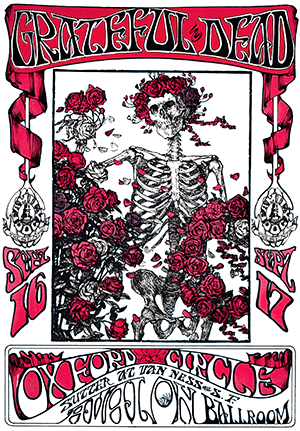

Stanley Mouse (b. 1940) is an American artist, best known for his 1960s psychedelic rock concert poster designs and Grateful Dead album cover art. He got his start in the Kustom Kulture scene working for Ed ‘Big Daddy’ Roth in 1958. The posters he produced were heavily influenced by Art Nouveau graphics, particularly the works of Alphonse Mucha and Edmund Joseph Sullivan.
Material associated with psychedelics, such as Zig-Zag rolling papers, were also referenced. Producing posters advertising for such musical groups as Big Brother and the Holding Company, Quicksilver Messenger Service, and Grateful Dead led to meeting the musicians and making contacts that were later to prove fruitful. Mouse and artist Alton Kelley are credited with creating the skeleton and roses image that became the Grateful Dead’s archetypal iconography, and Journey’s wings and beetles that appeared on their album covers from 1977 to 1980.
Posted in Art, Drugs |
Leave a Comment »
December 10, 2010

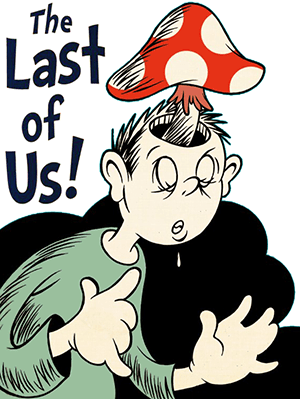
Cordyceps [kord-uh-seps] is a genus of mushrooms that grows on caterpillars and other insects; it has a number of Eastern and Western medical applications. It is used for a wide range of conditions including fatigue, sexual dysfunction, coughing, and as an adaptogen or immune stimulant.
An interesting feature of the Cordyceps species is the ability to affect the behavior of their insect host. Cordyceps unilateralis causes ants to climb a plant and attach there before they die. This ensures the parasite’s environment is of the optimal temperature and humidity, and maximal distribution of the spores from the fruiting body that sprouts out of the dead insect is achieved.
read more »
Posted in Drugs, Money, Science |
Leave a Comment »
December 7, 2010

Pruno, or prison wine, is an alcoholic liquid variously made from apples, oranges, fruit cocktail, ketchup, sugar, and possibly other ingredients, including bread. Pruno originated in (and remains largely confined to) prisons, where it can be produced cheaply, easily, and discreetly. The concoction can be made using only a plastic bag, hot running water, and a towel or sock to conceal the pulp during fermentation. The end result has been colorfully described as a ‘vomit-flavored wine-cooler.’ Depending on the time spent fermenting, the sugar content, and the quality of the ingredients and preparation, pruno’s alcohol content by volume can range from 2 – 14%.
Typically, the fermenting mass of fruit — called the motor in prison parlance (from ‘promoter’) – is retained from batch to batch to make the fermentation start faster. Increasing sugar results in more alcohol until the waste products of fermentation kill the motor. This also causes the taste of the end product to suffer. Ascorbic acid or Vitamin C powder is sometimes used to stop the fermentation, which, combined with the tartness of the added acid, counteracts the cloyingly sweet flavor. In an effort to eradicate pruno, some wardens have gone as far as banning all fresh fruit from prison cafeterias. In such cases, inmates often resort to using sauerkraut and orange juice.
Posted in Drugs, Food, Language |
2 Comments »
December 1, 2010


Teetotalism [tee-toht-l-iz-uhm] refers to either the practice of or the promotion of complete abstinence from alcoholic beverages. A person who practices or advocates teetotalism is called a teetotaler (plural teetotalers or teetotalli). The teetotalism movement was first started in Preston, England in the early 19th century. Some common reasons for choosing teetotalism are religious, health, family, philosophical, or social reasons, and, sometimes, as simply a matter of taste or preference.
Contemporary and colloquial usage has somewhat expanded teetotalism to include strict abstinence from most recreational intoxicants (legal and illegal). Most teetotaler organizations also demand from their members that they do not promote or produce alcoholic intoxicants.
read more »
Posted in Drugs, Language, Politics |
Leave a Comment »
November 22, 2010

At sufficiently high doses of the drug ketamine (half a gram or more), it is common to experience a ‘K-hole.’ This is a slang term for a state of dissociation from the body which may mimic the phenomenology of schizophrenia. Experience of the K-hole may include distortions in bodily awareness, such as the feeling that one’s body is being tugged, or is gliding on silk, flying, or has grown very large or distended. Users have reported the sensation of their soul leaving their human body.
read more »
Posted in Drugs, Language, Science |
Leave a Comment »
November 3, 2010

A bucket bong, also called a gravity bong, is a method of consuming cannabis. The smoke in a gravity bong never actually passes through the water as it would in an ordinary bong. The water is used to draw the smoke into the container by pulling up, creating a change in air pressure. The smoke is then pushed into the mouth of the user by pushing down causing air compression.
Posted in Drugs, Technology |
Leave a Comment »
October 30, 2010

Dock Ellis (1945 – 2008) was a Major League Baseball player who pitched for the Pittsburgh Pirates, among other teams. His best season was 1971, when he won 19 games for the World Series champion Pirates and was the starting pitcher for the National League in the All-Star Game. However, he is perhaps best remembered for throwing a no-hitter in 1970 and later stating that he had done it while under the influence of LSD.
read more »
Posted in Drugs, Games, Humor |
Leave a Comment »
October 18, 2010


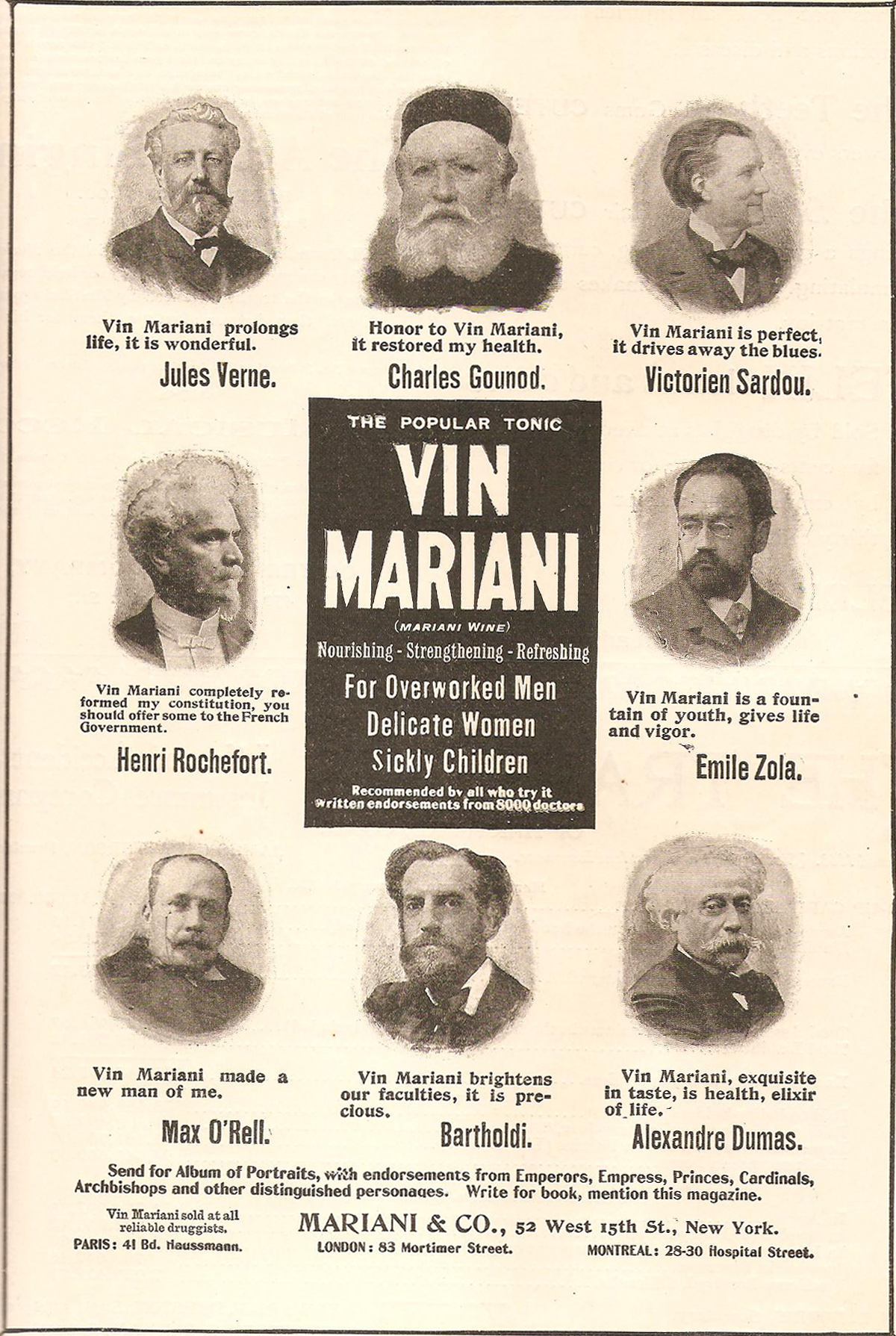
Vin Mariani (French: Mariani’s wine) was a tonic and patent medicine created circa 1863 by Angelo Mariani, a chemist who became intrigued with coca and its economic potential after reading Paolo Mantegazza’s paper on coca’s effects. Mariani started marketing a wine called Vin Tonique Mariani (à la Coca du Pérou) which was made from Bordeaux wine treated with coca leaves.
The ethanol in the wine acted as a solvent and extracted the cocaine from the coca leaves, altering the drink’s effect. It originally contained 6 mg of cocaine per fluid ounce of wine, but Vin Mariani which was to be exported contained 7.2 mg per ounce in order to compete with the higher cocaine content of similar drinks in the United States. Ads for Vin Mariani claimed that it would restore health, strength, energy, and vitality.
read more »
Posted in Drugs, Food, Money |
Leave a Comment »




 The Daily Omnivore