The bacchanalia [bak-uh-ney-lee-uh] were wild and mystic festivals of the Greco-Roman god Bacchus (or Dionysus), the wine god. The term has since come to describe any form of drunken revelry.
The bacchanalia were rites originally held in ancient Greece as the Dionysia. The most famous of the Greek Dionysia were in Attica and included a festal procession, a drinking feast, and dramatic performances in the theatre of Dionysus. The rites spread to Rome from the Greek colonies in Southern Italy where they were secret and only attended by women. The festivals occurred in the grove of Simila near the Aventine Hill on March 16 and March 17. Later, admission to the rites was extended to men, and celebrations took place five times a month.
read more »
September 4, 2012
Bacchanalia
September 3, 2012
Isolation Tank
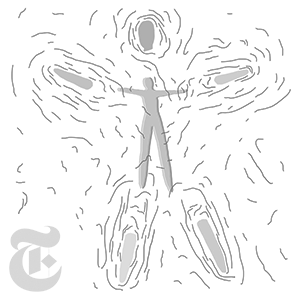
An isolation tank is a lightless, soundproof tank inside which subjects float in salt water at skin temperature. They were first used by John C. Lilly in 1954 to test the effects of sensory deprivation. Such tanks are now also used for meditation and relaxation and in alternative medicine.
The isolation tank was originally called the sensory deprivation tank. Other names for the isolation tank include flotation tank, John C. Lilly tank, REST tank, sensory attenuation tank, and think tank.
read more »
September 3, 2012
Corkscrew

A corkscrew is a kitchen tool for drawing corks from wine bottles. Generally, a corkscrew consists of a pointed metallic helix (often called the ‘worm’) attached to a handle.
The user grips the handle and screws the metal point into the cork, until the helix is firmly embedded, then a vertical pull on the corkscrew extracts the cork from the bottle. Corkscrews are necessary because corks themselves, being small and smooth, are difficult to grip and remove, particularly when inserted fully into an inflexible glass bottle. The handle of the corkscrew, often a horizontal bar of wood attached to the screw, allows for a commanding grip to ease removal of the cork. Corkscrew handles may incorporate levers that further increase the amount of force that can be applied outwards upon the cork.
read more »
August 29, 2012
Hippy Sippy
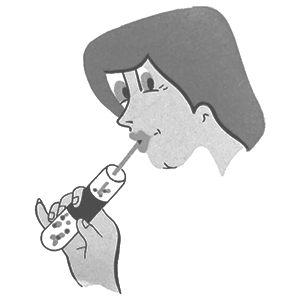
Hippy Sippy was a candy introduced in the late 1960s. It derived its name from its packaging: small multi-colored pellets contained in a toy package syringe. The intent was to mimick drug usage in the hippie culture, primarily through the toy syringe being a reminder of heroin, and secondarily through the multi-colored candy being a reminder of uppers and downers.
Included was a button with the phrase ‘Hippy Sippy says I’ll try anything!’ printed on it. Hippy Sippy was immediately controversial, and outraged many people. It was promptly removed from the market, but is still remembered due to its cultural shock value. The name was adopted by saxophonist Hank Mobley for his song ‘Hippy Sippy Blues.’
August 29, 2012
Candy Cigarette
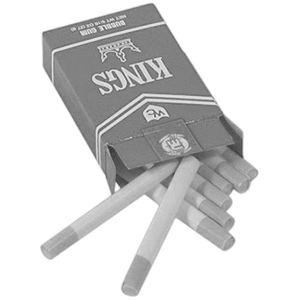
Candy cigarettes are a candy introduced in the early 20th century made out of chalky sugar, bubblegum, or chocolate, wrapped in paper as to resemble cigarettes. Their place on the market has long been controversial because many critics believe the candy desensitizes children, leading them to become smokers later in life. Because of this, the selling of candy cigarettes has been banned in several countries such as Finland, Norway, the Republic of Ireland, Turkey, and Saudi Arabia. In Canada, federal law prohibits candy cigarette branding that resembles real cigarettes.
The US state of North Dakota enacted a ban on candy cigarettes from 1953 until 1967. The Family Smoking and Prevention Control Act was misquoted as banning candy cigarettes in the US. However, the act bans any form of added flavoring in tobacco cigarettes other than menthol. It does not regulate the candy industry.
August 29, 2012
Bubble Pipe

A bubble pipe is a toy shaped like a tobacco pipe, intended to be used for blowing soap bubbles. Most bubble pipes are made of plastic and therefore cannot be used for actual smoking.
They are usually brightly colored, and sometimes feature fanciful designs including multiple bowls. Like candy cigarettes, bubble pipes allow children to imitate adult smokers. As concern over the harmful effects of tobacco smoke and the marketing of smoking products to children has risen, both have become considerably less popular.
August 26, 2012
Molecular Mixology

Molecular Mixology is the term applied to the process of creating cocktails using the scientific equipment and techniques of molecular gastronomy. These methods enable the creation of greater intensities and varieties of flavor, flavor combinations, and different ways of presenting drinks, for example using gels, powders, foams, atomized sprays, etc., as well as affecting the aesthetic qualities of the cocktail.
‘The Art of Drink’ website suggests that the earliest example of what we now call molecular mixology is the long-established bartending practice of layering ingredients in cocktails. This experimentation with the density and viscosity of fluids uses the principles of scientific investigation that are fundamental to molecular mixology.
read more »
August 26, 2012
Open Container Laws

In the United States, open container laws regulate or prohibit the existence of open containers of alcohol in certain areas. Typically these laws concern public places, such as parks and vehicles. The purpose of these laws is to restrict public intoxication, especially the dangerous act of operating a vehicle while intoxicated. Open container laws are state laws, rather than federal laws; thus they vary from state to state.
The vast majority of U.S. states and localities prohibit possessing and/or consuming an open container of alcohol in public places, such as on the street. However, the definition of ‘public place’ is not always clear. California is unique in that it does have a state law on the books, but similar to states that have no law, the state law only applies to areas that the ‘city, county, or city and county have enacted an ordinance’ in. Open container restrictions are not always rigorously enforced, and open containers may in fact be legally permitted in nominally private events which are open to the public. This is especially true in downtown districts and during holidays and sporting events and tailgate parties.
read more »
August 26, 2012
Botellón

Botellón [boh-tay-yone] (Spanish for ‘big bottle’), called ‘litros’ in Cantabria, is ‘mass meeting of young people between 13 and 24 years, mainly in open areas of free access, to consume drinks previously purchased in shops, listen to music, and talk.’ It emerged as an alternative to bars, discos or clubs, but normally is a previous step before going to such locations.
Although the origins of botellón started in Andalucia during the 1980s as a way for Andalucian workers to be able to enjoy a cheap drink outdoors instead of conforming to the prices that were offered in the bars, young people and especially students adopted it in the 90s, appearing for the first time formally in the city of Cáceres, in connection with the riots caused by the advance of the closing time for the nightclubs. Today it is a standard practice among the nightlife youth and even regulated in many cities.
read more »
August 26, 2012
Drinking in Public
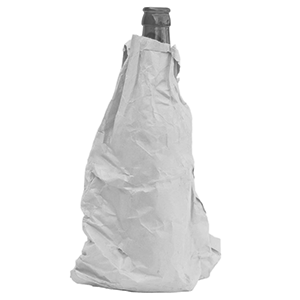
Social customs and laws on drinking alcohol in public vary significantly around the world. In some countries, such as the United States and the Muslim world, public drinking is almost universally condemned or outlawed, while in other countries, such as New Zealand and Japan, public drinking and public intoxication are legal (although local often authorities have power to pass bylaws declaring liquor-free zones).
Opponents of drinking in public argue that it encourages overconsumption of alcohol and binge drinking, rowdiness and violence, and propose that people should instead drink at private businesses such as public houses, bars or clubs, where a bartender may prevent overconsumption and where rowdiness can be better controlled by the fact that one is sitting down and security or bouncers may be present. Alternatively, one may drink at home.
read more »
August 23, 2012
The Point!
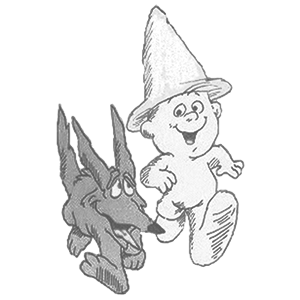
The Point! is a fable and the sixth album by American songwriter and musician Harry Nilsson about a boy named Oblio, the only round-headed person in the Pointed Village, where by law everyone and everything had to have a point. According to Nilsson:
‘I was on acid and I looked at the trees and I realized that they all came to points, and the little branches came to points, and the houses came to point. I thought, ‘Oh! Everything has a point, and if it doesn’t, then there’s a point to it.” There have been, so far, at least three different renditions of The Point!, each featuring songs written by Nilsson to accompany the story, including an animated film, an album, and a stage musical.
August 14, 2012
Nocebo
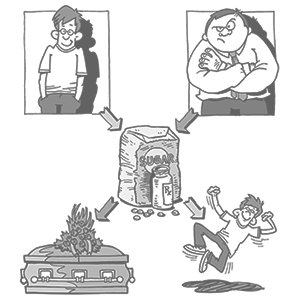
In medicine, a nocebo [no-see-bo] reaction or response refers to harmful, unpleasant, or undesirable effects a subject manifests after receiving an inert dummy drug or placebo. Nocebo responses are not chemically generated and are due only to the subject’s pessimistic belief and expectation that the inert drug will produce negative consequences. In these cases, there is no ‘real’ drug involved, but the actual negative consequences of the administration of the inert drug, which may be physiological, behavioral, emotional, and/or cognitive, are nonetheless real.
An example of nocebo effect would be someone who dies of fright after being bitten by a non-venomous snake. The term ‘nocebo’ (Latin: ‘I will harm’) was chosen by Walter Kennedy, in 1961, to denote the counterpart of one of the more recent applications of the term placebo (Latin: ‘I will please’); namely, that of a placebo being a drug that produced a beneficial, healthy, pleasant, or desirable consequence in a subject, as a direct result of that subject’s beliefs and expectations. The term ‘nocebo’ can also refer to positive outcomes based upon the patient’s expectation of that outcome.
read more »


 The Daily Omnivore