August 13, 2012
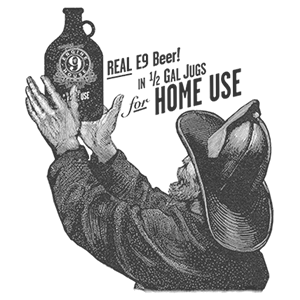
A growler [grou-ler] is a glass or ceramic jug with a capacity of 64 oz (1,900 ml) used to transport draught beer in Australia, the United States, and Canada. They are commonly sold at breweries and brewpubs as a means to sell take-out beer. The exploding growth of craft breweries and the growing popularity of home brewing has also led to an emerging market for the sale of collectible growlers.
Growlers are generally made of glass and have either a screw-on cap or a hinged porcelain gasket cap, which can provide freshness for a week or more. A properly sealed growler will hold carbonation indefinitely and will store beer like any other sanitized bottle. Some growler caps are equipped with valves to allow replacement of CO2 lost while racking. The modern glass growler was first introduced by Charlie and Ernie Otto of Otto Brother’s Brewing Company in 1989.
read more »
Posted in Drugs, Food, Money |
Leave a Comment »
July 26, 2012
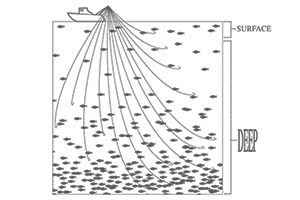

Silk Road is an online marketplace that its operators run as a Tor hidden service (anonymous and encrypted). Visitors must use Tor software to access the marketplace. The majority of products that sellers list on Silk Road qualify as contraband in most jurisdictions. ‘NPR’ has referred to the site as the ‘Amazon.com of illegal drugs.’ Buyers and sellers conduct all transactions with bitcoins (an encrypted digital currency).
Although the bitcoin’s exchange rate may fluctuate greatly in short periods of time, most of the prices on Silk Road are bound to United States dollar to prevent too drastic inflation or deflation. Buyers can register on Silk Road for free, but sellers must purchase new accounts through auctions to mitigate the possibility of malicious individuals distributing tainted goods.
read more »
Posted in Drugs, Money, Technology |
Leave a Comment »
July 26, 2012
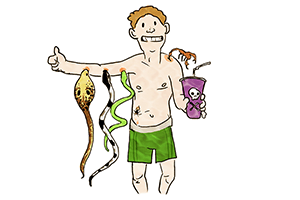

Mithridatism [mith-ri-dey-tiz-uhm] is the practice of protecting oneself against a poison by gradually self-administering non-lethal amounts. The word derives from Mithridates VI, the King of Pontus (modern-day Turkey), who so feared being poisoned that he regularly ingested small doses, aiming to develop immunity. Having been defeated by Roman general Pompey, legend has it that Mithridates tried to commit suicide using poison but failed because of his immunity and so had to resort to having a mercenary run him through with his sword.
There are only a few practical uses of mithridatism. It can be used by zoo handlers, researchers, and circus artists who deal closely with venomous animals. Mithridatization has been tried with success in Australia and Brazil and total immunity has been achieved even to multiple bites of extremely venomous cobras and pit vipers. Venomous snake handler Bill Haast used this method. Snake handlers from Burma tattoo themselves with snake venom for the same reason. Mithridatism is also used to treat peanut allergies.
read more »
Posted in Death, Drugs, Health |
1 Comment »
July 26, 2012

Physiological tolerance or drug tolerance is commonly encountered in pharmacology, when a subject’s reaction to a specific drug and concentration of the drug is progressively reduced, requiring an increase in concentration to achieve the desired effect. Drug tolerance can involve both psychological drug tolerance and physiological factors.
Tolerance rate depends on the particular drug, dosage and frequency of use, though it is typically reversible. Physiological tolerance also occurs when an organism builds up a resistance to the effects of a substance after repeated exposure. This can occur with environmental substances, such as salt or pesticides. A rapid drug tolerance is termed tachyphylaxis.
read more »
Posted in Drugs, Health |
1 Comment »
July 24, 2012

Duff Beer is a brand of beer that originally started as a fictional beverage on the animated series ‘The Simpsons,’ since then it has become a real brand of beer in a number of countries without permission or consent from it’s original creator, Matt Groening, and has resulted in legal battles with varying results. Groening has stated that he will not license the Duff trademark to brew an actual beer, over concern that it would encourage children to drink.
It is Homer Simpson’s beer of choice and a parody of stereotypical commercial beer: very cheaply priced, poor-quality, and advertised everywhere. The name was inspired by one-syllable beer names in the US (such as ‘Bud’). In an excerpt from his autobiography, former Guns N’ Roses bassist Duff McKagan claimed that the beer was named after him as the writers were fans of the band and he was known for his extreme alcohol consumption.
read more »
Posted in Drugs, Food, Humor |
Leave a Comment »
July 9, 2012
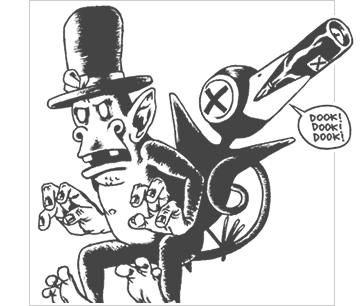
Maakies is a syndicated weekly comic strip by Tony Millionaire. It began publication in 1994 in the ‘New York Press.’ It currently runs in many American alternative newsweeklies including ‘The Stranger,’ ‘LA Weekly,’ and ‘Only.’ It also appears in several international venues including the Italian comics magazine ‘Linus’ and the Swedish comics magazine ‘Rocky.’
The strip focuses on the darkly comic misadventures of Uncle Gabby (a drunken Irish sock monkey) and Drinky Crow (an alcoholic crow), two antiheroes with a propensity for drunkenness, violence, suicide, and venereal disease. According to Millionaire, ”Maakies’ is me spilling my guts… Writing and drawing about all the things that make me want to jump in the river, laughing at the horror of being alive.’ Maakies strips typically take place in an early 19th century nautical setting. There is rarely any continuity between strips.
read more »
Posted in Art, Drugs, Humor |
Leave a Comment »
July 7, 2012

Behavioral addiction is a form of addiction which does not rely on chemicals (like drugs and alcohol), characterized by a compulsion to repeatedly engage in an action until said action causes serious negative consequences to the person’s physical, mental, social, and/or financial well-being. One sign that a behavior has become addictive is if it persists despite these consequences. Behavioral addictions, which are sometimes referred to as impulse control disorders, are increasingly recognized as treatable forms of addictions. Behaviors which may be addicting include gambling, eating, intercourse, viewing pornography, use of computers, playing video games, working , exercising, spiritual obsession (as opposed to religious devotion), cutting, and shopping.
When analyzing the addiction to food for example, a published study in 2009 from The Scripps Research Institute have shown for the first time that the same molecular mechanisms that drive people into drug addiction are behind the compulsion to overeat, pushing people into obesity. In this study, scientists focused on a particular receptor in the brain known to play an important role in vulnerability to drug addiction — the dopamine D2 receptor. The D2 receptor responds to dopamine, a neurotransmitter that is released in the brain by pleasurable experiences like food or sex or drugs like cocaine.
read more »
Posted in Drugs, Health, Money |
Leave a Comment »
May 18, 2012

An anxiolytic [ang-zee-uh-lit-ik] is a drug used for the treatment of anxiety and its related psychological and physical symptoms. Anxiolytics have been shown to be useful in the treatment of anxiety disorders. Beta-blockers, although not anxiolytics, can be used to combat the somatic symptoms of anxiety (such as an elevated heart rate).
Anxiolytics are also known as minor tranquilizers. The term is less common in modern texts, and was originally derived from a dichotomy with major tranquilizers, also known as neuroleptics or antipsychotics.
read more »
Posted in Death, Drugs, Health |
1 Comment »
May 18, 2012

Selank is a nootropic (smart drug), anxiolytic (antianxiety) peptide (string of amino acids) based drug developed by the Institute of Molecular Genetics of the Russian academy of sciences. Selank is a synthetic analogue of the immunomodulatory peptide tuftsin; as such, it mimics many of its effects, strengthening the immune system.
It is has been shown to influence the concentration of monoamine neurotransmitters (e.g. dopamine, serotonin) and induce metabolism of serotonin. There is evidence that it may also modulate the expression of Brain-derived neurotropic factor (which is related to nerve growth) in rats.
read more »
Posted in Drugs, Health, World |
Leave a Comment »
May 15, 2012

Acid Western is a sub-genre of the Western film that emerged in the 1960s and 1970s that combines the metaphorical ambitions of top-shelf Westerns, like ‘Shane’ and ‘The Searchers,’ with the excesses of the Spaghetti Westerns and the outlook of the counter-culture. Acid Westerns subvert many of the conventions of earlier Westerns to ‘conjure up a crazed version of autodestructive white America at its most solipsistic, hankering after its own lost origins.’
The term ‘Acid Western’ was coined in 1996 by Jonathan Rosenbaum in a review of Jim Jarmusch’s film, ‘Dead Man.’ Rosenbaum expanded upon the idea in a subsequent interview with Jarmusch for ‘Cineaste’ and later in the book ‘Dead Man’ from BFI Modern Classics. In the book, Rosenbaum illuminates several aspects of this re-revisionist Western: from Neil Young’s haunting score to the role of tobacco, to Johnny Depp’s performance, to the film’s place in the acid-Western genre.
read more »
Posted in Art, Drugs |
Leave a Comment »
May 14, 2012
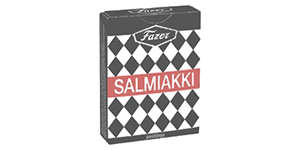

Liquorice [lik-uh-rish] or licorice is the root of Glycyrrhiza glabra (a legume) from which a somewhat sweet flavor can be extracted. It is native to southern Europe and parts of Asia, and is not related to anise, star anise, or fennel, which are the sources of similar-tasting compounds. The word ‘liquorice’ is derived from the Greek ‘glukurrhiza’ (‘sweet root’).
The flavor of liquorice comes mainly from a sweet-tasting compound called anethole, an aromatic, unsaturated ether compound also found in anise, fennel, and several other herbs. Much of the sweetness in liquorice comes from glycyrrhizin, a compound 30 to 50 times sweeter than sucrose (table sugar).
read more »
Posted in Drugs, Food, Health |
Leave a Comment »
May 14, 2012

Dimethoxybromoamphetamine (DOB), also known as Brolamfetamine and Bromo-DMA, is a psychedelic drug and substituted amphetamine of the phenethylamine (a neurotransmitter abundant in chocolate) class of compounds (e.g. MDMA). DOB was first synthesized by American pharmacologist Alexander Shulgin in 1967. In his book ‘PiHKAL: A Chemical Love Story,’ Shulgin lists the dosage range as 1 to 3 mg, which is generally taken orally. According to Shulgin, the effects of DOB last 18 to 30 hours. Onset of the drug is also long, sometimes taking up to three hours. The toxicity of DOB is not fully known, although high doses may cause serious vasoconstriction of the extremities.
DOB has been sold on blotter paper (and presumably represented as LSD). Misrepresentation as LSD could be potentially dangerous, as DOB does not have the known safety profile of LSD: unlike LSD, DOB can have physically harmful (if not fatal) effects in overdose. Upon tasting the chemical, if one notices a highly bitter or ‘chemically’ taste, this should serve as a warning sign that the drug is not LSD, but likely a psychedelic amphetamine (DOB, DOC, DOI, or Bromo-DragonFLY). However, blotter paper may have a taste regardless of the chemical on it, due to ink or solvent used.
Posted in Drugs, Health |
1 Comment »


 The Daily Omnivore