June 18, 2013

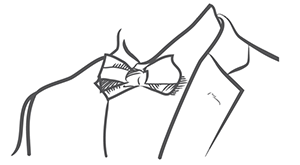
Bill Nye (b. 1955) is an American science educator, comedian, television host, actor, writer, and scientist who began his career as a mechanical engineer at Boeing. He is best known as the host of the Disney/PBS children’s science show ‘Bill Nye the Science Guy’ and for his many subsequent appearances in popular media as a science educator.
Nye was born in Washington, D.C., to Jacqueline Nye, a codebreaker during World War II, and Edwin Darby Nye, also a World War II veteran, whose experience in a Japanese prisoner of war camp led him to become a sundial enthusiast. Bill is a former fourth-generation Washington resident through his father’s side of the family. He studied mechanical engineering at Cornell University (where one of his professors was Carl Sagan).
read more »
Posted in Education, Humor, Science |
5 Comments »
June 14, 2013
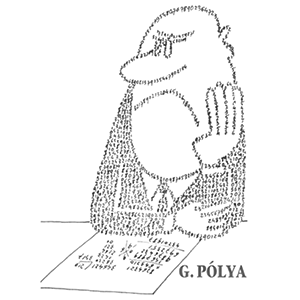
How to Solve It (1945) is a small volume by mathematician George Pólya describing methods of problem solving.
He suggests four steps when solving a mathematical problem: 1) First, understand the problem; 2) After understanding, then make a plan; 3) Carry out the plan; and; 4) Look back on your work — how could it be better? If this technique fails, Pólya advises: ‘If you can’t solve a problem, then there is an easier problem you can solve: find it.’ Or: ‘If you cannot solve the proposed problem, try to solve first some related problem. Could you imagine a more accessible related problem?’
read more »
Posted in Education, Language, Science |
Leave a Comment »
June 14, 2013
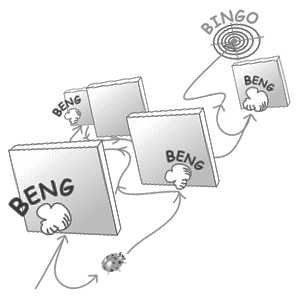
A heuristic [hyoo-ris-tik] (Greek: ‘find’ or ‘discover’) is a practical way to solve a problem. It is better than chance, but does not always work. A person develops a heuristic by using intelligence, experience, and common sense. Trial and error is the simplest heuristic, but one of the weakest. ‘Rule of thumb’ and ‘educated guesses’ are other names for simple heuristics. Since a heuristic is not certain to get a result, there are always exceptions.
Sometimes heuristics are rather vague: ‘look before you leap’ is a guide to behavior, but ‘think about the consequences’ is a bit clearer. Sometimes a heuristic is a whole set of stages. When doctors examines a patient, they go through a series of tests and observations. They may not find out what is wrong, but they give themselves the best chance of succeeding. This is called a diagnosis. In computer science, a ‘heuristic’ is a kind of algorithm (a step-by-step list of directions that need to be followed to solve a problem).
read more »
Posted in Education, Health, Science |
Leave a Comment »
June 13, 2013
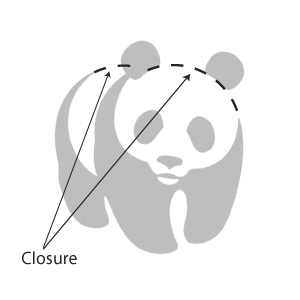
Closure or need for closure are psychological terms that describe the desire or need individuals have for information that will allow them to conclude an issue that had previously been clouded in ambiguity and uncertainty. Upon reaching this conclusion, they are now able to attain a state of ‘epistemic closure’.
The term ‘cognitive closure’ has been defined as ‘a desire for definite knowledge on some issue and the eschewal of confusion and ambiguity.’ Need for closure is a phrase used by psychologists to describe an individual’s desire for a firm solution as opposed to enduring ambiguity.
read more »
Posted in Education, Health, Science |
Leave a Comment »
June 7, 2013
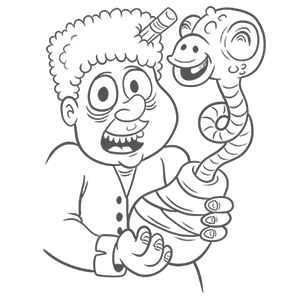
A coloring book is a type of book containing line art to which a child may add color using crayons (however, adult coloring products exist as well, including pornograhic, horror, and medical books).
Some coloring books have perforated edges so their pages can be removed from the books and used as individual sheets. Others may include a storyline and so are intended to be left intact. Coloring books may also incorporate other activities such as connect the dots, mazes, and other puzzles. Some coloring books also incorporate the use of stickers.
read more »
Posted in Art, Education, Language |
Leave a Comment »
May 24, 2013
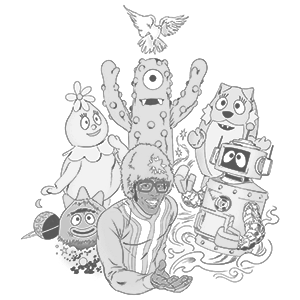
Yo Gabba Gabba! is an American children’s television show that airs on the Nick Jr. cable network. Created by Christian Jacobs (lead singer of the Aquabats) and Scott Schultz, the series premiered in 2007.
Popular artists appearing on the show include The Killers, Jimmy Eat World, Solange Knowles, Devo, Of Montreal, Chromeo, My Chemical Romance, Weezer, The Roots, MGMT, Jack Black, Tony Hawk, Elijah Wood, and The Ting Tings. Among the varied animation sequences during the show is ‘Super Martian Robot Girl,’ designed by indie cartoonists Evan Dorkin and Sarah Dyer. The toy models of the characters that appear at the beginning and end of each show were made by designer toy firm Kidrobot.
read more »
Posted in Art, Education, Humor |
Leave a Comment »
May 7, 2013

The term Dumbing down describes the deliberate diminishment of the intellectual level of the content of schooling and education, of literature and cinema, and of news and culture. The idea of and the term dumbing down originated in 1933 as slang, used by motion picture screenplay writers, to mean: ‘revise so as to appeal to those of little education or intelligence.’ Sociologist Pierre Bourdieu noted cultural capital as a means of social mobility, which is diminished by the processes of dumbing down.
The occurrences of dumbing down vary in nature, according to the subject matter under discussion and the purpose of the simplifier, but the dumbing-down usually involves the over-simplification of critical thought to the degree of conceptually undermining the intellectual standards of language and of learning of a society; by such simplistic means the writer and the speaker justifies the trivialization of cultural, artistic, and academic standards, as in the case of popular culture.
read more »
Posted in Education, Language, Politics |
Leave a Comment »
April 29, 2013

Whiteness studies is an interdisciplinary arena of academic inquiry focused on the cultural, historical and sociological aspects of people identified as ‘white,’ and the social construction of ‘whiteness’ as an ideology tied to social status. By the mid-1990s, numerous works across many disciplines analyzed whiteness, and it has since become a topic for academic courses, research and anthologies.
Pioneers in the field include W. E. B. Du Bois (‘Jefferson Davis as a Representative of Civilization,’ 1890), James Baldwin (‘The Fire Next Time,’ 1963), Ruth Frankenberg (‘White Women, Race Matters: The Social Construction of Whiteness,’ 1993), author and literary critic Toni Morrison (‘Playing in the Dark: Whiteness and the Literary Imagination,’ 1992) and historian David Roediger (‘The Wages of Whiteness,’ 1991).
read more »
Posted in Education, Politics, World |
Leave a Comment »
April 9, 2013

B-O-B is a ‘wildly successful’ series of sex education videos covering the practice of a woman penetrating a man’s anus with a strap-on dildo (known as ‘pegging’). The first of the two videos, which was released in 1998, became the best selling video to date for ‘Good Vibrations,’ a sex-toy company. The videos star sexologist Carol Queen, who discusses pegging and also demonstrates the practice with her lover.
The videos also contain footage of other couples engaging in the practice. The porn star Chloe appears in the second video; as she is best known as an anal queen, her use of a strap-on dildo is a ‘role reversal.’ Sex columnist Dan Savage, who popularized the term ‘pegging,’ originally offered ‘bob’ (short for ‘Bend over Boyfriend’) as one of two alternatives for the term.
read more »
Posted in Education, Sex |
Leave a Comment »
April 2, 2013
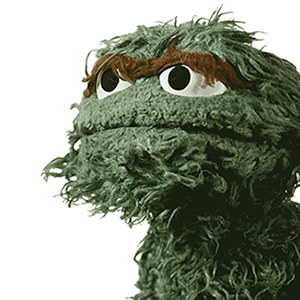
Oscar the Grouch is a Muppet character on the television program ‘Sesame Street.’ He has a green body (during the first season he was orange), has no visible nose, and lives in a trash can. His favorite thing in life is trash, as evidenced by the song ‘I Love Trash.’ A running theme is his compulsive hoarding of seemingly useless items.
‘The Grouch’ aptly describes his misanthropic interaction with the other characters, but also refers to his species. The character is performed by Caroll Spinney, and has been performed by him since the show’s first episode.
read more »
Posted in Education, Humor |
Leave a Comment »
March 7, 2013
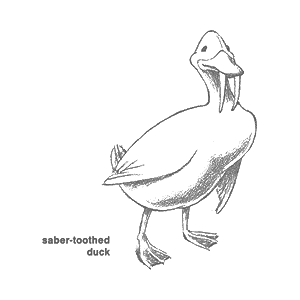
‘Science Made Stupid: How to Discomprehend the World Around Us’ is a book written and illustrated by Tom Weller in 1985. The winner of the 1986 Hugo Award for Best Non-Fiction Book, it is a parody of a junior high or high school-level science textbook. Though currently out-of-print, high-resolution scans are available online, as well as an abridged transcription, both of which have been endorsed by Weller.
Highlights of the book include a satirical account of the creationism vs. evolution debate and Weller’s drawings of fictional prehistoric animals (e.g., the duck-billed mastodon.) Weller released a companion volume, ‘Culture Made Stupid’ (also spelled ‘Cvltvre Made Stvpid’), which satirizes literature and the humanities.
Posted in Education, Humor, Science |
1 Comment »
February 20, 2013

Fertility and intelligence research has indicated that in humans, fertility rate and intelligence tend to be inversely correlated, that is to say, the more intelligent, as measured by IQ tests, exhibit a lower total fertility rate than the less intelligent. Survival rates are also correlated with IQ, so the net effect on population intelligence is unclear.
It is theorized that if the inverse correlation of IQ with fertility rate is stronger than the correlation of survival rate, and if heritable factors involved in IQ are consistently expressed in populations with different fertility rates, and if this continued over a significant number of generations, it could lead to a decrease in population IQ scores. Other correlates of IQ include income and educational attainment, which are also inversely correlated with fertility rate, and are to some degree heritable.
read more »
Posted in Education, Sex |
1 Comment »


 The Daily Omnivore