January 6, 2013
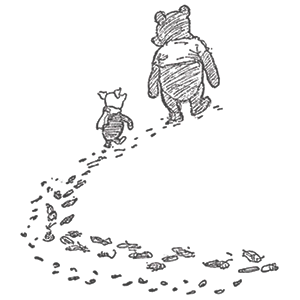
Woozle effect, also known as evidence by citation, or a woozle, occurs when frequent citation of previous publications that lack evidence mislead individuals, groups and the public into thinking or believing there is evidence, and nonfacts become urban myths and factoids (statements presented as a fact, but with no veracity).
Woozle effect is a term coined by criminologist Beverly Houghton in 1979. It describes a pattern of bias seen within social sciences and which is identified as leading to multiple errors in individual and public perception, academia, policy making and government. A woozle is also a claim made about research which is not supported by original findings.
read more »
Posted in Education, Language, Science |
Leave a Comment »
January 4, 2013
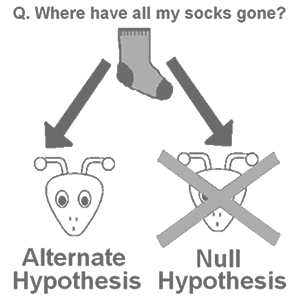
In statistics, a null hypothesis is the ‘no-change’ or ‘no-difference’ hypothesis. The term was first used by English geneticist Ronald Fisher in his book ‘The design of experiments.’ A hypothesis is a proposed explanation for some event or problem. Every experiment has a null hypothesis. If you do an experiment to see if a medicine works, the null hypothesis is that it doesn’t work.
If you do an experiment to see if people like chocolate or vanilla ice-cream better, the null hypothesis is that people like them equally. If you do an experiment to see if either boys or girls can play piano better, the null hypothesis is that boys and girls are equally good at playing the piano. The opposite of the null hypothesis is the alternative hypothesis (a difference does exist: this medicine makes people healthier, people like chocolate ice-cream better than vanilla, or boys are better at playing the piano than girls).
read more »
Posted in Education, Language, Science |
Leave a Comment »
January 3, 2013

Tacit knowledge (as opposed to formal or explicit knowledge) is the kind of knowledge that is difficult to transfer to another person by means of writing it down or verbalizing it. For example, stating to someone that London is in the United Kingdom is a piece of explicit knowledge that can be written down, transmitted, and understood by a recipient.
However, the ability to speak a language, use algebra, or design and use complex equipment requires all sorts of knowledge that is not always known explicitly, even by expert practitioners, and which is difficult to explicitly transfer to users. While tacit knowledge appears to be simple, it has far reaching consequences and is not widely understood.
read more »
Posted in Education, Language, Science |
Leave a Comment »
December 22, 2012

Ingri (1904 – 1980) and Edgar (1898 – 1986) Parin d’Aulaire [doe-lair] were married writers and illustrators of children’s books in the 20th century.
Using their research and travel experiences as inspiration, the husband and wife team produced 27 picture books for children. They also wrote and illustrated introductory books of Greek and Norse mythology.
read more »
Posted in Art, Education, Language |
Leave a Comment »
December 13, 2012

Psychohistory [sahy-koh-his-tuh-ree] is the study of the psychological motivations of historical events. It attempts to combine the insights of psychotherapy with the research methodology of the social sciences to understand the emotional origin of the social and political behavior of groups and nations, past and present. Its subject matter is childhood and the family (especially child abuse), and psychological studies of anthropology and ethnology.
Psychohistory derives many of its concepts from areas that are perceived to be ignored by conventional historians as shaping factors of human history, in particular, the effects of childbirth, parenting practice, and child abuse. The historical impact of incest, infanticide and child sacrifice are considered. Psychohistory holds that human societies can change between infanticidal and non-infanticidal practices and has coined the term ‘early infanticidal childrearing’ to describe abuse and neglect observed by many anthropologists.
read more »
Posted in Education, Health, Politics |
Leave a Comment »
December 12, 2012
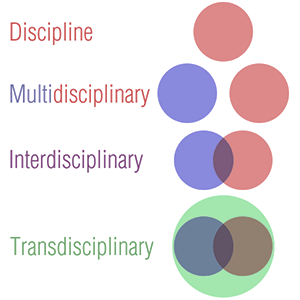
Transdisciplinarity connotes a research strategy that crosses many disciplinary boundaries to create a holistic approach.
It applies to research efforts focused on problems that cross the boundaries of two or more disciplines, such as research on effective information systems for biomedical research or bioinformatics, and can refer to concepts or methods that were originally developed by one discipline, but are now used by several others, such as ethnography, a field research method originally developed in anthropology but now widely used by other disciplines.
read more »
Posted in Education, Philosophy, Science |
Leave a Comment »
December 12, 2012

Interdisciplinarity involves the combining of two or more academic disciplines into one activity (e.g. a research project). It is about creating something new by crossing boundaries, and thinking across them. It is related to an interdiscipline (e.g. Sociolinguistics, Biosemiotics) which is an organizational unit that crosses traditional boundaries between academic disciplines or schools of thought, as new needs and professions have emerged.
Originally, the term interdisciplinary is applied within education and training pedagogies to describe studies that use methods and insights of several established disciplines or traditional fields of study. Interdisciplinarity involves researchers, students, and teachers in the goals of connecting and integrating several academic schools of thought, professions, or technologies – along with their specific perspectives – in the pursuit of a common task.
read more »
Posted in Education, Philosophy, Science |
Leave a Comment »
December 12, 2012
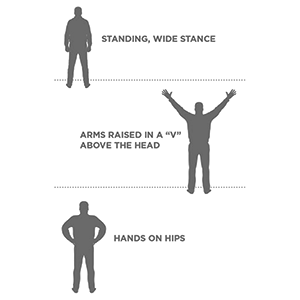
Amy Cuddy is an American social psychologist known for her studies of the relations between stereotyping and behavior. She is Associate Professor in the Negotiation, Organizations & Markets Unit at Harvard Business School. Cuddy studies the origins and outcomes of how people judge and influence each other.
She has conducted experimental and correlational research on stereotyping and discrimination against various groups (e.g., Asian Americans, elderly people, Latinos, working mothers), the causes and consequences of feeling ambivalent emotions (e.g., envy and pity), nonverbal behavior and communication, and hormonal responses to social stimuli. She is a sought-after speaker on the psychology of power, influence, nonverbal communication, and prejudice.
read more »
Posted in Education, Money, Science |
Leave a Comment »
December 11, 2012

Jane Elliott (b. 1933) is an American anti-racism activist and educator (she is also a feminist and LGBT activist).
She created the famous ‘blue-eyed/brown-eyed’ exercise, first done with grade school children in the 1960s, and which later became the basis for her career in diversity training.
read more »
Posted in Education, Money, Politics |
Leave a Comment »
November 26, 2012
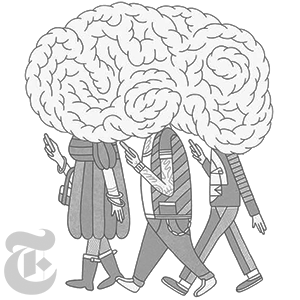
Collective intelligence is a shared or group intelligence that emerges from the collaboration and competition of many individuals and appears in consensus decision making in organisms (including some bacteria) and computer networks. The term appears in sociobiology, political science, and in context of mass peer review and crowdsourcing web applications (e.g. Wikipedia). This broader definition involves consensus, social capital, and formalism such as voting systems, social media and other means of quantifying mass activity.
Everything from a political party to a public wiki can reasonably be described as this loose form of collective intelligence. The notion of collective intelligence has also been called ‘Symbiotic intelligence.’ A precursor of the concept is found in entomologist William Morton Wheeler’s observation that seemingly independent individuals can cooperate so closely as to become indistinguishable from a single organism. Wheeler saw this collaborative process at work in ants that acted like the cells of a single beast he called a ‘superorganism.’
read more »
Posted in Education, Technology, World |
Leave a Comment »
November 26, 2012

The Knowledge Graph is a knowledge base used by Google to enhance its search engine’s search results with semantic-search information gathered from a wide variety of sources. Knowledge Graph display was added to Google’s search engine in 2012, starting in the United States. It provides structured and detailed information about the topic in addition to a list of links to other sites. The goal is that users would be able to use this information to resolve their query without having to navigate to other sites and assemble the information themselves.
According to Google, this information is derived from many sources, including the CIA World Factbook, Freebase, and Wikipedia. The feature is similar in intent to answer engines such as Ask Jeeves and Wolfram Alpha. As of 2012, its semantic network contained over 500 million objects and more than 3.5 billion facts about and relationships between these different objects which are used to understand the meaning of the keywords entered for the search.
Posted in Education, Language, Technology |
Leave a Comment »
November 26, 2012

Deep learning refers to a sub-field of machine learning (systems that examine data, from sensors or databases, and identify complex relationships) that is based on learning several levels of representations, corresponding to a hierarchy of features or factors or concepts, where higher-level concepts are defined from lower-level ones, and the same lower-level concepts can help to define many higher-level concepts.
Deep learning is part of a broader family of machine learning methods based on learning representations. An observation (e.g., an image) can be represented in many ways (e.g., a vector of pixels), but some representations make it easier to learn tasks of interest (e.g., is this the image of a human face?) from examples, and research in this area attempts to define what makes better representations and how to learn them.
read more »
Posted in Education, Technology |
Leave a Comment »


 The Daily Omnivore