September 10, 2012
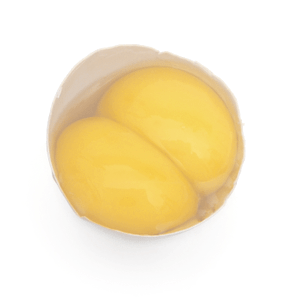
Double-yolk eggs occur when ovulation occurs too rapidly, or when one yolk becomes joined with another yolk. These eggs may be the result of a young hen’s reproductive cycle not yet being synchronized. Some hybrid breeds of hens also produce double-yolk eggs by default. Such eggs are produced in India. Heavier poultry breeds such as the buff Orpington have been known to lay triple yolk eggs in their lifetime. Although heredity causes some hens to have a higher propensity to lay double-yolked eggs, they occur more frequently as occasional abnormalities in young hens beginning to lay. Double-yolked eggs usually only lead to observed successful hatchlings under human intervention, as the chickens interfere with each other’s hatching process and die.
Eggs without yolk are called ‘dwarf’ or ‘wind’ eggs. Such an egg is most often a pullet’s first effort, produced before her laying mechanism is fully ready. In a mature hen, a wind egg is unlikely, but can occur if a bit of reproductive tissue breaks away, stimulating the egg producing glands to treat it like a yolk and wrap it in albumen, membranes and a shell as it travels through the egg tube. An archaic term for a no yolk egg is a ‘cock’ egg. Since they contained no yolk and therefore can’t hatch, it was traditionally believed that these eggs were laid by roosters.
Posted in Food, Science |
Leave a Comment »
September 8, 2012
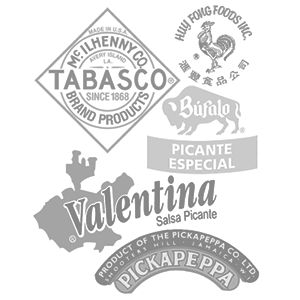
Hot sauce refers to any spicy sauce made from chili peppers and other ingredients. A group of chemicals called capsaicinoids are responsible for the heat in chili peppers. The peppers are infused in anything from vinegar, oil, water, beer and alcohol to fruits and vegetable pulp. Additional ingredients are often used, including those used to add extra heat, such as pure capsaicin extract and mustards.
Mexican hot sauce typically focuses more on flavor than on intense heat. The sauces are hot, but the individual flavors of the peppers are pronounced. Vinegar is used sparingly or not at all. Chipotles (smoked chili peppers) are a very popular ingredient of Mexican hot sauce.
read more »
Posted in Food, World |
Leave a Comment »
September 7, 2012

Anti-fat bias refers to the prejudicial assumption of personality characteristics based on a visual assessment of a person as suffering from obesity based on physical characteristics. Anti-fat bias can be found in many facets of society, and the media’s portrayal of obese individuals has often been blamed for the pervasiveness of this phenomenon.
Anti-fat bias leads individuals to label obese members of society with negative personality traits such as ‘lazy,’ ‘greedy,’ ‘stupid,’ ‘smelly,’ ‘slow,’ or ‘unmotivated.’ This bias is not restricted only to clinically obese individuals, but also encompasses those whose body shape is in some way found unacceptable (although still within the normal or overweight BMI range).
read more »
Posted in Food, Health, Politics |
Leave a Comment »
September 7, 2012

Glutamic [glew-tam-ick] acid is a flavor-enhancing compound which provides an umami (savory) taste to food. Glutamic acid is a natural constituent of many fermented or aged foods, including soy sauce, fermented bean paste (a component of miso), and cheese, and is also a component of hydrolyzed protein such as yeast extract (e.g. Vegemite).
The sodium salt of glutamic acid, monosodium glutamate (MSG), is a widely used additive in the food industry. Although they occur naturally in many foods, the flavor contributions made by glutamic acid and other amino acids were only scientifically identified early in the twentieth century.
read more »
Posted in Food, Health, Politics |
Leave a Comment »
September 4, 2012

Lexical-gustatory [lek-si-kuhl guhs-tuh-tawr-ee sin-uhs-thee-zhuh] synesthesia [sin-uhs-thee-zhuh] is one of the rarer forms of synesthesia (a mixing of the senses), in which spoken or written words evoke vivid sensations of taste, sometimes including temperature and texture (e.g., for lexical-gustatory synesthete JIW, ‘jail’ tastes of cold, hard bacon).
This form of synesthesia was first documented in 1907 in both Italy and the United States, but has only recently become the topic of scientific investigation.
read more »
Posted in Food, Health, Language |
Leave a Comment »
September 3, 2012

A corkscrew is a kitchen tool for drawing corks from wine bottles. Generally, a corkscrew consists of a pointed metallic helix (often called the ‘worm’) attached to a handle.
The user grips the handle and screws the metal point into the cork, until the helix is firmly embedded, then a vertical pull on the corkscrew extracts the cork from the bottle. Corkscrews are necessary because corks themselves, being small and smooth, are difficult to grip and remove, particularly when inserted fully into an inflexible glass bottle. The handle of the corkscrew, often a horizontal bar of wood attached to the screw, allows for a commanding grip to ease removal of the cork. Corkscrew handles may incorporate levers that further increase the amount of force that can be applied outwards upon the cork.
read more »
Posted in Drugs, Food, Technology |
Leave a Comment »
August 29, 2012

Hippy Sippy was a candy introduced in the late 1960s. It derived its name from its packaging: small multi-colored pellets contained in a toy package syringe. The intent was to mimick drug usage in the hippie culture, primarily through the toy syringe being a reminder of heroin, and secondarily through the multi-colored candy being a reminder of uppers and downers.
Included was a button with the phrase ‘Hippy Sippy says I’ll try anything!’ printed on it. Hippy Sippy was immediately controversial, and outraged many people. It was promptly removed from the market, but is still remembered due to its cultural shock value. The name was adopted by saxophonist Hank Mobley for his song ‘Hippy Sippy Blues.’
Posted in Drugs, Food, Politics |
1 Comment »
August 29, 2012

Candy cigarettes are a candy introduced in the early 20th century made out of chalky sugar, bubblegum, or chocolate, wrapped in paper as to resemble cigarettes. Their place on the market has long been controversial because many critics believe the candy desensitizes children, leading them to become smokers later in life. Because of this, the selling of candy cigarettes has been banned in several countries such as Finland, Norway, the Republic of Ireland, Turkey, and Saudi Arabia. In Canada, federal law prohibits candy cigarette branding that resembles real cigarettes.
The US state of North Dakota enacted a ban on candy cigarettes from 1953 until 1967. The Family Smoking and Prevention Control Act was misquoted as banning candy cigarettes in the US. However, the act bans any form of added flavoring in tobacco cigarettes other than menthol. It does not regulate the candy industry.
Posted in Drugs, Food, Politics |
Leave a Comment »
August 26, 2012

Molecular Mixology is the term applied to the process of creating cocktails using the scientific equipment and techniques of molecular gastronomy. These methods enable the creation of greater intensities and varieties of flavor, flavor combinations, and different ways of presenting drinks, for example using gels, powders, foams, atomized sprays, etc., as well as affecting the aesthetic qualities of the cocktail.
‘The Art of Drink’ website suggests that the earliest example of what we now call molecular mixology is the long-established bartending practice of layering ingredients in cocktails. This experimentation with the density and viscosity of fluids uses the principles of scientific investigation that are fundamental to molecular mixology.
read more »
Posted in Drugs, Food, Technology |
Leave a Comment »
August 24, 2012

The chewing gum ban in Singapore was enacted in 1992 and revised in 2004 and 2010. It bans the import and sale of chewing gum in Singapore. Since 2004, only chewing gum of therapeutic value is allowed into Singapore following the Singapore–United States Free Trade Agreement. This law was created because people disposed of gum incorrectly by sticking it under places like chairs or tables.
A common misconception among citizens is that personal use of chewing gum is allowed in Singapore. However, according to the set of Regulations, ‘importing’ means to ‘bring or cause to be brought into Singapore by land, water or air from any place which is outside Singapore …’ any goods, even if they are not for purposes of trade. The set of Regulations also does not make any provisions for personal use of quantities to be brought into Singapore. Therefore, bringing chewing gum into Singapore, even small quantities for whatever purpose, is prohibited.
read more »
Posted in Food, Politics, World |
Leave a Comment »
August 24, 2012

One old wives’ tale says that swallowed gum will remain in a human’s stomach for up to 7 years. According to several medical opinions, there seems to be little truth behind the tale. In most cases, swallowed gum will pass through the system as fast as any other food.
There have been a few cases where swallowing gum has required medical attention, but these cases are more or less related to chronic gum swallowers. One young boy swallowed several pieces each day and had to be hospitalized, and a young girl required medical attention when she swallowed her gum and four coins, which got stuck together in her esophagus. A bezoar (a mass trapped in the gastrointestinal system) is formed in the stomach when food or other foreign objects stick to gum and build up, causing intestinal blockage.
Posted in Food, Health |
Leave a Comment »
August 23, 2012

A blooming onion is a dish consisting of one large onion which is cut to resemble a flower, battered and deep-fried. It is served as an appetizer at some restaurants. The dish was created by chef Jeff Glowski in New Orleans and first appeared on the menu of Russell’s Marina Grill in that city as ‘Onion Mumm.’ The owners of Scotty’s Steak House in Springfield, New Jersey also claim to have invented this dish in the 1970s.
It was popularized nationally when it appeared as ‘Bloomin’ Onion,’ a charter feature of the Outback Steakhouse when that national chain opened in 1988. The dish remains prominent on its menu. Its popularity has led to its adoption as an appetizer at various other restaurant chains, most notably Lone Star Steakhouse & Saloon, where it is known as the ‘Texas Rose.’ A single blooming onion with dressing contains approximately 3,000 calories and 134 grams of fat, including 44 grams of saturated. When it existed, the similar style ‘Awesome Blossom’ at Chili’s was ranked ‘Worst Appetizer in America’ by ‘Men’s Health’ magazine in 2008.
Posted in Food, Health |
1 Comment »


 The Daily Omnivore