April 10, 2012
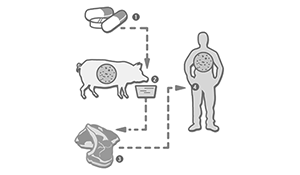

Antibiotic overuse is a contributing factor to the creation of multidrug-resistant bacteria, informally called ‘super bugs’: relatively harmless bacteria can develop resistance to multiple antibiotics and cause life-threatening infections. Though antibiotics are required to treat severe bacterial infections, misuse has contributed to a rise in bacterial resistance. The overuse of fluoroquinolone (a family of antibiotics) and other antibiotics fuels antibiotic resistance in bacteria, which can inhibit the treatment antibiotic-resistant infections. Their excessive use in children with otitis media (ear infection) has given rise to a breed of bacteria resistant to antibiotics entirely.
Widespread use of fluoroquinolones as a first-line antibiotic has led to decreased antibiotic sensitivity, with negative implications for serious bacterial infections such as those associated with cystic fibrosis, where quinolones are among the few viable antibiotics. Antibiotics have no effect on viral infections such as the common cold. They are also ineffective against sore throats, which are usually viral and self-resolving. Most cases of bronchitis (90–95%) are viral as well, passing after a few weeks—the use of antibiotics such as ofloxacin against bronchitis is superfluous and can put the patient at risk of suffering adverse reactions.
read more »
Posted in Drugs, Food, Health |
Leave a Comment »
April 9, 2012

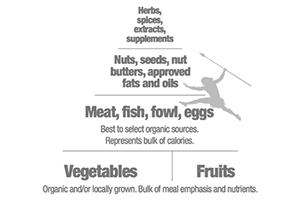
Food faddism refers to idiosyncratic diets and eating patterns that promote short-term weight loss, usually with no concern for long-term weight maintenance, which enjoy temporary popularity. The term ‘food fad’ may also be used with a neutral connotation to describe the short term popularity among restaurants and consumers of an ingredient, dish, or preparation technique.
‘Fad diet’ is a term of popular media, not science. Some so-called fad diets may make pseudo-scientific claims, but others labeled ‘fad’ are based on science. According to one definition, fad diets claim to be scientific but do not follow the scientific method in establishing their validity. Among the scientific shortcomings of the claims made in support of fad diets: not being open to revisions, whereas real science is; and observations that prompt explanations are used as evidence of the validity of the explanation.
read more »
Posted in Food, Health, Money |
Leave a Comment »
April 9, 2012

Yo-yo dieting, also known as ‘weight cycling,’ is a term coined by Kelly D. Brownell, Ph.D., at Yale University. In this process, the dieter is initially successful in the pursuit of weight loss but is unsuccessful in maintaining the loss long-term and begins to gain the weight back. The dieter then seeks to lose the regained weight, and the cycle begins again.
The reasons for yo-yo dieting are varied but often include embarking upon a hypocaloric diet that was initially too extreme. At first the dieter may experience elation at the thought of their rejection of food. Over time, however, the limits imposed by such extreme diets cause effects such as depression or fatigue that make the diet impossible to sustain. Ultimately, the dieter reverts to their old eating habits, now with the added emotional effects of failing to lose weight by restrictive diet. Such an emotional state leads many people to eating more than they would have before dieting, causing them to rapidly regain weight.
Posted in Food, Health |
Leave a Comment »
March 26, 2012

Fishing with John is a 1991 television series conceived, directed by and starring actor and musician John Lurie, which earned a cult following. On the surface, the series resembles a standard travel or fishing show: in each episode, Lurie takes a famous guest on a fishing expedition.
Since Lurie has no expert knowledge of fishing, the interest is in the interaction between Lurie and his guests, all of whom are his friends. Nothing particularly unusual actually happens, but the show is edited and narrated in a way to suggest that Lurie and his guest are involved in dramatic and even supernatural adventures. Guests included Jim Jarmusch, Matt Dillon, Tom Waits, Willem Dafoe, and Dennis Hopper. Each episode has voice-over narration by Robb Webb, which is sometimes bizarre and off-topic. The soundtrack is by Lurie, with several guest performers.
Posted in Food, Games, Humor |
1 Comment »
March 23, 2012
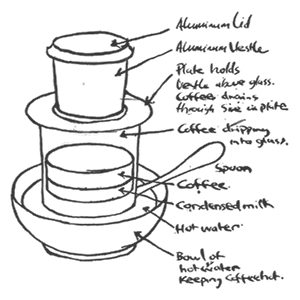
Vietnamese iced coffee is known as ‘Ca phe da.’ When milk is added it is called, ‘ca phe sua da.’ In northern Vietnam it is called ‘ca phe nau da’ (‘iced brown coffee). In its simplest preperation, Ca phe da is made with finely ground Vietnamese-grown dark roast coffee individually brewed with a small metal French drip filter (ca phe phin) into a cup containing about a quarter to a half as much sweetened condensed milk, stirred and poured over ice. Coffee was introduced into Vietnam by French colonists in the late 19th century. Vietnam quickly became a strong exporter of coffee with many plantations in the central highlands. The beverage was adopted with regional variations. Because of limitations on the availability of fresh milk, the French and Vietnamese began to use sweetened condensed milk with a dark roast coffee.
Vietnamese-Americans introduced the practice of adding chicory to coffee, and many Americans today believe that all true Vietnamese coffee contains chicory. One brand that uses chicory is Cafe du Monde, often cited as the coffee to use when brewing Vietnamese iced coffee. However, Cafe du Monde originated in New Orleans, and chicory coffee is an American phenomenon. In Vietnam, coffee is never served with chicory. Vietnamese brands such as Trung Nguyen or Indochine Coffee, both of which are headquartered in Vietnam and offer exclusively coffee grown in the central highlands.
Posted in Food, World |
Leave a Comment »
March 19, 2012

Banana republic is a pejorative name for a country which has an unstable government, high corruption and which largely depends on agriculture, such as growing bananas. There are subject to frequent coups. The ‘original Banana republic is Honduras. In the early 20th century the United Fruit Company had much influence in the country, even deposing a president and installing a new one over taxes.
The first known use of the term was by American author O. Henry in his 1904 book of linked short stories, ‘Cabbages and Kings.’ The book is based on Henry’s 1896-97 stay in Honduras, while hiding from federal authorities for embezzlement in the United States. O.Henry used the term to refer to a ‘servile dictatorship’ which directly supported large-scale plantation agriculture in return for payments or gifts.
read more »
Posted in Food, Money, Politics |
Leave a Comment »
March 17, 2012

‘Boneless lean beef trimmings,’ occasionally referred to as pink slime, are made from meat trimmings passed through a centrifuge then squeezed through a tube the size of a pencil, during which time it is exposed to ammonia gas. The combination of the gas with water in the meat results in a reaction that increases the pH (lowering acidity) and killing any pathogens such as E. coli. At the end of the process, the beef is at least 90 percent lean.
The typical beef production process results in beef trimmings, consisting of fat and meat, that frequently had been cooked down to recover the oils from the trim because it was not profitable to otherwise separate the meat from the trimmings. However, today much of these beef trimmings are sent as USDA-approved cuts of meat to special separation plants, where centrifuges separate the beef from the fat. The production process was pioneered by Eldon Roth, who in the 1980s founded Beef Products Inc.
Posted in Food, Health, Money |
Leave a Comment »
March 12, 2012

Slingshot is a water purification device created by Dean Kamen. Powered by a stirling engine running on a combustible fuel source, it claims to be able to produce clean water from almost any source. The device takes contaminated water and runs it through a vapor compression distiller that produces clean water, producing 250 gallons daily, enough for 100 people. The test devices have been used with ‘anything that looks wet,’ including polluted river water, saline ocean water, and raw sewage. In a demonstration at a technology conference in 2004, Kamen ran his own urine through the machine and drank the clean water that came out.
A pair of Slingshot devices ran successfully for a month in a village in Honduras during the summer of 2006. While the initial devices cost hundreds of thousands of dollars, Kamen hopes that increased economies of scale will allow production machines to be made available for $2,000 each. The Slingshot process operates by means of vapor compression distillation, requires no filters, and can operate using cow dung as fuel. In addition to producing drinkable water, the Slingshot also generates enough electricity to light 70 energy-efficient light bulbs.Kamen hopes to seed thousands of the units with local village entrepreneurs, in much the same way independent cell phone businesses have thrived and gradually changed the face of many impoverished areas around the globe.
Posted in Food, Technology, World |
Leave a Comment »
March 12, 2012

BarCraft is a portmanteau name for watching ‘StarCraft’ at bars. This phenomenon popped up in the spring of 2011 in the United States, with the start of North American Star League. It is often attributed to Team Liquid user ‘primadog,’ the redditor ‘_Oskar,’ and the Chao Bistro in Seattle. In May 2011, the user o_Oskar posted a topic on reddit saying that on the 11th of that month, people could go to Chao in Seattle to watch that day’s North American Star League games while drinking a few beers and enjoying the company of other ‘StarCraft’ fans.
Since then, the BarCraft phenomenon has grown exponentially, with BarCrafts in the United States, Canada, Sweden, Australia, and many more countries around the world, covering a variety of eSports events, not just StarCraft. New initiatives have recently sprouted from the barcraft trend. Namely, barcrafts have been used to raise money for the charity Child’s Play. Additionally, while not a charity in the strictest sense, One Nation of Gamers -a network of barcrafts composed of volunteers- pools all the money they raise to fund online starcraft tournaments for the community to watch.
Posted in Drugs, Food, Games |
1 Comment »
March 10, 2012

A meat analogue, also called a meat substitute, mock meat, faux meat, or imitation meat, approximates the aesthetic qualities (primarily texture, flavor, and appearance) and/or chemical characteristics of specific types of meat. Many analogues are soy-based (e.g. tofu, tempeh). Generally, meat analogue is understood to mean a food made from non-meats, sometimes without other animal products such as dairy. The market for meat imitations includes vegetarians, vegans, and people following religious dietary laws, such as Kashrut or Halal. Hindu cuisine features the oldest known use of meat analogues. Meat analogue may also refer to a meat-based and/or less-expensive alternative to a particular meat product, such as surimi (a fish slurry used to make products such as imitation crab meat).
Some vegetarian meat analogues are based on centuries-old recipes for seitan (wheat gluten), rice, mushrooms, legumes, tempeh, or pressed-tofu, with flavoring added to make the finished product taste like chicken, beef, lamb, ham, sausage, seafood, etc. Yuba is another soy-based meat analogue, made by layering the thin skin which forms on top of boiled soy milk. Some more recent meat analogues include textured vegetable protein (TVP), which is a dry bulk commodity derived from soy, soy concentrate, mycoprotein-based Quorn which uses egg white as a binder making them unsuitable for vegans, and modified defatted peanut flour.
Posted in Food, Money, Philosophy |
2 Comments »
March 8, 2012

Obesogens are foreign chemical compounds that disrupt normal lipid metabolism, which can lead to obesity.
Obesogens are functionally defined as chemicals that inappropriately alter lipid homeostasis and fat storage, change metabolic setpoints, disrupt energy balance, or modify the regulation of appetite and satiety to promote fat accumulation and obesity. The term obesogen was coined by Bruce Blumberg of UC, Irvine. The topic of this proposed class of chemical compounds and how to counteract their effects is explored at length in the book ‘The New American Diet.’
Posted in Drugs, Food, Health |
1 Comment »
February 28, 2012

Competitive eating is a sport in which participants compete against each other to consume large quantities of food in a short time period. Contests are typically less than 15 minutes in length, with the person consuming the most food being declared the winner. Competitive eating is most popular in the United States and Japan, where organized professional eating contests often offer $10,000 or more in prize money. Competitive eaters are sometimes known as ‘gurgitators,’ a word used by those close to the sport and an assumed opposite of regurgitation.
The chief criticism of competitive eating is the message the gluttonous sport sends in an age of rising obesity levels among Americans and the example it sets for today’s youth. Others contend that competitive eating is an example of Western gluttony at a time when others around the world are starving. Gastroparesis, also known as stomach paralysis, is also a concern among those who routinely stretch their stomachs beyond capacity. The condition may lead to the stomach’s inability to contract and lose its ability to empty itself.
read more »
Posted in Food, Games, Health |
Leave a Comment »


 The Daily Omnivore