October 27, 2011

Cocacolonization is a term that refers to globalization or cultural colonization. It is a portmanteau of the name of the multinational soft drink maker Coca-Cola and the word colonization. The term is used to imply either: the importation of Western (particularly American) goods; or, an invasion by Western and especially American cultural values that threatens local culture. While it is possible to use the term benignly, it has been used pejoratively to liken globalization to Westernization or Americanization.
In explaining the role of Coca-Cola as a universal influence of the ‘American way’ in the Cold War period, scholar Richard Kuisel states, ‘Perhaps no commercial product is more thoroughly identified with the United States… Coca Cola was fast becoming a universal drink.’ The dangers of cocacolonization were evoked after World War II by the French press, which regarded Coca-Cola as an American affront to the French culture. A typical cold war joke stated that, following the moon landing, the USSR leapfrogged the U.S. by painting the moon red, whilst the U.S. retaliated by going back and writing Coca-Cola in white on the red background. Seen as ‘too American’ for Communists, Pepsi was the main exported soft drink to Europe for much of the Cold War.
read more »
Posted in Food, Money, World |
Leave a Comment »
October 15, 2011

Nocturnal Sleep-Related Eating Disorder (NSRED), also known as sleep eating or somnambulistic eating, is a combination of a parasomnia (sleep disorders) and an eating disorder. It is a category within somnambulism (sleepwalking) that includes behaviors connected to a person’s conscious wishes or wants. Thus many times NSRED is a person’s fulfilling of their conscious wants that they suppress; however, this disorder is difficult to distinguish from other similar types of disorders. NSRED is closely related to Night Eating Syndrome (NES) except for the fact that those suffering from NES are completely awake and aware of their eating and bingeing at night while those suffering from NSRED are sleeping and unaware of what they are doing. Both disorders have a common occurrence of approximately one to five percent of adults, and have been predominantly found in women, with a young adult onset.
Typical behaviors include: ‘Partial arousals from sleep, usually within 2 to 3 hours of sleep onset, and subsequent ingestion of food in a rapid or ‘out of control’ manner.’ Sleep eaters also attempt to eat bizarre amalgamations of foods and even potentially harmful substances such as glue, wood, or other toxic materials. Paatients eat sweets, pastas, both hot and cold meals, improper substances such as ‘raw, frozen, or spoiled foods; salt or sugar sandwiches; buttered cigarettes; and odd mixtures prepared in a blender.’ Some eat their food with their bare hands while others attempt to eat it with utensils. This occasionally results in injuries to the person as well as other injuries.
Posted in Food, Health |
1 Comment »
October 10, 2011

A beer koozie [koe-zie] is a fabric or foam device that is designed to insulate a beverage can or bottle. It began as a marketing tool. The primary use of a beer koozie is to keep one’s hand warm while keeping the beer cold.
A secondary use of a beer koozie is to easily identify one’s beverage from another. Many different companies have used the koozie as a promotional giveaway because it is not only inexpensive to manufacture, but its frequent use is more likely to bring the company’s name to a household presence. Originally this logo or image was screen-printed on a round foam cylinder with a foam base (generally a hole is provided in the base to alleviate creation of a vacuum). A koozie can be made from many materials like neoprene, polyester or open cell foam.
Posted in Food, Language, Money |
1 Comment »
October 7, 2011
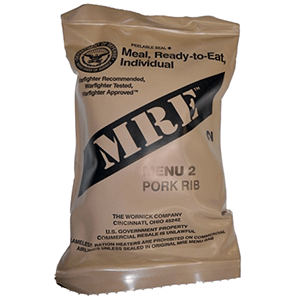
The Meal, Ready-to-Eat — commonly known as the MRE — is a self-contained, individual field ration in lightweight packaging bought by the United States military for its service members for use in combat or other field conditions where organized food facilities are not available.
General contents may include: entree, side dish, dessert or snack (often commercial candy, fortified pastry, or HOOAH! Bar), crackers or bread, spread of cheese, peanut butter, or jelly, powdered beverage mix (fruit flavored drink, cocoa, instant coffee or tea, sport drink, or dairy shake), utensils (usually just a plastic spoon), flameless ration heater, deverage mixing bag, sugarless chewing gum, water-resistant matchbook, napkin and moist towelette, and seasonings (salt, pepper, sugar, creamer, and/or Tabasco sauce).
read more »
Posted in Food, War |
Leave a Comment »
September 22, 2011

Michelada [mee-cha-lah-dah] is a cerveza preparada, a Mexican term for beer mixed with tomato juice, hot sauce, or salsa. In English-speaking countries, it would be considered a variety of shandy (a beer mixed with soda, carbonated lemonade, or cider. The Michelada is made with beer, tomato juice (or Clamato), lime juice, and assorted sauces, spices, and peppers. It is served in a chilled, salt-rimmed glass.
In Mexico, Micheladas are considered a good remedy for hangovers.There are different types of variations of Micheladas; for example in Mexico City, the most common form of a Michelada is prepared with beer, lime, salt, and hot sauce/or chili. Some add slices of orange.
read more »
Posted in Food, World |
2 Comments »
September 12, 2011

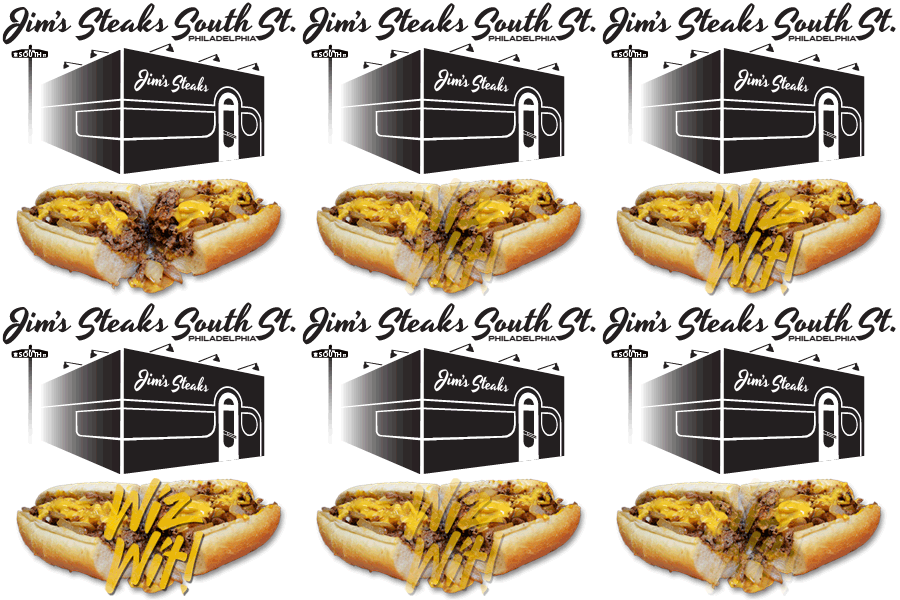
A cheesesteak, also known as a Philly cheesesteak or a steak and cheese, is a sandwich made from thinly sliced pieces of steak and melted cheese in a long roll. A popular regional fast food, it has its roots in the city of Philadelphia. The cheesesteak was developed in the early 20th century ‘by combining frizzled beef, onions, and cheese in a small loaf of bread,’ according to the Historical Society of Pennsylvania.
Philadelphians Pat and Harry Olivieri are often credited with inventing the sandwich by serving chopped steak on hoagie rolls in the early 1930s. They began selling this variation of steak sandwiches at their hot dog stand near south Philadelphia’s Italian Market. They became so popular that Pat opened up his own restaurant which still operates today as Pat’s King of Steaks at the intersection of 9th Street and Passyunk Avenue in South Philly.
read more »
Posted in Food |
Leave a Comment »
September 12, 2011
Cheez Whiz is a thick processed cheese sauce or spread sold by Kraft Foods. It was developed by a team led by food scientist Edwin Traisman and was first marketed in 1953. The bright orange, viscous paste usually comes in a glass jar and is used as a topping for celery, cheesesteaks, corn chips, hot dogs and other foods. It is marketed in Canada, México, the Philippines, the United States and Venezuela.
Cheez Whiz is one of a number of ‘processed cheese foods,’ a category including some types of individually-wrapped cheese slices. These products contain regular cheese that has been reprocessed along with additional ingredients such as emulsifiers and stabilizing agents, such as xanthan gum or carrageenan. These products derive their tanginess and flavor from additional ingredients such as citric acid and flavoring compounds. Annatto is used for coloring. In some markets, the product has been sold in a narrow jar that tapered towards the base when sold as a spread. When Cheez Whiz is advertised as a dip or a sauce, the jars are larger and more of a squat cylindrical shape.
Posted in Food, Money |
Leave a Comment »
September 12, 2011

Easy Cheese is the trademark for a processed cheese product distributed by Kraft Foods, also referred to as aerosol cheese or spray cheese, and is a descendant of squeeze cheese (a semi-solid cheesefood from the 1970s packaged in a squeezable plastic tube). It comes packaged in a spray can, much like canned whipped cream and does not require refrigeration. Easy Cheese contains milk, water, whey protein concentrate, canola oil, milk protein concentrate, sodium citrate, sodium phosphate, calcium phosphate, lactic acid, sorbic acid, sodium alginate, apocarotenal, annatto, cheese culture, and enzymes.
Although sometimes called ‘aerosol cheese,’ its container is not actually an aerosol spray can. Rather, the can contains a piston and a barrier plastic cap which squeezes the cheese through the nozzle in a solid column when the nozzle is pressed and the propellant expands in volume. The propellant, therefore, does not mix with the cheese. This explains why the can has a small rubber plug on its base. The can design also ensures that the cheese can be dispensed with the can upright or inverted.
Posted in Food, Money, Technology |
Leave a Comment »
September 12, 2011


Processed cheese is a food product made from normal cheese and sometimes other unfermented dairy ingredients, plus emulsifiers, extra salt, food colorings, or whey. Many flavors, colors, and textures of processed cheese exist. In the United States, the most recognizable variety of processed cheese is sold under the name American cheese, although this name also has other meanings. The Laughing Cow is an example of processed cheese.
Although processed cheese was first invented in 1911 by Walter Gerber of Thun, Switzerland, it was James L. Kraft who first applied for an American patent for his method in 1916. Kraft Foods also created the first commercially available sliced processed cheese, which was introduced in 1950. This form of sliced cheese and its derivatives have become commonplace in the United States, most notably used for cheeseburgers and grilled cheese sandwiches.
read more »
Posted in Food, Health, Money |
Leave a Comment »
September 12, 2011

Kraft Singles is a processed ‘cheese product’ manufactured and sold by Kraft Foods, introduced in 1949. Although processed cheese was first invented in 1911 by Walter Gerber of Thun, Switzerland, it was James L. Kraft who first applied for an American patent for his method in 1916. Kraft Foods also created the first commercially available sliced processed cheese, which was introduced in 1950.
One of the more famous ad campaigns in the 1980s claimed that each ¾ ounce slice contained ‘five ounces of milk’ (with milk being poured into a glass next to Kraft Singles), which makes them taste better than imitation cheese slices made mostly with vegetable oil and water (with oil being poured into a glass next to imitation cheese) and hardly any milk. The campaign was lambasted for its implications that each slice contained the same amount of calcium as a five ounce glass of milk and also more calcium than imitation cheese slices, which eventually led to a ruling by the Federal Trade Commission in 1992 that ordered Kraft to stop making false claims in its advertising. Kraft removed the ads, but continues to taut the use of milk in its ‘cheese products.’
Posted in Food, Money, Politics |
Leave a Comment »
September 12, 2011
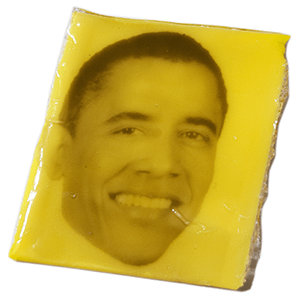
American cheese is a processed cheese, mild in flavor, with a medium-firm consistency, which melts easily. It was originally only white in color, but is usually now darkened to yellow or orange, typically with annatto, a natural food coloring.
At one time it was made from a blend of cheeses, most often Colby and Cheddar, but today’s American cheese is typically manufactured from raw ingredients, such as milk, whey, milkfat, milk protein concentrate, whey protein concentrate, and salt. In many jurisdictions, it does not meet the legal definition of cheese and must be labeled as ‘cheese analogue,’ ‘cheese product,’ ‘processed cheese,’ or similar and is commonly referred to as ‘plastic cheese’ or ‘burger cheese’ in the UK.
read more »
Posted in Food, Money, World |
1 Comment »
September 11, 2011

Placentophagy [pluh-sen-tof-uh-jee] is the act of mammals eating the placenta of their young after childbirth. The placenta contains high levels of prostaglandin which stimulates shrinking or return to a former size of the uterus. The placenta also contains small amounts of oxytocin which eases birth stress and causes the smooth muscles around the mammary cells to contract and eject milk. Although the placenta is revered in many cultures, very few customarily eat the placenta after the newborn’s birth. Those who advocate placentophagy in humans believe that eating the placenta prevents postpartum depression and other pregnancy complications. The Royal College of Obstetricians and Gynaecologists states that there is no medical reason to eat the placenta: ‘Animals eat their placenta to get nutrition – but when people are already well-nourished, there is no benefit, there is no reason to do it.’ Human placenta has also been an ingredient in some traditional Chinese medicines.
There is a school of thought that holds that placentophagy naturally occurred to hide any trace of childbirth from predators in the wild, though the fact that amniotic fluid is not similarly ingested by the mother seems to discredit this theory. Most placental mammals participate in placentophagy, including, surprisingly, herbivorous ones. Whales and seals are exceptions to mammalian placentophagy, as is the camel. Marsupials (pouched mammals) resorb rather than deliver the placenta, and therefore cannot engage in placentophagia; they do, however, vigorously lick birth fluids as they are excreted.
Posted in Food, Health |
1 Comment »



 The Daily Omnivore