August 11, 2013
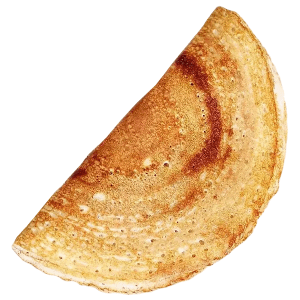
Dosa [doh-sa] is a fermented Indian crepe or pancake made from rice batter and black lentils. This staple dish is widely popular in southern Indian states, as well as other countries like Sri Lanka and Singapore. ‘The Story of our Food,’ a book written by K. T. Achaya, an eminent Indian food scientist and food historian, states that foods like Appam, Idiyappam, Dosai and Adai were already known in Tamil country around 1st century CE, as per references in Tamil Sangam literature. It is a common breakfast dish and street food, served hot, either folded in half or rolled like a wrap.
Dosa can be stuffed with fillings of vegetables and sauces to make a quick meal. They are typically served with a vegetarian side dish which varies according to regional and personal preferences. Though dosa typically refers to the version made with rice and lentils, many other versions exist, often specific to an Indian region. Some variations include egg dosa, which is spread with an omelette, and cheese dosa, which is stuffed with cheese. Masala dosa is dosa wrapped around an onion and potato curry or sabji (cauliflower with peas and carrots) originally invented by Udupi Hotels.
Posted in Food, World |
Leave a Comment »
August 4, 2013
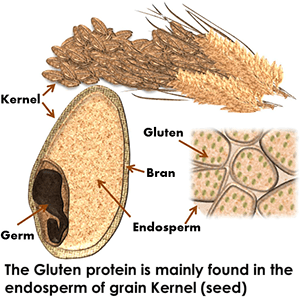
A gluten-free diet is a diet that excludes foods containing gluten. Gluten is a protein complex found in wheat (including ancient varieties: kamut and spelt), barley, rye, and triticale (a wheat/rye hybrid). A gluten-free diet is the only medically accepted treatment for celiac disease (an autoimmune disorder of the small intestine that occurs in genetically predisposed people of all ages).
Being gluten intolerant can often mean a person may also be wheat intolerant as well as suffer from the related inflammatory skin condition dermatitis herpetiformis (chronic blistering). A smaller minority of people who suffer from wheat intolerance alone are tolerant to gluten. Despite unknown benefits for the general population, and evidence to suggest adverse effects, a significant demand has developed for gluten-free food in the United States.
read more »
Posted in Food, Health |
Leave a Comment »
July 15, 2013

Slim Jim is a brand of jerky snacks or dried sausage manufactured by ConAgra Foods, Inc., the food conglomerate based in Omaha. They are popular in the United States. More than 500 million are produced annually in at least 20 varieties.
The Slim Jim itself has been transformed in the years since Adolph Levis invented it in 1928. He sold the company in 1967 for about 20 million dollars to General Mills, who moved the operations to Raleigh, N.C., and merged them into other meatpacking operations that it renamed Goodmark Foods. It sold Goodmark in 1982 to a group led by Ron Doggett, who sold it to ConAgra in 1998.
read more »
Posted in Food, Humor |
Leave a Comment »
July 12, 2013

A tater tot is a side dish made from deep-fried, grated potatoes. They are widely recognized by their crispness and cylindrical shape. Tater Tots is a registered trademark of Ore-Ida (a division of the HJ Heinz Company), which has become genericized.
The product was created in 1953 when Ore-Ida founders F. Nephi Grigg and Golden Grigg were trying to figure out what to do with leftover slivers of cut-up potatoes, which at the time was being sold to feed livestock at low margins. They chopped up the slivers, added flour and seasoning, then pushed the mash through holes and sliced off pieces of the extruded mixture. The product was first offered in stores in 1956.
read more »
Posted in Food |
Leave a Comment »
June 14, 2013

‘Catching Fire: How Cooking Made Us Human‘ (2009) is a book by British primatologist Richard Wrangham forwarding the hypothesis that cooking food was an essential element in the physiological evolution of human beings.
Humans are the only species that cook their food and Wrangham argues Homo erectus emerged about two million years years ago as a result of this unique trait. Cooking had profound evolutionary effect because it increased food efficiency by permitting human ancestors to spend less time foraging, chewing, and digesting. H. erectus developed via a smaller, more efficient digestive tract which freed up energy to enable larger brain growth.
read more »
Posted in Food, Health, Science |
1 Comment »
June 4, 2013
Nathan Myhrvold (b. 1959), formerly Chief Technology Officer at Microsoft, is co-founder and 40% owner of Intellectual Ventures, a patent portfolio holding company.
Myhrvold, usually with coinventors, holds 17 U.S. patents assigned to Microsoft and has applied for more than 500 patents. In addition, Myhrvold and coinventors hold 115 U.S. patents assigned mostly to The Invention Science Fund I, LLC.
read more »
Posted in Food, Money, Technology |
Leave a Comment »
May 20, 2013

Michael Moss was awarded the Pulitzer Prize for explanatory reporting in 2010, and was a finalist for the prize in 2006 and 1999. He is also the recipient of a Loeb Award and an Overseas Press Club citation.
Before coming to ‘The New Times,’ he was a reporter for ‘The Wall Street Journal,’ ‘New York Newsday,’ and ‘The Atlanta Journal-Constitution.’ He has been an adjunct professor at the Columbia School of Journalism and currently lives in Brooklyn with his wife and two sons.
Posted in Food, Health, Money |
1 Comment »
May 12, 2013

The word ‘tomato‘ may refer to the plant (Solanum lycopersicum) or the edible, typically red, fruit that it bears. Having originated in America, the tomato was spread around the world following the Spanish colonization of the Americas, and its many varieties are now widely grown, often in greenhouses in cooler climates.
The tomato is consumed in diverse ways, including raw, as an ingredient in many dishes and sauces, and in drinks. While it is botanically a fruit (a plant structure that contains its seeds), it is considered a vegetable for culinary purposes. The fruit is rich in lycopene (a carotene), which may have beneficial health effects.
read more »
Posted in Food, Language, World |
Leave a Comment »
May 6, 2013

An espresso machine is used to produce a traditional Italian espresso, a concentrated coffee drink served in small portions (shots). The first machine for making espresso was built and patented by Angelo Moriondo, who demonstrated a working example at the Turin General Exposition of 1884. He patented his invention that year as a: ‘New steam machinery for the economic and instantaneous confection of coffee beverage.’
In 1901, Luigi Bezzera of Milan patented improvements to the machine; four years later, the patent was bought by Desiderio Pavoni who founded the ‘La Pavoni’ company and began to produce the machine commercially (one a day) in a small Milanese workshop.
read more »
Posted in Food, Technology |
Leave a Comment »
April 30, 2013

McDonaldization is a term used by sociologist George Ritzer in his book ‘The McDonaldization of Society’ (1993). He explains it occurs when a culture possesses the characteristics of a fast-food restaurant.
McDonaldization is a reconceptualization of rationalization (moving from an ad-hoc system into one that is based on a set of published rules). Where German political economist Max Weber used the model of the bureaucracy to represent the direction of this change in society, Ritzer sees the fast-food restaurant as having become a more representative contemporary paradigm.
read more »
Posted in Food, Money, World |
2 Comments »
April 29, 2013

The Red Delicious is a clone of apple cultigen, now comprising more than 50 cultivars, that was recognized in Madison County, Iowa in 1880. As new cultivars with improved color and earlier harvestability have replaced the original cultivar in commercial orchards, the taste and texture of the harvested commodity have deteriorated, and many customers have begun to reject the Red Delicious at markets.
Apple expert, Roger Yepsen notes some of the Red’s less desirable qualities: ‘The skin is thick and bitter and has to be chewed vigorously… this apple ranks close to the bottom when cooked… sold year round, so shop with skepticism. Delicious retains its cheerful good looks long after its flavor has departed.’
read more »
Posted in Food, Money, Science |
Leave a Comment »
April 21, 2013
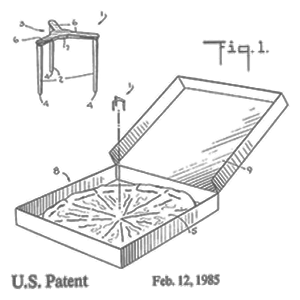
A pizza saver is a device used to prevent the top of a food container, such as a pizza box or cake box, from collapsing in at the center and touching the food inside. A pizza saver is made of plastic and has three (sometimes four) legs. They are often white, and the common practice is to place one pizza saver in the center of the pizza before the box lid is closed for delivery.
The pizza saver is not re-used and is thrown away or recycled by the patron, although some people have found secondary uses for them such as egg holders when turned upside down.
read more »
Posted in Food, Money, Technology |
Leave a Comment »



 The Daily Omnivore