January 24, 2026

The Highest Court in the Land is the basketball court located on the fifth floor of the United States Supreme Court Building. The Supreme Court of the United States is nicknamed the ‘highest court in the land’ because it is the highest court in the federal judiciary of the United States, and the basketball court is located on a higher floor than the courtroom where the Supreme Court meets, hence the basketball court’s nickname.
While Supreme Court law clerks regularly play on the court, it is less common for the justices to do so. The first justice to play basketball on the court was Byron White, according to fellow justice Sandra Day O’Connor.
read more »
Posted in Games, Politics |
1 Comment »
February 13, 2025
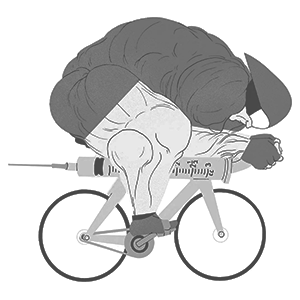
The Enhanced Games is a planned international sports event where the athletes will not be subject to drug testing. It is headed by Aron D’Souza, an Australian businessman. The event is meant to take place in 2025. Reactions from the sporting world have been generally negative, with commentators highlighting the safety risks of encouraging performance-enhancing drug use. Critics have dubbed it the Steroid Olympics. Some of the prominent investors in the Enhanced Games include Peter Thiel, Balaji Srinivasan, and Donald Trump Jr.
The event is intended to be annual and to include track and field, swimming, weightlifting, gymnastics, and combat sports.
read more »
Posted in Drugs, Games, Health |
1 Comment »
January 26, 2025
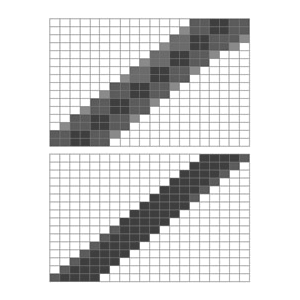
Deep learning super sampling (DLSS) is a family of real-time deep learning image enhancement and upscaling technologies developed by Nvidia that are available in a number of video games. The goal of these technologies is to allow the majority of the graphics pipeline to run at a lower resolution for increased performance, and then infer a higher resolution image from this that approximates the same level of detail as if the image had been rendered at this higher resolution. This allows for higher graphical settings and/or frame rates for a given output resolution, depending on user preference.
All generations of DLSS are available on all RTX-branded cards from Nvidia in supported titles. However, the frame generation feature is only supported on 40 series GPUs or newer and multi-frame generation is only available on 50 series GPUs. Nvidia has also introduced Deep learning dynamic super resolution (DLDSR), a related and opposite technology where the graphics are rendered at a higher resolution, then downsampled to the native display resolution using an artificial intelligence-assisted downsampling algorithm to achieve higher image quality than rendering at native resolution.
read more »
Posted in Games, Technology |
Leave a Comment »
December 23, 2024
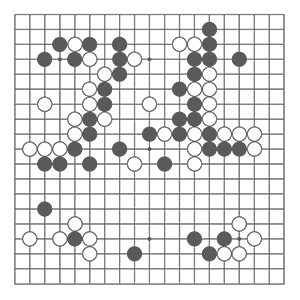
AlphaGo versus Lee Sedol, also known as the DeepMind Challenge Match, was a five-game Go match between top Go player Lee Sedol and AlphaGo, a computer Go program developed by DeepMind, played in Seoul, South Korea between 9 and 15 March 2016. AlphaGo won all but the fourth game; all games were won by resignation. The match has been compared with the historic chess match between Deep Blue and Garry Kasparov in 1997. Kasparov’s loss to Deep Blue is considered the moment a computer became better than humans at chess.
AlphaGo’s victory was a major milestone in artificial intelligence research. Most experts thought a Go program as powerful as AlphaGo was at least five years away; some experts thought that it would take at least another decade before computers would beat Go champions. Most observers at the beginning of the 2016 matches expected Lee to beat AlphaGo. With games such as checkers, chess, and now Go won by computer players, victories at popular board games can no longer serve as significant milestones for artificial intelligence in the way that they used to. Deep Blue’s Murray Campbell called AlphaGo’s victory ‘the end of an era… board games are more or less done and it’s time to move on.’
read more »
Posted in Drugs, Games, Technology |
1 Comment »
January 18, 2024
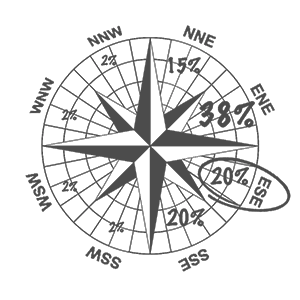
Crosswordese is the group of words frequently found in U.S. crossword puzzles but seldom found in everyday conversation. The words are usually short, three to five letters, with letter combinations which crossword constructors find useful in the creation of crossword puzzles, such as words that start and/or end with vowels, abbreviations consisting entirely of consonants, unusual combinations of letters, and words consisting almost entirely of frequently used letters. Such words are needed in almost every puzzle to some extent. Too much crosswordese in a crossword puzzle is frowned upon by cruciverbalists (people skillful in creating or solving crossword puzzles) and crossword enthusiasts.
The popularity of individual words and names of crosswordese, and the way they are clued, changes over time. For instance, ITO was occasionally clued in the 1980s and 1990s in reference to dancer Michio Itō and actor Robert Ito; then boomed in the late 1990s and 2000s with the rise of judge Lance Ito; and has since fallen somewhat, and when it appears today, the clue typically references figure skater Midori Ito or uses the partial phrase ‘I to’ (as in [‘How was ___ know?’]).
Posted in Games, Language |
1 Comment »
October 30, 2023
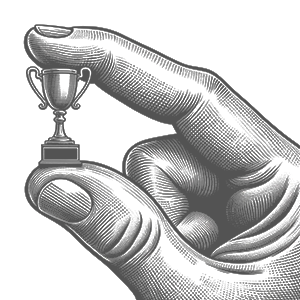
A participation trophy is a trophy given to children (usually) who participate in any sport event or contest without requiring their success in competition. The term may be used more generally as an example of the celebration of mediocrity or of emotional coddling. In this rhetorical context, it is frequently associated with millennials, those of Generation Y.
The use of participation trophies has caused some controversy. Critics argue that they promote narcissism and entitlement among children to whom they are given, and are based on incorrect assumptions regarding supposed psychological benefits of self-esteem. Critics also note that some children also do not value them as much as they do ‘normal’ trophies that are given to winners. Defenders of participation trophies argue that they teach children that trying their best is good enough, even if they do not win.
read more »
Posted in Games, Health, Politics |
Leave a Comment »
June 2, 2023

Gaming the system (also rigging, abusing, cheating, milking, playing, working, or breaking the system, or gaming or bending the rules) can be defined as using the rules and procedures meant to protect a system to, instead, manipulate the system for a desired outcome. Although the term generally carries negative connotations, gaming the system can be used for benign purposes in the undermining and dismantling of corrupt or oppressive organisations.
The first known documented use of the term ‘gaming the system’ is in 1975. According to James Rieley, a British advisor to CEOs and an author, structures in companies and organizations (both explicit and implicit policies and procedures, stated goals, and mental models) drive behaviors that are detrimental to long-term organizational success and stifle competition. For some, error is the essence of gaming the system, in which a gap in protocol allows for errant practices that lead to unintended results.
read more »
Posted in Games, Language |
Leave a Comment »
November 13, 2022

Tafheet (also known as hajwalah or Saudi drifting) is an Arab street racing subculture that involves repeatedly sliding around on a straight road at high speed, drifting sideways, and recovering with opposite lock, often with little or no concern for safety. It began in Saudi Arabia and United Arab Emirates in the 1970s. The cars are generally non-modifiedand are sometimes stolen or rented cars.
The technique does not involve recognized motorsport skills such as high-speed cornering using power slides. Many videos and compilations of the minor and horrific accidents that result are posted online.
read more »
Posted in Death, Games, World |
1 Comment »
October 16, 2022
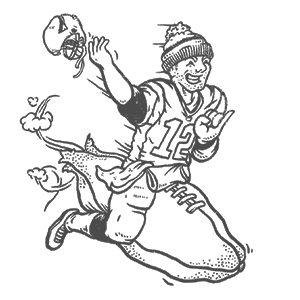
Deflategate was a National Football League (NFL) controversy involving the allegation that New England Patriots quarterback Tom Brady ordered the deliberate deflation of footballs used in the Patriots’ victory against the Indianapolis Colts during the 2014 AFC Championship Game on January 18, 2015. The controversy resulted in Brady being suspended for four games, while the team was fined $1 million and forfeited two draft selections in 2016.
Brady appealed but eventually agreed to sit out the first four games of the 2016 season, which concluded with the Patriots winning Super Bowl LI and Brady being named MVP. The season also saw the NFL change the procedure for monitoring football pressure.
read more »
Posted in Games, Politics |
Leave a Comment »
October 4, 2022

Everesting is an activity in which cyclists or runners ascend and descend a given hill multiple times, in order to have cumulatively climbed 8,848 meters (29,029 ft) (the elevation of Mount Everest).
The first event described as ‘Everesting’ was by George Mallory, grandson of George Mallory, who disappeared on Everest in 1924. The younger Mallory ascended Mount Donna Buang in 1994, having ridden eight ‘laps’ of the 1,069-meter hill. The format and rules were cemented by cyclist Andy van Bergen, inspired by the story of Mallory’s effort. In the first official group effort, van Bergen organized 65 riders, 40 of whom finished the Everesting attempt.
read more »
Posted in Games, Health |
Leave a Comment »
September 29, 2022
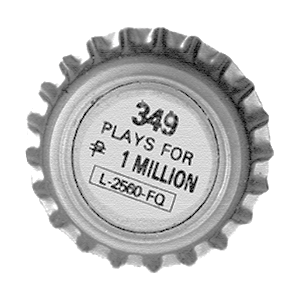
Pepsi Number Fever, also known as the 349 incident, was a promotion held by PepsiCo in the Philippines in 1992, which led to riots and the deaths of at least five people.
In February 1992, Pepsi Philippines (PCPPI) announced that they would print numbers, ranging from 001 to 999, inside the caps (crowns) of Pepsi, 7-Up, Mountain Dew, and Mirinda bottles. Certain numbers could be redeemed for prizes, which ranged from 100 pesos (about US$4) to 1 million pesos for a grand prize (roughly US$40,000 in 1992), equivalent to 611 times the average monthly salary in the Philippines at the time. Pepsi allocated a total of US$2 million for prizes. Marketing specialist Pedro Vergara based Pepsi Number Fever on similar, moderately successful promotions that had been held previously in Vergara’s geographic area of expertise, Latin America.
read more »
Posted in Death, Games, Money |
3 Comments »
July 28, 2022
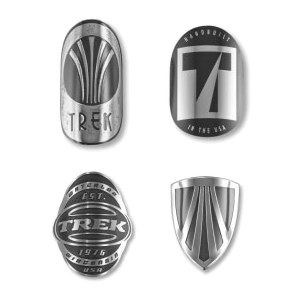
Trek Bicycle Corporation is a bicycle and cycling product manufacturer and distributor under brand names Trek, Electra Bicycle Company, Bontrager, and Diamant Bikes. The company has previously manufactured bikes under the Gary Fisher, LeMond Racing Cycles, Klein, and Villiger Bikes brand names.
With its headquarters in Waterloo, Wisconsin, Trek bicycles are marketed through 1,700 independently owned bicycle shops across North America, subsidiaries in Europe, Asia, South Africa, as well as distributors in 90 countries worldwide. Most Trek bicycles are manufactured outside the U.S. in countries including the Netherlands, Germany, Taiwan, and China.
read more »
Posted in Games, Money |
Leave a Comment »


 The Daily Omnivore