July 16, 2012

Slow parenting is a parenting style in which few activities are organized for children. Instead, they are allowed to explore the world at their own pace. It is a response to concerted cultivation and the widespread trend for parents to schedule activities and classes after school; to solve problems on behalf of the children, and to buy services from commercial suppliers rather than letting nature take its course.
The philosophy, part of the ‘Slow Movement,’ makes recommendations in play, toys, access to nature, watching television, and scheduled activities. The opposing view is that such children are disadvantaged because their parents do not provide as many learning opportunities.
read more »
Posted in Education, Games, Philosophy |
Leave a Comment »
July 9, 2012

The Bullingdon Club is a secret society dining club for exclusive students at Oxford University. The club has no permanent rooms and is notorious for its members’ wealth and destructive binges. Membership is by invitation only, and prohibitively expensive for most, given the need to pay for the uniform, dinners, and damages. The club was founded over 200 years ago. Originally it was a hunting and cricket club. This foundational sporting purpose is attested to in the Club’s symbol.
‘The Wisden Cricketer’ reports that the Bullingdon is ‘ostensibly one of the two original Oxford University cricket teams but it actually used cricket merely as a respectable front for the mischievous, destructive, or self-indulgent tendencies of its members.’ By the late 19th century, the present emphasis on dining within the Club began to emerge. ‘The Bullingdon Club dinners were the occasion of a great display of exuberant spirits, accompanied by a considerable consumption of the good things of life, which often made the drive back to Oxford an experience of exceptional nature.’
read more »
Posted in Education, Games, Money |
Leave a Comment »
July 9, 2012

Phoenix Wright: Ace Attorney is an adventure video game developed by Capcom. It was first released as ‘Gyakuten Saiban’ (literally ‘Turnabout Trial’) in Japan exclusively for the Game Boy Advance in 2001. The game stars Phoenix Wright, a rookie defense attorney in the Fey and Co. Law Offices, owned by fellow defense attorney Mia Fey. Other characters include Maya Fey, Mia’s sister; Miles Edgeworth, a rival prosecutor; Dick Gumshoe, a scatterbrained detective, and Larry Butz, an old friend of Phoenix’s.
The game features five court cases divided into episodes. Each case flips between two game modes: investigation and the actual trial. In the investigation aspect of the game, Phoenix gathers evidence and speaks to characters involved in the case. In the trial aspect of the game, Phoenix defends his client using said evidence, cross examines witnesses, and solves the mystery surrounding each case. The court perspective is usually in the third person, while the perspective outside of court is in the first person. Since the release of the Game Boy Advance version, the Ace Attorney series has produced many sequels and spin-offs, in a variety of formats including Nintendo’s WiiWare and Apple iOS.
Posted in Games, Politics, World |
Leave a Comment »
July 7, 2012


Prediction markets are speculative markets created for the purpose of making predictions; the current market prices can then be interpreted as predictions of the probability of the event or the expected value of the parameter. For example, a prediction market security might reward a dollar if a particular candidate is elected, such that an individual who thinks the candidate had a 70% chance of being elected should be willing to pay up to 70 cents for such a security.
People who buy low and sell high are rewarded for improving the market prediction, while those who buy high and sell low are punished for degrading the market prediction. Evidence so far suggests that prediction markets are at least as accurate as other institutions predicting the same events with a similar pool of participants.
read more »
Posted in Games, Money, Politics |
Leave a Comment »
June 26, 2012

Kappa is an Italian manufacturer of sports clothes and accessories, that started as a sock and underwear manufacturer in 1916 in Turin. Its logo, known as ‘Omini,’ is a silhouette of a man (left) and woman (right) sitting back to back in the nude. It was created in 1969 by mere accident.
After a photo shoot for a bathing suit advertisement, a man and a woman were sitting back-to-back, naked, with the outlines of their bodies traced by the back lighting. The photographers knew they had something, and the idea grew into what is now the logo, which symbolizes the mutual support between man and woman, and their completion.
Posted in Games, Money, World |
Leave a Comment »
June 26, 2012

Umbro is an English sportswear and football equipment supplier, and a subsidiary of Nike since 2008. Umbro designs, sources, and markets sport-related apparel, footwear, and equipment. Its products are sold in over 90 countries. The company was founded in 1924 by Harold Humphreys, along with his brother Wallace in a small workshop, inspired by the growing interest in football witnessed nationwide.
The word ‘Umbro’ is an acronym derived from Humphreys Brothers Clothing. Umbro’s major debut was in the 1934 FA Cup final, when both teams Manchester City and Portsmouth wore uniforms designed and manufactured by the company. Other teams supplied by Umbro during the 1930s and 1940s were Sheffield United and Preston North End, Manchester United, and Blackpool. In 1952, the British team at the Summer Olympics wore Umbro, tailored for the needs of their individual sports. Umbro would be a major supplier to the British Olympics team for the next 20 years.
read more »
Posted in Games, Money, World |
Leave a Comment »
June 26, 2012

Brine, Corp. is a US sporting goods manufacturer (lacrosse, soccer, volleyball, and field hockey equipment). It markets its products under its own brand as well as ‘In The Crease’ for goals and goal accessories. The company was founded by W.H. Brine in 1922 as the W.H. Brine Company. It was privately owned by the Brine family and named Brine, Inc. before it was acquired by New Balance in 2006.
It started as a small sports equipment and uniform company. They sold to private schools and regional camps, quickly growing to a major manufacturer of lacrosse and soccer equipment.
read more »
Posted in Games, Money, Technology |
1 Comment »
June 26, 2012

The Gatorade shower is a sports tradition that involves dumping a cooler full of liquid (most commonly Gatorade mixed with ice) over a coach’s (or occasionally star player or owner’s) head following a meaningful win, such as the Super Bowl. The tradition began with the New York Giants in the mid-1980s.
According to several sources, including Jim Burt of the Giants, in 1985, when the Giants beat the Washington Redskins 17-3, Burt dumped a cooler on Bill Parcells after being angry about the coach’s treatment of him that week. Burt insisted that Harry Carson dump the Gatorade on Parcells, because Carson was a favorite and wouldn’t get in trouble.
read more »
Posted in Food, Games, Humor |
Leave a Comment »
June 17, 2012

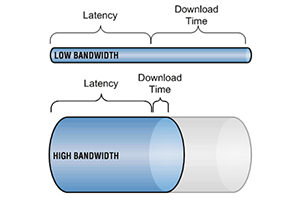
IBZL (Infinite Bandwidth Zero Latency) is a thought experiment that asks: what will happen when bandwidth (the maximum speed of a connection) is so great, and latency (delays) so small, that it no longer matters? What will be the applications and services that would most benefit from an IBZL connection to the Internet?
The IBZL program was started in the UK by the Open University (a distance learning and research university) and Manchester Digital (a digital media trade organization). ‘Infinite bandwidth’ and ‘zero latency’ are not meant literally; they are a shorthand for networks where bandwidth and latency cease to be limiting factors.
read more »
Posted in Games, Technology |
Leave a Comment »
June 6, 2012

The Neo Geo is an arcade system board and home video game console released in 1990 by Japanese game company SNK. The MVS (Multi Video System), as the Neo Geo was known to the coin-operated arcade game industry, offered arcade operators the ability to put up to six different arcade titles into a single cabinet, a key economic consideration for operators with limited floorspace.
With its games stored on self-contained cartridges, a game-cabinet could be exchanged for a different game-title by swapping the game’s ROM-cartridge and cabinet artwork. Several popular franchise-series, including ‘Fatal Fury,’ ‘The King of Fighters,’ ‘Metal Slug,’ and ‘Samurai Shodown,’ were released for the platform. The Neo Geo system was also marketed as a very costly home console, commonly referred to today as the AES (Advanced Entertainment System).
read more »
Posted in Games, Money, Technology |
Leave a Comment »
June 6, 2012

Sanwa Denshi (‘Three Harmonies Electronics Company’) is a general electronics manufacturer, but is best known internationally as a leading manufacturer of arcade parts; i.e. joysticks, buttons, coin feeds etc.
Its parts are commonly used in Japanese arcade machines and held in high regard by custom builders (especially in the fighting game community).
read more »
Posted in Games, Money, Technology |
Leave a Comment »
June 4, 2012
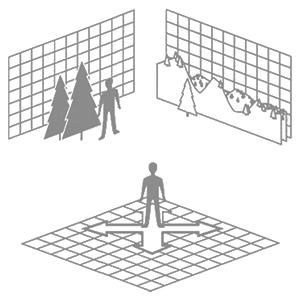
‘Ship in a Bottle‘ is a ‘Star Trek: The Next Generation’ episode (season six) where a sentient holodeck character, Professor James Moriarty, puts the Enterprise in jeopardy in his quest to be freed from confines of holographic environments.
Data and La Forge are enjoying a Sherlock Holmes holodeck program when the two notice that a character programmed to be left-handed was actually right-handed. They call Lt. Barclay to repair the holodeck, but as he checks the status of the Sherlock Holmes programs, he encounters an area of protected memory. He activates it to find the artificial sentient Professor James Moriarty character projected into the Holodeck, who appears to have memory since his creation (‘Elementary, Dear Data’ in season three: Geordi asks the holodeck to make a Sherlock Holmes villain that can defeat Data, creating a foe more powerful than originally planned).
read more »
Posted in Art, Games, Technology |
Leave a Comment »


 The Daily Omnivore