August 18, 2011
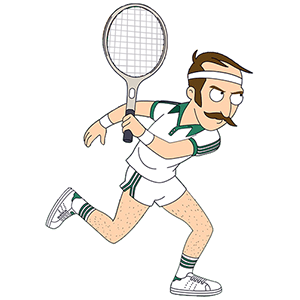
Adidas Stan Smith is a tennis shoe made by Adidas. Stan Smith was an American tennis star of the 1960s and ’70s. Adidas approached him in 1971 to endorse the Haillet shoe (designed for French tennis pro Jean-Louis Haillet). The shoe, usually made with a leather upper, has a simple design and unlike most of the Adidas range has no external stripes.
Instead there are three rows of perforations in the same pattern. There is a sketched picture of the tennis player on the tongue of the shoe. The brand is the biggest-selling tennis shoe ever.
Posted in Games, Money |
Leave a Comment »
August 16, 2011

In motorsports, homologation [huh-mol-uh-gey-shun] is the approval process a vehicle, race track or standardized part must go through to race in a given league or series. The regulations and rules that must be met are generally set by the series’ sanctioning body. The word is derived from the Greek homologeo—literally ‘same words’—for ‘agree.’ The names of the Ferrari 250 GTO, 288 GTO, Pontiac GTO, and Mitsubishi GTO, where ‘GTO’ stands for ‘Gran Turismo Omologato’ (‘Grand Touring, Homologated’), use the term explicitly.
In racing series that are ‘production-based’ (that is, the vehicles entered in the series are based on production vehicles for sale to the public), homologation requires not only compliance with a racing series’ technical guidelines (for example, engine displacement, chassis construction, suspension design and such) but it often includes minimum levels of sales to ensure that vehicles are not designed and produced solely for racing in that series. Since such vehicles are primarily intended for the race track, practical use on public roads is generally a secondary design consideration, so long as government regulations are met.
read more »
Posted in Games, Language, Money |
Leave a Comment »
August 14, 2011
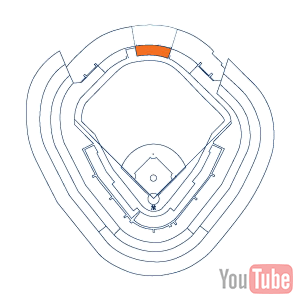
The batter’s eye is a solid-colored, usually dark area beyond the center field wall of a baseball stadium, that is the visual backdrop directly in the line of sight of a baseball batter, while facing the pitcher and awaiting a pitch. This dark surface allows the batter to see the pitched ball against a sharply contrasted and uncluttered background. Its primary purpose is the safety of the batter.
The use of a batter’s background has been standard in baseball (as well as cricket) since at least the late 19th century. The Batter’s Eye performs the same role at a baseball venue as the sightscreen does at a cricket venue, except that a cricket sightscreen is usually white in order to contrast with the dark red cricket ball. Alternatively a black screen is used to contrast the white Kookaburra Limited Overs cricket ball.
read more »
Posted in Games, Health |
Leave a Comment »
August 14, 2011

Cow tipping is the purported activity of sneaking up on a sleeping, upright cow and pushing it over for fun. As cattle do not sleep standing up, cow tipping is a myth. Cattle only rest while standing up, rather than sleeping that way, and they are easily disturbed.
Additionally, they represent over a half ton of weight that would easily resist a lesser tipping force. Horses, however, do regularly sleep standing up due to a locking mechanism of their stifle joint, a trait cows do not possess.
Posted in Games, Humor |
Leave a Comment »
August 14, 2011

‘Real-Life Superheroes‘ are men and women who, using the thematic device of the costumed superhero, perform services that benefit the community in a variety of ways. Some Real-Life Superheroes (RLSH) hand out supplies to the homeless, while others seek to directly combat crime through community patrols in which suspicious activity is identified and reported to the proper authorities, and some physically confront suspected perpetrators themselves.
Real life super heroes wear masks or otherwise disguise themselves in order to perform ‘heroic deeds’ like community services or fighting crime when they come across it. They are often similar to neighborhood watches or militias. Examples include Phoenix Jones and a team of nine others in the Rain City Superhero Movement.
Posted in Games, Humor, Politics |
Leave a Comment »
August 8, 2011

In psychogeography, a dérive is an unplanned journey through a landscape, usually urban, in which an individual travels where the subtle aesthetic contours of the surrounding architecture and geography subconsciously direct them with the ultimate goal of encountering an entirely new and authentic experience. Situationist theorist Guy Debord defines the dérive as ‘a mode of experimental behavior linked to the conditions of urban society: a technique of rapid passage through varied ambiances.’ He also notes that ‘the term also designates a specific uninterrupted period of dériving.’ The term is literally translated into English as ‘drift.’
The concept of the dérive has its origins in the Letterist International of the 1940s, an artistic and political collective based in Paris, where it was a critical tool for understanding and developing the theory of psychogeography, defined as the ‘specific effects of the geographical environment (whether consciously organized or not) on the emotions and behavior of individuals.’ The dérive, an unplanned tour through an urban landscape directed entirely by the feelings evoked in the individual by their surroundings, served as the primary means for mapping and investigating the psychogeography of these different areas.
read more »
Posted in Games, Science |
Leave a Comment »
August 3, 2011

The Acid Tests were a series of parties held by Ken Kesey in the San Francisco Bay Area during the mid 1960s, centered entirely around the use of, experimentation with, and advocacy of, the psychedelic drug LSD, also known as ‘acid.’ The name ‘Acid Test’ was coined by Kesey, after the term ‘acid test’ used by gold miners in the 1850s.
He advertised the parties with posters that read, ‘Can YOU Pass The Acid Test?,’ and the name was later popularized in Tom Wolfe’s 1968 book, ‘The Electric Kool-Aid Acid Test.’ Musical performances by the Grateful Dead were commonplace, along with black lights, strobe lights, and fluorescent paint. The Acid Tests are notable for their influence on the LSD-based counterculture of the San Francisco area and subsequent transition from the beat generation to the hippie movement.
Posted in Drugs, Games, Humor |
Leave a Comment »
August 2, 2011

Sky lanterns, also known as Kongming Lantern are airborne paper lanterns found in some Asian cultures. They are constructed from oiled rice paper on a bamboo frame, and contain a small candle or fuel cell composed of a waxy flammable material. When lit, the flame heats the air inside the lantern, thus lowering its density causing the lantern to rise into the air. The sky lantern is only airborne for as long as the flame stays alight, after which the lantern floats back to the ground.
According to popular lore, the Kongming Lantern was the first hot air balloon, said to be invented by the Chinese sage and military strategist Zhuge Liang, whose reverent term of address (i.e. Chinese style name) was Kongming. They were first deployed at the turn of the 3rd century as a type of signaling balloon or, it is claimed, as a type of spy blimp in warfare. Alternatively the name may come from the lantern’s resemblance to the hat Kongming is traditionally shown to be wearing.
read more »
Posted in Games, Technology, World |
Leave a Comment »
August 2, 2011
Rudolf Dassler (1898 – 1974) was the German founder of the sportswear company PUMA and the older brother of Adidas founder, Adolf ‘Adi’ Dassler. The brothers were partners in a shoe company Adi started, Gebrüder Dassler Schuhfabrik (Dassler Brothers Shoe Factory). Rudi joined in 1924, however the brothers became rivals following World War II and started their own companies in 1948. Initially calling the new company ‘Ruda,’ it was soon changed to its present name of Puma. Puma is the word for cougar in German as well as other languages. Under his direction, Puma remained a small provincial company. Only under the direction of his son, Armin Dassler, did it become the worldwide known company it remains today.
With the rise of Adolf Hitler in the 1930s, both Dassler brothers joined the Nazi Party, with Rudolf reputed as being the more ardent National Socialist. Rudolf was drafted, and later captured, while Adi stayed behind to produce boots for the Wehrmacht (Nazi military). During the war, a growing rift between the pair reached a breaking point after an Allied bomb attack in 1943 when Adi and his wife climbed into a bomb shelter that Rudolf and his family were already in: ‘The dirty bastards are back again,’ Adi said, apparently referring to the Allied war planes, but Rudolf was convinced his brother meant him and his family. Rudolf, upon his capture by American troops, was suspected of being a member of the SS, information supposedly supplied by none other than his brother Adi.
Posted in Games, Money, War |
Leave a Comment »
August 2, 2011

Adolf Dassler (1900 – 1978), known as ‘Adi,’ was the founder of the German sportswear company Adidas. Trained as a cobbler, Dassler started to produce his own sports shoes in his mother’s laundry after his return from World War I. His father, Christoph, who worked in a shoe factory, and the Zehlein brothers, who produced the handmade spikes for track shoes in their blacksmith’s shop, supported Dassler in starting his own business. In 1924, his older brother Rudolf joined the business, which became the Gebrüder Dassler Schuhfabrik (Dassler Brothers Shoe Factory). At the 1928 Olympics, Dassler equipped several athletes, laying the foundation for the international expansion of the company. During the 1936 Summer Olympics in Berlin, Dassler equipped Jesse Owens of the USA with his shoes. Owens went on to win four gold medals in that Olympics.
With the rise of Adolf Hitler in the 1930s, both Dassler brothers joined the Nazi Party, with Rudolf reputed as being the more ardent National Socialist. Rudolf was drafted, and later captured, while Adi stayed behind to produce boots for the Wehrmacht (Nazi military). The war exacerbated the differences between the brothers and their wives. Rudolf, upon his capture by American troops, was suspected of being a member of the SS, information supposedly supplied by none other than his brother Adi. By 1948, the rift between the brothers widened. Rudolf left the company to found Puma on the other side of town (across the Aurach River), and Adolf Dassler renamed the company Adidas after his own nickname (Adi Dassler).
Posted in Games, Money, War |
Leave a Comment »
July 30, 2011
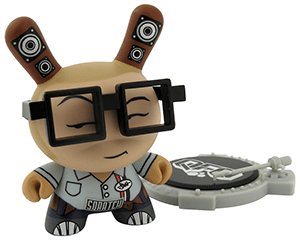

Turntablism is the art of manipulating sounds and creating music using phonograph turntables and a DJ mixer. The word ‘turntablist’ was coined in 1995 by DJ Babu to describe the difference between a DJ who just plays records, and one who performs by touching and moving the records, stylus and mixer to manipulate sound. The new term co-occurred with a resurgence of the art of hip hop style DJing in the 1990s.
Composer John Oswald described the art: ‘A phonograph in the hands of a ‘hiphop/scratch’ artist who plays a record like an electronic washboard with a phonographic needle as a plectrum, produces sounds which are unique and not reproduced — the record player becomes a musical instrument.’
read more »
Posted in Art, Games, Technology |
Leave a Comment »
July 29, 2011
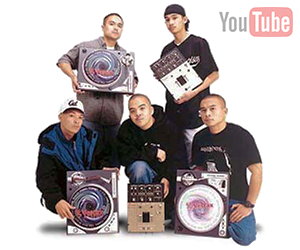

The Invisibl Skratch Piklz were a group of Filipino American turntablists. The members of the group were originally hip-hop DJs, who were among the pioneers of the turntablism movement in the 1990s; turntablists create musical pieces by mixing samples from records, by using multiple turntables as instruments.
The group started in 1989 as Shadow of the Prophet, with DJ Q-bert, Mix Master Mike, and DJ Apollo, who left the group in 1993.
read more »
Posted in Art, Games, Technology |
Leave a Comment »


 The Daily Omnivore