January 28, 2011

In sports science theory, supercompensation [soo-per-kom-puhn-sey-shuhn] is the post training period during which the trained function/parameter has a higher performance capacity than it did prior to the training period. First put forth by Hungarian scientist Nikolai Jakowlew in 1976, this theory is a basic principle of athletic training.
read more »
Posted in Games, Health, Science |
Leave a Comment »
January 25, 2011

Speed Golf is a sport started in California in 1979 by American runner Steve Scott and which involves completing a golf course in the lowest combination of strokes and time. Players run between shots and generally carry one to six clubs. A player’s score is calculated by adding minutes plus strokes, so a round of 90 completed in 50 minutes and 30 seconds would compute to a score of 140:30. The lowest score in competition is believed to have been shot by professional Christopher Smith at the Chicago Speedgolf Classic in 2005. Smith shot 65 in just 44:06 for a speed golf score of 109:06.
Rules and etiquette are generally the same for speed golf and regular golf with minor exceptions. Speed golfers are allowed to putt with the flagstick left in the hole, but are expected to rake bunkers, fix ball marks and conform to the dress code. Speed Golf is sometimes contrasted with Cross-country BigBall, in which players use soccer balls and baseball bats. Both sports require substantial physical stamina.
Posted in Games, Humor |
Leave a Comment »
January 25, 2011

An upturned collar (or popped collar) is an otherwise flat, protruding collar of either a shirt, jacket, or coat that has been turned upward. Before the early 20th century, most shirt collars were turned up in some manner. Men and women alike wore tall, stiff collars (as much as three inches tall), not unlike a taller version of a clerical collar, made either of starched linen, cotton, or lace. The writer H. G. Wells remarked in his 1902 book ‘Kipps’ that these ‘made [the] neck quite sore and left a red mark under [the] ears.’
Between the late 19th and mid-20th centuries, men’s collars were often detachable from their shirts, connected only by two removable collar studs (one in front and one in back). Detachable collars were very stiff, and either stood straight up (Hamilton collar) or were pressed over at an ironed-in, starched crease (Fremont collar). After WWII, mass-production gradually phased out detachable collars from ordinary dress shirts. Occasionally, one can still find detachable collar formal shirts, designed to be worn with a tuxedo or evening dress.
read more »
Posted in Art, Games |
Leave a Comment »
January 19, 2011


Desert Bus a minigame found in the 1999 Sega CD title: ‘Penn & Teller’s Smoke and Mirrors.’ The objective of the game is to drive a bus from Tucson, Arizona to Las Vegas, Nevada in real time at a maximum speed of 45mph. The feat requires 8 hours of continuous play to complete, since the game cannot be paused. Penn Jillette commented in his radio show that the overly realistic nature of the game was in response to Janet Reno and the controversy surrounding violent video games at the time.
read more »
Posted in Games, Humor, Technology |
Leave a Comment »
January 17, 2011
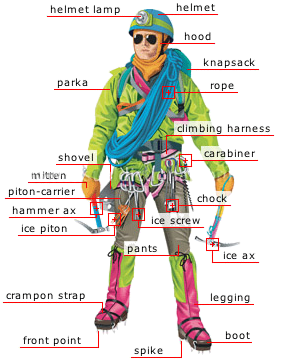
The Explorers Grand Slam is a challenge to reach the North Pole, the South Pole and all of the Seven Summits (the highest mountains of each of the seven continents). Only a dozen people have completed the Explorers Grand Slam. British mountaineer, David Hempleman-Adams became the first to complete this challenge in 1998. In 2005, Park Young Seok of South Korea completed a ‘true Adventurers Grand Slam,’ which additionally includes ascending all 14 peaks above 8,000 meters.
Young-Seok holds the world’s second fastest time (behind Jerzy Kukuczka of Poland) for ascending the 14 Eight-thousanders, the Guinness World Record for climbing six of the 8,000-meter Himalayan peaks within one year, and another record for reaching the South Pole on foot in 44 days, self-sufficient and without any food re-supplies.
Posted in Games, World |
Leave a Comment »
January 13, 2011


A toy library is a library from which toys, puzzles, and games are lent out, functioning like a lending library. Toy libraries offer play sessions for families and a wide range of toys appropriate for children at different stages in their development.
Toy libraries provide children with new toys every week or two, saving parents money and keeping children from getting bored. Popular in the French-speaking world, toy libraries are called ludothèques. A lekotek is a toy and play library with a specific focus on children with special needs.
Posted in Games, Health, Money |
Leave a Comment »
January 10, 2011


Kewpie dolls and figurines are based on illustrations by Rose O’Neill that appeared in Ladies’ Home Journal in 1909. The small dolls were extremely popular in the early 1900s; they were often awarded as a carnival prize and collected. They were first produced in Ohrdruf, a small town in Germany, then famous for its toy-manufacturers. Their name is derived from ‘cupid,’ the Roman god of beauty and non-platonic love.
The early dolls, especially signed or ceramic, are highly collectible and worth thousands of dollars. The time capsule at the 1939 New York World’s Fair contained a Kewpie doll. The Kewpie doll was mentioned in Anne Frank’s diary. She received one on her first St. Nicholas Day in the Annex from Miep and Bep. The dolls are also mentioned in Steinbeck’s Of Mice and Men.
Posted in Games, Money |
Leave a Comment »
January 6, 2011

Místico (b. 1982) is a Mexican Luchador enmascarado, or masked professional wrestler currently working for the lucha libre promotion Consejo Mundial de Lucha Libre (CMLL). Since 2006 Místico has been the main tecnico (good guy) in CMLL and the biggest box office draw in all of Mexico. Místico is Spanish for ‘Mystic,’ a religious ring character who is the storyline protege of the wrestling priest Fray Tormenta.
Posted in Games, Humor |
Leave a Comment »
January 3, 2011

The Young Shuffle is a style of running named for Australian potato farmer and athlete, Cliff Young (1922 — 2003). Young won the 544 mile Melbourne Ultramarathon at age 61, running in overalls and gumboots. He grew up on a 2000 acre farm in Beech Forest in south-western Victoria with approximately 2,000 sheep that he roundup on foot. He arrived at the 1983 Melbourne to Sydney ultramarathon as an unknown. He ran at a slow loping pace and trailed the leaders for most of the course, but by denying himself sleep and running while the others slept he slowly gained on them and eventually won by a large margin.
Before running the race he told the press that he had previously run for two to three days straight rounding up sheep. He claimed afterwards that during the race he imagined that he was running after sheep and trying to outrun a storm. The run took him five days, 15 hours and four minutes, trimming almost two days off the record for any previous run between Sydney and Melbourne. All of the six competitors who finished the race broke the previous record, but Young beat them by running while they were sleeping, and by using an ungainly looking, but very energy efficient running style that his since been dubbed the Young Shuffle.
Posted in Games, Humor |
Leave a Comment »
December 17, 2010
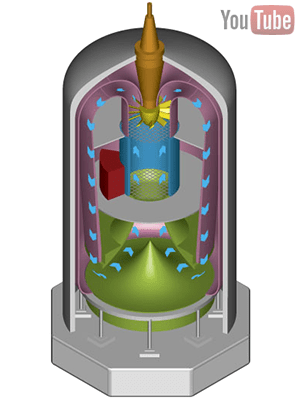
Bodyflight is the art of ‘flying your body’ in a controlled manner. This include turns, rolls, lateral movement, fall rate control, and other acrobatics in the air. The skill of bodyflight makes it possible for skydivers to fly closer to each other while they are falling, to allow them to link together in formation skydiving, then fly apart to a safe distance before opening parachutes. Many skills of bodyflight can be learned in a vertical wind tunnel, to enable skydivers to become better at controlling their bodies in the sky.
The first human to fly in a vertical wind tunnel was Jack Tiffany in 1964 at Wright Patterson Air Force Base. The first recreational vertical wind tunnel was developed by a Canadian company named AERODIUM in Quebec, patented as the ‘Levitationarium’ in 1979.
read more »
Posted in Games, Technology |
1 Comment »
December 9, 2010

A combination puzzle, also known as a sequential move puzzle or twisty puzzle, is a puzzle which consists of a set of pieces which can be manipulated into different combinations by a group of operations. The puzzle is solved by achieving a particular combination starting from a random (scrambled) combination. Often, the solution is required to be some recognizable pattern such as ‘all like colors together’ or ‘all numbers in order’. The most famous of these puzzles is the original Rubik’s Cube, invented in 1974 by Hungarian sculptor and professor of architecture Ernő Rubik.
There are many different variations including cubes with up to seven layers: the 2×2×2 (Pocket/Mini Cube), 3×3×3 cube (Rubik’s Cube), the 4×4×4 (Rubik’s Revenge/Master Cube), and the 5×5×5 (Professor’s Cube), the 6×6×6 (V-Cube 6), and 7×7×7 (V-Cube 7). The E-cube is an electronic variant of the 3x3x3 cube, made with RGB LEDs and switches. In addition to cubes, combination puzzles are available in various other geometric shapes, including a tetrahedron (Pyraminx), octahedron (Skewb Diamond), dodecahedron (Megaminx), and icosahedron (Dogic). There are also puzzles that change shape such as Rubik’s Snake and the Square One.
Posted in Games |
1 Comment »
December 7, 2010

Parahawking combines paragliding and falconry. Birds of prey are trained to fly with paragliders, guiding them to thermals for in-flight rewards and performing aerobatic manoeuvres. It was developed by British falconer Scott Mason in 2001. Mason began a round-the-world trip in Pokhara, Nepal, where many birds of prey – such as the griffon vulture, steppe eagle and black kite – can be found. He has been based in Pokhara ever since, training and flying birds during the dry season between September and March.
The team started by training two black kites, but have since added an Egyptian vulture and a Mountain hawk-eagle to the team. Only rescued birds are used – none of the birds have been taken from the wild. Mason and Hill documented their endeavors, with help from colleague Graham Saunders-Griffiths, in a film entitled Parahawking.
Posted in Games |
Leave a Comment »




 The Daily Omnivore