October 3, 2015

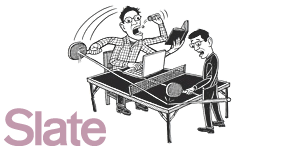
Joshua Foer (b. 1982) is a freelance journalist living in Connecticut, with a primary focus on hard sciences. He was the 2006 USA Memory Champion, whichwas described in his 2011 book, ‘Moonwalking with Einstein: The Art and Science of Remembering Everything.’ Foer set a new US record in the ‘speed cards’ event by memorizing a deck of 52 cards in 1 minute and 40 seconds. His book describes his journey from participatory journalist to national champion mnemonist, under the tutelage of British Grand Master of Memory, Ed Cooke. Penguin paid a $1.2 million advance for publishing rights, and the film rights were optioned by Columbia Pictures shortly after publication.
Foer was born in Washington, DC to Esther Foer, Director of Sixth & I Historic Synagogue, and Albert Foer, the president of the American Antitrust Institute, an antitrust watchdog. He is the younger brother of former ‘The New Republic’ editor Franklin Foer and novelist Jonathan Safran Foer. Josh has organized several websites and organizations based on his interests. He created the ‘Athanasius Kircher Society,’ which had only one session, featuring savant Kim Peek and proto-astronaut Joseph Kittinger. He is the co-founder of the ‘Atlas Obscura,’ an online compendium of ‘The World’s Wonders, Curiosities, and Esoterica.’ He is also a co-organizer of ‘Sukkah City’ a Kosher architectural design competition, and Sefaria, a non-profit dedicated to building digital experiences and infrastructure for Jewish texts.
Posted in Games, Language, Science |
Leave a Comment »
September 28, 2015


Tinker Hatfield (b. 1952) is the designer of many of Nike’s most popular and innovative athletic shoe designs, including the Air Jordan 3 through Air Jordan 15, the twentieth anniversary Air Jordan, the Air Jordan XXIII, XXV, XXIX, and other athletic sneakers including the world’s first ‘cross training’ shoes, the Nike Air Trainer. Hatfield oversees Nike’s ‘Innovation Kitchen.’ He is Nike’s Vice President for Design and Special Projects.
He attended the University of Oregon, where he ran track for coach and Nike co-founder Bill Bowerman, and at one time had the pole-vault record at the school. Academically, he studied architecture and graduated with a degree from the University of Oregon School of Architecture. Hatfield joined Nike in 1981, and in 1985 started working on shoe design, believing that his architectural skills could be applied to footwear.
read more »
Posted in Art, Games, Money |
Leave a Comment »
June 19, 2015
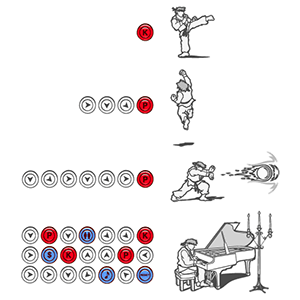
A learning curve graphically represents the amount of experience it takes to learn a given task. Skills with a steep learning curve are difficult to learn quickly, but progress comes rapidly once past the initial hurdle. Activities with a shallow learning curve, by contrast, are said to be ‘easy to learn, hard to master’ (Bushnell’s Law of video game design).
The term can refer to individual tasks repeated in a series of trials or a body of knowledge is learned over time. It was first described by German psychologist Hermann Ebbinghaus in 1885. His tests involved memorizing series of nonsense syllables, and recording the success over a number of trials. The translation does not use the term learning curve—but he presents diagrams of learning against trial number. He also notes that the score can decrease, or even oscillate.
read more »
Posted in Education, Games, Money |
1 Comment »
June 18, 2015
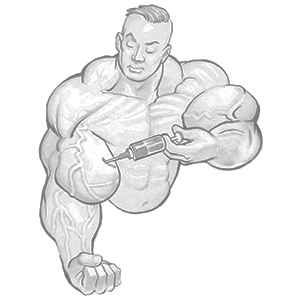
Some bodybuilders, particularly at professional level, inject substances such as ‘site enhancement oil,’ commonly known as synthol [sin-thawl], to mimic the appearance of developed muscle where it may otherwise be disproportionate or lagging. This is practice is referred to as ‘fluffing.’ (Synthol is also the name of an all natural mouthwash available in France since 1920 that is also packaged as a gel and spray for the treatment of muscular pain.)
Site enhancement oil is 85% oil, 7.5% lidocaine (a local anesthetic), and 7.5% alcohol. It is not restricted, as it is ostensibly sold for topical use only, and many brands are available on the internet. The use of injected oil to enhance muscle appearance was abandoned in the late 20th century as it can cause pulmonary embolisms (blood clots in the lungs), nerve damage, infections, skin lesions, stroke, and the formation of oil-filled cysts in the muscle. Sesame oil is often used, which can cause allergic reactions such as vasculitis (inflamed blood vessels). An aesthetic issue is drooping of muscle under gravity.
Posted in Drugs, Games, Health |
Leave a Comment »
June 1, 2015

NeuroRacer is a video game designed by a team of researchers at the University of California, San Francisco led by cognitive neuroscientist Adam Gazzaley as a way to help with mental cognition.
It was designed as an intervention for ‘top-down modulation deficits in older adults.’ A study on 60-85 year olds showed that the multitasking nature of the game caused improvements in tasks outside of the game involving working memory and sustained attention.
Posted in Education, Games, Health |
Leave a Comment »
May 18, 2015

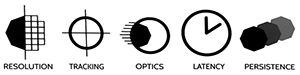
Presence is the illusion that a virtual experience is real. Today, it often considers the effect that people experience when they interact with a computer-mediated or computer-generated environment. This use of the term derives from the word ‘telepresence,’ coined by MIT professor Marvin Minsky in 1980, which he described as the manipulation of objects in the real world through remote access technology. For example, a surgeon may use a computer to control robotic arms to perform minute procedures on a patient in another room. Or a NASA technician may use a computer to control a rover to collect rock samples on Mars.
As technologies progressed, the need for an expanded term arose. Thomas Sheridan (also of MIT, and a pioneer of robotics and remote control technology) extrapolated Minsky’s original definition. Using the shorter ‘presence,’ Sheridan explained that the term refers to the effect felt when controlling real world objects remotely as well as the effect people feel when they interact with and immerse themselves in virtual reality or virtual environments.
read more »
Posted in Games, Language, Technology |
Leave a Comment »
May 17, 2015

Grim Fandango is a dark comedy neo-noir adventure game released by LucasArts in 1998 for Windows, with game designer Tim Schafer as project leader. It is the first adventure game by LucasArts to use 3D computer graphics overlaid on pre-rendered, static backgrounds. As with other LucasArts adventure games, the player must converse with other characters and examine, collect, and use objects correctly to solve puzzles in order to progress.
Grim Fandango ’s world combines elements of the Aztec belief of afterlife with style aspects of film noir, including ‘The Maltese Falcon,’ ‘On the Waterfront, ‘and ‘Casablanca,’ to create the Land of the Dead, through which recently departed souls, represented in the game as calaca-like figures, must travel before they reach their final destination, the Ninth Underworld. The story follows travel agent Manuel ‘Manny’ Calavera as he attempts to save Mercedes ‘Meche’ Colomar, a newly arrived but virtuous soul, during her long journey.
read more »
Posted in Art, Games, Humor |
Leave a Comment »
May 8, 2015

Card counting is a casino card game strategy used primarily in blackjack to determine whether the next hand is likely to give a probable advantage to the player or to the dealer. Card counters are a class of advantage players, who attempt to decrease the house edge by keeping a running tally of all high and low valued cards seen by the player.
Card counting allows players to bet more with less risk when the count gives an advantage as well as minimize losses during an unfavorable count. Card counting also provides the ability to alter playing decisions based on the composition of remaining cards. Card counting (sometimes called ‘card reading’) is also used in trick-taking games such as contract bridge or spades to optimize the winning of tricks (rounds of play).
read more »
Posted in Games, Money, Politics |
Leave a Comment »
May 5, 2015
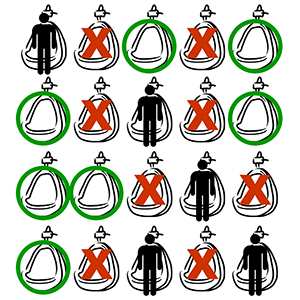
Male Restroom Etiquette is a 2006 American short subject created by humorist Phil R. Rice and produced by his company Zarathustra Studios. The film is a mockumentary about unwritten rules of behavior in male restrooms and is intended to be a parody of educational and social guidance films. The film was made using the machinima technique of recording video footage from computer games, namely ‘The Sims 2’ and ‘SimCity 4.’ In the short, the narrator states that increased cultural diversity has necessitated the exposition of previously unwritten rules regarding the use of malerestrooms.
According to these rules, males should use restrooms as quickly as possible, maximize physical separation from each other when using urinals, flush urinals when they contain concentrated urine, avoid stalls with unflushed toilets, and avoid eye contact and communication with others. The film depicts a scenario in which excess communication leads to a mess in the restroom and thus deficient hygiene and homeostasis, the latter of which is in the lowest tier in Maslow’s hierarchy of needs. As the scenario continues, the restroom occupants turn to violence, leading to police and biological hazard team involvement that closes the restroom. Forced to go elsewhere, other men repeat the scenario, eventually leading to complete societal breakdown.
Posted in Games, Humor |
1 Comment »
January 19, 2015

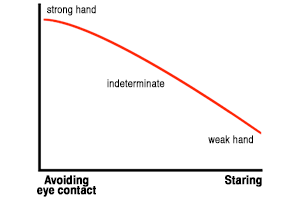
A tell in poker is a change in a player’s behavior or demeanor that can indicate the strength of their hand. A player gains an advantage if they observe and understand the meaning of another player’s tell, particularly if the tell is unconscious and reliable. Sometimes a player may fake a tell, hoping to induce their opponents to capitalize on bad information. More often, people try to avoid giving out a tell, by maintaining an expressionless ‘poker face’ regardless of how strong or weak their hand is.
A tell may be common to a class of players or unique to a single player. Some possible tells include leaning forward or back, placing chips with more or less force, fidgeting, doing chip tricks, showing nervous tics, or changing one’s breathing, tone of voice, facial expressions, direction of gaze. Other tells are associated with a player’s actions with the cards, cigarettes, or drinks, or merely by their style of play.
read more »
Posted in Games, Money |
Leave a Comment »
December 17, 2014

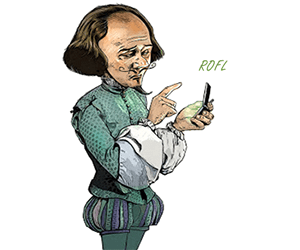
An argot [ahr-goh] is a secret language used by various groups — e.g. schoolmates, outlaws, colleagues, among many others — to prevent outsiders from understanding their conversations. The term is also used to refer to the informal specialized vocabulary from a particular field of study, occupation, or hobby, in which sense it overlaps with jargon (non-standard definitions). French author Victor Hugo was one of the first to research argot extensively. He describes it in his 1862 novel ‘Les Misérables’ as the language of the dark; at one point, he says, ‘What is argot; properly speaking? Argot is the language of misery.’ The earliest known record of the term in this context was in a 1628 document. The word was probably derived from the contemporary name, ‘les argotiers,’ given to a group of thieves at that time.
Under the strictest definition, an argot is a proper language, with its own grammar and style. But such complete secret languages are rare, because the speakers usually have some public language in common, on which the argot is largely based. Such argots are mainly versions of another language, with a part of its vocabulary replaced by words unknown to the larger public; argot used in this sense is synonymous with cant language, such as verlan and louchébem (similar to Pig Latin), which retain French syntax and apply transformations only to individual words (and often only to a certain subset of words, such as nouns, or semantic content words). Such systems are examples of ‘argots à clef,’ or ‘coded argots.’ Specific words can go from argot into common speech or the other way. For example, modern French ‘loufoque’ (‘crazy, goofy’), now common usage, originates in the louchébem transformation of ‘fou'(‘crazy’). ‘Piaf’ is a Parisian argot word for ‘bird, sparrow’ taken up by the singer Edith Piaf as her stage name.
Posted in Games, Language, World |
Leave a Comment »
December 17, 2014


Louchébem [loo-shuh-behm] is Parisian and Lyonnaise butchers’ (French boucher) slang, similar to Pig Latin and Verlan. It originated in the mid-19th century and was in common use until the 1950s. Each word is transformed by moving the first consonant to the end; and suffixes such as -ème, -ji, -oc, -muche are added at the end; the letter ‘L’ is placed at the beginning of the new word. Note that spelling often becomes phoneticized.
Even today, Louchébem is still well-known and used among those working at point-of-sale in the meat retail industry. Some words have even leaked into common, everyday use by the masses; an example is the word ‘loufoque,’ meaning unsound of mind. In 1937, English novelist E.C. Bentley used the language as a plot point in his short story, ‘The Old-Fashioned Apache.’
Posted in Games, Language, World |
Leave a Comment »


 The Daily Omnivore