January 7, 2013

Nunchi refers to a concept in Korean culture that describes the subtle art and ability to listen and gauge others’ moods. In Western culture, nunchi could be described as the concept of emotional intelligence. In Korea, it is the person’s ‘kibun’ being read, which is his or her pride, mood, or state of mind. It is of central importance to the dynamics of interpersonal relationships in Korean culture.
Nunchi is literally translated as ‘eye-measure.’ It is closely related to the broader concept of paralanguage (non-verbal elements of communication used to modify meaning and convey emotion), however nunchi also relies on an understanding of one’s status relative to the person with whom they’re interacting. It can be seen as the embodiment of skills necessary to communicate effectively in Korea’s high context culture. The concept of nunchi, and one’s abundance or lack thereof, forms the basis of many common expressions and idioms. For example, a socially clumsy person can be described as ‘nunchi eoptta,’ meaning ‘absence of nunchi.’
Posted in Health, Language, World |
Leave a Comment »
January 6, 2013

Viral phenomena are objects or patterns able to replicate themselves or convert other objects into copies of themselves when these objects are exposed to them.
The concept of something, other than a biological virus, being viral came into vogue just after the Internet became widely popular in the mid-to-late 1990s. An object, even an immaterial object, is considered to be viral when it has the ability to spread copies of itself or change other similar objects to become more like itself when those objects are simply exposed to the viral object.
read more »
Posted in Health, Language, Technology |
Leave a Comment »
January 2, 2013

The friendship paradox is the phenomenon first observed by the sociologist Scott L. Feld in 1991 that most people have fewer friends than their friends have, on average. It can be explained as a form of sampling bias (e.g. non-random sample) in which people with greater numbers of friends have an increased likelihood of being observed among one’s own friends. In contradiction to this, most people believe that they have more friends than their friends have.
The same observation can be applied more generally to social networks defined by other relations than friendship: for instance, most people’s sexual partners have (on the average) a greater number of sexual partners than they have. In spite of its apparently paradoxical nature, the phenomenon is real, and can be explained as a consequence of the general mathematical properties of social networks.
read more »
Posted in Health, Science, Technology |
Leave a Comment »
January 2, 2013
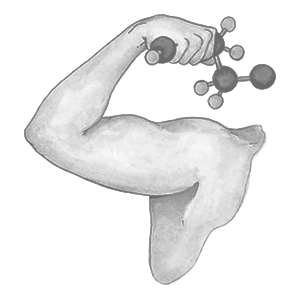
Conjugated [kon-juh-gey-tid] linoleic [li-noh-lee-ik] acids (CLA) are a family acids found mostly in the meat and dairy products derived from ruminants. CLAs can be either cis- or trans-fats.
In 1979, researchers from the University of Wisconsin applied a beef extract to mice skin. The mice were then exposed to a strong carcinogen. When the researchers counted the number of tumors developed by the mice 16 weeks later, they found to their surprise that the mice exposed to the beef extract had 20% fewer tumors. The identity of this anticarcinogen was not discovered until almost a decade later, in 1987.
read more »
Posted in Drugs, Food, Health |
Leave a Comment »
December 30, 2012

Neophobia [nee-oh-foh-bee-uh] is the fear of new things or experiences. It is also called cainophobia. In psychology, neophobia is defined as the persistent and abnormal fear of anything new. In its milder form, it can manifest as the unwillingness to try new things or break from routine.
Mild manifestations are often present in young children (who want the small portion of the world that they ‘know’ to remain constant) and elderly people (who often cope using long established habits and don’t want to learn ‘new tricks’).
read more »
Posted in Food, Health, Language |
3 Comments »
December 22, 2012

Female genital mutilation (FGM), also known as female circumcision, is defined by the World Health Organization (WHO) as ‘all procedures that involve partial or total removal of the external female genitalia, or other injury to the female genital organs for non-medical reasons.’ FGM is typically carried out on girls from a few days old to puberty. It may take place in a hospital, but is usually performed, without anaesthesia, by a traditional circumciser using a knife, razor, or scissors.
According to the WHO, it is practiced in 28 countries in western, eastern, and north-eastern Africa, in parts of the Middle East, and within some immigrant communities in Europe, North America, and Australasia. The WHO estimates that 100–140 million women and girls around the world have experienced the procedure, including 92 million in Africa. The practice is carried out by some communities who believe it reduces a woman’s libido.
read more »
Posted in Health, Philosophy, Sex |
Leave a Comment »
December 22, 2012

Male circumcision has often been, and remains, the subject of controversy on a number of grounds—including religious, ethical, sexual, and health related. The Ancient Greeks and Romans valued the foreskin and were opposed to circumcision – an opposition inherited by the canon and secular legal systems of the Christian West that lasted at least through to the Middle Ages. Traditional Judaism and Islam have advocated male circumcision as a religious obligation.
The ethics of circumcision are sometimes controversial. From the mid-19th century, there has been advocacy in some Anglophone countries on medical grounds, such as the prevention of masturbation and ‘reflex neurosis.’ Modern proponents argue that circumcision reduces the risks of a range of infections and diseases as well as conferring sexual benefits. In contrast, opponents, particularly of infant circumcision, often question its effectiveness in preventing disease, and object to subjecting newborn boys, without their consent, to a procedure they consider to have debatable benefits, significant risks, and a potentially negative impact on general health and later sexual enjoyment.
read more »
Posted in Health, Philosophy, Sex |
2 Comments »
December 21, 2012

Brominated [broh-muh-neyt-ed] vegetable oil (BVO) is vegetable oil that has had atoms of the element bromine bonded to it. Oil treated this way is used as an emulsifier in citrus-flavored soft drinks to help natural fat-soluble citrus flavors stay suspended in the drink and to produce a cloudy appearance. BVO has been used by the soft drink industry since 1931.
The addition of bromine increases the density of the oil, and the amount of bromine is carefully controlled to achieve a density that is the same as the water in the drink. As a result, the BVO remains suspended in the water instead of forming separate layers. Only small quantities, concentrations of 8 ppm, are needed to achieve this effect.
read more »
Posted in Food, Health |
Leave a Comment »
December 20, 2012

Affective computing is the study and development of systems and devices that can recognize, interpret, process, and simulate human affects.
It is an interdisciplinary field spanning computer sciences, psychology, and cognitive science, which originated at MIT with Rosalind Picard’s 1995 paper on affective computing. A motivation for the research is the ability to simulate empathy. The machine should interpret the emotional state of humans and adapt its behavior to them, giving an appropriate response for those emotions.
read more »
Posted in Health, Language, Technology |
Leave a Comment »
December 19, 2012

The Edgewood Arsenal experiments (also known as Project 112) are said to be related to or part of CIA mind-control programs after World War II, such as MKULTRA. Journalist Linda Hunt, citing records from the U.S. National Archives, revealed that eight German scientists worked at Edgewood, under Project Paperclip (the US program recruiting Nazi scientists after the war).
The experiments were performed at the Edgewood Arsenal, northeast of Baltimore, Maryland, and involved hallucinogens such LSD, THC, and BZ, in addition to biological and chemical agents. Experiments on human subjects utilizing such agents goes back to at least World War I. In the mid-1970s, in the wake of many health claims made from exposure to such agents, including psychotropic drugs administered in later experiments, the U.S. Congress began investigations of misuse of such experiments, and inadequate informed consent given by the soldiers and civilians involved.
Posted in Drugs, Health, War |
Leave a Comment »
December 19, 2012

The term ‘autonomous sensory meridian response’ (ASMR) is a neologism for a claimed biological phenomenon, characterized as a distinct, pleasurable tingling sensation often felt in the head, scalp or peripheral regions of the body in response to various visual and auditory stimuli.
The phenomenon was first noted through internet culture such as blogs and online videos. Tom Stafford, a professor at the University of Sheffield, says ‘It might well be a real thing, but it’s inherently difficult to research.’
read more »
Posted in Health, Science |
Leave a Comment »
December 19, 2012
Epigenetics [ep-uh-juh-net-iks] refers to non-genetic, heritable characteristics: information other than that found in DNA that can be transmitted from parent to offspring, such as in the form of methylation of DNA (molecular markers attached at several points on a strand of DNA) or histone modification (histones are protein structures that tightly pack and unpack DNA, exposing and ‘expressing’ desired genes).
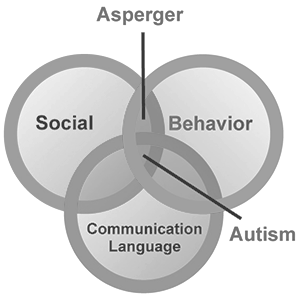
Autism spectrum disorder (ASD) includes autism, Asperger disorder (high-functioning autism), childhood disintegrative disorder, and pervasive developmental disorder-not otherwise specified.
read more »
Posted in Health, Science |
Leave a Comment »



