August 17, 2012
Motivation is the psychological feature that arouses an organism to action toward a desired goal and elicits, controls, and sustains certain goal directed behaviors. For instance: an individual has not eaten, he or she feels hungry, and as a response he or she eats and diminishes feelings of hunger. There are many approaches to motivation: physiological, behavioral, cognitive, and social. It is the crucial element in setting and attaining goals—and research shows that subjects can influence their own levels of motivation and self-control.
A 2007 paper, ‘Where the Motivation Resides and Self-Deception Hides: How Motivated Cognition Accomplishes Self-Deception,’ examined how people remain blind to the motives underlying their flattering self-construals, attitudes, and social judgments. Motivated cognition accomplishes the goal of self-deception. Self-serving conclusions are produced and the influence of such distortions remains hidden from conscious awareness because of the ubiquitous presence and specialized nature of motivated cognition.
read more »
Posted in Education, Health, Money |
Leave a Comment »
August 16, 2012

Eugenics [yoo-jen-iks] is the study of hereditary improvement of the human race by controlled selective breeding. Eugenics rests on some basic ideas. The first is that what is true of animals is true of man. The characteristics of animals are passed on from one generation to the next in heredity, including mental characteristics. For example, the behavior and mental characteristics of different breeds of dog differ, and all modern breeds are greatly changed from wolves. The breeding and genetics of farm animals show that if the parents of the next generation are chosen, then that affects what offspring are born.
Negative eugenics aims to cut out traits that lead to suffering, by limiting people with the traits from reproducing. Positive eugenics aims to produce more healthy and intelligent humans, by persuading people with those traits to have more children. In the past, many ways were proposed for doing this, and even today eugenics means different things to different people. The idea of eugenics is controversial, because in the past it was sometimes used to justify discrimination and injustice against people who were thought to be genetically unhealthy or inferior.
read more »
Posted in Health, Politics, Sex |
Leave a Comment »
August 15, 2012

Kurdaitcha [ka-dai-tcha] (or kurdaitcha man) is a ritual ‘executioner’ in Australian Aboriginal culture. The ‘execution’ in this case is a complex ritual similar to voodoo hexes or pagan curses. The kurdaitcha ritual is a nocebo, a negative response to physically harmless stimuli.
Voodoo death, also known as psychosomatic death, is a term coined by Harvard physiologist Walter Cannon in 1942 to describe the phenomenon of sudden death as brought about by a strong emotional shock, such as fear. The word ‘kurdaitcha’ is also used by Europeans to refer to the shoes worn by the Kurdaitcha, woven of feathers and human hair and treated with blood.
read more »
Posted in Death, Health, Philosophy |
Leave a Comment »
August 15, 2012

Voodoo death, a term coined by Harvard physiologist Walter Cannon in 1942 also known as psychogenic or psychosomatic death, is the phenomenon of sudden death as brought about by a strong emotional shock, such as fear. The anomaly is recognized as psychosomatic in that death is caused by an emotional response—often fear—to some suggested outside force.
Voodoo death is particularly noted in native societies, and concentration or prisoner of war camps, but the condition is not specific to any culture or mentality.
read more »
Posted in Death, Health, Philosophy |
Leave a Comment »
August 14, 2012
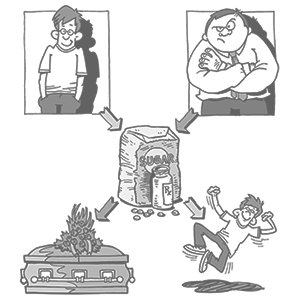
In medicine, a nocebo [no-see-bo] reaction or response refers to harmful, unpleasant, or undesirable effects a subject manifests after receiving an inert dummy drug or placebo. Nocebo responses are not chemically generated and are due only to the subject’s pessimistic belief and expectation that the inert drug will produce negative consequences. In these cases, there is no ‘real’ drug involved, but the actual negative consequences of the administration of the inert drug, which may be physiological, behavioral, emotional, and/or cognitive, are nonetheless real.
An example of nocebo effect would be someone who dies of fright after being bitten by a non-venomous snake. The term ‘nocebo’ (Latin: ‘I will harm’) was chosen by Walter Kennedy, in 1961, to denote the counterpart of one of the more recent applications of the term placebo (Latin: ‘I will please’); namely, that of a placebo being a drug that produced a beneficial, healthy, pleasant, or desirable consequence in a subject, as a direct result of that subject’s beliefs and expectations. The term ‘nocebo’ can also refer to positive outcomes based upon the patient’s expectation of that outcome.
read more »
Posted in Drugs, Health, Language |
1 Comment »
August 9, 2012
Birth order is defined as a person’s rank by age among his or her siblings. Birth order is often believed to have a profound and lasting effect on psychological development. This assertion has been repeatedly challenged by researchers, yet birth order continues to have a strong presence in pop psychology and popular culture. Alfred Adler, an Austrian psychiatrist, and a contemporary of Sigmund Freud and Carl Jung, was one of the first theorists to suggest that birth order influences personality.
He argued that birth order can leave an indelible impression on an individual’s style of life, which is one’s habitual way of dealing with the tasks of friendship, love, and work. According to Adler, firstborns are ‘dethroned’ when a second child comes along, and this may have a lasting influence on them. Younger and only children may be pampered and spoiled, which can also affect their later personalities. Additional birth order factors that should be considered are the spacing in years between siblings, the total number of children, and the changing circumstances of the parents over time.
read more »
Posted in Health |
Leave a Comment »
August 9, 2012

Elastic therapeutic tape, commonly referred to as ‘kinesiology tape,’ is an elastic cotton strip with an acrylic adhesive that is used with the intention of treating athletic injuries and a variety of physical disorders.
Numerous studies have failed to show that elastic therapeutic taping produces clinically significant benefits. A 2012 systematic review found that the efficacy of Kinesio Tape in pain relief was trivial.
read more »
Posted in Games, Health, Money |
Leave a Comment »
July 30, 2012

Monosodium [mon-uh-soh-dee-uhm] glutamate [gloo-tuh-meyt] (MSG) is a seasoning salt and one of the most abundant naturally occurring non-essential amino acids. The glutamate of MSG confers the same umami (savory) taste of glutamate from other foods (e.g. meats, poultry, fish, eggs, dairy products, and kombu seaweed), being chemically identical.
Industrial food manufacturers market and use MSG as a flavor enhancer because it balances, blends and rounds the total perception of other tastes. Professor Kikunae Ikeda from the Tokyo Imperial University isolated glutamic acid as a new taste substance in 1908 from kombu, and named its taste ‘umami.’
read more »
Posted in Food, Health, World |
Leave a Comment »
July 30, 2012

A self-serving bias is attributing successes to internal factors and failures to external factors. This bias is a mechanism for individuals to protect or enhance their own self-esteem.
A student who attributes a good grade on an exam to his or her own intelligence and hours of studying but a poor grade to the professor’s poor teaching ability and unfair test questions is exhibiting the self-serving bias. Studies have shown that similar attributions are made in various situations, such as the workplace, interpersonal relationships, sports, and consumer decisions.
read more »
Posted in Health, Science, World |
1 Comment »
July 30, 2012

Mistakes Were Made (But Not by Me) is a non-fiction book by social psychologists Carol Tavris and Elliot Aronson, first published in 2007. It deals with cognitive dissonance (discomfort caused by holding conflicting ideas simultaneously), self-serving bias (attributing successes to internal factors and failures to external factors), and other cognitive biases (deviations in judgment), using these psychological theories to illustrate how the perpetrators of hurtful acts justify and rationalize their behavior.
It describes a positive feedback loop of action and self-deception by which slight differences between people’s attitudes become polarized. Topics covered include: the doomsday cult described in ‘When Prophecy Fails’; the MMR vaccine controversy and Andrew Wakefield; marriage; day care sex abuse hysteria and false memory syndrome, confabulation of autobiographical memory; George W. Bush and the Iraq War; Criminal interrogations, trials, and capital punishment; Mel Gibson; and Oprah Winfrey and her involvement in the James Frey controversy.
Posted in Health, Language, Science |
Leave a Comment »
July 30, 2012
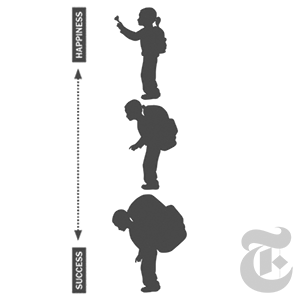
Madeline Levine, Ph. D., is a practicing psychologist in Marin County, California. She is the author of several non-fiction books: ‘Viewing Violence’ published in 1996, ‘See No Evil: A Guide to Protecting Our Children from Media Violence’ published in 1998, and ‘The Price of Privilege: how parental pressure and material advantage are creating a generation of disconnected and unhappy kids’ published in 2006. The first two books represent an analysis of the negative effects of media violence on child development.
Her third book is a study of the psychological ailments plaguing teens from affluent families. ‘The Price of Privilege’ is based not only on her 25 years of experience in treating such teens within Marin County (an affluent community within the San Francisco Bay Area) but also on her consultations with colleagues around the United States—particularly research psychologist Suniya S. Luthar — as well as her review of the contemporary psychological research on the subject. Her latest book is ‘Teach Your Children Well: Parenting for Authentic Success.’
Posted in Education, Health, Language |
Leave a Comment »
July 30, 2012

Morton’s toe (or Greek foot) is the common term for the condition of a shortened first metatarsal (big toe) in relation to the second metatarsal. It is a type of brachymetatarsia (a condition in which there is one or more abnormally short metatarsals).
The name derives from American orthopedic surgeon Dudley Joy Morton. Although commonly described as a disorder, it is sufficiently common to be considered a normal variant of foot shape (its prevalence varies with different populations).
read more »
Posted in Health |
Leave a Comment »


 The Daily Omnivore