July 26, 2012


Mithridatism [mith-ri-dey-tiz-uhm] is the practice of protecting oneself against a poison by gradually self-administering non-lethal amounts. The word derives from Mithridates VI, the King of Pontus (modern-day Turkey), who so feared being poisoned that he regularly ingested small doses, aiming to develop immunity. Having been defeated by Roman general Pompey, legend has it that Mithridates tried to commit suicide using poison but failed because of his immunity and so had to resort to having a mercenary run him through with his sword.
There are only a few practical uses of mithridatism. It can be used by zoo handlers, researchers, and circus artists who deal closely with venomous animals. Mithridatization has been tried with success in Australia and Brazil and total immunity has been achieved even to multiple bites of extremely venomous cobras and pit vipers. Venomous snake handler Bill Haast used this method. Snake handlers from Burma tattoo themselves with snake venom for the same reason. Mithridatism is also used to treat peanut allergies.
read more »
Posted in Death, Drugs, Health |
1 Comment »
July 26, 2012

Physiological tolerance or drug tolerance is commonly encountered in pharmacology, when a subject’s reaction to a specific drug and concentration of the drug is progressively reduced, requiring an increase in concentration to achieve the desired effect. Drug tolerance can involve both psychological drug tolerance and physiological factors.
Tolerance rate depends on the particular drug, dosage and frequency of use, though it is typically reversible. Physiological tolerance also occurs when an organism builds up a resistance to the effects of a substance after repeated exposure. This can occur with environmental substances, such as salt or pesticides. A rapid drug tolerance is termed tachyphylaxis.
read more »
Posted in Drugs, Health |
1 Comment »
July 25, 2012
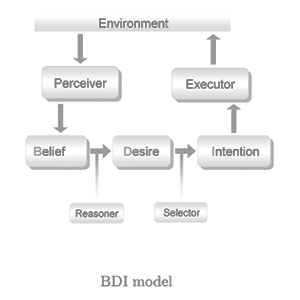
Folk psychology can be described as the common understanding of mental processes (e.g. pain, pleasure, excitement, anxiety, etc.), grounded in the use of common linguistic terms as opposed to technical or scientific jargon. Folk psychology and analogy are invariably linked, with both concepts having evolved as a result of the relationship they have with each other. Once technical terms are stripped, the easiest way to describe something is through references to familiar items. In this way, the union between analogy and folk psychology was inevitable.
Traditionally, the study of folk psychology has focused on how everyday people—those without formal training in the various academic fields of science—go about attributing mental states. This domain has primarily been centered on intentional states reflective of an individual’s beliefs and desires; each described in terms of everyday language and concepts such as ‘beliefs,’ ‘desires,’ ‘fear,’ and ‘hope.’ As a result of this among other intrinsic factors, the domain’s scope, method, and contributions are consistently subjects of dispute in many scientific quarters.
read more »
Posted in Health, Language, Science |
Leave a Comment »
July 25, 2012

Boundaries of the mind refers to a personality trait concerning the degree of separateness (‘thickness’) or connection (‘thinness’) between mental functions and processes. Thin boundaries are associated with open-mindedness, sensitivity, vulnerability, creativity, and artistic ability.
People with thin boundaries may tend to confuse fantasy and reality and tend to have a fluid sense of identity, so that they tend to merge or lose themselves in their relations with others. People with thick boundaries differentiate clearly between reality and fantasy and between self and other, and tend to prefer well-defined social structures. The concept was developed by psychoanalyst Ernest Hartmann from his observations of the personality characteristics of frequent nightmare sufferers. The construct has been particularly studied in relation to dream recall and lucid dreaming.
read more »
Posted in Health, Science |
Leave a Comment »
July 24, 2012


Pronoia [proh-noi-uh] is a neologism that is defined as the opposite state of mind as paranoia: having the sense that there is a conspiracy that exists to help the person. It is also used to describe a philosophy that the world is set up to secretly benefit people. The writer and Electronic Frontier Foundation co-founder John Perry Barlow defined pronoia as ‘the suspicion the Universe is a conspiracy on your behalf.’ The academic journal ‘Social Problems’ published an article entitled ‘Pronoia’ by Fred H. Goldner in 1982.
According to Goldner: ‘Pronoia is the positive counterpart of paranoia. It is the delusion that others think well of one. Actions and the products of one’s efforts are thought to be well received and praised by others. Mere acquaintances are thought to be close friends; politeness and the exchange of pleasantries are taken as expressions of deep attachment and the promise of future support. Pronoia appears rooted in the social complexity and cultural ambiguity of our lives: we have become increasingly dependent on the opinions of others based on uncertain criteria.’
read more »
Posted in Health, Humor, Language |
1 Comment »
July 23, 2012
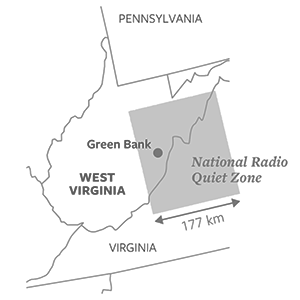
Idiopathic environmental intolerance attributed to electromagnetic fields (IEI-EMF) is a set of claims of adverse medical symptoms purportedly caused by exposure to electromagnetic fields. Other terms for IEI-EMF include electromagnetic hypersensitivity (EHS), electrohypersensitivity, electro-sensitivity, and electrical sensitivity (ES).
Although the thermal effects of electromagnetic fields on the body are established, self-described sufferers of electromagnetic hypersensitivity report responding to non-ionizing electromagnetic fields (or electromagnetic radiation) at intensities well below the limits permitted by international radiation safety standards. The majority of provocation trials to date have found that self-described sufferers of electromagnetic hypersensitivity are unable to distinguish between exposure to real and fake electromagnetic fields, and it is not recognized as a medical condition by the medical or scientific communities.
read more »
Posted in Health, Technology |
Leave a Comment »
July 19, 2012

Theobromine poisoning or chocolate poisoning is an adverse reaction to the alkaloid theobromine, found in chocolate, tea, cola beverages, açaí berries, and some other foods. Cacao beans contain about 1.2% theobromine by weight, while processed chocolate, in general, has smaller amounts.
The amount found in highly refined chocolate candies (~2 g/kg) is much lower than that of dark chocolate (~10 g/kg) or unsweetened baker’s chocolate (> 14 g/kg ). In general, the amount of theobromine found in chocolate is small enough such that chocolate can be safely consumed by humans. However, occasional serious side effects may result from the consumption of large quantities, especially in the elderly. In extreme cases, emergency room treatment may be required.
read more »
Posted in Death, Food, Health |
1 Comment »
July 19, 2012
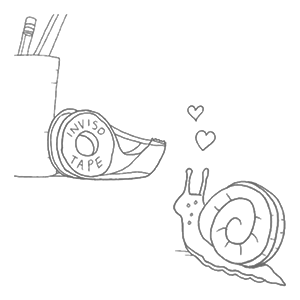
Parataxic [par-uh-tak-sik] distortion is term coined by american psychiatrist Harry S. Sullivan to explain the inclination to skew perceptions of others based on fantasy. The ‘distortion’ is in the perception of others, based not on actual experience with the individual but from a projected fantasy personality. For example: when one falls in love they can create an image of the person as the ‘perfect match’ or ‘soul mate’ only to find out later the person did not match the original perception.
The fantasy personality is created in part from experience and from emotional stress. The stress of forming a new relationship or finding a life mate, where one contemplates reproduction, can be seen as stress, although it is perceived as pleasurable. ‘Falling in love’ can create the atmosphere where parataxic distortion is primarily involved in the perception of the object of affection. It is possible in these situations for chemical influences to play a role in the process.
read more »
Posted in Health, Love, Sex |
1 Comment »
July 18, 2012
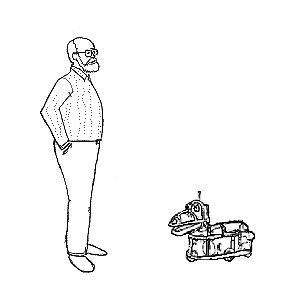
The intentional stance is a term coined by philosopher Daniel Dennett for the level of abstraction in which we view the behavior of a thing in terms of mental properties. It is part of a theory of mental content proposed by Dennett, which provides the underpinnings of his later works on free will, consciousness, folk psychology, and evolution.
‘Here is how it works: first you decide to treat the object whose behavior is to be predicted as a rational agent; then you figure out what beliefs that agent ought to have, given its place in the world and its purpose. Then you figure out what desires it ought to have, on the same considerations, and finally you predict that this rational agent will act to further its goals in the light of its beliefs. A little practical reasoning from the chosen set of beliefs and desires will in most instances yield a decision about what the agent ought to do; that is what you predict the agent will do.’
read more »
Posted in Health, Philosophy, Science |
Leave a Comment »
July 16, 2012

The Price of Privilege is a non-fiction book by psychologist Madeline Levine. The book’s primary thesis is that teenagers from affluent families have more intense psychological problems than expected.
Levine maintains that children from rich families with psychological dysfunctions have been ignored because many people assume the wealthy have the resources to take care of themselves. Her findings are based on her experience as a psychologist working with children in Marin County and related clinical studies. She defines affluence as a yearly household income in the $120,000 to $160,000 range.
read more »
Posted in Health, Money |
Leave a Comment »
July 11, 2012

Mosquito control manages the population of mosquitoes to reduce their damage to human health, economies, and enjoyment. Mosquito control is a vital public-health practice throughout the world and especially in the tropics because mosquitoes spread many diseases, such as malaria. Mosquito-control operations are targeted against three different problems:
Nuisance mosquitoes (bother people around homes or in parks and recreational areas); Economically important mosquitoes (reduce real estate values, adversely affect tourism and related business interests, or negatively impact livestock or poultry production); and Public health (focusing on mosquitoes as vectors, or transmitters, of infectious disease).
read more »
Posted in Health, Money, Science |
Leave a Comment »
July 10, 2012

Time perception is a field of study within psychology and neuroscience; it refers to the sense of time, which differs from other senses since time cannot be directly perceived but must be reconstructed by the brain. Humans can perceive relatively short periods of time, in the order of milliseconds, and also durations that are a significant fraction of a lifetime. Human perception of duration is subjective and variable.
Some researchers attempt to categorize people by how they differ in their perception of time. Pioneering work, emphasizing species-specific differences, was done by Estonian naturalist Karl Ernst von Baer. Experimental work began under the influence of the psycho-physical notions of Gustav Theodor Fechner with studies of the relationship between perceived and measured time. Work with animals conducted by German biologist Jakob von Uexküll included measurement of length of momentum in snails.
read more »
Posted in Health, Science |
Leave a Comment »



 The Daily Omnivore