June 13, 2012

A soda tax is a surcharge on soft drinks. It may focus on sugar-sweetened beverages (soda sweetened with sugar, corn syrup, or other caloric sweeteners and other carbonated and uncarbonated drinks, and sports and energy drinks). As an example of Pigovian taxation (a tax levied on a market activity that generates negative externalities), it may aim to discourage unhealthy diets and offset the economic costs of obesity.
France is in the process of introducing a tax on sugary drinks for 2012; following introduction, soft drinks are estimated to be up to 3.5% more expensive. The city of Richmond, California has placed a soda tax on its 2012 ballot. Soda consumption has been noted as a contributing factor to the obesity epidemic and medical costs related to obesity. In 1994, an early soda tax was introduced by Kelly D. Brownell, Director of the Rudd Center for Food Policy and Obesity at Yale. In 2009, 33 US states had a sales tax on soft drinks. Support for a soda tax has been higher when pollsters say the money will go towards health care.
read more »
Posted in Food, Health, Money, Politics |
Leave a Comment »
June 13, 2012

Canned water is drinking water packaged in tin cans or beverage cans, a less common alternative to bottled water. Canned water is used primarily where storage or distribution systems are set up for cans, or when canning systems are used to make emergency water supplies.
Anheuser-Busch has donated more than 68.5 million cans of water. Water was stored in steel cans, lined with plastic bags, under the United States Civil Defense program. Approximately twelve million 17.5-US-gallon (66 L) cans were deployed, and could hold water for more than ten years.
Posted in Food, Health |
Leave a Comment »
June 11, 2012
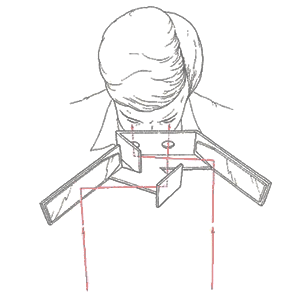
A pseudoscope [soo-duh-skohp] (‘false view’) is a binocular optical instrument that reverses depth perception. It is used to study human stereoscopic perception. Objects viewed through it appear inside out, for example: a box on a floor would appear as a box shaped hole in the floor. It typically uses sets of optical prisms, or periscopically arranged mirrors to swap the view of the left eye with that of the right eye.
In the 1800s Victorian scientist Charles Wheatstone coined the name and used the device to explore his theory of stereo vision. Switching the two pictures in a standard stereoscope changes all the elevated parts into depressions, and vice versa.
read more »
Posted in Health |
Leave a Comment »
June 9, 2012
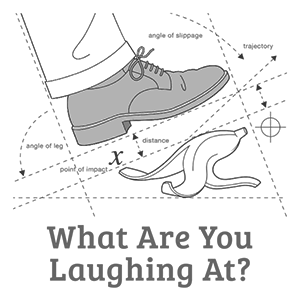
There are many theories of humor which attempt to explain what humor is, what social function it serves, and what would be considered humorous. It would be very difficult to explain humor to a hypothetical person who did not have a sense of humor already. In fact, to such a person humor would appear to be quite strange if not outright irrational behavior.
Among the prevailing types of theories that attempt to account for the existence of humor there are: psychological theories (the vast majority of which consider humor to be very healthy behavior); spiritual theories (which may consider humor to be a ‘gift from God’). There are also theories that consider humor to be an unexplainable mystery, very much like a mystical experience. Although various classical theories of humor and laughter may be found, in contemporary academic literature three theories of humor appear repeatedly: relief theory, superiority theory, and incongruity theory.
read more »
Posted in Health, Humor, Philosophy |
Leave a Comment »
June 9, 2012

Nervous laughter is laughter evoked from an audience’s expression of embarrassment, alarm, discomfort, or confusion, rather than amusement. Nervous laughter is usually less robust in expression than ‘a good belly laugh,’ and may be combined with confused glances or awkward silence on the part of others in the audience. Nervous laughter is considered analogous to a courtesy laugh, which may be rendered by more of a conscious effort in an attempt to move a situation along more quickly, especially when the comedian is pausing for laughter.
Nervous laughter is a physical reaction to stress, tension, confusion, or anxiety – just like sweaty palms or an elevated heart-rate. It’s not a conscious decision; it has nothing to do with one’s sense of humor and can occur at the unfunniest of times. Neuroscientist Vilayanur Ramachandran states ‘We have nervous laughter because we want to make ourselves think what horrible thing we encountered isn’t really as horrible as it appears, something we want to believe.’ Those are the most embarrassing times, too, naturally.
read more »
Posted in Health, Humor |
1 Comment »
June 8, 2012
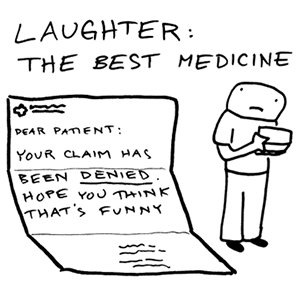
Laughter is an audible expression or appearance of excitement, an inward feeling of joy. It may ensue from jokes, tickling, and other stimuli. It is associated with a number of positive emotional states, such as joy, mirth, happiness, and relief. However on some occasions it may express other emotions, such as embarrassment, contrition, or confusion.
A nervous laugh or courtesy laugh is rendered by a more conscious effort, in an attempt to move a situation along more quickly. Laughter is a part of human behavior regulated by the brain, helping humans clarify their intentions in social interaction and providing an emotional context to conversations.
read more »
Posted in Health, Humor |
Leave a Comment »
June 7, 2012


The evolutionary psychology of religion is the study of religious belief using evolutionary psychology principles. As with all other organs and organ functions, the brain and cognition’s functional structure have been argued to have a genetic basis, and are therefore subject to the effects of natural selection and evolution. Like other organs and tissues, this functional structure should be universally shared amongst humans and should solve important problems of survival and reproduction. Evolutionary psychologists seek to understand cognitive processes, religion in this case, by understanding the survival and reproductive functions they might serve.
There is general agreement among scientists that a propensity to engage in religious behavior evolved early in human history. However, there is disagreement on the exact mechanisms that drove the evolution of the religious mind. There are two schools of thought. One is that religion itself evolved due to natural selection and is an adaptation, in which case religion conferred some sort of evolutionary advantage. Alternatively, religious beliefs and behaviors may have emerged as by-products of other adaptive traits without initially being selected for because of their own benefits (called spandrels).
read more »
Posted in Health, Philosophy, Science |
Leave a Comment »
May 25, 2012

The memory-prediction framework is a theory of brain function that was created by Jeff Hawkins and described in his 2004 book, ‘On Intelligence.’ This theory concerns the role of the mammalian neocortex and its associations with the hippocampus and the thalamus in matching sensory inputs to stored memory patterns and how this process leads to predictions of what will happen in the future.
The theory is motivated by the observed similarities between the brain structures (especially neocortical tissue) that are used for a wide range of behaviours available to mammals. It posits that the remarkably uniform physical arrangement of cortical tissue reflects a single principle or algorithm which underlies all cortical information processing.
read more »
Posted in Health, Science |
Leave a Comment »
May 21, 2012

Delayed gratification denotes a person’s ability to wait in order to obtain something that he or she wants. This intellectual attribute is also called impulse control, will power, self control, and ‘low’ time preference, in economics. Delay discounting is defined as ‘the preference for smaller immediate rewards over larger but delayed rewards and to the well established fact that the subjective value of reward decreases with increasing delay to its receipt.’ Sociologically, good impulse control is considered a positive personality trait.
Moreover, people who lack the psychological trait of being able to delay gratification are said to require instant gratification and might suffer poor impulse control. The Stanford Marshmallow Experiment indicates that good impulse control might be psychologically important for academic achievement and for success in adult life.
read more »
Posted in Health, Science |
1 Comment »
May 18, 2012

An anxiolytic [ang-zee-uh-lit-ik] is a drug used for the treatment of anxiety and its related psychological and physical symptoms. Anxiolytics have been shown to be useful in the treatment of anxiety disorders. Beta-blockers, although not anxiolytics, can be used to combat the somatic symptoms of anxiety (such as an elevated heart rate).
Anxiolytics are also known as minor tranquilizers. The term is less common in modern texts, and was originally derived from a dichotomy with major tranquilizers, also known as neuroleptics or antipsychotics.
read more »
Posted in Death, Drugs, Health |
1 Comment »
May 18, 2012

Selank is a nootropic (smart drug), anxiolytic (antianxiety) peptide (string of amino acids) based drug developed by the Institute of Molecular Genetics of the Russian academy of sciences. Selank is a synthetic analogue of the immunomodulatory peptide tuftsin; as such, it mimics many of its effects, strengthening the immune system.
It is has been shown to influence the concentration of monoamine neurotransmitters (e.g. dopamine, serotonin) and induce metabolism of serotonin. There is evidence that it may also modulate the expression of Brain-derived neurotropic factor (which is related to nerve growth) in rats.
read more »
Posted in Drugs, Health, World |
Leave a Comment »
May 17, 2012

Emotional intelligence is a thought model that claims that to be successful, people must be able to know their own feelings. They must also be able to guess and influence the emotions of other people, and of groups of other people. There are several different models that disagree about the exact definition of the term. Criticisms have centered on whether the construct is a real intelligence and whether it has incremental validity over IQ and the Big Five personality dimensions.
The earliest roots of emotional intelligence can be traced to Charles Darwin’s work on the importance of emotional expression for survival and, second, adaptation. In the 1900s, even though traditional definitions of intelligence emphasized cognitive aspects such as memory and problem-solving, several influential researchers in the intelligence field of study had begun to recognize the importance of the non-cognitive aspects. For instance, as early as 1920, American psychologist E.L. Thorndike used the term ‘social intelligence’ to describe the skill of understanding and managing other people.
read more »
Posted in Health, Science |
Leave a Comment »


 The Daily Omnivore