May 1, 2012
Intellectualization is a defense mechanism where reasoning is used to block confrontation with an unconscious conflict and its associated emotional stress, by ‘using excessive and abstract ideation to avoid difficult feelings.’ It involves removing one’s self, emotionally, from a stressful event.
Intellectualization may accompany, but ‘differs from rationalization, which is justification of irrational behavior through clichés, stories, and pat explanation.’ It is one of Freud’s original defense mechanisms. Freud believed that memories have both conscious and unconscious aspects, and that intellectualization allows for the conscious analysis of an event in a way that does not provoke anxiety.
read more »
Posted in Health |
Leave a Comment »
May 1, 2012
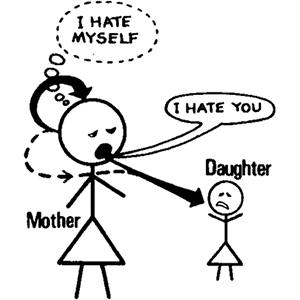
A defense mechanism is the coping technique individuals unconsciously use to protect themselves from getting hurt in unpleasant situations (e.g. conflicts, unhappiness). Without defense mechanism, people may suffer from psychological and mental illness. In Freudian psychoanalytic theory, defense mechanisms are unconscious, psychological strategies brought into play by various entities to cope with reality and to maintain self-image.
Healthy persons normally use different defenses throughout life. An ego defense mechanism becomes pathological only when its persistent use leads to maladaptive behavior such that the physical and/or mental health of the individual is adversely affected. The purpose of ego defense mechanisms is to protect the mind/self/ego from anxiety and/or social sanctions and/or to provide a refuge from a situation with which one cannot currently cope.
read more »
Posted in Health |
2 Comments »
April 30, 2012

Jung identified the anima [an-uh-muh] as being the unconscious feminine component of men, and the animus [an-uh-muhs] as the unconscious masculine component in women. However, this is rarely taken as a literal definition: many modern day Jungian practitioners believe that every person has both an anima and an animus. Jung stated that the anima and animus act as guides to the unconscious unified Self, and that forming an awareness and a connection with the anima or animus is one of the most difficult and rewarding steps in psychological growth. Jung reported that he identified his anima as she spoke to him, as an inner voice, unexpectedly one day.
Often, when people ignore the anima or animus the complexes, the anima or animus vies for attention by projecting itself on others. This explains, according to Jung, why we are sometimes immediately attracted to certain strangers: we see our anima or animus in them. Love at first sight is an example of anima and animus projection. Moreover, people who strongly identify with their gender role (e.g. a man who acts aggressively and never cries) have not actively recognized or engaged their anima or animus.
read more »
Posted in Health, Philosophy, Sex |
Leave a Comment »
April 30, 2012
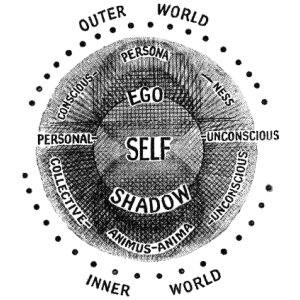
In Jungian psychology, the shadow is a part of the unconscious mind consisting of repressed weaknesses, shortcomings, and instincts. It is one of the three most recognizable archetypes, the others being the ‘anima and animus’ and the ‘persona.’ ‘Everyone carries a shadow,’ Jung wrote, ‘and the less it is embodied in the individual’s conscious life, the blacker and denser it is.’ It may be (in part) one’s link to more primitive animal instincts, which are superseded during early childhood by the conscious mind.
According to Jung, the shadow, in being instinctive and irrational, is prone to projection: turning a personal inferiority into a perceived moral deficiency in someone else. Jung writes that if these projections are unrecognized ‘The projection-making factor (the Shadow archetype) then has a free hand and can realize its object–if it has one–or bring about some other situation characteristic of its power.’ These projections insulate and cripple individuals by forming an ever thicker fog of illusion between the ego and the real world.
read more »
Posted in Health, Philosophy |
2 Comments »
April 30, 2012
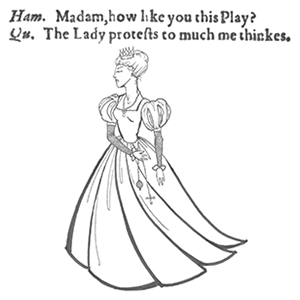
Projection is a psychological defense mechanism where a person subconsciously denies his or her own attributes, thoughts, and emotions, which are then ascribed to the outside world, usually to other people. Thus, projection involves imagining or projecting the belief that others originate those feelings. Projection reduces anxiety by allowing the expression of the unwanted unconscious impulses or desires without letting the conscious mind recognize them.
An example of this behavior might be blaming another for self failure. The mind may avoid the discomfort of consciously admitting personal faults by keeping those feelings unconscious, and by redirecting libidinal satisfaction by attaching, or ‘projecting,’ those same faults onto another person or object. The theory was developed by Sigmund Freud.
read more »
Posted in Health, Philosophy, Politics |
2 Comments »
April 30, 2012

In psychoanalytic theory, reaction formation is a defensive process (defense mechanism) in which anxiety-producing or unacceptable emotions and impulses are mastered by exaggeration (hypertrophy) of the directly opposing tendency. Reaction formation depends on the hypothesis that: ‘[t]he instincts and their derivatives may be arranged as pairs of opposites: life versus death, construction versus destruction, action versus passivity, dominance versus submission, and so forth.
When one of the instincts produces anxiety by exerting pressure on the ego either directly or by way of the superego, the ego may try to sidetrack the offending impulse by concentrating upon its opposite. For example, if feelings of hate towards another person make one anxious, the ego can facilitate the flow of love to conceal the hostility.’ Where reaction-formation takes place, it is usually assumed that the original, rejected impulse does not vanish, but persists, unconscious, in its original infantile form. Thus, where love is experienced as a reaction formation against hate, we cannot say that love is substituted for hate, because the original aggressive feelings still exist underneath the affectionate exterior that merely masks the hate to hide it from awareness.
read more »
Posted in Health, Sex |
Leave a Comment »
April 29, 2012

Methaqualone is a sedative-hypnotic drug that is similar in effect to barbiturates, a general central nervous system depressant. The sedative-hypnotic activity was first noted by Indian researchers in the 1950s and in 1962 methaqualone itself was patented in the US by Wallace and Tiernan. Its use peaked in the early 1970s as a hypnotic, for the treatment of insomnia, and as a sedative and muscle relaxant.
It has also been used illegally as a recreational drug, commonly known as Quaaludes [kwey-lood], Sopors, Ludes, or Mandrax (particularly in the 1970s in North America) depending on the manufacturer. At that time ‘luding out’ was a popular college pastime. This is the similar effect of an alcoholic blackout with no recollection of events. Since at least 2001, it has been widely used in South Africa, where it is commonly referred to as ‘smarties’ or ‘geluk-tablette’ (meaning ‘happy tablets’). Clandestinely produced methaqualone is still seized by government agencies and police forces around the world.
Posted in Drugs, Health, Politics |
Leave a Comment »
April 26, 2012

Foreign Accent Syndrome is a rare medically recognised condition which is a speech impediment that usually occurs as a resulting side effect of brain injury, such as a stroke or head trauma. As a result of the speech impediment those suffering from the Foreign Accent Syndrome pronounce their native language with an accent that to the ear of the listeners may be mistaken as foreign or dialectical.
It has many other impacts and effects, including poor memory and concentration span, as well as a feeling of loss of identity, potentially causing those affected to go through a bereavement process. Two cases have been reported of individuals with the condition as a development problem and one associated with severe migraine. Between 1941 and 2009 there have been sixty recorded cases.
read more »
Posted in Health, Language, World |
Leave a Comment »
April 26, 2012
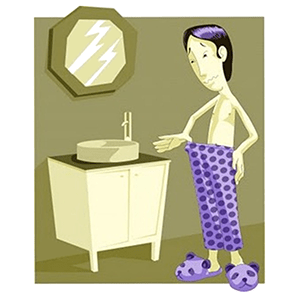
Koro is a culture-specific syndrome from Southeast Asia in which the person has an overpowering belief that his penis (or other genitalia) is shrinking and will shortly disappear. Also known as shrinking penis, the syndrome is listed in the Diagnostic and Statistical Manual of Mental Disorders. In China, it is known as ‘shuk yang.’
For females, the belief focuses on the nipples retracting or shrinking. Though the syndrome is rooted in China and found mostly in Southeast Asia, rare and isolated cases of koro are found in people of non-Chinese ethnicity worldwide. Episodes of epidemics occurred in the endemic nations. In a different cultural setting, mass hysteria of genital-shrinkage have been reported in African nations.
read more »
Posted in Health, Sex, World |
Leave a Comment »
April 24, 2012

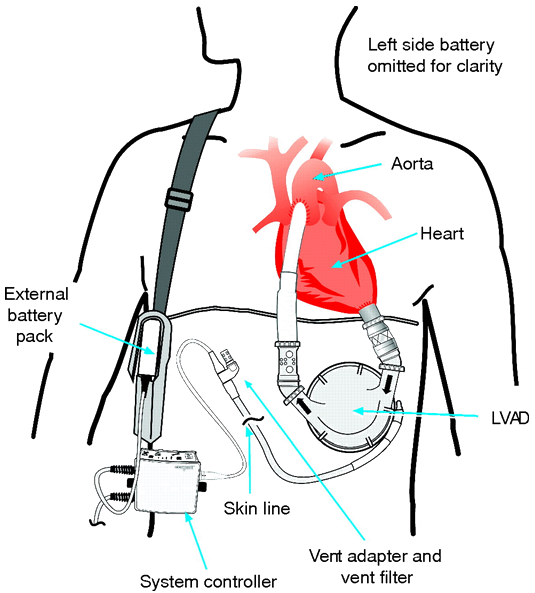
A Ventricular assist device [ven-trik-yuh-ler] (VAD) is a mechanical circulatory device that is used to partially or completely replace the function of a failing heart. Some VADs are intended for short term use, typically for patients recovering from heart attacks or heart surgery, while others are intended for long term use (months to years and in some cases for life), typically for patients suffering from congestive heart failure. VADs are designed to assist either the right (RVAD) or left (LVAD) ventricle, or both at once (BiVAD).
Which of these types is used depends primarily on the underlying heart disease and the pulmonary arterial resistance that determines the load on the right ventricle. LVADs are most commonly used, but when pulmonary arterial resistance is high, right ventricular assistance becomes necessary. Long term VADs are normally used to keep patients alive with a good quality of life while they wait for a heart transplantation (known as a ‘bridge to transplantation’). However, LVADs are sometimes used as ‘destination therapy’ (therapy when a heart transplant is not an option) and sometimes as a ‘bridge to recovery.’
read more »
Posted in Health, Technology |
Leave a Comment »
April 23, 2012

In traditional Chinese culture, qì [chee] is an active principle forming part of any living thing. Qi is frequently translated as life energy, lifeforce, or energy flow. Qi is the central underlying principle in traditional Chinese medicine and martial arts. The literal translation is ‘breath,’ ‘air,’ or ‘gas.’ Concepts similar to qi can be found in many cultures, for example, Prana in Vedantic philosophy, mana in Hawaiian culture, Lüng in Tibetan Buddhism, and Vital energy in Western philosophy.
Some elements of qi can be understood in the term ‘energy’ when used by writers and practitioners of various esoteric forms of spirituality and alternative medicine. Elements of the qi concept can also be found in popular culture, for example ‘The Force’ in ‘Star Wars’ Notions in the west of energeia, élan vital, or vitalism are purported to be similar.
read more »
Posted in Health, Philosophy, World |
Leave a Comment »
April 19, 2012


Superfood is an unscientific marketing term used in various contexts. For example, it is sometimes used to describe food with high nutrient or phytochemical content that may confer health benefits, with few properties considered to be negative, such as being high in saturated fats or artificial ingredients, food additives, or contaminants. An often-cited example of a superfruit is blueberries which contain moderate-rich concentrations of anthocyanins, vitamin C, manganese, dietary fiber, pterostilbene (an undefined phytochemical under preliminary research), and low calorie content.
Other examples of superfoods include broccoli, spinach, pumpkin, and tomatoes which are rich in various nutrients. All these fruits and vegetables contain a variety of nutrients and phytochemicals in varying amounts as do common plant foods like bananas, pineapples and potatoes which have only rarely been called superfoods. Fish may be considered a superfood due to their omega-3 fatty acids which may promote cognitive development.
read more »
Posted in Food, Health, Money |
Leave a Comment »