April 19, 2012

Cannabidiol [kah-nuh-bi-dye-awl] (CBD) is a cannabinoid found in Cannabis. It is a major constituent of the plant, representing up to 40% in its extracts. It has displayed sedative effects in animal tests. Some research, however, indicates that CBD can increase alertness. It may decrease the rate of THC clearance from the body, perhaps by interfering with the metabolism of THC in the liver. Medically, it has been shown to relieve convulsion, inflammation, anxiety, and nausea, as well as inhibit cancer cell growth. Recent studies have shown cannabidiol to be as effective as atypical antipsychotics in treating schizophrenia.
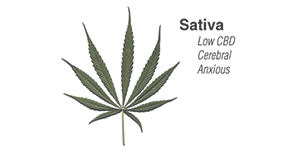
A Cannabis Indica plant may have a CBD/THC ratio 4:-5 times that of Cannabis sativa. Marijuana with relatively high ratios of CBD:THC is less likely to induce anxiety than vice versa. This might partial be due to CBD’s antagonist effects at the cannabidanoid receptor, compared to THC’s partial agonist effect. The relatively large amount of CBD contained in Cannabis indica, means, compared to a sativa, the effects are modulated significantly. The effects of Sativa are well known for its cerebral high, hence used daytime as medical cannabis, while Indica are well known for its sedative effects and preferred night time as medical cannabis.
Posted in Drugs, Health |
1 Comment »
April 18, 2012

Fighting in ice hockey is an established tradition of the sport in North America, with a long history involving many levels of amateur and professional play and including some notable individual fights. Although a source of criticism, it is a considerable draw for the sport. Fighting is usually performed by one or more enforcers, or ‘goons’—players whose role it is to fight and intimidate—on a given team and is governed by a complex system of unwritten rules that players, coaches, officials, and the media refer to as ‘the code.’
Some fights are spontaneous, while others are premeditated by the participants. While officials tolerate fighting during hockey games, they impose a variety of penalties on players who engage in fights. The NHL and most minor professional leagues in North America do not eject players outright for fighting, but major European and collegiate hockey leagues do, and multi-game suspensions may be added on top of the ejection.
read more »
Posted in Games, Health, Politics |
Leave a Comment »
April 18, 2012
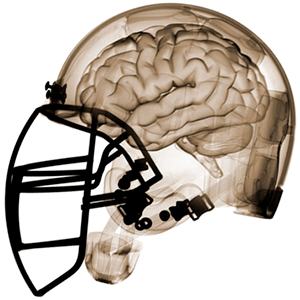
Dave Duerson (1960 – 2011) played in the NFL from 1983–1993. Duerson played football, basketball, and baseball in high school. He was given an opportunity to play for the Los Angeles Dodgers as a pitcher and outfielder in 1979, but declined, choosing to play football at Notre Dame from 1979 to 1982. He graduated with honors, with a BA in Economics. Duerson was selected to four consecutive Pro Bowls from 1986 to 1989 in his career, and won two championship rings, playing safety for the Bears (Super Bowl XX), and the Giants (Super Bowl XXV). He purchased the majority interest in Fair Oaks Farms (formerly Brooks Sausage Company) in 1995. Duerson grew the company from $24M revenue to over $63.5M in six years.
Duerson was found dead at his Florida home in the winter of 2011. The Miami-Dade County medical examiner reported that Duerson died of a self-inflicted gunshot wound to the chest. He sent a text message to his family saying he wanted his brain to be used for research at the Boston University School of Medicine, which is conducting research into chronic traumatic encephalopathy (CTE) caused by playing pro football. Researcher neurologists at Boston University confirmed that he suffered from a neurodegenerative disease linked to concussions.
Posted in Death, Games, Health |
Leave a Comment »
April 18, 2012

A food desert is any area in the industrialized world where healthy, affordable food is difficult to obtain. Food deserts are prevalent in rural as well as urban areas and are most prevalent in low-socioeconomic minority communities. They are associated with a variety of diet-related health problems. Food deserts are also linked with supermarket shortage.
The food desert concept was first introduced in the United Kingdom in the early 1990s to examine disparities in food pricing and to describe geographical areas with limited access to retail grocery stores. A food desert is a food environment unsupportive of health; it is defined by barriers which restrict access to healthful foods. Barriers may include lack of access to food retailers, availability of nutritious foods, or affordability of foods. Research has defined food deserts quantitatively or by neighborhood characteristics such as economic and social barriers.
read more »
Posted in Food, Health, Money |
1 Comment »
April 17, 2012
Katie Piper (b. 1983) is a former model and television presenter from the UK. Piper had hoped to have a full-time career in the media, but in 2008 sulfuric acid was thrown in her face. The attack, which blinded Piper in one eye, was arranged by Piper’s ex-boyfriend, Daniel Lynch, and carried out by an accomplice, Stefan Sylvestre. Lynch and Sylvestre were arrested and are serving life sentences in prison for their crimes.
Surgeons removed all the skin from her face before rebuilding it with a skin substitute and then a skin graft. The procedure was the first of its kind to be completed in a single operation. In 2009, Piper chose to give up her anonymity and attempt to increase awareness about burn victims. The Channel 4 documentary ‘Katie: My Beautiful Face’ was first aired that autumn.
Posted in Health, Politics |
Leave a Comment »
April 17, 2012

The terms empathogen [em-path-uh-jen] and entactogen are used to describe a class of psychoactive drugs that produce distinctive emotional and social effects similar to those of MDMA (‘Ecstasy’) characterized by increased empathy (the ability to understand and share the feelings of another). Putative members of this class include 2C-B, 2C-I, MDMA, MDA, MDEA, MBDB, 2C-T-7, and 2C-T-2, among others.
The chemical structure of many entactogens contains a substituted amphetamine core, and most belong to the phenethylamine class of psychoactive drugs, although several (AET and AMT) are tryptamines. When referring to MDMA and its counterparts, the term ‘MDxx’ is often used with the exception of MDPV.
read more »
Posted in Drugs, Health, Language |
Leave a Comment »
April 13, 2012

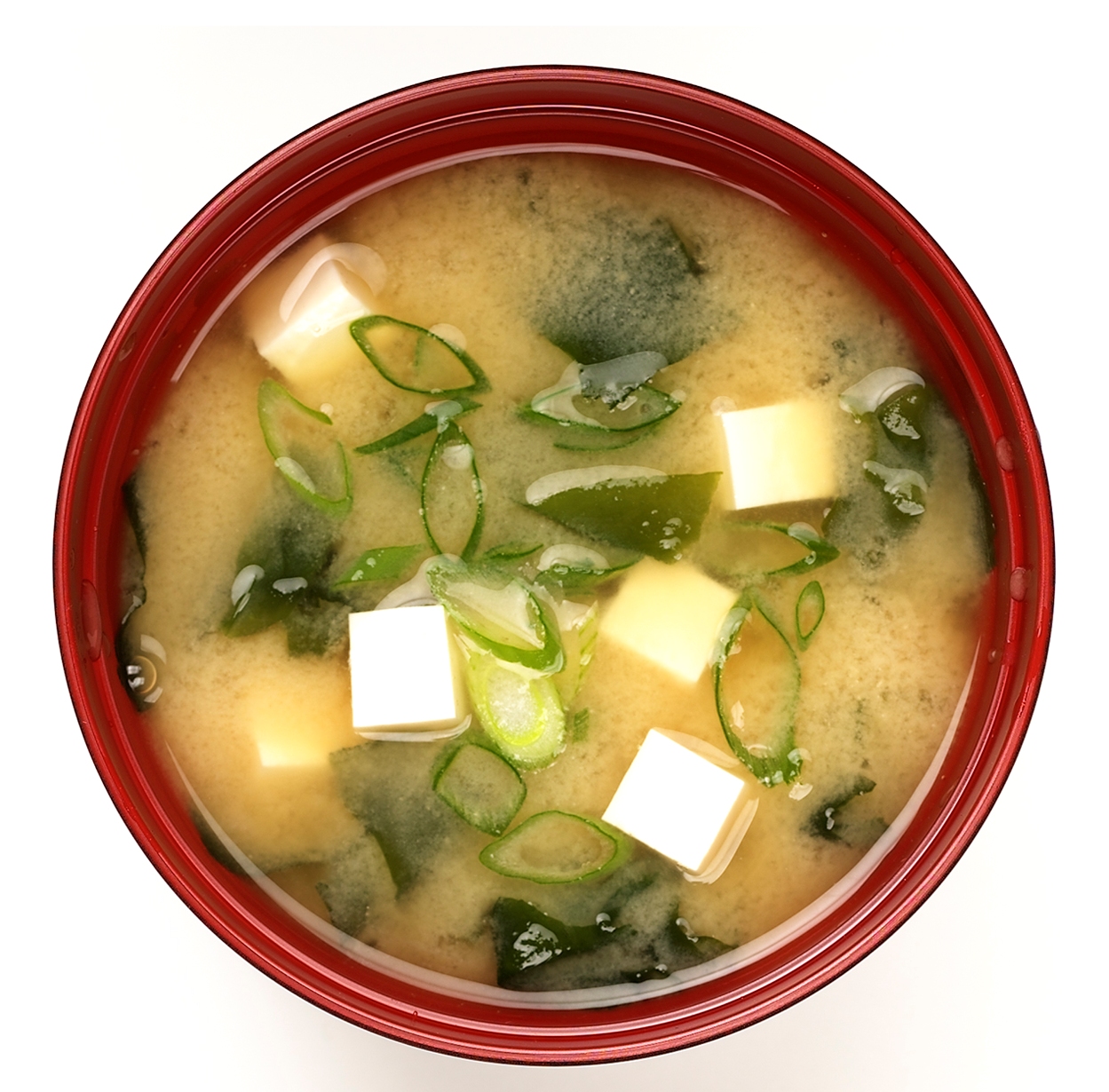
Miso [mee-soh] is a traditional Japanese seasoning produced by fermenting rice, barley and/or soybeans, with salt and the fungus kōjikin, the most typical miso being made with soy. The result is a thick paste used for sauces and spreads, pickling vegetables or meats, and mixing with dashi soup stock to serve as miso soup called ‘misoshiru,’ a Japanese culinary staple. High in protein and rich in vitamins and minerals, miso played an important nutritional role in feudal Japan.
Miso is still very widely used in Japan, both in traditional and modern cooking, and has been gaining world-wide interest. Miso is typically salty, but its flavor and aroma depend on various factors in the ingredients and fermentation process. There is a very wide variety of miso available. Different varieties of miso have been described as salty, sweet, earthy, fruity, and savory. The traditional Chinese analogue of miso is known as dòujiàng.
read more »
Posted in Food, Health, World |
1 Comment »
April 10, 2012
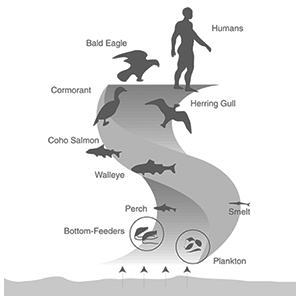
Bioaccumulation refers to the accumulation of substances, such as pesticides, or other organic chemicals in an organism. Bioaccumulation occurs when an organism absorbs a toxic substance at a rate greater than that at which the substance is lost. Thus, the longer the biological half-life of the substance the greater the risk of chronic poisoning, even if environmental levels of the toxin are not very high.
Bioconcentration is a related but more specific term, referring to uptake and accumulation of a substance from water alone. By contrast, bioaccumulation refers to uptake from all sources combined (e.g. water, food, air, etc.).
read more »
Posted in Food, Health, Politics |
Leave a Comment »
April 10, 2012
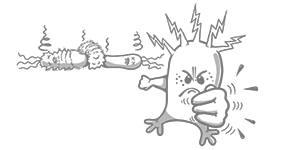

Triclosan [trik-loh-san] is an antibacterial and antifungal agent found in consumer products, including toothpaste, soaps, detergents, toys, and surgical cleaning treatments. In 2016, the FDA announced that effective September 2017, it would prohibit the sale of ‘consumer antiseptic washes’ containing triclosan or 18 other ingredients marketed as antimicrobials due to the FDA’s findings of the lack of efficacy in these products.
Despite being used in many consumer products, beyond its use in toothpaste to prevent gingivitis, there is no evidence according to the FDA that triclosan provides an extra benefit to health in other consumer products. A comprehensive analysis from the University of Michigan School of Public Health indicated that plain soaps are just as effective as consumer-grade antibacterial soaps with triclosan in preventing illness and removing bacteria from the hands.
read more »
Posted in Drugs, Health, Money |
Leave a Comment »
April 10, 2012
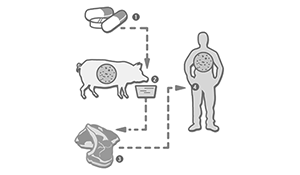

Antibiotic overuse is a contributing factor to the creation of multidrug-resistant bacteria, informally called ‘super bugs’: relatively harmless bacteria can develop resistance to multiple antibiotics and cause life-threatening infections. Though antibiotics are required to treat severe bacterial infections, misuse has contributed to a rise in bacterial resistance. The overuse of fluoroquinolone (a family of antibiotics) and other antibiotics fuels antibiotic resistance in bacteria, which can inhibit the treatment antibiotic-resistant infections. Their excessive use in children with otitis media (ear infection) has given rise to a breed of bacteria resistant to antibiotics entirely.
Widespread use of fluoroquinolones as a first-line antibiotic has led to decreased antibiotic sensitivity, with negative implications for serious bacterial infections such as those associated with cystic fibrosis, where quinolones are among the few viable antibiotics. Antibiotics have no effect on viral infections such as the common cold. They are also ineffective against sore throats, which are usually viral and self-resolving. Most cases of bronchitis (90–95%) are viral as well, passing after a few weeks—the use of antibiotics such as ofloxacin against bronchitis is superfluous and can put the patient at risk of suffering adverse reactions.
read more »
Posted in Drugs, Food, Health |
Leave a Comment »
April 9, 2012

In sexuality, the refractory period is the recovery phase after (normally male) orgasm during which it is physiologically impossible for an individual to have additional orgasms. Most men are unable to maintain or achieve an erection during this time, and many perceive a psychological feeling of ‘satiation’ and are temporarily uninterested in further sexual activity. The penis may be hypersensitive and further sexual stimulation may even feel painful during this time frame.
The refractory period varies widely among individuals and across species, ranging from minutes to days. An increased infusion of the hormone oxytocin during ejaculation is believed to be chiefly responsible for the refractory period and the amount by which oxytocin is increased may affect the length of each refractory period. Another chemical which is considered to be responsible for this effect is prolactin, which represses dopamine, which is responsible for sexual arousal.
read more »
Posted in Drugs, Health, Sex |
Leave a Comment »
April 9, 2012


Orgasm (from Greek: ‘to swell’) is the sudden discharge of accumulated sexual tension during the sexual response cycle, resulting in rhythmic muscular contractions in the pelvic region characterized by an intense sensation of pleasure. Experienced by males and females, orgasms are controlled by the involuntary, or autonomic, limbic system.
They are often associated with other involuntary actions, including muscular spasms in multiple areas of the body, a general euphoric sensation, and, frequently, body movements and vocalizations are expressed. The period after orgasm (known as a refractory period) is often a relaxing experience, attributed to the release of the neurohormones oxytocin and prolactin.
read more »
Posted in Health, Sex |
1 Comment »