January 16, 2012
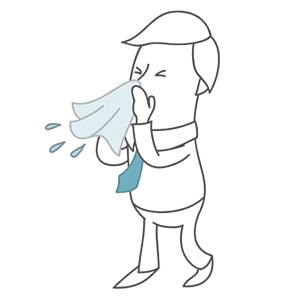
Presenteeism [prez-uhn-tee-iz-uhm] is the act of attending work while sick. A topic that is at times considered its opposite, absenteeism, has historically received extensive attention in the management sciences, but presenteeism has only recently found a place in research literature. Management researchers in Europe, such as Simpson (1998), were some of the first to explore this topic, but those in epidemiology and other health related fields have also examined the effects of this behavior.
While the construct is often cited as coming to work while sick, Johns (2010) further noted that the definitions do not assign any motives to presenteeism. An employee, therefore, may come to work because he or she simply needs the money and cannot afford to take time off due to illness. Additionally, one could go to work due to a love and devotion to the job. In this case, presenteeism could be considered an act of organizational citizenship and inspire admiration from colleague. Therefore, simply viewing presenteeism as a negative act that leads to productivity loss and decreased health may be restricting potential analysis of the construct.
Posted in Health, Money |
Leave a Comment »
January 16, 2012
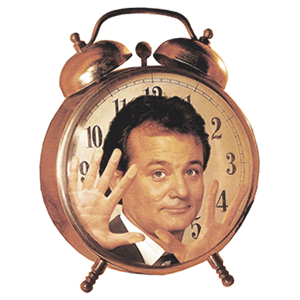
Repetition compulsion is a psychological phenomenon in which a person repeats a traumatic event or its circumstances over and over again. This includes reenacting the event or putting oneself in situations where the event is likely to happen again. This ‘re-living’ can also take the form of dreams in which memories and feelings of what happened are repeated, and even hallucination.
The term can also be used to cover the repetition of behaviour or life patterns more broadly: a ‘key component in Freud’s understanding of mental life, ‘repetition compulsion’…describes the pattern whereby people endlessly repeat patterns of behavior which were difficult or distressing in earlier life.’
read more »
Posted in Health |
Leave a Comment »
January 10, 2012

A donor offspring, or donor conceived person, is conceived via the donation of sperm (sperm donation) or ova (egg donation), or both, either from two separate donors or from a couple. In the case of embryo donation, the conceiving parents are a couple.
Donor conceived people may never learn of their true birth origins as information about their true biological parent(s) is not recorded on the birth certificate. This is compounded by the fact that only a small proportion (av. 10%) of donor conceived people will ever be informed of the nature of their conception by the recipient parent(s).
read more »
Posted in Health, Politics, Sex |
Leave a Comment »
January 3, 2012
Trip sitter is a term used by recreational or spiritual drug users to describe a person who remains sober to ensure the safety of the drug user while he or she is under the influence of a drug; they are especially common with first-time experiences or when using psychedelics, dissociatives, and deliriants. This practice can be qualified as a means of harm reduction. Also called a Psychedelic Guide, this latter term is more often used to describe someone who takes an active role in shaping a drug user’s experiences as opposed to a sitter who merely remains present, ready to discourage bad trips and handle emergencies, but not otherwise uninvolved. Guides are more common among spiritual users of entheogens and were strongly encouraged by psychedelic researcher Timothy Leary.
Although an ideal sitter is one who is both personally experienced with the substance being used, as well as trained to deal with psychological or medical issues that may arise, arguably the most important qualities may be the willingness to help, the discipline to stay sober enough to be fully present, and the ability to be relaxed, accepting, and not interfere with the experience beyond the wishes of the user. When using a short-acting substance such as smoked DMT or Salvia divinorum, it may be possible for two people to take turns, with one being the sitter while the other takes the psychedelic.
Posted in Drugs, Health |
1 Comment »
January 3, 2012
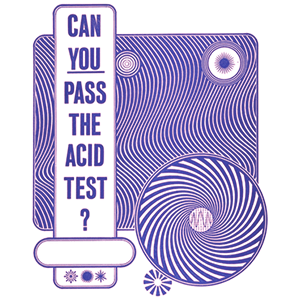
Set and setting describes the context for psychedelic drug experiences: one’s mindset and the setting in which the user has the experience. The term was coined by Timothy Leary, and became widely accepted by researchers in psychedelic psychotherapy.
‘Set’ is the mental state a person brings to the experience, like thoughts, mood and expectations. ‘Setting’ is the physical and social environment. Social support networks have shown to be particularly important in the outcome of the psychedelic experience. They are able to control or guide the course of the experience, both consciously and subconsciously. Stress, fear, or a disagreeable environment, may result in an unpleasant experience (bad trip). Conversely, a relaxed, curious person in a warm, comfortable and safe place is more likely to have a pleasant experience.
read more »
Posted in Drugs, Health |
1 Comment »
January 3, 2012
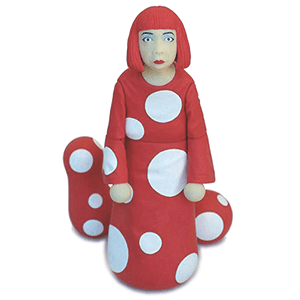
Yayoi [yah-yoy] Kusama [koo-sah-muh] (b. 1929) is a Japanese artist whose paintings, collages, soft sculptures, performance art and environmental installations all share an obsession with repetition, pattern, and accumulation (she has described herself as an ‘obsessive artist’). Kusama’s work is based in Conceptual art (in which the concepts or ideas involved in the work take precedence over traditional aesthetic and material concerns) and shows some attributes of feminism, minimalism, surrealism, Art Brut, pop art, and abstract expressionism, and is infused with autobiographical, psychological, and sexual content.
Kusama is also a published novelist and poet, and has created notable work in film and fashion design. She has long struggled with mental illness, and has experienced hallucinations and severe obsessive thoughts since childhood, often of a suicidal nature. She claims that as a small child she suffered physical abuse by her mother. In 2008, a work by her sold for $5.1 million, a record for a living female artist.
read more »
Posted in Art, Health, Money |
1 Comment »
January 3, 2012
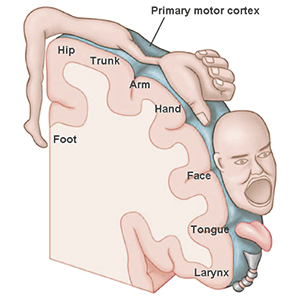
A cortical [kawr-ti-kuhl] homunculus [huh-muhng-kyuh-luhs] is a pictorial representation of the size of the brain areas for various parts of human anatomy. It is a visual representation of the concept of ‘the body within the brain’ that one’s hand or face exists as much as a series of nerve structures or a ‘neuron concept’ as it does a physical form. This concept relates to many neuro-biological phenomena including ‘phantom limb’ and ‘body integrity identity disorder’ (a psychological disorder wherein sufferers feel they would be happier living as an amputee).
There are two types of homunculus: sensory and motor. Each one shows a representation of how much of its respective cortex innervates certain body parts. The reason for the bizarre, distorted appearance of the homunculus is that the amount of cerebral tissue or cortex devoted to a given body region is proportional to how richly innervated and sensitive, or the number of muscles and motor units within that region is, not to its size. The resulting image is a grotesquely disfigured human with disproportionately huge hands, lips, and face in comparison to the rest of the body.
Posted in Health, Science |
Leave a Comment »
December 29, 2011

Hair of the dog is a colloquial expression in the English language predominantly used to refer to alcohol that is consumed with the aim of lessening the effects of a hangover. The expression originally referred to a method of treatment of a rabid dog bite by placing hair from the dog in the wound. The use of the phrase as a metaphor for a hangover treatment dates back at least to the time of Shakespeare. It is possible that the phrase was used to justify an existing practice, ‘similia similibus curantur’ (Latin: ‘like cures like’), which dates back to ancient Greece.
Similarly, in the 1930’s cocktails known as Corpse Revivers were served by hotel staff to guests ailing from too much drink.
read more »
Posted in Drugs, Health, Language |
Leave a Comment »
December 23, 2011
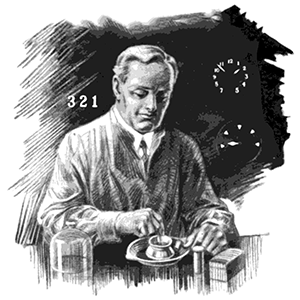
Undark was a trade name for luminous paint made with a mixture of radioactive radium and zinc sulfide, as produced by the U.S. Radium Corporation between 1917 and 1938. It was used primarily in watch dials.
The people working in the industry who applied the radioactive paint became known as the Radium Girls, because many of them became ill and some died from exposure to the radiation emitted by the radium contained within the product. The product was the direct cause of Radium jaw in the dial painters. Undark was also available as a kit for general consumer use and marketed as glow-in-the-dark paint.
Posted in Health, Money, Technology |
Leave a Comment »
December 17, 2011

No poo (short for ‘no shampoo’) is a collective term for methods of washing hair without commercial shampoo. Methods for washing hair without shampoo include washing with dissolved baking soda, followed by an acidic rinse such as diluted apple cider vinegar. Also honey and various oils (such as coconut oil) can be used. The notion of non-shampooed hair being unhealthy is reinforced by the greasy feeling of the scalp after a day or two of not shampooing. However, using shampoo every day removes sebum, the oil produced by the scalp. This causes the sebaceous glands to produce oil at a higher rate to compensate for what is lost during shampooing.
A gradual reduction in shampoo use will cause the sebaceous glands to produce at a slower rate, resulting in less oil on the scalp. Shampoo typically contains chemical additives such as sulfates (e.g. sodium lauryl sulfate). These chemicals can irritate the skin of sensitive persons (or of anyone if not promptly rinsed). Some shampoos also include silicone derivatives (e.g. dimethicone), which coats the hair, protecting it and making it more manageable; however, it also prevents moisture from entering the hair, eventually drying it out. Dimethicone is a common ingredient in smoothing serums and detangling conditioners.
Posted in Health, Money |
Leave a Comment »
December 15, 2011

Bad trip (or psychedelic crisis) is a disturbing experience sometimes associated with use of a psychedelic drug such as LSD, Salvia, DXM, mescaline, psilocybin, DMT and sometimes even other drugs including cannabis, alcohol and MDMA. The manifestations can range from feelings of vague anxiety and alienation to profoundly disturbing states of unrelieved terror, ultimate entrapment, or cosmic annihilation.
Psychedelic specialists in the therapeutic community do not necessarily consider unpleasant experiences as threatening or negative, focusing instead on their potential to be highly beneficial to the user when properly resolved. They can be exacerbated by the inexperience or irresponsibility of the user or the lack of proper preparation and environment for the trip, and are reflective of unresolved psychological tensions triggered during the course of the experience.
read more »
Posted in Drugs, Health |
Leave a Comment »
December 8, 2011
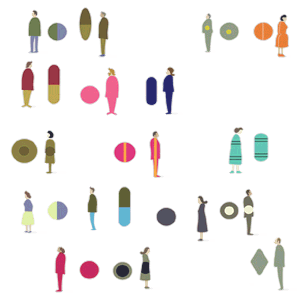
Personalized medicine is a medical model emphasizing the customization of healthcare, with all decisions and practices tailored to individual patients. Recently, this has mainly involved the systematic use of genetic or other information about an individual patient to select or optimize preventative and therapeutic care. Over the past century, medical care has centered on standards of care based on epidemiological studies of large cohorts. However, large cohort studies have previously been unable take into account the genetic variability of individuals within a population. Personalized medicine seeks to provide an objective basis for consideration of such individual differences. Traditionally, personalized medicine has been limited to the consideration of a patient’s family history, social circumstances, environment and behaviors.
Since the late 1990s, the advent of research using biobanks (cryogenic storage facilities that archive biological samples) has brought advances in a number of molecular profiling technologies including proteomic profiling, metabolomic analysis, genetic testing, and molecular medicine. Since about 2007 the term Stratified medicine has been used for the current approach.
Posted in Health, Technology |
Leave a Comment »



 The Daily Omnivore