November 22, 2011
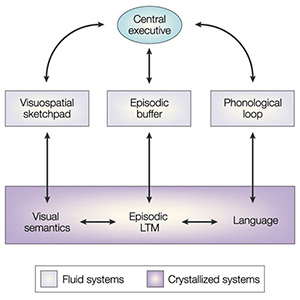
Dysexecutive [dis-ig-zek-yuh-tiv] syndrome (DES) consists of a group of symptoms, usually resulting from brain damage, that fall into cognitive, behavioral and emotional categories and tend to occur together. The term was introduced by British psychologist Alan Baddeley to describe a common pattern of dysfunction in executive functions, such as planning, abstract thinking, flexibility and behavioral control.
It is thought to be Baddeley’s theory of working memory and the central executive that are the hypothetical systems impaired in DES. The syndrome was once known as frontal lobe syndrome, however dysexecutive syndrome is preferred because it emphasizes the functional pattern of deficits (the symptoms) over the location of the syndrome in the frontal lobe, which is often not the only area affected.
read more »
Posted in Health, Science |
Leave a Comment »
November 22, 2011

Sluggish Cognitive Tempo (SCT) is an unformalized descriptive term which is used to better identify a subgroup within the formal subgroup ‘ADHD-PI predominantly inattentive.’ SCT is not recognized in any standard medical manuals such as the DSM-IV or the ICD-10. In many ways, those who have an SCT profile have the opposite symptoms of those with classic ADHD: instead of being hyperactive, extroverted, obtrusive, and risk takers, those with SCT are drifting, introspective and daydreamy, and feel as if ‘in the fog’ (although in excited states, an SCT patient behaves very similarly to a traditional ADHD patient). They also don’t have the same risk factors and outcomes.
A key behavioral characteristic of those with SCT symptoms is that they are more likely to appear to be lacking motivation. They lack energy to deal with mundane tasks and will consequently seek things that are mentally stimulating because of their underaroused state, an intense craving for emotional and intellectual stimulation. Those with SCT symptoms show a qualitatively different kind of attention deficit that is more typical of a true information input-output problem, such as memory retrieval and active working memory, and display a wavering ‘up and down’ mental pattern with extremely variable levels of intense thought, hyperactivity, failing memory, and sexual appetite. Conversely, those with the other two subtypes of ADHD are characteristically excessively energetic and have no difficulty processing information.
read more »
Posted in Education, Health |
1 Comment »
November 21, 2011

Steve Haworth is a body modification artist based in Phoenix, Arizona. He is responsible for the invention and popularization of subdermal and transdermal implants, such as the ‘Metal Mohawk.’ He designed specialized medical instruments called dermal elevators for this process. He has also done pioneering work with surface bars, ear shaping, tongue splitting, magnetic implants, and artistic branding (using electrocautery units). He has worked on individuals noted for their extensive modifications such as The Enigma, Katzen, Stalking Cat and The Lizardman. Many other respected artists in the body modification community cite Haworth as an inspiration. Fellow body modification artist Samppa von Cyborg says that ‘He’s the most important, most respected body modder out there.’ Shawn Porter of body modification blog ‘Scar Wars’ explains, ‘I directly credit Steve’s branding as a main influence on the newer generation of scarification artists; his high detail branding (which caused a stir when it was featured in ‘In the Flesh,’ ‘Body Art,’ and ‘Bizarre’) showed people that you could do more than just dots, chevrons and geometric shapes.’
Haworth’s father was a manufacturer of surgical equipment, and he continued in the family business, eventually branching into piercing jewelry and body modification instruments. Currently he is retired from regular piercing, preferring to concentrate on 3D implants and other types of body modification. He continues to manufacture body jewelry and tools for body modification. He and his business partner Jesse Jarrell create unique silicone jewelry for large-gauge piercing with their company Kaos Softwear. Haworth travels around the country and the world frequently, and conducts seminars on his body modification techniques. He founded the body suspension group ‘Life Suspended’ and performs suspensions with them on regular basis. He is also the co-founder of the production company ‘Horns & Halos,’ which puts on several fetish-themed events every year.
Posted in Art, Health, Technology |
Leave a Comment »
November 21, 2011
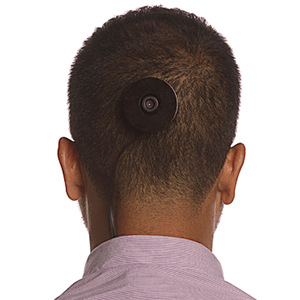
In body modification, an implant is a device placed under the human skin for decorative purposes. Such implants may be subdermal (beneath the skin) or transdermal (partially below and partially above the skin). In the context of body modification, some may consider injections of silicone and other substances a type of implant as well. Some types of implants may be performed by doctors or other medical professionals, while others are performed by body modification artists.
Examples include collarbone piercing, deep chest piercing, eyeball implants, flesh stapling, genital beading, magnetic implants, and scrotal implants. A clavicle or collarbone piercing is a very deep piercing that passes beneath the collarbone, and therefore enters the body cavity. These are highly prone to rejection as the collarbone placement is a high movement area.
read more »
Posted in Art, Health, Technology |
Leave a Comment »
November 20, 2011
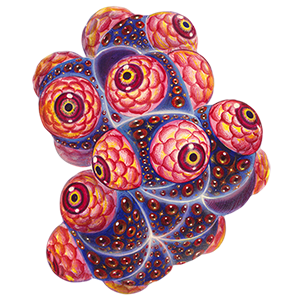
Rick Strassman (b. 1952) is psychiatrist and psychopharmacology researcher, and the first person in the US after twenty years of intermission to embark in human research with psychedelic, hallucinogenic, or entheogenic substances. During the intermission period, research was restricted by law to animals studies only.
Dr Strassman’s studies aimed to investigate the effects of DMT (dimethyltryptamine), a powerful psychedelic, that he hypothesizes is produced by the human brain in the pineal gland. DMT is found naturally in various natural sources, and is related to human neurotransmitters such as serotonin and melatonin.
read more »
Posted in Drugs, Health, Science |
Leave a Comment »
November 19, 2011
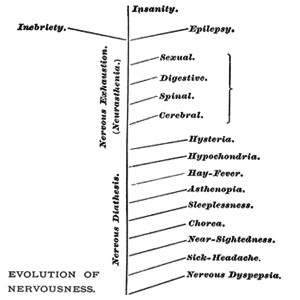
Neurasthenia [noor-uhs-thee-nee-uh] is a psycho-pathological term first used by American neurologist George Miller Beard in 1869 to denote a condition with symptoms of fatigue, anxiety, headache, neuralgia (pain of the nerves) and depressed mood. It is currently a diagnosis in the World Health Organization’s International Classification of Diseases (and in the Chinese Classification of Mental Disorders).
However, it is no longer included as a diagnosis in the American Psychiatric Association’s Diagnostic and Statistical Manual of Mental Disorders. Americans were supposed to be particularly prone to neurasthenia, which resulted in the nickname ‘Americanitis’ (popularized by American psychologist William James). Today, the condition is still commonly diagnosed in Asia.
read more »
Posted in Drugs, Health, World |
Leave a Comment »
November 16, 2011

The sweat lodge is a ceremonial sauna and is an important event in some Native American cultures. There are several styles of sweat lodges that include a domed or oblong hut similar to a wigwam, or even a simple hole dug into the ground and covered with planks or tree trunks. Stones are typically heated in an exterior fire and then placed in a central pit in the ground. Early occurrences can be found in the fifth century BCE, when Scythians constructed pole and woolen cloth sweat baths.
Vapor baths were in use among the Celtic tribes, and the sweat-house was in general use in Ireland down to the 18th, and even survived into the 19th century. It was of beehive shape and was covered with clay. It was especially resorted to as a cure for rheumatism. Rituals and traditions vary from region to region and from tribe to tribe. They often include prayers, drumming, and offerings to the spirit world. In some cultures a sweat-lodge ceremony may be a part of another, longer ceremony such as a Sun Dance.
read more »
Posted in Drugs, Health, Philosophy |
Leave a Comment »
November 10, 2011
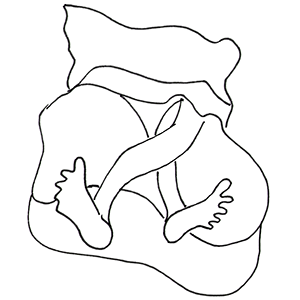
Restless legs syndrome (RLS) or Willis-Ekbom disease is a neurological disorder characterized by an irresistible urge to move one’s body to stop uncomfortable or odd sensations. It most commonly affects the legs, but can affect the arms, torso, and even phantom limbs. Moving the affected body part modulates the sensations, providing temporary relief. RLS sensations can most closely be compared to an itching or tickling in the muscles, like ‘an itch you can’t scratch’ or an unpleasant ‘tickle that won’t stop.’ The sensations typically begin or intensify during quiet wakefulness, such as when relaxing, reading, studying, or trying to sleep.
As with many diseases with diffuse symptoms, there is controversy among physicians as to whether RLS is a distinct syndrome. The U.S. National Institute of Neurological Disorders and Stroke publishes an information sheet characterizing the syndrome but acknowledging it as a difficult diagnosis. Physicians generally consider it a real entity that has specific diagnostic criteria., but many doctors express the view that the incidence of restless leg syndrome is exaggerated by manufacturers of drugs used to treat it. Others believe it is an underrecognized and undertreated disorder.
Posted in Drugs, Health, Money |
Leave a Comment »
November 10, 2011

In popular usage, eccentricity [ek-suhn-tris-i-tee] (also called quirkiness or kookiness) refers to unusual or odd behavior on the part of an individual. This behavior would typically be perceived as unusual or unnecessary, without being demonstrably maladaptive. Eccentricity is contrasted with ‘normal’ behavior, the nearly universal means by which individuals in society solve given problems and pursue certain priorities in everyday life. People who consistently display benignly eccentric behavior are labeled as ‘eccentrics.’
Derived from Greek ekkentros, ‘out of the center,’ the word ‘eccentric’ first appeared in English in 1551 as an astronomical term meaning ‘a circle in which the earth, sun, etc. deviates from its center.’ Five years later, in 1556, an adjective form of the word was added. 129 years later, in 1685, the definition evolved from the literal to the figurative, and eccentric began being used to describe unconventional or odd behavior. A noun form of the word – a person who possesses and exhibits these unconventional or odd qualities/behaviors – didn’t appear until 1832.
read more »
Posted in Health, Language, Money |
1 Comment »
November 10, 2011
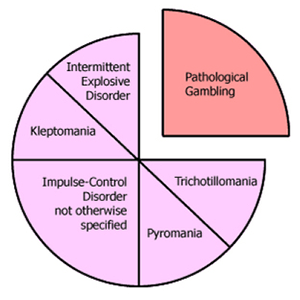
Impulse control disorder is a set of psychiatric disorders including intermittent explosive disorder, kleptomania, pathological gambling, pyromania (fire-starting), and three body-focused repetitive or compulsive behaviors (trichotillomania, a compulsion to pull one’s hair out; onychophagia, compulsive nail biting; and dermatillomania, compulsive skin picking). The onset of these disorders usually occurs between the ages of 7 and 15. Impulsivity, the key feature of these disorders, can be thought of as seeking a small, short term gain at the expense of a large, long term loss. Those with the disorder repeatedly demonstrate failure to resist their behavioral impetuosity.
Considered to be part of the obsessive-compulsive disorder spectrum, impulse control disorders are often associated with substance use disorders because ‘it has been speculated that these disorders are mediated by alterations of partially overlapping neural circuits.’ Impulse control disorders have two treatment options: psychosocial and pharmacological. Treatment methodology is informed by the presence of comorbid conditions.
Posted in Health |
Leave a Comment »
November 10, 2011
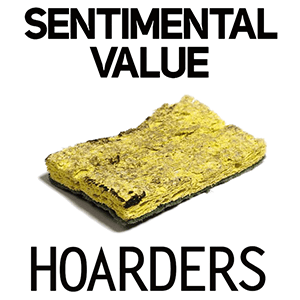
Compulsive hoarding (or disposophobia) is the acquisition of possessions (and failure to use or discard them) in excess of socially normative amounts, even if the items are worthless, hazardous, or unsanitary. Compulsive hoarding may impair mobility and interfere with basic activities, including cooking, cleaning, hygiene, sanitation, bathroom use and sleeping. It is not clear whether compulsive hoarding is an isolated disorder, or rather a symptom of another condition, such as obsessive-compulsive disorder.
While there is no clear definition of compulsive hoarding in accepted diagnostic criteria (such as the current DSM), there are several defining features: the acquisition of, and failure to discard, a large number of possessions that appear to be useless or of limited value; living spaces sufficiently cluttered so as to preclude activities for which those spaces were designed; significant distress or impairment in functioning caused by the hoarding; and reluctance or inability to return borrowed items; as boundaries blur, impulsive acquisitiveness could sometimes lead to stealing or kleptomania.
read more »
Posted in Health, Money |
2 Comments »
November 9, 2011

The Mozart effect can refer to: A set of research results that indicate that listening to Mozart’s music may induce a short-term improvement on the performance of certain kinds of mental tasks known as spatial-temporal reasoning; popularized versions of the theory, which suggest that ‘listening to Mozart makes you smarter, or that early childhood exposure to classical music has a beneficial effect on mental development. The term was first coined by Alfred A. Tomatis who used Mozart’s music as the listening stimulus in his work attempting to cure a variety of disorders.
The approach has been popularized in a book by Don Campbell, and is based on an experiment published in ‘Nature’ suggesting that listening to Mozart temporarily boosted scores on one portion of the IQ test. As a result, the Governor of Georgia, Zell Miller, proposed a budget to provide every child born in Georgia with a CD of classical music. Subsequent studies have had limited success duplicating the Mozart effect, and its validity is debated.
Posted in Art, Education, Health |
Leave a Comment »


 The Daily Omnivore