October 28, 2011

A child beauty pageant is a beauty contest featuring contestants including and younger than 18 years of age. Divisions include talent, interview, sportswear, casual wear, swim wear, western wear, theme wear, outfit of choice, decade wear, and evening wear, typically wearing makeup as well as elaborate hairstyles. The contestants wear custom fitted and designed outfits to present their routines on stage.
Some pageants do their best to make every child feel like a winner. There is a queen for every age division and there are Ultimate Grand Supreme awards, Mini supreme queens for certain blocks of age divisions (0-5, 6-11, 12-16, 17 and up). There are also side awards and overall side awards. Pageants may cater to the ‘natural’ contestant (who typically wears minimal makeup, only her own hair, no false teeth, no spray tan, and unmanicured nails) and/or the ‘high glitz’ contestant (who typically uses any and all of the above listed techniques to enhance her appearances).
read more »
Posted in Health, Politics, Sex |
14 Comments »
October 23, 2011

The Center for Inquiry(CFI) is a non-profit educational organization with headquarters in the United States whose primary mission is to encourage evidence-based inquiry into paranormal and fringe science claims, alternative medicine and mental health practices, religion, secular ethics, and society.
CFI is dedicated to promoting and defending science, reason, and free inquiry in all aspects of human interest.
read more »
Posted in Health, Philosophy, Science |
Leave a Comment »
October 15, 2011

Nocturnal Sleep-Related Eating Disorder (NSRED), also known as sleep eating or somnambulistic eating, is a combination of a parasomnia (sleep disorders) and an eating disorder. It is a category within somnambulism (sleepwalking) that includes behaviors connected to a person’s conscious wishes or wants. Thus many times NSRED is a person’s fulfilling of their conscious wants that they suppress; however, this disorder is difficult to distinguish from other similar types of disorders. NSRED is closely related to Night Eating Syndrome (NES) except for the fact that those suffering from NES are completely awake and aware of their eating and bingeing at night while those suffering from NSRED are sleeping and unaware of what they are doing. Both disorders have a common occurrence of approximately one to five percent of adults, and have been predominantly found in women, with a young adult onset.
Typical behaviors include: ‘Partial arousals from sleep, usually within 2 to 3 hours of sleep onset, and subsequent ingestion of food in a rapid or ‘out of control’ manner.’ Sleep eaters also attempt to eat bizarre amalgamations of foods and even potentially harmful substances such as glue, wood, or other toxic materials. Paatients eat sweets, pastas, both hot and cold meals, improper substances such as ‘raw, frozen, or spoiled foods; salt or sugar sandwiches; buttered cigarettes; and odd mixtures prepared in a blender.’ Some eat their food with their bare hands while others attempt to eat it with utensils. This occasionally results in injuries to the person as well as other injuries.
Posted in Food, Health |
1 Comment »
October 15, 2011

Somniloquy [som-nil-o-kwee] or sleep-talking is a parasomnia (sleep disorder) that refers to talking aloud in one’s sleep. It can be quite loud, ranging from simple sounds to long speeches, and can occur many times during sleep. Listeners may or may not be able to understand what the person is saying. Sleep-talking usually occurs during transitory arousals from NREM sleep, which is when the body does not move smoothly from one stage in NREM sleep to another, and they become partially aroused from sleep. Further it can also occur during REM sleep at which time it represents a motor breakthrough (see sleep paralysis) of dream speech, words spoken in a dream are spoken out loud.
Sleep-talking is very common and is reported in 50% of young children, with most of them outgrowing it by puberty, although it may persist into adulthood (about 4% of adults are reported to talk in their sleep). It appears to run in families. Sleep-talking can be associated with fever. Sleep-talking by itself is harmless; however, it can wake up others and cause them consternation—especially when misinterpreted as conscious speech by an observer. If the sleep-talking is dramatic, emotional, or profane it may be a sign of another sleep disorder. Sleep-talking can be monitored by a partner or by using an audio recording device; devices which remain idle until detecting a sound wave are ideal for this purpose. Polysomnography (sleep recording) shows episodes of sleep talking that can occur in any stage of sleep.
Posted in Health, Language |
Leave a Comment »
October 13, 2011

Hypnagogia [hip-nuh-gah-jee-uh] is a term coined by French physician Alfred Maury in the 19th century for the transitional state between wakefulness and sleep (i.e. the onset of sleep). It is characterized by dreamlike auditory, visual, or tactile sensations.
Sometimes the word hypnagogia is used in a restricted sense to refer to the onset of sleep, and contrasted with hypnopompia, Frederic Myers’s term for waking up. The hypnagogic state can provide insight into a problem, the best known example being August Kekulé’s realization that the structure of benzene was a closed ring after dozing in front of a fire and seeing atoms forming into snakes, one of who grabbed its tail in its mouth.
read more »
Posted in Health, Language, Science |
1 Comment »
October 13, 2011

Nootropics [no-eh-tro-pik], also referred to as smart drugs or memory enhancers, are drugs that improve mental functions such as cognition, memory, intelligence, motivation, attention, and concentration. The word nootropic was coined in 1972 by Dr. Corneliu E. Giurgea of Romania, derived from the Greek words nous, or ‘mind,’ and trepein meaning ‘to bend/turn.’
Nootropics are thought to work by altering the availability of the brain’s supply of neurochemicals (neurotransmitters, enzymes, and hormones), by improving the brain’s oxygen supply, or by stimulating nerve growth. However the efficacy of nootropic substances, in most cases, has not been conclusively determined. This is complicated by the difficulty of defining and quantifying cognition and intelligence.
read more »
Posted in Drugs, Health |
1 Comment »
October 13, 2011

A microsleep is an episode of sleep which may last for a fraction of a second or up to thirty seconds. Often, it is the result of sleep deprivation, mental fatigue, depression, sleep apnea, hypoxia, narcolepsy, or hypersomnia. For the sleep-deprived, microsleeping can occur at any time, typically without substantial warning. Microsleeps become extremely dangerous when they occur in situations which demand constant alertness, such as driving a motor vehicle or working with heavy machinery. People who experience microsleeps usually remain unaware of them, instead believing themselves to have been awake the whole time, or to have temporarily lost focus.
There is little agreement on how best to identify microsleep episodes. Some experts define microsleep according to behavioral criteria (head nods, drooping eyelids, etc.), while others rely on EEG markers. When experiencing microsleeps while driving an automobile, from the perspective of the driver, he or she drives a car, and then suddenly realizes that several seconds have passed by unnoticed. It is not obvious to the driver that he or she was asleep during those missing seconds, although this is in fact what happened. The sleeping driver is at very high risk for having an accident during a microsleep episode.
Posted in Health |
Leave a Comment »
October 13, 2011

A power nap is a short sleep which terminates before the occurrence of deep sleep or slow-wave sleep (SWS), intended to quickly revitalize the subject. The expression was coined by Cornell University social psychologist James Maas. The power nap is thought to maximize the benefits of sleep versus time. It is used to supplement normal sleep, especially when a sleeper has accumulated a sleep deficit. Scientific experiments and anecdotal evidence suggest that an average power nap duration of around 15–30 minutes is most effective. Any more time, and the body enters into its usual sleep cycle.
Various durations are recommended for power naps, which are very short compared to regular sleep. The short duration of a power nap is designed to prevent nappers from sleeping so long that they enter a normal sleep cycle without being able to complete it. Entering a normal sleep cycle, but failing to complete it, can result in a phenomenon known as sleep inertia, where one feels groggy, disoriented, and even more sleepy than before beginning the nap. In order to attain maximum post-nap performance, it is critical that a power nap be limited to the beginning of a sleep cycle, specifically sleep stages I and II.
read more »
Posted in Health, Language, Science |
Leave a Comment »
October 13, 2011
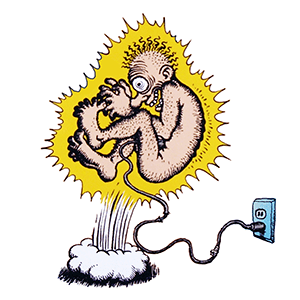
Symptoms described as ‘brain zaps,’ ‘brain shocks,’ ‘brain shivers,’ or ‘cranial zings’ are a withdrawal symptom experienced during discontinuation (or reduction of dose) of antidepressant drugs. The symptoms are widely variable in description and of unknown etiology; common descriptions include dizziness, electric shock-like sensations, sweating, nausea, insomnia, tremor, confusion, nightmares, and vertigo.
The ‘preferred term’ for coding these types of symptoms in adverse drug reaction reports is ‘paraesthesia’ (more generally known as the feeling of ‘pins and needles’).
Posted in Drugs, Health, Language |
Leave a Comment »
October 13, 2011
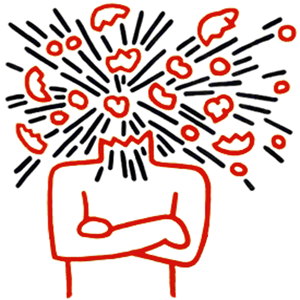
Exploding head syndrome is a parasomnia condition (sleep disorder) that causes the sufferer occasionally to experience a tremendously loud noise as originating from within his or her own head, usually described as the sound of an explosion, roar, gunshot, loud voices or screams, a ringing noise, or the sound of electrical arcing (buzzing). This noise usually occurs within an hour or two of falling asleep, but is not necessarily the result of a dream and can happen while awake as well. While the sound is perceived as extremely loud, it is usually not accompanied by pain. In some cases an instant flash of what is perceived as video ‘static’ is reported.
Attacks appear to change in number over time, with several attacks occurring in a space of days or weeks followed by months of remission. Sufferers often feel a sense of fear and anxiety after an attack, accompanied by elevated heart rate. Attacks are also often accompanied by perceived flashes of light (when perceived on their own, known as a ‘visual sleep start’) or difficulty in breathing. The condition is also known as ‘auditory sleep starts.’ It is not thought to be dangerous, although it is sometimes distressing to experience. Sufferers may experience an inability to vocalize any sound, or mild forms of sleep paralysis during an attack.
read more »
Posted in Health |
Leave a Comment »
October 13, 2011

A life review is a phenomenon widely reported as occurring during near-death experiences, in which a person rapidly sees much or the totality of his or her life history in chronological sequence and in extreme detail. It is often referred to by people having experienced this phenomenon as having their life ‘flash before their eyes.’
A reformatory purpose seems commonly implicit in accounts, though not necessarily for earthly purpose, since return from a near-death experience may reportedly entail individual choice. While individuals sometimes report reviews took place in the company of otherworldly beings who shared the observation, they also say they felt unjudged during the process, leaving themselves their own strongest critics.
read more »
Posted in Death, Health, Philosophy |
Leave a Comment »
October 13, 2011

An out-of-body experience (OBE) is an experience that typically involves a sensation of floating outside of one’s body and, in some cases, perceiving one’s physical body from a place outside one’s body (autoscopy). The term was introduced in 1943 by G.N.M Tyrrell in his book ‘Apparitions,’ and adopted as a bias-free alternative to belief-centric labels such as ‘astral projection,’ ‘soul travel,’ or ‘spirit walking.’
Though the term usefully distances researchers from scientifically problematic concepts such as the soul, scientists still know little about the phenomenon. Some researchers believe they have managed to recreate OBE in a laboratory setup by stimulating a part in the human brain. One in ten people has an out-of-body experience once, or more commonly, several times in their life. OBEs are often part of the near-death experience. Those who have experienced OBEs sometimes claim to have observed details which were unknown to them beforehand.
read more »
Posted in Death, Health, Philosophy |
Leave a Comment »



 The Daily Omnivore