October 13, 2011

Binaural [bahy-nawr-uhl] beats or binaural tones are auditory processing artifacts, or apparent sounds, the perception of which arises in the brain for specific physical stimuli. This effect was discovered in 1839 by Heinrich Wilhelm Dove, and earned greater public awareness in the late 20th century based on claims that binaural beats could help induce relaxation, meditation, creativity and other desirable mental states. The effect on the brainwaves depends on the difference in frequencies of each tone, for example, if 300 Hz was played in one ear and 310 in the other, then the Binaural beat would have a frequency of 10 Hz.
The brain produces a phenomenon resulting in low-frequency pulsations in the amplitude and sound localization of a perceived sound when two tones at slightly different frequencies are presented separately, one to each of a subject’s ears, using stereo headphones. A beating tone will be perceived, as if the two tones mixed naturally, out of the brain. The frequencies of the tones must be below 1,000 hertz for the beating to be noticeable. The difference between the two frequencies must be small (less than or equal to 30 Hz) for the effect to occur; otherwise, the two tones will be heard separately and no beat will be perceived. Binaural beats reportedly influence the brain in more subtle ways through the entrainment of brainwaves and have been claimed to reduce anxiety and provide other health benefits such as control over pain.
read more »
Posted in Health, Science, Technology |
1 Comment »
October 13, 2011

A mind machine (or psychowalkman) uses pulsing rhythmic sound and/or flashing light to alter the brainwave frequency of the user. Mind machines are said to induce deep states of relaxation, concentration, and in some cases altered states of consciousness that have been compared to those obtained from meditation and shamanic rituals. The process applied by these machines is also known as brainwave synchronization or entrainment. Mind machines typically consist of a control unit, a pair of headphones and/or strobe light goggles. The unit controls the sessions and drives the LEDs in the goggles. Professionally, they are usually referred to as Auditory Visual Stimulation devices (AVS). Sessions will typically aim at directing the average brainwave frequency from a high level to a lower level by ramping down in several sequences. Target frequencies typically correspond to delta (1-3 hertz), theta (4–7 Hz), alpha (8–12 Hz) or beta brain waves (13–40 Hz), and can be adjusted by the user based on the desired effects.
There have been a number of claims regarding binaural beats (auditory processing artifacts or apparent sounds), among them that they may help people memorize and learn, stop smoking, tackle erectile dysfunction and improve athletic performance. However, research into binaural beats is very limited. No conclusive studies have been released to support marketing claims for binaural beat systems. Mind machines are often used together with biofeedback or neurofeedback equipment in order to adjust the frequency on the fly. Modern mind machines can connect to the Internet to update the software and download new sessions. When sessions are used in conjunction with meditation, neurofeedback, etc. the effect can be amplified. Rapidly flashing lights may be dangerous for people with photosensitive epilepsy or other nervous disorders. It is thought that one out of 10,000 adults will experience a seizure while viewing such a device; about twice as many children will have a similar ill effect.
Posted in Health, Money, Technology |
Leave a Comment »
October 13, 2011

The term ‘psychedelic experience‘ is vague – characterized by polyvalence or ambiguity due to its nature – however in modern psychopharmacological science as well as philosophical, psychological, neurological, spiritual-religious and most other ideological discourses it is understood as an altered state of awareness often distinct to, and induced by the consumption of certain psychotropics.
In particular hallucinogens, many entheogens and specifically psychedelic compounds are known to cause this change in mental state.
read more »
Posted in Drugs, Health, Philosophy |
Leave a Comment »
October 7, 2011

Hysterical strength describes displays of extreme strength by humans, beyond what is believed to be normal. It is a speculative term that is not recognized in medical academia; the concept has only a small body of anecdotal evidence to support it.
The most common anecdotal examples are of mothers lifting automobiles to rescue their children, and when people are in life and death situations. Hysterical strength can result in torn muscles and damaged joints. This is why, in addition to high lactic acid production, the body limits the number of muscle fibers the human body uses.
Posted in Health, Language |
Leave a Comment »
September 29, 2011


Technophobia is the fear or dislike of advanced technology or complex devices, especially computers. The term is generally used in the sense of an irrational fear, but others contend fears are justified. It is the opposite of technophilia. First receiving widespread notice during the Industrial Revolution, technophobia has been observed to affect various societies and communities throughout the world. This has caused some groups to take stances against some modern technological developments in order to preserve their ideologies. In some of these cases, the new technologies conflict with established beliefs, such as the personal values of simplicity and modest lifestyles.
A number of examples of technophobic ideas can be found in multiple forms of art, ranging from literary works such as ‘Frankenstein’ to films like ‘Metropolis.’ Many of these works portray the darker side of technology as seen by the technophobic. As technologies become increasingly complex and difficult to understand, people are more likely to harbor anxieties relating to their use of modern technologies.
read more »
Posted in Health, Language, Technology |
Leave a Comment »
September 29, 2011

The sleeping position is the body configuration assumed by a person during or prior to sleeping. It has been shown to have health implications, particularly for babies. In the 1958 edition of his best-selling book ‘The Common Sense Book of Baby and Child Care,’ pediatrician Dr. Benjamin Spock warned against placing a baby on its back, writing, ‘if [an infant] vomits, he’s more likely to choke on the vomitus.’ However, later studies have shown that placing a young baby in a prone position increases the risk of sudden infant death syndrome (SIDS).
Pregnancy.org champions ‘SOS’ (sleep on side), particularly the left side, for pregnant women, claiming this ‘will increase the amount of blood and nutrients that reach the placenta and your baby.’ It is recommended that people at risk of obstructive sleep apnea sleep on their side and with a 30° or higher elevation of the upper body. Snoring, which may be (but is not necessarily) an indicator of obstructive sleep apnea, may also be alleviated by sleeping on one’s side.
read more »
Posted in Health, Science, Sex |
Leave a Comment »
September 25, 2011

Menstrual [men-stroo-uhl] synchrony [sing-kruh-nee], also known as the McClintock Effect, or the Wellesley Effect is a phenomenon reported in 1971 wherein the menstrual cycles of women who lived together (such as in homes, prisons, convents, bordellos, dormitories, or barracks) reportedly became synchronized over time. The existence of menstrual synchrony has not been definitively established, and studies investigating it have been controversial.
The phenomenon of menstrual synchrony also addresses the larger question of whether or not humans have and can perceive pheromones, or utilize chemosignaling. Psychologist Martha McClintock was the first scientist to do a study on menstrual synchrony, reporting her findings in ‘Nature’ in 1971.
read more »
Posted in Health, Science, Sex |
2 Comments »
September 25, 2011
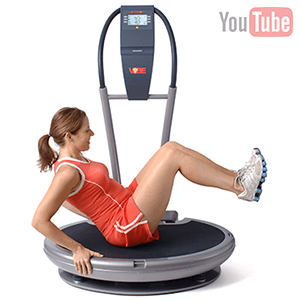
Whole body vibration (WBV) therapy was explored by Russian scientist Vladimir Nazarov, who tested vibration on cosmonauts in an effort to decrease the loss of muscle and bone mass in space. As there is minimal gravitational force in space, muscles and bones are not loaded as they normally are on earth. Humans in space lose their muscular strength very quickly, which is why they are not able to easily walk when they come back to earth. The decrease of bone density increases the risk of bone fractures, so it’s not safe to stay in space for extended periods. The aerospace industry in the former Soviet Union worked with vibration training. Before their departure, cosmonauts were subjected to special training sessions so that the density of their bones would increase and their muscular strength would rise.
A particular form of WBV is vibration training, which is becoming increasingly popular. Initially, vibration training was mainly used in the fitness industry, but the use of vibration equipment is expanding quickly. It is now widely used in physical therapy, rehabilitation and professional sports, but it is also increasingly used for beauty and wellness applications.
read more »
Posted in Health, Money, Technology |
Leave a Comment »
September 25, 2011
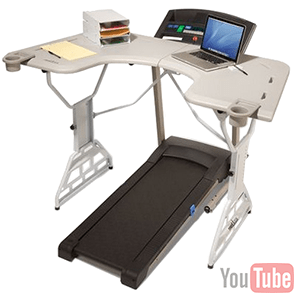
A treadmill desk is a work desk built around a treadmill. A person using the treadmill desk walks slowly on the treadmill while continuing to perform office tasks at the desk. There are several types of treadmill desks available on the open market. Some incorporate a traditional treadmill with a desktop built over it, while most are now commercially built for this specific use. The aim of a treadmill desk is to integrate movement and gentle exercise into the working day of an otherwise sedentary office worker. Rather than sitting all day in a chair, a treadmill desk allows desk-based workers to stand and take a slow walk while working.
A treadmill desk is not typically used for a cardio workout, as most users find walking at a speed of 1.0 – 2.0 mph the ideal range. At slower walking speeds, most able-bodied people can undertake desk-based tasks such as typing or talking on the telephone. However, even at these slower speeds, a person may burn 100 – 150 calories per hour, which may result in increased fitness and weight loss. The aim of the treadmill desk is to improve fitness and reduce obesity in office workers. Scientific research has also shown that walking, like other forms of mild exercise, can also improve one’s mental alertness, heighten creativity, fight depression, increase productivity and improve one’s mood.
Posted in Health, Money, Technology |
Leave a Comment »
September 25, 2011

A standing desk is both an antique desk and a modern desk form conceived for writing and/or reading while standing up or while sitting on a high stool. The term stand-up or stand up desk is also used. During the 18th and 19th centuries, standing desks were popular in the homes and offices of the rich. While most modern desks are 30 inches (76 cm.) high and most antique desks 29 inches high (73.7 cm), there is no such average for standing desks.
Users of a ‘sitting desk’ are fairly immobile so it is relatively easy to adjust the height of a seat to compensate for variations in the individual height of the users. Users of a standing desk move around a bit more, so it is not practical to have them stand on a small pedestal or some other object. Thus, standing desks tend to vary greatly in height.
read more »
Posted in Health, Money, Technology |
2 Comments »
September 20, 2011

Bless you, or God bless you, is a common English expression addressed to a person after they sneeze. In non-English-speaking cultures, words referencing good health or a long life are often used instead of ‘bless you,’ though some also use references to God. English speakers also respond to sneezing with the German word Gesundheit, which means ‘health.’
The origin of the custom and its original purpose is unknown. Several possible origins are commonly given. The practice of blessing someone who sneezes, dating as far back as at least 77 CE, however, is far older than most specific explanations can account for.
read more »
Posted in Health, Language, Philosophy |
1 Comment »
September 13, 2011

Steatopygia [stee-at-uh-pahy-jee-uh] is a high degree of fat accumulation in and around the buttocks. The deposit of fat is not confined to the gluteal regions, but extends to the outside and front of the thighs, forming a thick layer reaching sometimes to the knee. This development constitutes a genetic characteristic of the Khoisan, an African ethnic group, where it is regarded as a sign of feminine beauty: it begins in infancy and is fully developed by the time of the first pregnancy. It is often accompanied by the formation known as elongated labia (labia minora that may extend as much as 4 inches outside the vulva). This was historically known as the ‘hottentot apron’ — now deemed a very offensive term.
It has been suggested that this feature was once more widespread. Paleolithic Venus figurines, sometimes referred to as ‘steatopygian Venus’ figures, discovered from Europe to Siberia and presenting a remarkable development of the thighs, and even the prolongation of the labia minora, have been used to support this theory. Whether these were intended to be lifelike or exaggeratory, even idealistic, is unclear. However, these figures do not strictly qualify as steatopygian, since they exhibit an angle of approximately 120 degrees between the back and the buttocks, while steatopygia is diagnosed at an angle of about 90 degrees only.
Posted in Health, Sex, World |
Leave a Comment »


 The Daily Omnivore