August 30, 2011

The term anal retentive, commonly abbreviated to anal, is used conversationally to describe a person who pays such attention to detail that the obsession becomes an annoyance to others, and can be carried out to the detriment of the anal-retentive person. The term derives from Freudian psychoanalysis. People who are said to be anal retentive usually suffer from obsessive–compulsive personality disorder. In the psychology of Freud, the anal stage is said to follow the oral stage of infant or early-childhood development. This is a time when an infant’s attention moves from oral stimulation to anal stimulation (usually the bowels but occasionally the bladder), usually synchronous with learning to control his or her excretory functions, a time of toilet training.
Freud theorized that children who experience conflicts during this period of time may develop ‘anal’ personality traits, namely those associated with a child’s efforts at excretory control: orderliness, stubbornness, a compulsion for control. If these qualities continue into later life, the person is said to be ‘anal retentive.’ Conversely, those who reject anal characteristics are said to have ‘anal expulsive’ personality types. Although Freud’s theories on early childhood have been influential on the psychological community, research suggests that the overall pattern of parental attitudes has a much more concrete effect on how an infant will grow up. There is no conclusive research linking anal stage conflicts with ‘anal’ personality types.
Posted in Health, Language |
Leave a Comment »
August 26, 2011
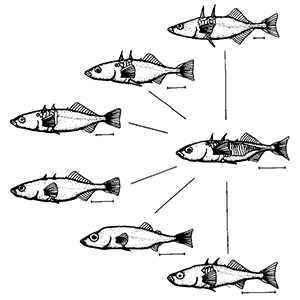
Assortative mating is the phenomenon where a sexually reproducing organism chooses to mate with individuals that are similar (positive assortative mating) or dissimilar (negative assortative mating) to itself in some specific manner. In evolution, these two types of assortative mating have the effect, respectively, of increasing or reducing the range of variation (trait variance), when the assorting is cued on heritable traits. Positive assortative mating, therefore, results in disruptive natural selection, and negative assortative mating results in stabilized natural selection.
Assortative mating has been invoked to explain sympatric speciation (the process through which new species evolve from a single ancestral species while inhabiting the same geographic region). For some populations there are two different resources for which different phenotypes (genetic traits) are optimum. Intermediates between these two phenotypes are less favorable. It is then favorable if the organisms can recognize mates that are optimized for the same resources as they are themselves. If mutations that make such recognition possible appear, these will be selected for.
read more »
Posted in Health, Science, Sex |
Leave a Comment »
August 25, 2011

In decision making and psychology, decision fatigue refers to the deteriorating quality of decisions made by an individual, after a long session of decision making. It is now understood as one of the causes of irrational trade-offs in decision making. For instance, judges have been shown to make poorer decisions later in the day. Decision fatigue can not only results in fast and careless decisions, but even in decision paralysis where no decision is made at all. In the formal approach to decision quality management, specific techniques have been devised to help managers cope with decision fatigue.
Trade-offs, where either of two choices have positive and negative elements, are an advanced and energy consuming form of decision making. A person who is mentally depleted becomes reluctant to make trade-offs, or makes very poor choices. Jonathan Levav at Stanford University designed experiments showing how decision fatigue can leave a person vulnerable to sales and marketing strategies designed to time the sale.
read more »
Posted in Health, Money, Science |
Leave a Comment »
August 25, 2011

Ego depletion refers to the idea that self-control or willpower is an exhaustible resource that can be used up. When that energy is low, mental activity that requires self-control is impaired. In other words, using one’s self-control impairs the ability to control one’s self later on. In an illustrative experiment on ego depletion, participants who controlled themselves by trying not to laugh while watching a comedian did worse on a later task that required self-control compared to participants who watching the video and were free to laugh.
Much of the early research on ego depletion was performed by social psychologists Roy Baumeister, Mark Muraven, and their colleagues. In a recent series of studies, they suggest that a positive mood stimulus could help restore the depleted energy. For example, watching short clips of stand-up comedy by Robin Williams and Eddie Murphy can restores the capacity to self-regulate. The work is experimental and does not consider in depth the mechanisms by which performance is restored. Whether it is because of an actual restoration of self-regulatory resources or provides an additional motivation to press on with a depleted self remains an open question., and a study from Carol Dweck and other researchers from Stanford University, questions the ego depletion theory, and presents evidence that ‘a person’s mindset and personal beliefs about willpower determine how long and how well they’ll be able to work on a tough mental exercise.’
Posted in Health, Language, Science |
Leave a Comment »
August 15, 2011

Oniomania [oh-nee-uh-mey-nee-uh] (Greek: onios ‘for sale’ and mania ‘insanity’) is the technical term for the compulsive desire to shop, more commonly referred to as compulsive shopping, shopping addiction, shopaholism, compulsive buying or CB. All of these are considered to be either clinical addictions or impulse control disorders, depending on the clinical source. ‘Originally termed oniomania by Kraepelin (1915) and Bleuler (1924), CB has been described for over 100 years’; but though included among other pathological and reactive impulses, CB went largely ignored for the middle quarters of the twentieth century, and even today ‘Compulsive Shopping is a painful yet virtually unknown mental illness.’
‘Some psychiatrists believe compulsive buying is more indicative of an impulse control disorder, others think it is more indicative of an obsessive-compulsive disorder, or bipolar disorder’ or even an addiction. It has been accepted as a disorder by the Deutsche Gesellschaft Zwangserkrankungen (German organization for obsessive-compulsive disorders), for several years; but in the United States, ‘an Impulse control disorder not otherwise specified…is the diagnostic category usually accorded to compulsive buying.’
read more »
Posted in Health, Money |
Leave a Comment »
August 14, 2011
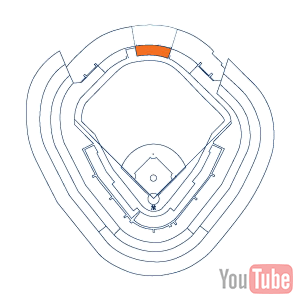
The batter’s eye is a solid-colored, usually dark area beyond the center field wall of a baseball stadium, that is the visual backdrop directly in the line of sight of a baseball batter, while facing the pitcher and awaiting a pitch. This dark surface allows the batter to see the pitched ball against a sharply contrasted and uncluttered background. Its primary purpose is the safety of the batter.
The use of a batter’s background has been standard in baseball (as well as cricket) since at least the late 19th century. The Batter’s Eye performs the same role at a baseball venue as the sightscreen does at a cricket venue, except that a cricket sightscreen is usually white in order to contrast with the dark red cricket ball. Alternatively a black screen is used to contrast the white Kookaburra Limited Overs cricket ball.
read more »
Posted in Games, Health |
Leave a Comment »
August 7, 2011

A false awakening is a vivid dream about awakening from sleep. After a false awakening, subjects often dream they are performing daily morning rituals such as cooking, cleaning and eating. The experience is sometimes called a double dream, or a dream within a dream. A false awakening may occur following an ordinary dream or following a lucid dream (one in which the dreamer has been aware of dreaming). Particularly if the false awakening follows a lucid dream, the false awakening may turn into a ‘pre-lucid dream,’ that is, one in which the dreamer may start to wonder if they are really awake and may or may not come to the correct conclusion.
In a study by Harvard psychologist Deirdre Barrett, 2,000 dreams from 200 subjects were examined and it was found that false awakenings and lucidity were significantly more likely to occur within the same dream or within different dreams of the same night. False awakenings often preceded lucidity as a cue, but they could also follow the realization of lucidity, often losing it in the process.
read more »
Posted in Health, Philosophy, Science |
Leave a Comment »
August 4, 2011

Whole grains are cereal grains that contain cereal germ, endosperm, and bran, in contrast to refined grains, which retain only the endosperm. Whole Grains can generally be sprouted while refined grains generally will not sprout. Wholemeal products are made by grinding whole grains in order to make whole grain flour. Whole grains are a natural source of protein as well as a source of carbohydrates and are made into many different kinds of foods.
There are multiple grains such as cereal grains (e.g. wheat, brown rice, oats, barley, corn, and rye) as well as pseudocereals (e.g. quinoa and buckwheat) that may be labeled whole grains. Common whole grain products include: whole wheat bread, whole wheat pasta, rolled oats, and popcorn. By contrast, common refined-grain products include: white rice, white bread, hominy, and pasta.
read more »
Posted in Food, Health |
Leave a Comment »
August 4, 2011
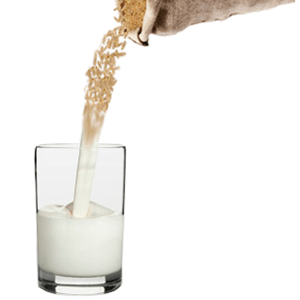
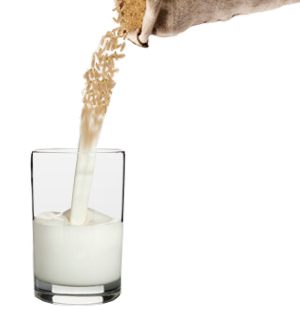
Grain milk is a milk substitute made from fermented grain or from flour. Grain milk can be made from oats, spelt, rice, rye, einkorn wheat or quinoa, and looks very similar to cow’s milk. It has a lower protein content and a higher carbohydrate content than cow’s milk. Just as cow’s milk is often fortified, grain milks may have calcium and some vitamins (especially B12) added to them.
Grain milk is low in saturated fat and contains no lactose, which is beneficial for those who are lactose intolerant. Grain milk also lacks milk protein, making it suitable for vegans and people with milk allergies. Flavored grain milk can come in plain, vanilla, chocolate or a variety of other flavors. There are also grain milk cream and desserts available.
Posted in Food, Health |
Leave a Comment »
August 4, 2011
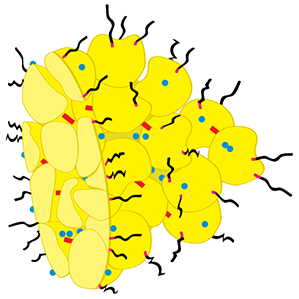
Milk is a white liquid produced by the mammary glands of mammals. It is the primary source of nutrition for infants before they are able to digest other types of food. Early-lactation milk contains colostrum, which carries the mother’s antibodies to the baby and can reduce the risk of many diseases in the baby. The precise components of raw milk vary by species and by a number of other factors, but it contains significant amounts of saturated fat, protein and calcium as well as vitamin C.
In almost all mammals, milk is fed to infants through breastfeeding, either directly or by expressing the milk to be stored and consumed later. Some cultures, historically or currently, continue to use breast milk to feed their children until they are seven years old. Human infants sometimes are fed fresh goat milk, but there are known risks in this practice, such as developing a host of allergic reactions.
read more »
Posted in Food, Health, Science |
Leave a Comment »
August 1, 2011

Stephen LaBerge (born 1947) is a psychophysiologist and a leader in the scientific study of lucid dreaming. In 1967 he received his Bachelor’s Degree in mathematics. He received his Ph.D. in Psychophysiology at Stanford University in 1980.
He developed a technique to enable himself and other researchers to enter a lucid dream state at will, MILD (mnemonic induction of lucid dreams), which was necessary for many forms of dream experimentation. In 1987, he founded The Lucidity Institute, an organization that promotes research into lucid dreaming, as well as running courses for the general public on how to achieve a lucid dream.
read more »
Posted in Health, Science |
1 Comment »
August 1, 2011

Freckles are clusters of concentrated melanin (an organic pigment ubiquitous in nature) which are most often visible on people with a fair complexion. A freckle is also called an ‘ephelis.’ In contrast to lentigines (liver spots) and moles, freckles do not have an increased number of melanin producing cells (melanocytes). Freckles can be found on anyone no matter their genetic background; however, having freckles is genetic and is related to the presence of a dominant gene.
The formation of freckles is triggered by exposure to sunlight: UV-B radiation activates melanocytes to increase melanin production, which can cause freckles to become darker. Freckles are predominantly found on the face, although they may appear on any skin exposed to the sun, such as the shoulders. They are rare on infants, and more commonly found on children before puberty. Upon exposure to the sun, freckles will reappear if they have been altered with creams or lasers and not protected from the sun, but do fade with age in some cases. They can also be treated with citric acid.
Posted in Health, Science |
Leave a Comment »


 The Daily Omnivore