June 14, 2011


Recovery International (often referred to simply as Recovery) is a mental health, self-help organization founded in 1937 by neuropsychiatrist Abraham Low in Chicago. Recovery’s program is based on self-control, self-confidence, and increasing one’s determination to act.
Recovery deals with a range of people, all of whom have difficulty coping with everyday problems, whether or not they have a history of psychiatric hospitalization. It is non-profit, secular, and although it uses methods devised by Low, most groups are currently led by experienced non-professionals.
read more »
Posted in Health |
Leave a Comment »
June 8, 2011


Cognitive behavioral therapy (CBT) is a psychotherapeutic approach, a talking therapy, that aims to solve problems concerning dysfunctional emotions, behaviors and cognitions through a goal-oriented, systematic procedure. The title is used in diverse ways to designate behavior therapy, cognitive therapy, and to refer to therapy based upon a combination of basic behavioral and cognitive research.
There is empirical evidence that CBT is effective for the treatment of a variety of problems, including mood, anxiety, personality, eating, substance abuse, and psychotic disorders. Some clinicians and researchers are more cognitive oriented (e.g. cognitive restructuring), while others are more behaviorally oriented (in vivo exposure therapy). Other interventions combine both (e.g. imaginal exposure therapy).
read more »
Posted in Health, Science |
Leave a Comment »
June 8, 2011

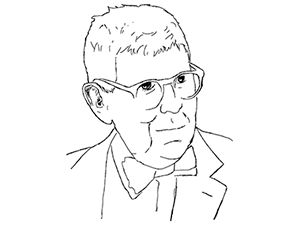
Cognitive therapy (CT) is a type of psychotherapy developed by American psychiatrist Aaron T. Beck. CT is one of the therapeutic approaches within the larger group of cognitive behavioral therapies (CBT) and was first expounded by Beck in the 1960s.
Cognitive therapy seeks to help the patient overcome difficulties by identifying and changing dysfunctional thinking, behavior, and emotional responses. This involves helping patients develop skills for modifying beliefs, identifying distorted thinking, relating to others in different ways, and changing behaviors. Treatment is based on collaboration between patient and therapist and on testing beliefs. Therapy may consist of testing the assumptions which one makes and identifying how certain of one’s usually unquestioned thoughts are distorted, unrealistic and unhelpful. Once those thoughts have been challenged, one’s feelings about the subject matter of those thoughts are more easily subject to change.
read more »
Posted in Health, Science |
1 Comment »
June 8, 2011

Behavior therapy (or behavior modification) is an approach to psychotherapy based on behaviorism which aims to treat psychopathology through techniques designed to reinforce desired and eliminate undesired behaviors. Precursors of certain fundamental aspects of behavior therapy have been identified in various ancient philosophical traditions, particularly Stoicism.
While the modern behavior therapist deliberately applies principles of learning to this therapeutic operations, empirical behavior therapy is probably as old as civilization – if we consider civilization as having begun when man first did things to further the well-being of other men. From the time that this became a feature of human life there must have been occasions when a man complained of his ills to another who advised or persuaded him of a course of action. In a broad sense, this could be called behavior therapy whenever the behavior itself was conceived as the therapeutic agent.
read more »
Posted in Health, Science |
Leave a Comment »
June 3, 2011

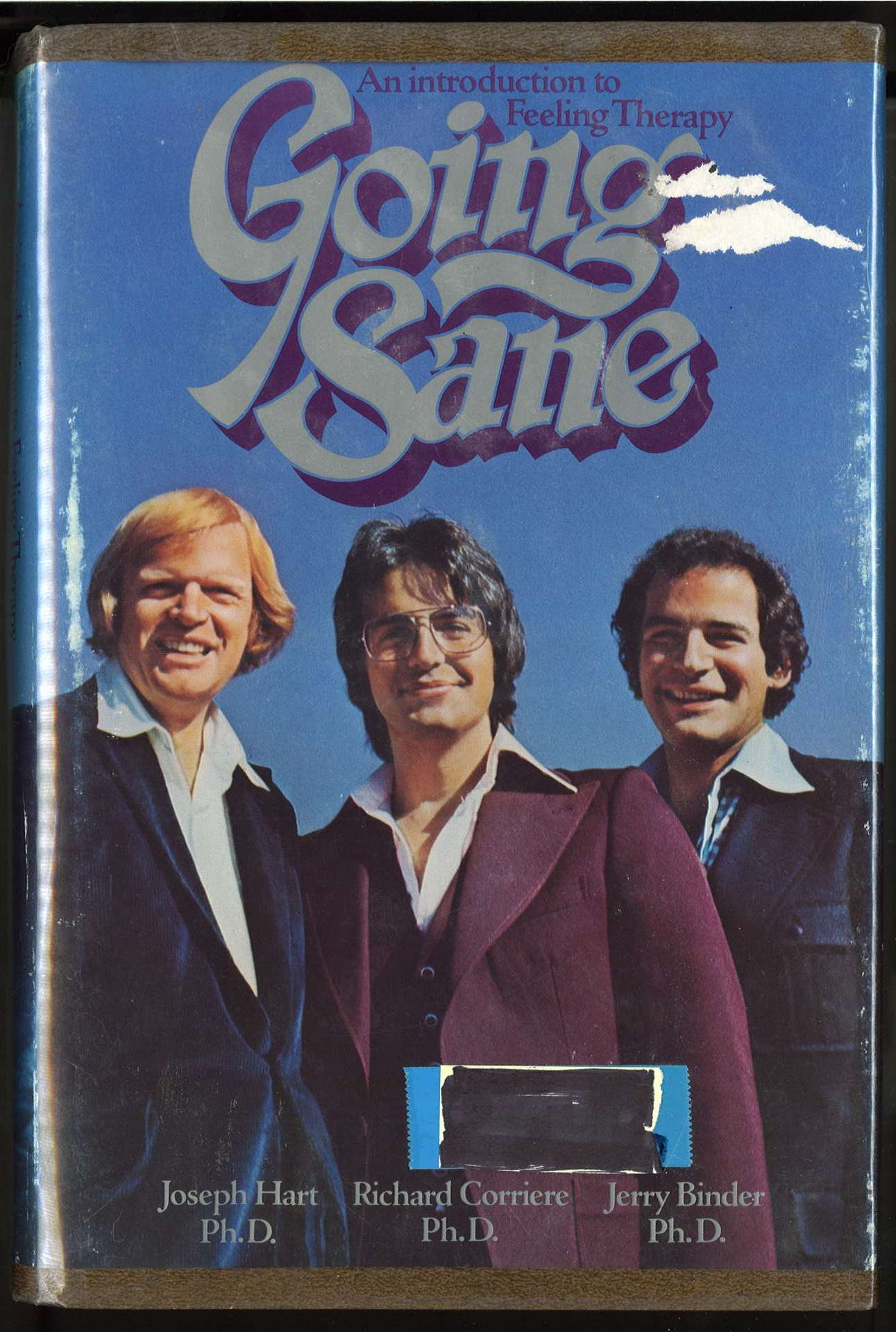
The Center for Feeling Therapy was an abusive, cult-like psychotherapy group founded in 1971 in Los Angeles. The Center was founded by former members of Arthur Janov’s Primal Institute who were dissatisfied with what they felt were shortcomings in primal therapy (a psychotherapy based on the theory that neurosis is caused by the repressed pain of childhood trauma).
The Center started as an offshoot of primal therapy, but quickly abandoned primal therapy and subsequently went through many theoretical shifts, including an emphasis on dream analysis. At its peak it had 350 resident patients and 2,000 members including various branches.
read more »
Posted in Health |
Leave a Comment »
June 3, 2011
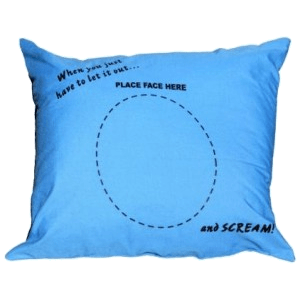
Primal therapy is a trauma-based psychotherapy created by an American psychologist, Arthur Janov, who argues that neurosis is caused by the repressed pain of childhood trauma. Janov argues that repressed pain can be sequentially brought to conscious awareness and resolved through re-experiencing the incident and fully expressing the resulting pain during therapy. Primal therapy was developed as a means of eliciting the repressed pain; the term Pain is capitalized in discussions of primal therapy when referring to any repressed emotional distress and its purported long-lasting psychological effects. Janov criticizes the talking therapies as they deal primarily with the cerebral cortex and higher-reasoning areas and do not access the source of Pain within the more basic parts of the central nervous system.
Primal therapy became very influential during a brief period in the early 1970s, after the publication of Janov’s first book, ‘The Primal Scream.’ It inspired hundreds of spin-off clinics worldwide and served as an inspiration for many popular cultural icons. John Lennon, actor James Earl Jones and pianist Roger Williams were prominent advocates of primal therapy. Primal therapy has since declined in popularity, partly because Janov has not produced the outcomes necessary to convince research-oriented psychotherapists of its effectiveness. Janov and others continue to advocate and practice the therapy or various developments of it.
Posted in Health |
Leave a Comment »
May 21, 2011

Robert Hare (b. 1934) is a Canadian researcher renowned in the field of criminal psychology. He developed the Psychopathy Checklist (PCL) and Psychopathy Checklist Revised (PCL-R), used to diagnose cases of psychopathy and also useful in predicting the likelihood of violent behavior, and is professor emeritus of the University of British Columbia where his studies center on psychopathology and psychophysiology.
In contemporary research and clinical practice, Robert D. Hare’s Psychopathy Checklist-Revised (PCL-R) is the psycho-diagnostic tool most commonly used to assess psychopathy.
read more »
Posted in Health, Politics, Science |
Leave a Comment »
May 21, 2011

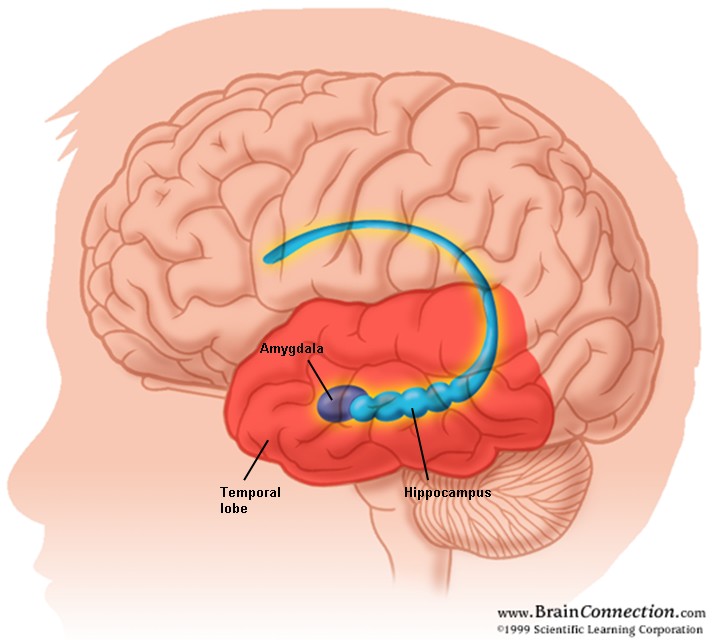
Amygdala [uh-mig-duh-luh] hijack is a term coined by psychologist Daniel Goleman in his 1996 book ‘Emotional Intelligence: Why It Can Matter More Than IQ.’ Goleman uses the term to describe emotional responses from people which are out of measure with the actual threat because it has triggered a much more significant emotional threat. The brain processes stimuli by having the thalamus direct sensory information to the neocortex (the ‘thinking brain’). The cortex then routes the signal to the amygdala (the ’emotional brain’) for the proper emotional reaction. The amygdala then triggers a flood of peptides and hormones to create emotion and action.
Perceived potential threats, however, can disrupt this smooth flow; the thalamus bypasses the cortex and routes the signal directly to the amygdala, which is the trigger point for the primitive fight-or-flight response; when the amygdala feels threatened, it can react irrationally and destructively. Goleman states that ‘Emotions make us pay attention right now – this is urgent – and give us an immediate action plan without having to think twice. The emotional component evolved very early: Do I eat it, or does it eat me?’ The emotional response ‘can take over the rest of the brain in a millisecond if threatened.’ An amygdala hijack exhibits three signs: strong emotional reaction, sudden onset, and post-episode realization that the reaction was inappropriate.
Posted in Health, Language, Science |
Leave a Comment »
May 21, 2011
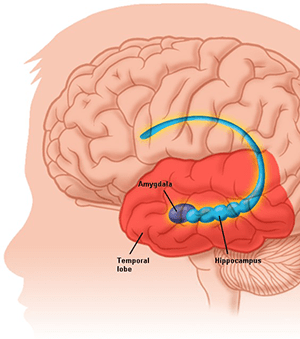
The amygdala [uh-mig-duh-luh] (Latin: ‘almond’) are almond-shaped groups of nuclei (clusters of neurons) located deep within the temporal lobes of the brain in complex vertebrates, including humans. Shown in research to perform a primary role in the processing and memory of emotional reactions, the amygdalae are considered part of the limbic system.
The amygdala sends impulses to the hypothalamus for activation of the sympathetic nervous system to trigger a fight or flight response, to the thalamic reticular nucleus for increased reflexes, to the nuclei of the trigeminal nerve and the facial nerve, and to the ventral tegmental area, locus coeruleus, and laterodorsal tegmental nucleus for activation of dopamine, norepinephrine and epinephrine (adrenalin).
read more »
Posted in Health, Science |
Leave a Comment »
May 21, 2011
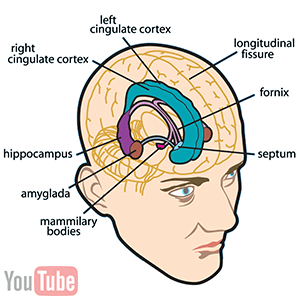
The limbic system (or Paleomammalian brain) is a set of brain structures including the hippocampus, amygdala, anterior thalamic nuclei, septum, limbic cortex and fornix, which seemingly support a variety of functions including emotion, behavior, long term memory, and olfaction (smell). The term ‘limbic’ comes from the Latin limbus, for ‘border’ or ‘edge.’ Some scientists have suggested that the concept of the limbic system should be abandoned as obsolete, as it is grounded more in transient tradition than in facts.
The limbic system operates by influencing the endocrine system (hormones) and the autonomic nervous system (visceral functions, e.g. breathing, urinating, salivating). It is highly interconnected with the nucleus accumbens, the brain’s pleasure center, which plays a role in sexual arousal and the ‘high’ derived from certain recreational drugs. In a 1954 experiment, rats with metal electrodes implanted into their nucleus accumbens as well as their septal nuclei repeatedly pressed a lever activating this region, and did so in preference to eating and drinking, eventually dying of exhaustion.
read more »
Posted in Health, Science |
2 Comments »
May 21, 2011

The triune brain is a model of the evolution of the vertebrate forebrain and behavior proposed by the American physician and neuroscientist Paul D. MacLean. MacLean originally formulated his model in the 1960s and propounded it at length in his 1990 book ‘The Triune Brain in Evolution.’ The triune brain consists of the reptilian complex, the paleomammalian complex (limbic system), and the neomammalian complex (neocortex), viewed as structures sequentially added to the forebrain in the course of evolution.
The triune brain hypothesis became familiar to a broad popular audience through Carl Sagan’s Pulitzer prize winning 1977 book ‘The Dragons of Eden.’ Though embraced by some psychiatrists and at least one leading affective neuroscience researcher, the model never won wide acceptance among comparative neurobiologists. Comparative evolutionary neuroanatomists currently regard its claims about brain evolution to be outdated.
read more »
Posted in Health, Science |
Leave a Comment »
May 17, 2011
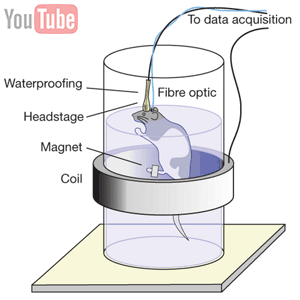
Optogenetics is a neuromodulation technique employed in neuroscience where light pulses are used to activate and deactivate neurons which have been genetically sensitized to photons. It employs a combination of techniques from optics and genetics to control and monitor the activities of individual neurons in living tissue—even within freely-moving animals—and to precisely measure the effects of those manipulations in real-time. The key reagents used in optogenetics are light-sensitive proteins.
The earliest approaches were developed and applied in the lab of Gero Miesenböck, now Waynflete Professor of Physiology at the University of Oxford, and Richard Kramer and Ehud Isacoff at the University of California, Berkeley; these methods conferred light sensitivity but were never reported to be useful by other laboratories due to the multiple components these approaches required. A distinct single-component approach involving microbial opsin genes introduced in 2005 turned out to be widely applied. Optogenetics is known for the high spatial and temporal resolution that it provides in altering the activity of specific types of neurons to control a subject’s behavior.
Posted in Health, Science, Technology |
Leave a Comment »