June 28, 2011

Kombu [kohm-boo], called dashima in Korean and haidai in Chinese, is the Japanse word for edible kelp widely eaten in East Asia. Most kombu is extensively cultivated on ropes in the seas of Japan and Korea.
Over 90 percent of Japanese kombu is cultivated, mostly in Hokkaidō, but also as far south as the Seto Inland Sea.
read more »
Posted in Food, Health, World |
Leave a Comment »
June 28, 2011

The Demon Core was the nickname given to a 6.2-kilogram (14 lb) subcritical mass of plutonium that accidentally went briefly critical in two separate accidents at the Los Alamos laboratory in 1945 and 1946. Both incidents resulted in the acute radiation poisoning and the subsequent death of a scientist.
After these incidents, the sphere of plutonium was referred to as the Demon Core. The core was used in an atomic bomb test in 1946, five weeks after the second fatal accident, and proved in practice to have a slightly increased yield over similar cores which had not been subjected to criticality excursions.
read more »
Posted in Health, Technology, War |
1 Comment »
June 28, 2011

The iBOT is a very stable and mobile powered wheelchair developed by Dean Kamen in a partnership between DEKA and Johnson and Johnson’s Independence Technology division. It is a medical technology, made to help people with severe mobility problems.
As of 2006 the iBOT retailed for approximately $26,100 and required a prescription in the U.S. As of 2009, it is no longer available for sale from Independence Technology, but support for existing units will be available until the end of 2013.
read more »
Posted in Health, Technology |
1 Comment »
June 24, 2011

The Repository for Germinal Choice was a sperm bank that existed in Escondido, California from 1980 to 1999. The repository is commonly believed to have accepted only donations from Nobel Prize laureates, although in fact it accepted donations from non-Nobelists, also. Founded by Robert Klark Graham, the repository was dubbed the ‘Nobel prize sperm bank’ by media reports at the time.
The only contributor who became known publicly was William Shockley, Nobel laureate in physics. Other donors were recruited from among the ranks of scientists and academics Graham and his assistant, Paul Smith, considered to be ‘the future Nobel laureates.’
read more »
Posted in Health, Science, Sex |
Leave a Comment »
June 23, 2011


A sugar substitute is a food additive that duplicates the effect of sugar in taste, usually with less food energy. Some sugar substitutes are natural and some are synthetic. Those that are not natural are, in general, called artificial sweeteners.
Animal studies have indicated that a sweet taste induces an insulin response in rats. The release of insulin causes blood sugar to be stored in tissues (including fat). In the case of a response to artificial sweeteners, because blood sugar does not increase there can be increased hypoglycemia (low blood sugar) and increased food intake the next time there is a meal. Rats given sweeteners have steadily increased calorie intake, increased body weight, and increased adiposity (fatness).
read more »
Posted in Food, Health, Technology |
Leave a Comment »
June 22, 2011

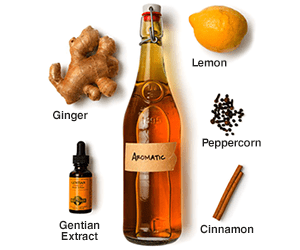
A bitters is an alcoholic beverage that is flavored with herbal essences and has a bitter or bittersweet flavor. There are numerous brands of bitters that were formerly marketed as patent medicines (tonics and elixirs) but are now considered to be digestifs (an after dinner drink intended to aid in digestion), rather than medicines. Bitters are 45% alcohol by volume.
Common ingredients in bitters include cascarilla, cassia, gentian, orange peel, and quinine from Cinchona bark (grown in Peru and Indonesia). The flavor of Angostura bitters, Suze and Peychaud’s Bitters derives primarily from gentian, a bitter herb. Bitters are prepared by infusion or distillation, using aromatic herbs, bark, roots, and/or fruit for their flavor and medicinal properties.
read more »
Posted in Drugs, Food, Health |
Leave a Comment »
June 21, 2011

Clive Wearing (b. 1938) is a British musician and musicologist suffering from an acute and long-lasting case of anterograde and retrograde amnesia. Specifically, this means he lacks the ability to form new memories, dubbed the ‘memento’ syndrome by laypeople and the media, after a film of the same name based on the subject.
Clive Wearing is an accomplished musician, and is known for editing the works of composer, Orlande de Lassus. Wearing sang at Westminster Cathedral as a tenor lay clerk for many years and also had a successful career as a chorus master and worked as such at Covent Garden and the London Sinfonietta Chorus. In 1968 he founded the Europa Singers of London, an amateur choir specialising in music of the 17th, 18th and 20th centuries. It won critical approval especially for performances of the Monteverdi Vespers.
read more »
Posted in Art, Health |
Leave a Comment »
June 21, 2011
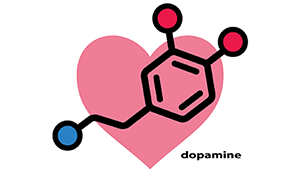

The nucleus [noo-klee-uhs] accumbens [uh-cum-benz] is a collection of neurons within the striatum, a component of the forebrain (prosencephalon). It is thought to play an important role in reward, pleasure, laughter, addiction, aggression, fear, and the placebo effect.
Each half of the brain has one nucleus accumbens, which, along with the olfactory tubercle collectively form the ventral striatum, which is part of the basal ganglia, part of the cerebrum vital to movement. The nucleus accumbens plays a role in rhythmic timing and is considered to be of central importance to the limbic-motor interface.
read more »
Posted in Drugs, Health, Sex |
Leave a Comment »
June 20, 2011

Sexual anorexia is a term used to describe a loss of ‘appetite’ for romantic-sexual interaction. However, the term is used broadly and can be better defined as a fear of intimacy to the point that the person has severe anxiety surrounding sex with emotional content i.e. in an intimate relationship. The concept was first mentioned by psychologist Nathan Hare in 1975.
The term also applies to individuals who appear to have a sexual addiction which is expressed through a variety of behaviors such as the compulsive use of strip clubs, prostitutes,internet porn sites, etc. but more accurately fit the definition of sexual anorexic in that they seem to lack the ability to have a relationship of a sexual nature beyond a paid-for or anonymous experience.
read more »
Posted in Health, Sex |
Leave a Comment »
June 16, 2011

The sun protection factor of a sunscreen is a laboratory measure of the effectiveness of sunscreen — the higher the SPF, the more protection a sunscreen offers against UV-B (the ultraviolet radiation that causes sunburn); it does not measure UV-A (the radiation that causes cancer).
The SPF is the amount of UV radiation required to cause sunburn on skin with the sunscreen on. Sunscreen in general is proven to slow the aging of skin, but not prevent skin cancer.
read more »
Posted in Health, Science |
Leave a Comment »
June 15, 2011

Synesthesia [sin-uhs-thee-zhuh] is a condition where the brain mixes up the senses (e.g. sounds can have ‘colors,’ images can have ‘odors,’ etc.). People who have synesthesia are called synesthetes. Synesthesia is usually inherited (called congenital synesthesia), but exactly how people inherit it is unknown.
Synesthesia is sometimes reported by people using psychedelic drugs, after a stroke, or during an epileptic seizure. It is also reported to be a result of blindness or deafness. Synesthesia that comes from events unrelated to genes is called adventitious synesthesia. This synesthesia results from some drugs or a stroke but not blindness or deafness. It involves sound being linked to vision or touch being linked to hearing.
read more »
Posted in Art, Health, Science |
Leave a Comment »
June 14, 2011
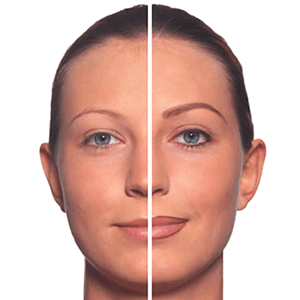
Permanent makeup is a cosmetic technique which employs tattoos (permanent pigmentation of the dermis) as a means of producing designs that resemble makeup, such as eyelining and other permanent enhancing colors to the skin of the face, lips, and eyelids.
It is also used to produce artificial eyebrows, particularly in people who have lost them as a consequence of old age, disease, such as alopecia, chemotherapy, or a genetic disturbance, and to disguise scars and white spots in the skin such as in vitiligo. It is also used to restore or enhance the breast’s areola, such as after breast surgery.
read more »
Posted in Art, Health |
Leave a Comment »



