April 29, 2011

Autosomal Dominant Compelling Helioophthalmic Outburst (ACHOO) Syndrome is a genetic dominant disorder that results in uncontrollable sneezing in response to numerous stimuli, such as looking at bright lights, cold air, or strong flavors. The condition affects 18-35% of the population, and its exact mechanism of action is not well understood.
Photic sneeze reflex is an dominant hereditary trait which causes sneezing, possibly many times consecutively when suddenly exposed to bright light. The first mention of the phenomenon is probably in the later work attributed to Aristotle (c. 200 BCE).
read more »
Posted in Health, Science |
Leave a Comment »
April 28, 2011
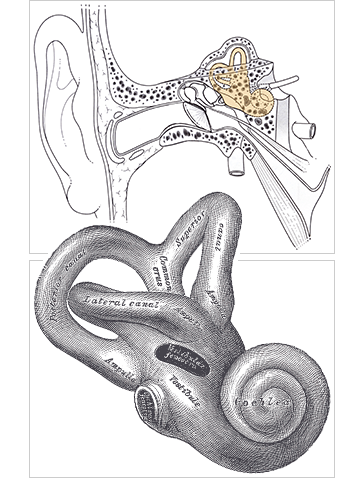
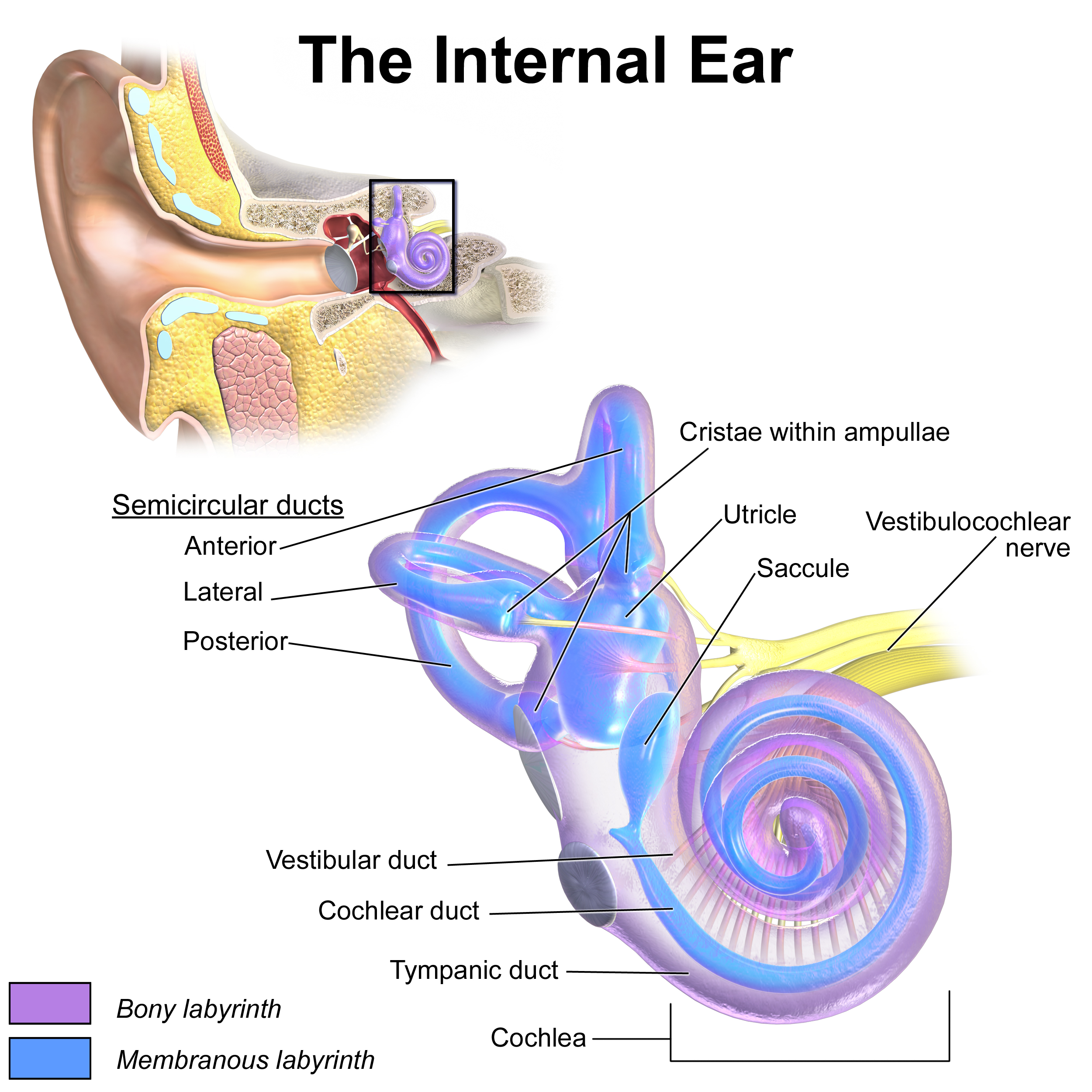
The receptors for the senses of equilibrium (vestibule) and hearing (cochlea) are housed within a collection of fluid filled tubes and chambers known as the membranous labyrinth, which is located within the bony labyrinth, a cavity in an an animal’s skull bones.
Posted in Health, Language, Science |
Leave a Comment »
April 25, 2011

In Australia, the United Kingdom and Germany, some nursing homes build false bus stops for their patients who are suffering from dementia.
Some of these bus stops are even fitted with outdated advertisements and timetables – 30 years outdated. The patients will sit at the bus stop waiting for a bus to take them to their imagined destination. After some time the nursing staff comes to escort the clients back to the retirement home.
Posted in Health |
Leave a Comment »
April 24, 2011

A Silver Alert is a public notification system in the United States to broadcast information about missing persons – especially seniors with Alzheimer’s Disease, dementia or other mental disabilities – in order to aid in their return. Approximately 6 in 10 dementia victims will wander at least once, and if not found within 24 hours, up to half of wandering seniors with dementia suffer serious injury or death.
read more »
Posted in Health, Language, Politics |
Leave a Comment »
April 23, 2011
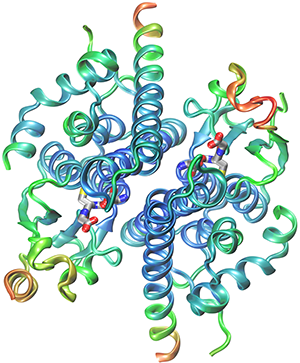
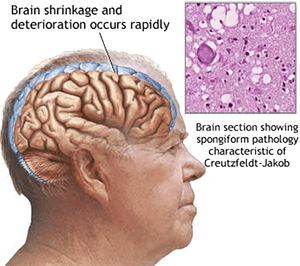
Prions [prahy-on] are infectious, misfolded proteins (large molecules built from small units known as amino acids). They are known to cause many forms of encephalitis, or brain disease, such as scrapie, Creutzfeldt-Jakob Disease, kuru, and Bovine Spongiform Encephalopathy, also known as Mad Cow Disease.
Prions work by changing the shape of proteins in the living things it causes disease in. While normal proteins have lots of alpha helices, or twisted parts, changed proteins have lots of beta sheets, or flat parts. The word ‘prion,’ coined in 1982 by American neurologist, Stanley B. Prusiner, is a portmanteau derived from the words ‘protein’ and ‘infection.’
read more »
Posted in Health, Science |
Leave a Comment »
April 23, 2011
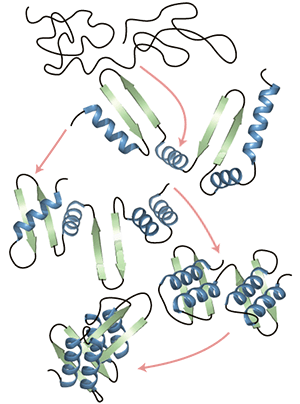
Proteomics [proh-tee-om-iks] is the large-scale study of proteins, particularly their structures and functions. Proteins are vital parts of living organisms, as they are the main components of the physiological metabolic pathways of cells. The term ‘proteomics’ was first coined in 1997 to make an analogy with genomics, the study of the genes. The word ‘proteome’ is a blend of ‘protein’ and ‘genome,’ and was coined by Australian geneticist, Marc Wilkins, in 1994. The proteome is the entire complement of proteins, including the modifications made to a particular set of proteins, produced by an organism or system. This will vary with time and distinct requirements, or stresses, that a cell or organism undergoes.
After genomics, proteomics is considered the next step in the study of biological systems. It is much more complicated than genomics mostly because while an organism’s genome is more or less constant, the proteome differs from cell to cell and from time to time. This is because distinct genes are expressed in distinct cell types. This means that even the basic set of proteins which are produced in a cell needs to be determined.
Posted in Health, Science, Technology |
Leave a Comment »
April 23, 2011
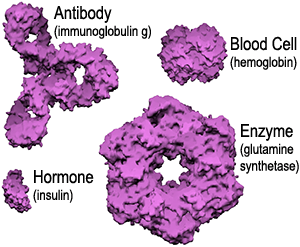

Proteins are large molecules built from peptides: chains of amino acids held together with peptide bonds. A polypeptide is a single linear chain of two or more amino acids. Protein molecules consist of one or more polypeptides put together typically in a biologically functional way. The shortest peptides are dipeptides, consisting of two amino acids joined by a single peptide bond. There can also be tripeptides, tetrapeptides, pentapeptides, etc.
Proteins are used to make new tissue and cells, as enzymes (catalysts that accelerate chemical reactions in the body), hormones (chemical messengers), or antibodies (immunological agents).
read more »
Posted in Food, Health, Science |
Leave a Comment »
April 23, 2011
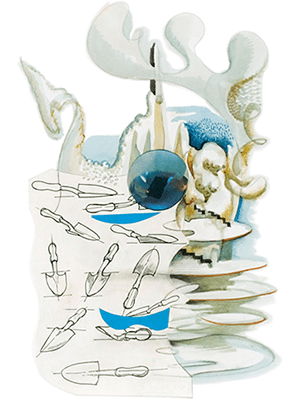
Adrian Hill (1895–1977) was a British artist and pioneering Art Therapist. He wrote many best-selling books about painting and drawing, and in the 1950s and early 1960s presented a BBC children’s television program called ‘Sketch Club.’
His own work combined elements of impressionism and surrealism as well as more conventional representations, and was widely displayed at major art galleries during his lifetime, both in Britain and abroad.
read more »
Posted in Art, Health, Science |
Leave a Comment »
April 21, 2011
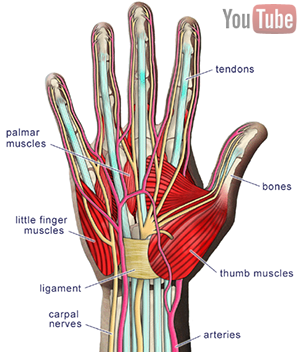
Hand transplantation is a surgical procedure to transplant a hand from one human to another. The operation is carried out in the following order: bone fixation, tendon repair, artery repair, nerve repair, then vein repair. The operation typically lasts 8 to 12 hours. The first short-term success in human hand transplantation occurred with New Zealander Clint Hallam who had lost his hand in an accident while in prison. The operation was performed in 1998 in France by a team assembled from different countries around the world.
Hallam’s transplanted hand was removed at his request in 2001 following an episode of rejection. The first hand transplant to achieve prolonged success was performed on New Jersey native Matthew Scott in 1999. Scott had lost his hand in a fireworks accident at age 24. Later that year the Philadelphia Phillies asked him to do the honors of throwing out the ceremonial first pitch.
Posted in Health, Science |
Leave a Comment »
April 21, 2011
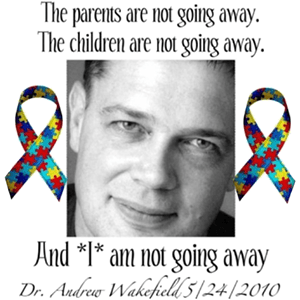
Andrew Wakefield (b. 1957) is a British former surgeon and medical researcher known for his fraudulent claims of a causative connection between the measles, mumps and rubella (MMR) vaccine and autism. He also created the term ‘autistic enterocolitis’ to describe an unproven form of inflammatory bowel disease (not to be confused with irritable bowel syndrome).
In January 2011, an article by British investigative reporter, Brian Deer and its accompanying editorial in the British Medical Journal identified Wakefield’s work as an ‘elaborate fraud.’ In a follow-up article, Deer said that Wakefield had planned to launch a venture on the back of an MMR vaccination scare that would profit from new medical tests and ‘litigation driven testing.’ Wakefield’s study and public recommendations against the use of the combined MMR vaccine were linked to a steep decline in vaccination rates in the United Kingdom and a corresponding rise in measles cases, resulting in serious illness and several fatalities.
Posted in Health, Money, Politics |
Leave a Comment »
April 21, 2011

A diagnosis of exclusion (per exclusionem) is a medical condition whose presence cannot be established with complete confidence from examination or testing. Diagnosis is therefore by elimination of other reasonable possibilities. Perhaps the largest category of diagnosis by exclusion is seen among psychiatric disorders where the presence of physical or organic disease must be excluded as a prerequisite for making a functional diagnosis.
Diagnosis by exclusion tends to occur where scientific knowledge is scarce, specifically where the means to verify a diagnosis by an objective method is absent. As a specific diagnosis cannot be confirmed a fall back position is to exclude that group of known causes that may cause a similar clinical presentation.
read more »
Posted in Health, Language, Science |
Leave a Comment »
April 20, 2011

Oaksterdam is a cultural district on the north end of downtown Oakland, California, where medical cannabis in a variety of competitively priced smokeable and edible preparations is available for purchase in multiple cafes, clubs, and patient dispensaries. Since 2005, cannabis has been legally available to patients with patient identification and physician recommendation at a dispensary in the neighborhood, one of Oakland’s four officially licensed dispensaries under the current municipal ordinance.
Measure Z clubs are businesses that sell cannabis to people over the age of 18. One private club in Oaksterdam sells cannabis and food containing cannabis to adults who do not hold valid physician recommendations for medical marijuana, which are needed to obtain county-issued patient identification cards in California. One such club is named after Oakland’s Measure Z, a city ballot initiative which makes the private sales, cultivation, and possession of cannabis the lowest police priority and mandates that the City of Oakland tax and regulate cannabis as soon as possible under state law.
Posted in Drugs, Health, Money |
Leave a Comment »






 The Daily Omnivore