April 20, 2011

Morning Star is a highly potent strain of cannabis that is distributed in California as part of its medical marijuana program. It is known to have as much as 24% THC content. The amount of THC present in a cannabis sample is generally used as a measure of cannabis potency.
The three main forms of cannabis products are the herb (marijuana), resin (hashish), and oil (hash oil). Marijuana often contains 5% THC content, resin 20%, and cannabis oil may contain more than 60%. The Morning Star strain is available at Leaf Lab located in San Jose, CA.
Posted in Drugs, Health, Science |
Leave a Comment »
April 20, 2011

The Cannabis Buyers Club was the first public medical marijuana dispensary. It opened in February 1994 at 194 Church Street in San Francisco, founded by the Proposition 215 coauthors, a California law concerning the use of medical cannabis.
194 Church had previously been established in 1990 as a lower profile medicinal marijuana retail location by a small collective of people, and mostly to help those suffering from AIDS. The Cannabis Buyers Club, prior to being legalized under California law, was at Ford and Sanchez Street in San Francisco, 1993. Still subject to legal hassles after that date, it eventually changed its name to ‘Cannabis Cultivators Club.’
Posted in Drugs, Health, Politics |
Leave a Comment »
April 18, 2011

Genie is the pseudonym for Susan M. Wiley, a feral child who spent nearly all of the first thirteen years of her life locked inside a bedroom strapped to a potty chair. She was a victim of one of the most severe cases of social isolation in American history. Genie was discovered by Los Angeles authorities in 1970.
Genie’s discovery was compared extensively with that of Victor of Aveyron, about whom a film was made, ‘The Wild Child.’ Psychologists, linguists and other scientists exhibited great interest in the case due to its perceived ability to reveal insights into the development of language and linguistic critical periods.
read more »
Posted in Health, Language |
Leave a Comment »
April 12, 2011

Highway hypnosis, also popularly known as ‘driving without attention mode’ or ‘white line fever,’ is a mental state in which a person can drive a motor vehicle great distances, responding to external events in the expected manner with no recollection of having consciously done so. In this state the driver’s conscious mind is apparently fully focused elsewhere, with seemingly direct processing of the masses of information needed to drive safely. Highway hypnosis is just one manifestation of a relatively commonplace experience, where the conscious and unconscious minds appear to concentrate on different things.
Building on the theories of American psychologist, Ernest Hilgard (1904 – 2001), that hypnosis is an altered state of awareness, some theorists hold that the consciousness can develop hypnotic dissociation. In the example of highway hypnosis, one stream of consciousness is driving the car while the other stream of consciousness is dealing with other matters. Amnesia can even develop for the dissociated consciousness that drove the automobile. The phenomenon is an example of automaticity in cognitive psychology.
Posted in Health, Language, Science |
Leave a Comment »
April 12, 2011

Automaticity [aw-tuh-mah-tis-i-tee] is the ability to do things without occupying the mind with the low-level details required, allowing it to become an automatic response pattern or habit. It is usually the result of learning, repetition, and practice. Examples of automaticity are common activities such as speaking, bicycle-riding, assembly-line work, and driving a car.
After an activity is sufficiently practiced, it is possible to focus the mind on other activities or thoughts while undertaking an automaticized activity (for example, holding a conversation or planning a speech while driving a car). Walking is not an example of automaticity as it is not a cortical function. It is a medullary function, with specific medullary circuits, which can be learnt to be inhibited or altered by higher-order ones.
Posted in Health, Language, Science |
Leave a Comment »
April 12, 2011

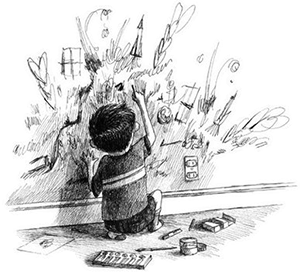
The hunter vs. farmer hypothesis is a hypothesis proposed by American author and former psychotherapist, Thom Hartmann, about the origins of attention-deficit hyperactivity disorder (ADHD), suggesting that the condition may be an adaptive behavior. Hartmann proposes that the high frequency of ADHD in contemporary settings represents otherwise normal behavioral strategies that become maladaptive in such evolutionarily novel environments as the formal school classroom. Genetic variants conferring susceptibility to ADHD are very frequent—implying that the trait had provided selective advantage in the past.
Hartmann notes that most or all humans were nomadic hunter gatherers for hundreds of thousands of years, but that this standard gradually changed as agriculture developed in most societies, and more people worldwide became farmers. Over many years, most humans adapted to farming cultures, but Hartmann speculates that people with ADHD retained some of the older hunter characteristics. The theory also explains the distractibility factor in ADHD individuals and their short attention span, along with various other characteristics, such as apathy towards social norms, poor planning and organizing ability, distorted sense of time, impatience, and impulsiveness.
Posted in Health, Science |
Leave a Comment »
April 11, 2011


The Amethyst Initiative is an organization made up of U.S. college presidents and chancellors that in 2008 launched a movement calling for the reconsideration of U.S. drinking age laws, particularly the minimum age of 21 as established nationally by the National Minimum Drinking Age Act of 1984. The initiative is currently supported by 135 college presidents.
According to Greek and Roman legend, amethysts protected their owners from drunkenness.
Posted in Drugs, Health, Politics |
Leave a Comment »
April 11, 2011

Bugchasing is a slang term for the practice of pursuing sex with HIV infected individuals in order to contract HIV. ‘Giftgivers’ are HIV positive individuals who comply with the bugchaser’s efforts to become infected with HIV.
Bugchasers indicate various reasons for this activity. Some bugchasers engage in the activity for the excitement inherent in pursuing such a dangerous activity, but do not implicitly desire to contract HIV. Some consider bugchasing ‘intensely erotic’ and the act of being infected as the ‘ultimate taboo, the most extreme sex act left.’
read more »
Posted in Death, Health, Sex |
Leave a Comment »
April 5, 2011

Rumination [roo-muh-ney-shuhn] is a way of responding to distress that involves repetitively (and passively) focusing on the symptoms of distress, and on its possible causes and consequences. Rumination is more common in people who are pessimistic or neurotic. The tendency to ruminate is a stable constant over time and serves as a significant risk factor for clinical depression. There is also evidence that rumination is linked to general anxiety, post traumatic stress, binge drinking, eating disorders, and self-injurious behavior. Rumination is similar to worry except rumination focuses on bad feelings and experiences from the past, whereas worry is concerned over potential bad events in the future. Both rumination and worry are associated with anxiety and other negative emotional states.
Although rumination is generally unhealthy and associated with depression, thinking and talking about one’s feelings can be beneficial under the right conditions. Healthy self-disclosure can reduce distress and rumination when it leads to greater insight and understanding about the source of one’s problems. Thus, when people share their feelings with others in the context of supportive relationships, they are likely to experience growth. When people repetitively ruminate and dwell on the same problem without making progress, they are likely to experience depression.
Posted in Health, Science |
Leave a Comment »
April 5, 2011

Purely Obsessional Obsessive-Compulsive Disorder (Pure O) is a lesser-known form or manifestation of OCD. There are usually no observable compulsions (checking, counting, hand-washing, etc.). While ritualizing and neutralizing behaviors do take place, they are almost entirely in the form of excessive mental rumination. The nature and type of Purely Obsessional OCD varies greatly, but the central theme for all sufferers is the emergence of a disturbing intrusive thought or question, an unwanted/inappropriate mental image, or a frightening impulse that causes the person extreme anxiety because it is antithetical to closely-held religious beliefs, morals, or societal mores.
Neurotypicals instinctively respond to bizarre intrusive thoughts or impulses as insignificant and part of a normal variance in the human mind. Someone with Purely Obsessional OCD will respond with profound alarm followed by an intense attempt to neutralize the thought or avoid having it again. The person begins to ask themselves constantly ‘Am I really capable of something like that?’ or ‘Could that really happen?’ or ‘Is that really me?’ (even though they usually realize that their fear is irrational, which causes them further distress) and put tremendous effort into escaping or resolving the unwanted thought. They then end up in a vicious cycle of mentally searching for reassurance and trying to get a definitive answer.
Posted in Health, Language, Science |
Leave a Comment »
April 5, 2011

Stage fright or performance anxiety is the anxiety aroused by the requirement to perform in front of an audience, whether actually or potentially (for example, when performing before a camera). In the context of public speaking, this fear is termed glossophobia, one of the most common of phobias. Such anxiety may precede or accompany participation in any activity involving public self-presentation.
In some cases stage fright may be a part of a larger pattern of social phobia or social anxiety disorder, but many people experience stage fright without any wider problems. Quite often, stage fright arises in a mere anticipation of a performance, often a long time ahead. It has numerous manifestations: fluttering or pounding heart, tremor in the hands and legs, sweaty hands, diarrhea, facial nerve tics, dry mouth, and erectile dysfunction.
read more »
Posted in Art, Drugs, Health |
Leave a Comment »
April 5, 2011
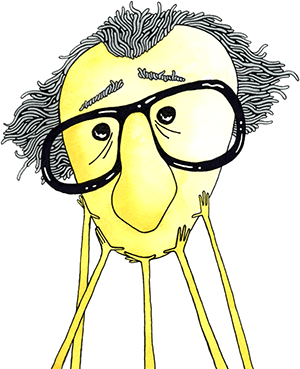

Neuroticism [noo-rot-uh-siz-uhm] is a fundamental personality trait in the study of psychology. It is an enduring tendency to experience negative emotional states. Individuals who score high on neuroticism are more likely than the average to experience such feelings as anxiety, anger, guilt, and depressed mood.
Neuroticism, along with other personality traits, has been mapped across states in the USA. People in eastern states such as New York, New Jersey, West Virginia, and Mississippi tend to score high on neuroticism, whereas people in many western states, such as Utah, Colorado, South Dakota, Oregon, and Arizona score lower on average. People in states that are higher in neuroticism also tend to have higher rates of heart disease and lower life expectancy.
read more »
Posted in Health, Language, Science |
Leave a Comment »




 The Daily Omnivore