April 5, 2011
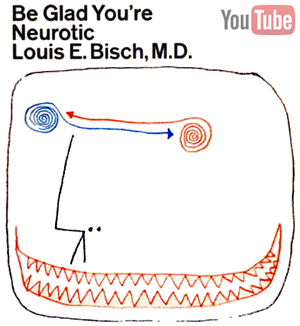

Neurosis [noo-roh-sis] is a class of functional mental disorders involving distress but neither delusions nor hallucinations, whereby behavior is not outside socially acceptable norms. Those suffering from it are said to be neurotic. The term essentially describes an ‘invisible injury’ and the resulting condition. The American Diagnostic and Statistical Manual of Mental Disorders (DSM) has eliminated the category of ‘Neurosis,’ reflecting a decision by the editors to provide descriptions of behavior as opposed to hidden psychological mechanisms as diagnostic criteria.
Neurosis should not be mistaken for psychosis, which refers to loss of touch with reality, or neuroticism, a fundamental personality trait characterized by an enduring tendency to experience negative emotional states.
read more »
Posted in Health, Language, Science |
Leave a Comment »
April 4, 2011
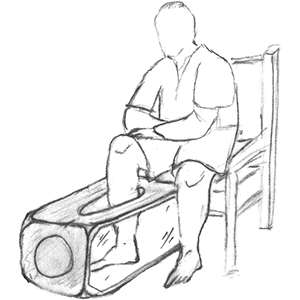
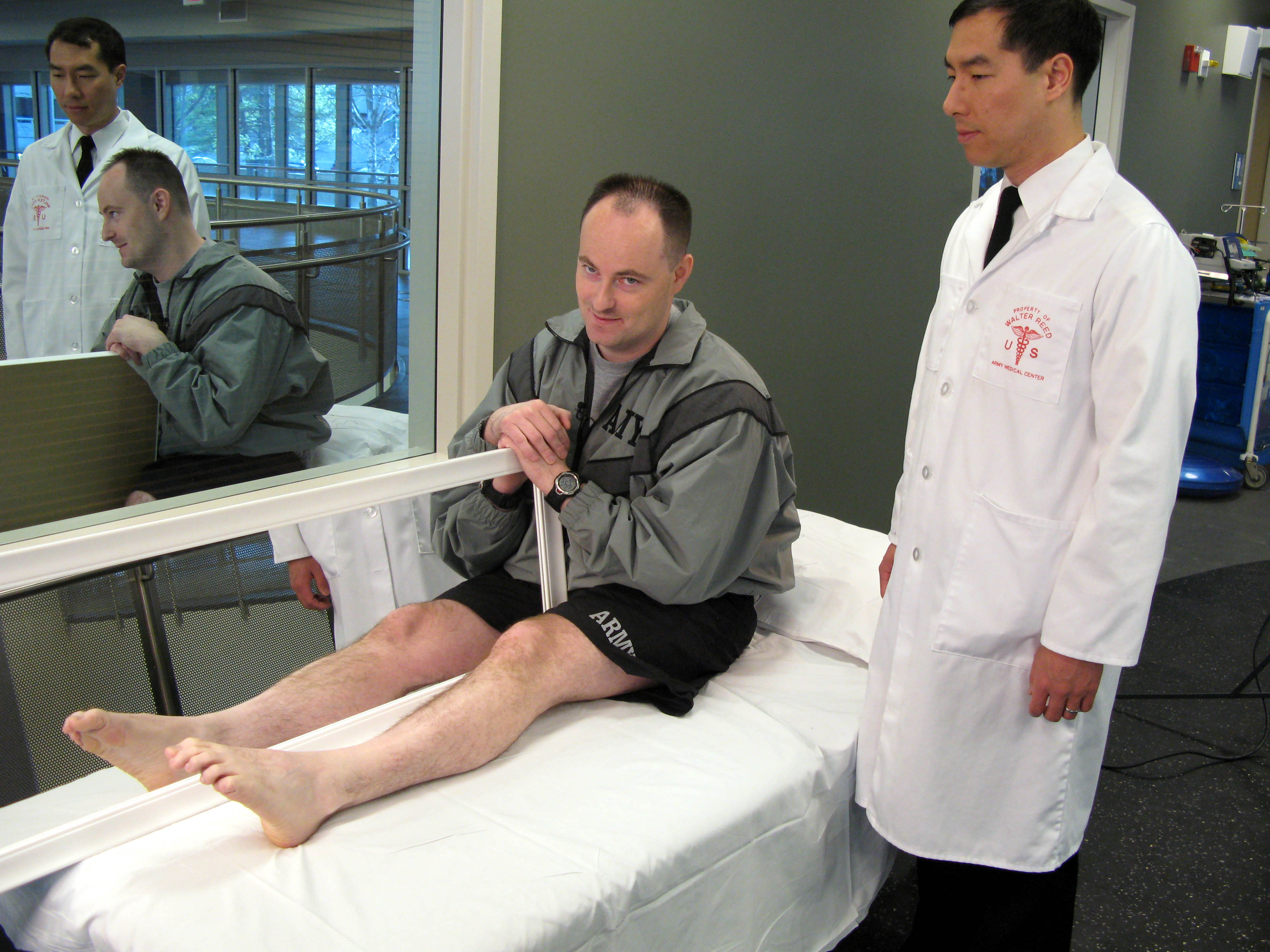
A mirror box is a box with two mirrors in the center (one facing each way), invented by neurologist Vilayanur S. Ramachandran to help alleviate phantom limb pain, in which patients feel they still have a limb after having it amputated.
read more »
Posted in Health, Science |
Leave a Comment »
April 4, 2011
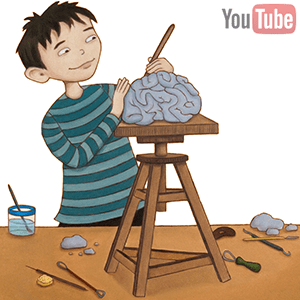
Neuroplasticity [noor-oh-pla-stis-i-tee] refers to the ability of the brain to change as a result of one’s experience, that the brain is ‘plastic’ and ‘malleable.’ The discovery of this feature of the brain is rather modern; the previous belief amongst scientists was that the brain does not change after the critical period of infancy.
Substantial changes occur in the lowest neocortical processing areas, changes that can profoundly alter the pattern of neuronal activation in response to experience. According to the theory of neuroplasticity, experience can actually change both the brain’s physical structure (anatomy) and functional organization (physiology) from top to bottom.
Posted in Health, Science |
Leave a Comment »
April 4, 2011
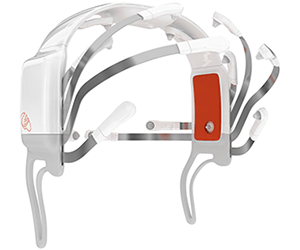
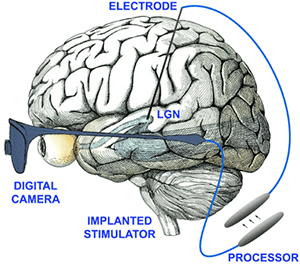
A brain–computer interface (BCI) is a direct communication pathway between the brain and an external device. BCIs are often aimed at assisting, augmenting or repairing human cognitive or sensory-motor functions. Research on BCIs began in the 1970s at UCLA under a grant from the National Science Foundation, followed by a contract from DARPA.
The field has since focused primarily on neuroprosthetics applications that aim at restoring damaged hearing, sight and movement. Thanks to the remarkable cortical plasticity of the brain, signals from implanted prostheses can, after adaptation, be handled by the brain like natural sensor or effector channels.
Posted in Health, Money, Technology |
Leave a Comment »
April 3, 2011

The Devil and Daniel Johnston is a 2006 documentary film about the noted American eccentric artist Daniel Johnston. It chronicles Johnston’s life from childhood up to the present, with an emphasis on his mental illness, and how it manifested itself in demonic self-obsession. The film was directed by Jeff Feuerzeig and produced by Henry S. Rosenthal.
Posted in Art, Health, Money |
Leave a Comment »
April 3, 2011

Daniel Johnston (b. 1961) is an American singer, songwriter, musician, and artist. Johnston has been diagnosed with bipolar disorder which has been a recurring problem throughout his life. In 1990, on a two-seater plane piloted by his father Bill, Johnston had a hypomanic episode believing he was Casper The Friendly Ghost and removed the key from the planes ignition and threw it out the window. His father, a former Air Force pilot, managed to successfully crash-land the plane. Although the plane was destroyed, Johnston and his father emerged with only minor injuries. As a result of this episode, Johnston was involuntarily committed to a mental hospital.
Interest in Johnston increased when Kurt Cobain was frequently photographed wearing a t-shirt featuring the cover image of Johnston’s album ‘Hi, How Are You.’ In spite of Johnston being resident in a mental hospital at the time, a bidding war to sign him ensued. He refused to sign a multi-album deal with Elektra Records because Metallica was on the labels roster and Daniel was convinced that they were possessed by Satan and would hurt him. He also dropped his manager who brokered the deal, because Daniel believed he too was possessed by Satan. Ultimately he signed with Atlantic Records and released Fun, produced by Paul Leary of Butthole Surfers in 1994.
Posted in Art, Health, Money |
Leave a Comment »
March 31, 2011

Infrasound [in-fruh-sound] is sound that is lower in frequency than 20 Hz or cycles per second, the ‘normal’ limit of human hearing. Hearing becomes gradually less sensitive as frequency decreases, so for humans to perceive infrasound, the sound pressure must be sufficiently high. The ear is the primary organ for sensing infrasound, but at higher levels it is possible to feel infrasound vibrations in various parts of the body.
The study of such sound waves is sometimes referred to as infrasonics, covering sounds beneath 20 Hz down to 0.001 Hz. This frequency range is utilized for monitoring earthquakes, charting rock and petroleum formations below the earth, and also to study the mechanics of the heart. Infrasound is characterized by an ability to cover long distances and get around obstacles with little dissipation.
read more »
Posted in Art, Health, Science |
Leave a Comment »
March 31, 2011
The Prisoner’s Cinema is a phenomenon reported by prisoners confined to dark cells and by others kept in darkness, voluntarily or not, for long periods of time. It has also been reported by truck drivers, pilots, and practitioners of intense meditation. Astronauts and other individuals that have been exposed to certain types of radiation have reported witnessing similar phenomena.
The ‘cinema’ consists of a light show of various colors that appear out of the darkness. The light has a form, but those that have seen it find it difficult to describe. Sometimes, the cinema lights resolve into human or other figures. Scientists believe it is a result of phosphenes (flashes of light, often associated with inflammation of the optic nerve) combined with the psychological effects of prolonged exposure to darkness.
Posted in Health, Science |
Leave a Comment »
March 31, 2011

Charles Bonnet syndrome (CBS) is a condition that causes patients with visual loss to have complex visual hallucinations, first described by Charles Bonnet in 1760, and first introduced into English-speaking psychiatry in 1982. Sufferers, who are mentally healthy people with often significant visual loss, have vivid, complex recurrent visual hallucinations. Often they come in the form of ‘lilliput hallucinations,’ in which objects are smaller than normal.
Sufferers understand that the hallucinations are not real, and the hallucinations are only visual. People suffering from CBS may experience a wide variety of hallucinations, such as images of complex colored patterns and images of people, or animals, plants or trees and inanimate objects. The hallucinations also often fit into the person’s surroundings. Oliver Sacks, a neurologist and author who suffers from a retinal tumor, gave a TED talk about this and other visual hallucinations.
Posted in Health, Science |
Leave a Comment »
March 31, 2011

Musical ear syndrome (MES) refers to auditory hallucinations subsequent to hearing loss. It is comparable to Charles Bonnet syndrome (visual hallucinations by visually impaired people) and some have suggested this phenomenon could be included under that diagnosis. The occurrence of MES has been suggested to be very high among the hearing impaired. Sufferers typically hear music or singing and the condition is more common in women. The hallucinatory experiences differ from psychotic disorders although there may be some overlap.
The likely cause is a small cerebrovascular event affecting the auditory cortex. The ‘hole’ in the hearing range is ‘plugged’ by the brain confabulating a piece of information – in this case a remembered melody. A similar occurrence is seen with strokes of the visual cortex where a visual field defect occurs and the brain confabulates a piece of visual data to fill the spot. Towards the end of his life, Robert Schumann said he heard angelic music and music from other composers, which formed the basis for his violin concerto (however, his symptoms may also have been caused by syphilis or mercury poisoning).
Posted in Art, Health, Science |
1 Comment »
March 31, 2011

An aura [awr-uh] is a perceptual disturbance experienced by some migraine sufferers and epileptics before a migraine or seizure. It often manifests as the perception of a strange light, an unpleasant smell, or confusing thoughts or experiences. Some people experience aura without a subsequent migraine or seizure, which is called a silent migraine.
Auras allow epileptics time to prevent injury to themselves or others. The time between the appearance of the aura and the migraine lasts from a few seconds up to an hour. Most people who have auras have the same type every time. Visual changes can include bright lights and blobs, zigzag lines, distortions in the size or shape of objects, a vibrating visual field, pulsating patches, tunnel vision, blind or dark spots in the field of vision, kaleidoscope effects on the visual field, or temporary blindness.
read more »
Posted in Health, Science |
Leave a Comment »
March 31, 2011

A Migraine (Greek: ‘half skull’) is a neurological syndrome which often presents itself as a severe headache. There are different types of migraines, most give the sufferer a headache, and might make them dizzy or want to stay away from bright lights (photophobia) or loud noises (hyperacusis). They can also include visual disturbances (such as seeing funny patterns or lights/colors) and other disturbances of senses (funny smells or tastes). Migraines can last from 4 to 72 hours, but in most cases only last about 4 hours. The cause of migraines is unknown, but it is often believed to be linked to family medical history. It is about three times more common in women than in men.
The typical migraine headache is unilateral pain (affecting one half of the head) and pulsating in nature. Approximately one-third of people who suffer from migraine headaches perceive an aura—unusual visual, olfactory, or other sensory experiences that are a sign that the migraine will soon occur. Initial treatment is with analgesics for the headache, an antiemetic for the nausea, and the avoidance of triggering conditions. The cause of migraine headache is unknown; the most common theory is a disorder of the serotonergic control system.
Posted in Health, Science |
Leave a Comment »





 The Daily Omnivore