March 1, 2011

The anterior fornix erogenous zone (AFE or A-Spot) is a female erogenous zone that when stimulated can lead to rapid vaginal lubrication and arousal, sometimes without any other form of stimulation, with continued stimulation resulting in an intense orgasm. It is located at or near the deepest point on the anterior wall of the vagina, above the cervix, where the anterior wall of the vagina starts to curve upward. The posterior fornix is also believed to be an erogenous zone, called the ‘deep spot.’
Some believe that the AFE is the anterior fornix itself, but some sex experts believe it to be a degenerated female prostate (a theory that many have already applied to the G-spot and the Skene’s gland) or the area where the vaginal nerves connect, which is thought to be near it. One other theory is that it is the vesicouterine pouch, due to its proximity to the supposed location of the AFE zone and the supposed erogenous qualities of the rectouterine pouch. The AFE redirects female ejaculatory fluid, which is expelled from the Skene’s gland during G-spot orgasms, and turns it into vaginal lubrication. Because stimulating the AFE zone causes this mechanism and creates an erotic sensation simultaneously, full arousal occurs very quickly.
Posted in Health, Science, Sex |
1 Comment »
February 27, 2011
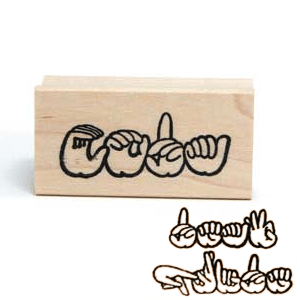
A child of a deaf adult, often known by the acronym CODA, is a person who was raised by a deaf parent or guardian. Many CODAs identify with both deaf and hearing cultures. The organization CODA (Children of Deaf Adults) was established in 1983 for hearing children of deaf adults in the United States. CODA began hosting annual conferences in 1986, in Fremont, California. The conferences have grown, taking on an international status with attendees hailing from worldwide.
Posted in Health, Language, Politics |
Leave a Comment »
February 24, 2011
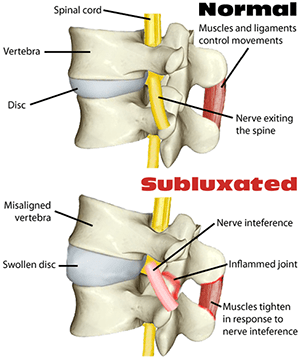
Vertebral [vur-tuh-bruhl] subluxation [suhb-luhk-sey-shuhn] is a controversial term that is commonly used by chiropractors to describe signs and symptoms of the spinal column. The chiropractic vertebral subluxation complex has been a source of controversy since its inception in 1895 due to its metaphysical origins and claims of far reaching effects on health and disease. Although some in the chiropractic profession reject the concept of subluxation and shun the use of this term as a diagnosis, its current and officially accepted status by the profession has been repeatedly confirmed.
In 2010 the General Chiropractic Council, the statutory regulatory body for chiropractors in the United Kingdom, issued guidance for chiropractors stating that the chiropractic vertebral subluxation complex ‘is not supported by any clinical research evidence that would allow claims to be made that it is the cause of disease or health concerns.’ A similar stance is taken by the National Health Service: ‘There is also no scientific evidence to support the idea that most illness is caused by misalignment of the spine.’
Posted in Health, Language, Science |
Leave a Comment »
February 23, 2011
The term ‘analysis paralysis‘ refers to over-analyzing (or over-thinking) a situation, so that a decision or action is never taken, in effect paralyzing the outcome. A decision can be treated as over-complicated, with too many detailed options, so that a choice is never made, rather than try something and change if a major problem arises. A person might be seeking the optimal or ‘perfect’ solution upfront, and fear making any decision which could lead to erroneous results, when on the way to a better solution.
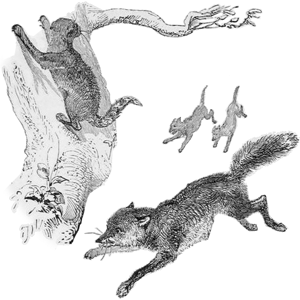
In Aesop’s Fables’ ‘The Fox and the Cat,’ the fox has ‘hundreds of ways of escaping’ while the cat has ‘only one.’ When they heard the hounds approaching, the cat scampered up a tree while ‘the Fox in his confusion was caught up by the hounds.’ The fable ends with the moral, ‘Better one safe way than a hundred on which you cannot reckon.’
Posted in Health, Language |
Leave a Comment »
February 21, 2011

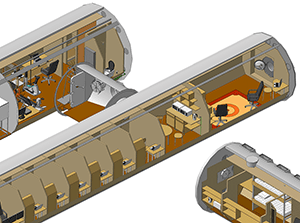
Mars-500 is a multi-part ground-based experiment simulating a manned flight to Mars. The experiment’s facility is located at the Russian Academy of Sciences’ Institute of Biomedical Problems (IBMP) in Moscow, Russia. A total of 640 experiment days have been scheduled, divided into three stages. During each stage, a crew of six volunteers live and work in a mockup spacecraft. Communication with the outside world is limited, and has a simulated 20 minute delay. The supply of on-board consumables is limited.
The longest stage of the experiment is intended to simulate a complete 520-day mission to Mars, and began on June 3, 2010.
Posted in Health, Science |
Leave a Comment »
February 17, 2011

An ultramarathon is any sporting event involving running longer than the traditional marathon length. There are two types of ultramarathon events: those that cover a specified distance, and events that take place during specified time (with the winner covering the most distance in that time). The most common distances are 50 km, 100 km, 50 mi, and 100 miles. Other distances/times include double marathons, 24-hour races, and multiday races of 1000 miles or even longer. The format of these events and the courses vary, ranging from single or multiple loops (some as short as a 400-meter track), to point-to-point road or trail races, to cross-country rogaines.
Many ultramarathons, especially trail challenges, have severe course obstacles, such as inclement weather, elevation change, or rugged terrain. Many of these races are run on dirt roads or mountain paths, though some are run on paved roads as well. Usually, there are aid stations every 5 to 15 km apart, where runners can replenish food and drink supplies or take a short break. Timed events range from 6, 12, and 24 hours to 3 and 6 days (known as multi-day events). Timed events are generally run on a track or a short road course, often one mile or less.
Posted in Games, Health |
Leave a Comment »
February 14, 2011

Phineas P. Gage (1823 – 1860) was an American railroad construction foreman now remembered for his improbable survival of an accident in which a large iron rod was driven completely through his head, destroying much of his brain’s left frontal lobe, and for that injury’s reported effects on his personality and behavior—effects so profound that friends saw him as ‘no longer Gage.’
Long called ‘the American Crowbar Case, Phineas Gage influenced 19th-century discussion about the brain, particularly debate on cerebral localization (determination of areas of the cortex involved in performance of certain functions) and was perhaps the first case suggesting that damage to specific regions of the brain might affect personality and behavior.
Posted in Health, Science |
Leave a Comment »
February 13, 2011
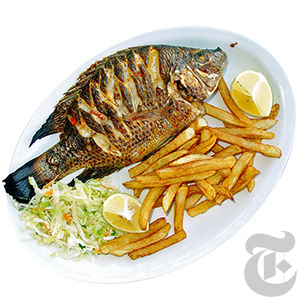
Tilapia [tuh-lah-pee-uh] is the common name for nearly a hundred species of fish. Tilapia inhabit a variety of fresh water habitats including shallow streams, ponds, rivers and lakes. Historically they have been of major importance in artisan fishing in Africa and the Middle East, and are of increasing importance in aquaculture. China is the largest Tilapia producer in the world, followed by Egypt.
read more »
Posted in Food, Health, Money |
Leave a Comment »
February 13, 2011
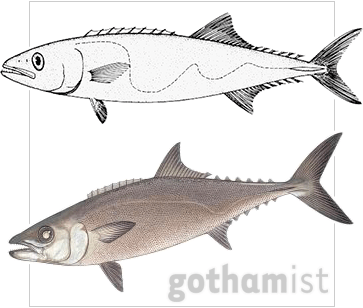
The escolar [es-kuh-lahr] is a species of fish found in deep tropical and temperate waters around the world. It is also known as Snake Mackerel, and sometimes marketed as ‘butterfish,’ ‘oilfish,’ ‘white tuna,’ ‘walu,’ or ‘codfish,’ a controversial practice due to potential health problems related with consumption of the fish. Like its relative the oilfish, escolar cannot metabolize the wax esters naturally found in its diet. This gives the escolar an oil content of 14–25% in its flesh. These wax esters may cause gastrointestinal distress in humans called ‘steatorrhea,’ the onset of which may occur between 30 minutes and 36 hours following consumption.
Symptoms may include stomach cramps, bright orange oil in stool, diarrhea, headaches, nausea, vomiting, and anal leakage. Because of the possible effects of consumption, escolar has been banned from consumption in Japan since 1977, as the Japanese government considers it toxic. It has also been banned in Italy. In 1999, the Swedish and Danish National Food Administrations informed fish trade associations and fish importing companies about the problems escolar and related fish could cause if not prepared properly and issued recommendations.
Posted in Food, Health, Science |
Leave a Comment »
February 12, 2011
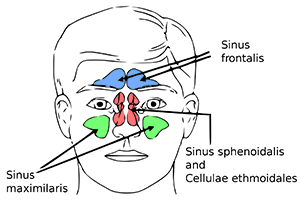

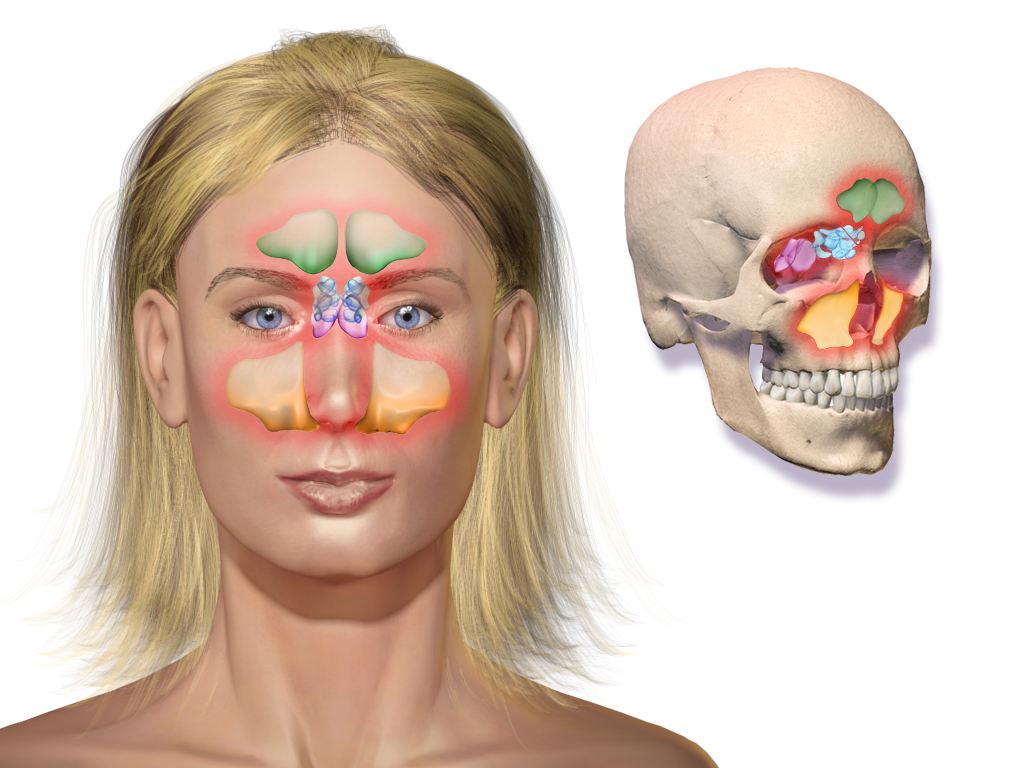
Paranasal sinuses are air-filled spaces, communicating with the nasal cavity, within the bones of the skull and face. Humans possess a number of paranasal sinuses, divided into subgroups that are named according to the bones within which the sinuses lie. Paranasal sinuses occur in a variety of animals (including most mammals, birds, non-avian dinosaurs, and crocodilians). The biological role of the sinuses is debated, but a number of possible functions have been proposed such as decreasing the relative weight of the front of the skull, and especially the bones of the face; increasing resonance of the voice; and providing a buffer against blows to the face.
It has also been suggested they insulate sensitive structures like dental roots and eyes from rapid temperature fluctuations in the nasal cavity, and also serve to humidify and heat inhaled air. The paranasal sinuses are joined to the nasal cavity via small orifices called ostia. These become blocked easily by allergic inflammation, or by swelling in the nasal lining which occurs with a cold. If this happens, normal drainage of mucus within the sinuses is disrupted, and sinusitis may occur. These conditions may be treated with drugs such as pseudoephedrine, which causes vasoconstriction in the sinuses, reducing inflammation, by traditional techniques of nasal irrigation, or by corticosteroid.
Posted in Health, Science |
Leave a Comment »
February 12, 2011

A neti pot is a device used for irrigating the nasal passages. Typically it has a spout attached near the bottom, sometimes with a handle on the opposite side. Neti pots flush out the nasal cavities by using gravity to draw the flow of saline. Some modern variants available from pharmacies are made of flexible plastic and can be compressed to exert additional pressure. In recent years alternative strategies have been developed, including bulb syringes in which the flow is created by squeezing a bulb and more advanced ‘pulsatile devices’ which mechanically pump the saline.
The use of a neti pot requires mixing up a saline solution that will be poured through the nasal passages. A typical saline solution is a mixture of around 500 ml of water with 5 g of salt. Sodium bicarbonate is sometimes added. The neti pot used with a saline solution has been shown to be an effective treatment for hay fever, sinusitis, and other nasal conditions. The origins of nasal irrigation are understood to be in the ancient Hindu practice of Ayurveda whose roots are traced to the Vedas.
Posted in Health, Technology |
Leave a Comment »
February 12, 2011

Magnetic implants are an experimental process in which small magnets are placed under the skin, allowing objects to be magnetically attached to the body, and also enables the wearer to sense electromagnetic fields. They have been used for several years in dentistry and re-constructive surgery, but their use by the body modification community is recent. Having magnets implanted under the skin allows the wearer to attach magnetic items to the outside of the skin, and also enables the wearer to sense electromagnetic fields.
Samppa, a a body modification artist, implanted magnets in himself and close friends in the late 1990’s, but they weren’t very strong and were only capable of picking up small items. Jesse Jarrell and Steve Haworth developed small and powerful neodymium magnets encapsulated in silicone. The procedure is still experimental, and complications are common, including rupturing of the silicone shell.
Posted in Art, Health, Technology |
Leave a Comment »