February 12, 2011
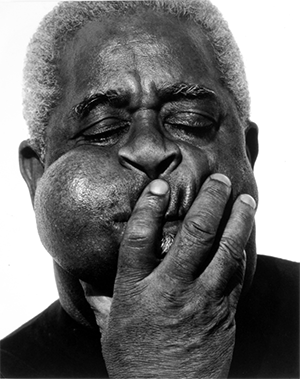
The Valsalva maneuver is performed by moderately forceful attempted exhalation against a closed airway, usually done by closing one’s mouth and pinching one’s nose shut. Variations of the maneuver can be used either in medical examination as a test of cardiac function and autonomic nervous control of the heart, or to ‘clear’ the ears and sinuses (that is, to equalize pressure between them) when ambient pressure changes, as in diving, hyperbaric oxygen therapy, or aviation.
The technique is named after Antonio Maria Valsalva, the 17th Century physician and anatomist from Bologna, whose principal scientific interest was the human ear. He described the Eustachian tube and the maneuver to test its patency (openness). He also described the use of this maneuver to expel pus from the middle ear. A modified version is done by expiring against a closed glottis. This will elicit the cardiovascular responses described below but will not force air into the Eustachian tubes.
Posted in Health |
Leave a Comment »
February 11, 2011
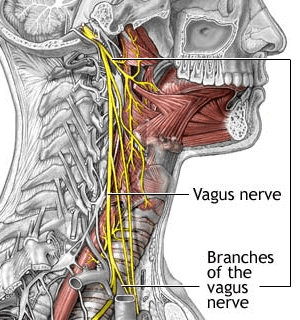
The vagus nerve [vey-guhs] is the tenth of twelve cranial nerves. Besides output to the various organs in the body, the vagus nerve conveys sensory information about the state of the body’s organs to the central nervous system. 80-90% of the nerve fibers in the vagus nerve are afferent (sensory) nerves communicating the state of the viscera to the brain. The medieval Latin word ‘vagus’ means literally ‘Wandering’ (the words vagrant, vagabond, and vague come from the same root). Sometimes the branches are spoken of in the plural and are thus called vagi.
read more »
Posted in Health, Science |
1 Comment »
February 8, 2011

Oxytocin is a mammalian hormone that acts primarily in the brain. It is best known for roles in female reproduction. It is released in large amounts during labor, and after stimulation of the nipples, facilitating birth and breastfeeding. Recent studies have begun to investigate oxytocin’s role in various behaviors, including orgasm, social recognition, pair bonding, anxiety, and maternal behaviors. For this reason, it is sometimes referred to as the ‘love hormone.’
Posted in Health, Love, Sex |
Leave a Comment »
February 8, 2011
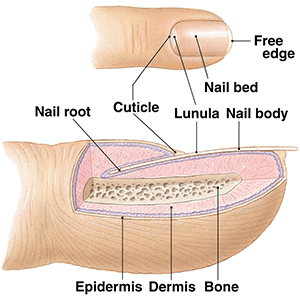
The lunula [loo-nyuh-luh] (‘little moon’ in Latin) is the crescent-shaped whitish area of the bed of a fingernail or toenail. The lunula is the visible part of the nail matrix (i.e. the root of the nail). In humans, it appears by week 14 of gestation, and has a primary structural role in defining the free edge of the distal nail plate (the part of the nail that grows outward). The lunula is most noticeable on the thumb, however, not everyone’s lunula is visible. In some cases, the eponychium may partially or completely cover the lunula.
It is located at the end of the nail (that is closest to the skin of the finger), but it still lies under the nail. It is not actually white, but it only appears so, when it is seen through the nail. Outlining the nail matrix, the lunula is a very delicate part of the nail structure. If one damages the lunula, the nail will permanently be deformed. Even when the totality of the nail is removed, the lunula remains in place and is similar in appearance to another smaller fingernail embedded in the nail bed.
Posted in Health, Language, Science |
Leave a Comment »
February 7, 2011

Full-spectrum light is light that covers the electromagnetic spectrum from infrared through near-ultraviolet, or all wavelengths that are useful to plant or animal life; in particular, sunlight is considered full spectrum, even though the solar spectral distribution reaching Earth changes with time of day, latitude, and atmospheric conditions. ‘Full-spectrum’ is not a technical term when applied to an electrical light bulb but rather a marketing term implying that the product emulates natural light.
Some products marketed as ‘full-spectrum’ may produce light throughout the entire spectrum, but not with an even spectral distribution, and may not even differ substantially from lights not marketed as ‘full-spectrum.’
read more »
Posted in Art, Health, Technology |
Leave a Comment »
February 3, 2011

Endorphins (‘endogenous morphine’) are proteins that are similar to opioids. They are hormones made by the endocrine system of many vertebrates. When they are released into the body, they cause a sense of well-being. They also act as analgesics, and are sometimes named ‘natural pain killers.’ Endorphins were first found in 1970s. They are produced by the pituitary gland and the hypothalamus during exercise, excitement, pain, consumption of spicy food, love and orgasm, and they resemble the opiates in their abilities to produce analgesia and a feeling of well-being. The sudden release of endorphins during strenuous exercise is sometimes called a ‘runner’s high.’
The term endorphin rush has been adopted in popular speech to refer to feelings of exhilaration brought on by pain, danger, or other forms of stress, supposedly due to the influence of endorphins. When a nerve impulse reaches the spinal cord, endorphins are released which prevent nerve cells from releasing more pain signals. Immediately after injury, endorphins allow animals to feel a sense of power and control over themselves that allows them to persist with activity for an extended time.
Posted in Drugs, Health, Science |
Leave a Comment »
February 2, 2011

Ironic processing is the psychological process whereby an individual’s deliberate attempts to suppress or avoid certain thoughts (thought suppression) render those thoughts more persistent.
read more »
Posted in Health, Science |
Leave a Comment »
February 2, 2011

A death erection, angel lust, or terminal erection is a post-mortem erection, technically a priapism (prolonged involuntary erection), observed in the corpses of human males who have been executed, particularly by hanging. The phenomenon has been attributed to pressure on the cerebellum created by the noose. Spinal cord injuries are known to be associated with priapism. Other causes of death may also result in these effects, including fatal gunshot wounds to the brain, damage to major blood vessels, and violent death by poisoning. A postmortem priapism is an indicator that death was likely swift and violent.
Death by hanging, whether an execution or a suicide, has been observed to affect the genitals of both men and women. In women, the labia and clitoris will become engorged and there may be a discharge of blood from the vagina. In men, a more or less complete state of erection of the penis, with discharge of urine, mucus or prostatic fluid is a frequent occurrence – present in one case in three.
Posted in Death, Health, Sex |
Leave a Comment »
February 2, 2011

Erotic asphyxiation is the intentional restriction of oxygen to the brain for sexual arousal. It is also called asphyxiophilia, hypoxyphilia, or breath control play. Colloquially, a person engaging in the activity is sometimes called a ‘gasper.’
The carotid arteries (on either side of the neck) carry oxygen-rich blood from the heart to the brain. When these are compressed, as in strangulation or hanging, the sudden loss of oxygen to the brain and the accumulation of carbon dioxide can increase feelings of giddiness, lightheadedness, and pleasure, all of which will heighten sexual sensations.
read more »
Posted in Death, Health, Sex |
1 Comment »
February 2, 2011
The fainting game refers to intentionally cutting off oxygen to the brain with the goal of inducing temporary syncope (loss of consciousness) and euphoria. There are two distinct methods used to achieve oxygen deprivation: strangulation and rapid breathing (self-induced hypocapnia). The fainting game is pursued primarily by children and teens to get a high without taking drugs. It is frequently confused with erotic asphyxiation, which is oxygen deprivation for sexual arousal.
The practice goes by many other names in different parts of the world, such as: Riding a Rocket, Airplaning, America Dream Game, Black Out Game, Breath Play, Bum Rushing, California Choke, California Headrush, Choking Out, Cloud Nine, Dying game, Dream Game, Elevator, Flatline Game, Funky Chicken, Harvey Wallbanger, Hyperventilation Game, Indian Headrush, Knockout Game, Pass-out Game, Natural High, Sleeper Hold, Space Cowboy, Space Monkey, Suffocation Roulette, Rising Sun, High Riser, Tingling Game, Trip to Heaven, Speed Dreaming, Wall-Hit, and Purple Dragon.
Posted in Health, Language, Sex |
Leave a Comment »
February 2, 2011
Quorn is the leading brand of mycoprotein food product in the UK and Ireland. The mycoprotein is extracted from a fungus, Fusarium venenatum, which is grown in large vats. Quorn is produced as both a cooking ingredient and a range of ready meals. It is sold (largely in Europe, but also in other parts of the world) as a health food and an alternative to meat, especially for vegetarians. As it uses egg white as a binder, it is not a vegan food.
During production, it is textured, giving it some of the grained character of meat, and pressed either into a mince resembling ground beef; forms resembling chicken breasts, meatballs, and turkey roasts; or chunks resembling diced chicken breast. In these forms, Quorn has a varying color and a mild flavour resembling the imitated meat product, and is suitable for use as a replacement for meat in many dishes, such as stews and casseroles. The final Quorn product is high in protein and dietary fibre and is low in saturated fat and salt. It contains less dietary iron than do most meats.
Posted in Food, Health, Technology |
Leave a Comment »
February 2, 2011

Human echolocation [ek-oh-loh-key-shuhn] is the ability of humans to detect objects in their environment by sensing echoes from those objects. This ability is used by some blind people to navigate within their environment. They actively create sounds, such as by tapping their canes, lightly stomping their foot or by making clicking noises with their mouths (however, because humans click with much lower frequencies and slower rates than other animals, only larger objects can be sensed). The principle is comparable to active sonar in submarines and to echolocation by bats and dolphins.
Vision and hearing are closely related in that they can process reflected waves of energy. Vision processes light waves as they travel from their source, bounce off surfaces throughout the environment and enter the eyes. Similarly, the auditory system processes sound waves as they travel from their source, bounce off surfaces and enter the ears. Both systems can extract a great deal of information about the environment by interpreting the complex patterns of reflected energy that they receive. In the case of sound, these waves of reflected energy are called ‘echoes.’
Posted in Health, Science |
Leave a Comment »



