November 3, 2010

Barefoot running was widespread for the majority of human history and is still relatively common in undeveloped populations. In competitive running virtually all modern athletes use running shoes, but a small minority of runners have achieved success running barefoot, including Olympic champions and world record holders Abebe Bikila and Tegla Loroupe, as well as Zola Budd. The biomechanics of running are changed quite significantly when shoes are used – in barefoot running, the balls of the feet strike the ground with the most force. With padded shoes more emphasis is placed on the heel and the back of the foot. Running in thin-soled, flexible shoes such as moccasins, VivoBarefoot and Vibram FiveFingers is biomechanically similar to barefoot running.
Barefoot running is experiencing a small resurgence of popularity. Its proponents believe it is healthier for feet and reduces the risk of chronic injuries, notably repetitive stress injuries due to the impact of heel striking in padded running shoes. These health claims are supported by some research and advocated by some authorities, but the research is not conclusive or widely accepted in the medical community. Barefoot running is not generally advocated by medical or sports organizations, who recommend that padded running shoes be worn, with particular consideration to foot type (type of pronation in heel strike gait).
Posted in Games, Health, Technology |
Leave a Comment »
October 27, 2010

The clean and jerk is one of two olympic weightlifting events (the other being the snatch). It is a highly technical lift that is known as ‘the king of lifts’ because more weight can be lifted above one’s head as compared to any other known weightlifting technique. The clean portion of the lift refers to the lifter explosively pulling the weight from the floor to a racked position across deltoids and clavicles.
In early twentieth century weightlifting competitions, a variant movement called the ‘Continental’ (because it was practiced by Germans rather than the British) allowed the lifter to pull the barbell up to his belt, where it could rest. Then with several successive flips, the bar would be moved up the torso until it reached the position for the overhead jerk. The Continental gained a reputation as clumsy, slow, and nonathletic compared to the swift coordinated movement required to lift the bar ‘clean.’ Hence, the clean movement was adopted by the early weightlifting federations as the official movement.
Posted in Games, Health, Language |
Leave a Comment »
October 26, 2010

In anatomy, heterochromia [het-uh-roh-kroh-me-uh] refers to a difference in coloration, usually of the iris but also of hair or skin. Heterochromia is a result of the relative excess or lack of melanin (a pigment). It may be inherited or due to disease or injury. Eye color, specifically the color of the irises, is determined primarily by the concentration and distribution of melanin. The affected eye may be hyperpigmented (hyperchromic) or hypopigmented (hypochromic).
Heterochromia of the eye (heterochromia iridis or heterochromia iridum) is of two kinds. In complete heterochromia, one iris is a different color from the other. In partial heterochromia or sectoral heterochromia, part of one iris is a different color from its remainder. Partial or sectoral heterochromia is much less common than complete heterochromia and is typically found in autosomally inherited disorders such as Hirschsprung’s disease and Waardenburg syndrome.
Posted in Health, Science |
1 Comment »
October 26, 2010

Propolis [prop-uh-lis] is a resinous mixture that honey bees collect from tree buds, sap flows, or other botanical sources. It is used as a sealant for unwanted open spaces in the hive. Propolis is used for small gaps (approximately 6 millimeters or less), while larger spaces are usually filled with beeswax.
Its color varies depending on its botanical source, the most common being dark brown, but it can be found in green, red, black and white hues. Propolis is sticky at and above room temperature. At lower temperatures it becomes hard and very brittle. Propolis is also marketed by health food stores as a traditional medicine with a variety of uses.
read more »
Posted in Health, Science |
Leave a Comment »
October 26, 2010
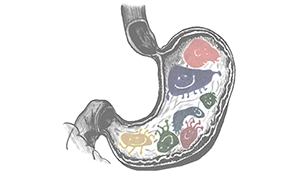

The hygiene hypothesis states that the more hygienic a society is, the more allergic they are as well. Studies suggest that the immune system in early infancy is primed to recognize and fight infections. In the absence of infections, the immune system begins to target innocuous items in the child’s diet and environment. A rise in peanut allergies, in particular, is being investigated as the result of a lack of early childhood exposure to infectious agents, symbiotic microorganisms (e.g., gut flora or probiotics), and parasites. The theory that exposure to infections decreases the risk of an allergy was first proposed by, David P. Strachan in an article published in the British Medical Journal (BMJ), in 1989.
Other diseases, such as the rise of autoimmune diseases and acute lymphoblastic leukemia in young people in the developed world, have also been linked to the hygiene hypothesis. There is also some evidence that autism is caused by an immune disease, and at least one study implicates the hygiene hypothesis as a cause of autism. Because of the increased use of antibiotics, antipyretics (fever reducing drugs), and vaccines against childhood diseases, children with modern medical care are less likely to experience high fever. According to some medical papers, high fever may prevent cancer.
Posted in Health |
Leave a Comment »
October 21, 2010

Cortisol, also called the ‘stress hormone,’ is an endogenous steroid that helps the body metabolize glucose, control blood pressure, suppress immunity, and respond to inflammation. The cortisol [kawr-tuh-sawl] awakening response (CAR) is an increase of about 50% in cortisol levels occurring 20–30 minutes after awakening in the morning in some people. This rise is superimposed upon the late-night rise in cortisol which occurs before awakening.
It is thought to be linked to the hippocampus’ preparation of the hypothalamic-pituitary-adrenal axis (HPA) to face anticipated stress. The HPA is a complex set of interactions among three endocrine glands. It is a major part of the neuroendocrine system that controls reactions to stress and regulates many body processes, including digestion, the immune system, and mood. The hippocampus is responsible for long term memory. CAR is hypothesized to be the stress response that occurs when your memories systems ‘wake up,’ forcing you to consider the challenges of the day ahead.
read more »
Posted in Health |
1 Comment »
October 19, 2010
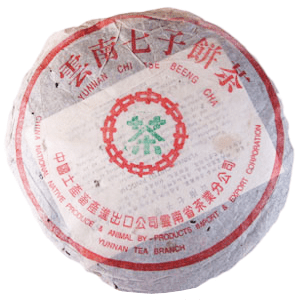
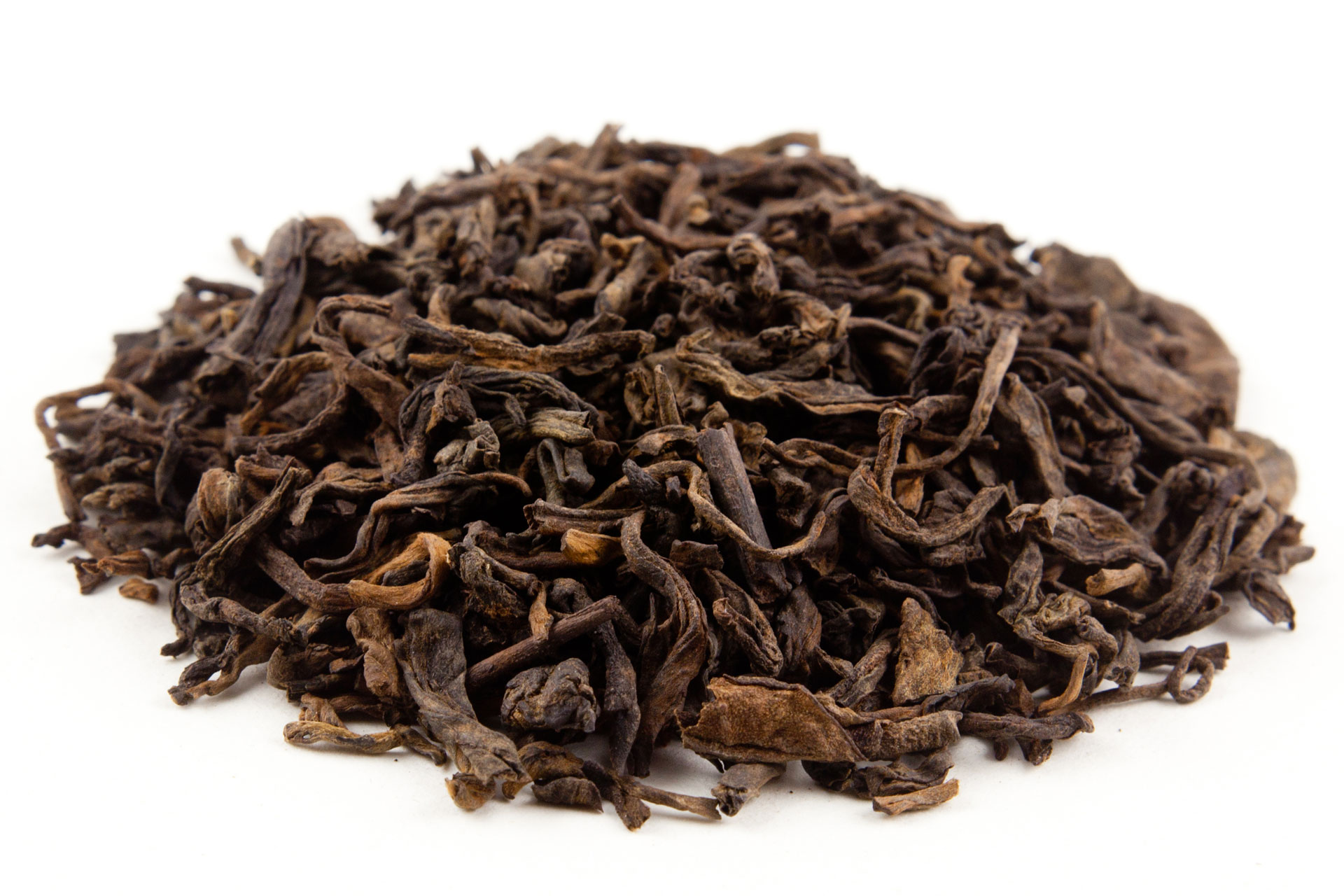
Pu-erh tea or Bolay tea is a type of tea made from a ‘large leaf’ variety of the tea plant Camellia sinensis and named after Pu’er county near Simao, Yunnan, China. Pu-erh tea can be purchased as either raw/green (sheng) or ripened/cooked (shu), depending on processing method or aging. Sheng pu-erh can be roughly classified on the tea oxidation scale as a green tea, and the shou or aged-green variants as post-fermented tea. The fact that pu-erh fits in more than one tea type poses some problems for classification. For this reason, the ‘green tea’ aspect of pu-erh is sometimes ignored, and the tea is regarded solely as a post-fermented product.
Unlike other teas that should ideally be consumed shortly after production, pu-erh can be drunk immediately or aged for many years; pu-erh teas are often now classified by year and region of production much like wine vintages. While there are many counterfeit pu-erhs on the market and real aged pu-erh is difficult to find and identify, it is still possible to find pu-erh that is 10 to 50 years old, as well as a few from the late Qing dynasty (1644–1912). Indeed, tea connoisseurs and speculators are willing to pay high prices for older pu-erh, upwards of thousands of dollars per cake.
Posted in Food, Health, World |
Leave a Comment »
October 19, 2010

Cortisol [kawr-tuh-sawl], also known as hydrocortisone, is a steroid hormone or glucocorticoid produced by the adrenal gland, and is one of the best known ‘stress hormones.’ Stress hormones act by mobilizing energy from storage to muscles, increasing heart rate, blood pressure and breathing rate and shutting down metabolic processes such as digestion, reproduction, growth and immunity.
Posted in Health, Science |
Leave a Comment »
October 19, 2010

A saccade [suh-kahd] is a fast movement of an eye, head or other part of an animal’s body or device. It can also be a fast shift in frequency of an emitted signal or other quick change. Saccades are quick, simultaneous movements of both eyes in the same direction. Saccades serve as a mechanism for fixation and rapid eye movement. The word appears to have been coined in the 1880s by French ophthalmologist Émile Javal, who used a mirror on one side of a page to observe eye movement in silent reading, and found that it involves a succession of discontinuous individual movements.
Humans and many other animals do not look at a scene in fixed steadiness (as opposed to e.g., most birds); instead, the eyes move around, locating interesting parts of the scene and building up a mental, three-dimensional ‘map’ corresponding to the scene (as opposed to the graphical map of avians, that often relies upon detection of angular movement on the retina). One reason for the saccadic movement of the human eye is that the central part of the retina—known as the fovea—plays a critical role in resolving objects. By moving the eye so that small parts of a scene can be sensed with greater resolution, body resources can be used more efficiently. Saccades are the fastest movements produced by the human body
Posted in Health, Language |
Leave a Comment »
October 13, 2010
Syringe Tide refers to a period during 1987-88 in New Jersey, where significant amounts of medical waste and raw garbage washed up onto a 50-mile (80 km) stretch of Atlantic Ocean beaches in Jersey Shore communities in Monmouth and Ocean counties. This forced the closing of all the beaches in the two counties. Officials traced the source of the waste to the Fresh Kills Landfill in Staten Island. New York City was required to pay $1 million for past pollution damages as well as pay for the clean up. Reparations were denied business owners on the Jersey Shore for revenues lost during the months of inactivity.
In response to syringe tides of 1987 and 1988, the participants in the New Jersey Harbor Estuary Program (HEP) implemented an extremely successful effort, known as the Short-term Floatables Action Plan. The plan has been implemented since 1989. It curtails floatable debris wash-ups by intercepting slicks within the Harbor. With this plan, the extent of beach closures declined from over 70 miles (110 km) in 1988 to fewer than 4 miles (6.4 km) in 1989, and closures have remained at a low level since.
Posted in Health |
Leave a Comment »
October 10, 2010
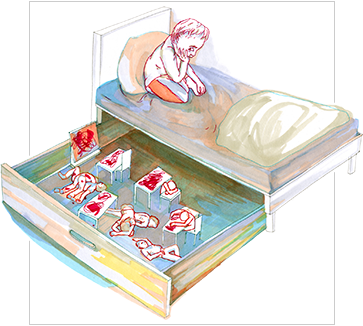
Hikikomori (literally ‘pulling away,’ being confined’) is a Japanese term to refer to the phenomenon of reclusive people who have chosen to withdraw from social life, often seeking extreme degrees of isolation and confinement because of various personal and social factors in their lives.
The term hikikomori refers to both the sociological phenomenon in general as well as to people belonging to this societal group. In Western terminology this group may include individuals suffering from social phobia or social anxiety problems. This could also be due to agoraphobia, avoidant personality disorder or painful or extreme shyness.
Posted in Health, Language, World |
Leave a Comment »
September 28, 2010
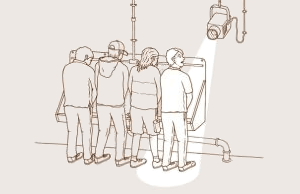
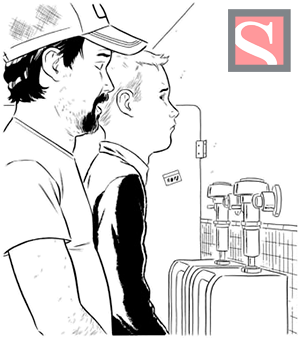
Paruresis [pahr-yew-ree-sis] is a type of phobia in which the sufferer is unable to urinate in the (real or imaginary) presence of others, such as in a public restroom. It most commonly affects males, though there are female sufferers too. The analogous condition that affects bowel movement is called parcopresis.
Many people have brief, isolated episodes of urinary difficulty in situations where other people are in close proximity. Paruresis is also known by many colloquial terms, including bashful bladder, bashful kidneys, mental cloggery, stage fright, pee fright, urophobia, pee-shyness, the slow dribbles, creeping pee-pee, public piss syndrome, shy bladder syndrome, air-blockage, and psychogenic urinary retention.
read more »
Posted in Health |
Leave a Comment »




 The Daily Omnivore