July 11, 2010
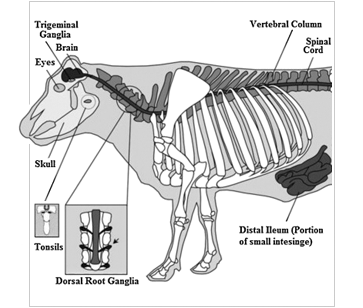
Specified risk material is tissues of ruminant animals that cannot be inspected and passed for human food because they contain high concentrations of prions (proteinaceous infectious particle, an infectious agent composed primarily of protein), which cause mad cow and other diseases. These tissues include brains, eyes, spinal cord, and other organs, but the exact definition varies by jurisdiction.
Posted in Food, Health, Science |
Leave a Comment »
July 11, 2010


Mechanically separated meat also known as mechanically recovered/reclaimed meat, is a paste-like meat product produced by forcing beef, pork, turkey or chicken bones, with attached edible meat, under high pressure through a sieve or similar device to separate the bone from the edible meat tissue.
Mechanically separated meat has been used in certain meat and meat products since the late 1960s, particularly in hot dogs. This product can be contrasted with meat extracted by advanced meat recovery systems, a newer method that shaves the last traces of meat from bone.
Posted in Food, Health, Technology |
Leave a Comment »
July 9, 2010

Anosognosia [ah-no-sohg-no-see-ah] is a condition in which a disabled person seems unaware of or denies the existence of his or her disability. This may include unawareness of quite dramatic impairments, such as blindness or paralysis. It was first named by neurologist Joseph Babinski in 1914, although relatively little has been discovered about the cause of the condition since its initial identification. The word comes from the Greek words “nosos” disease and “gnosis” knowledge.
Posted in Health |
Leave a Comment »
June 30, 2010

The burpee is a full body exercise used in strength and aerobic training. It is performed in four steps: 1) Begin in a standing position; 2) Drop into a squat position with your hands on the ground; 3) Kick your feet back, while keeping your arms extended; and 4) Immediately return your feet to the squat position. The athlete then stands up from squat position and repeats the procedure. There are many variants of the burpee such as the ‘Burpee push up’ (the athlete performs one push-ups after assuming the plank position); ‘Jump up Burpee’ (the athlete jumps up as high as they can in at the end of the movement and before beginning the next Burpee); and the ‘Long-jump burpee’ (the athlete jumps forward, not upward). For the ‘Burpee Mile,’ the athlete performs the Burpee exercise, then performs a Standing long jump. This sequence is repeated until the athlete has traveled one mile.
According to Oxford Dictionaries Online, the exercise was named in the 1930s for American physiologist Royal H. Burpee, who developed the Burpee test. He earned a PhD in Applied Physiology from Columbia University in 1940 and created the exercise as part of his PhD thesis as a quick and simple way to assess fitness. The exercise was popularized when the United States Armed Services adopted it as a way to assess the fitness level of recruits in WWII. Consisting of a series of the exercises performed in rapid succession, the test was meant to be a quick measure of agility, coordination and strength.
Posted in Games, Health |
Leave a Comment »
June 28, 2010
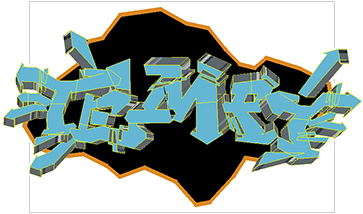

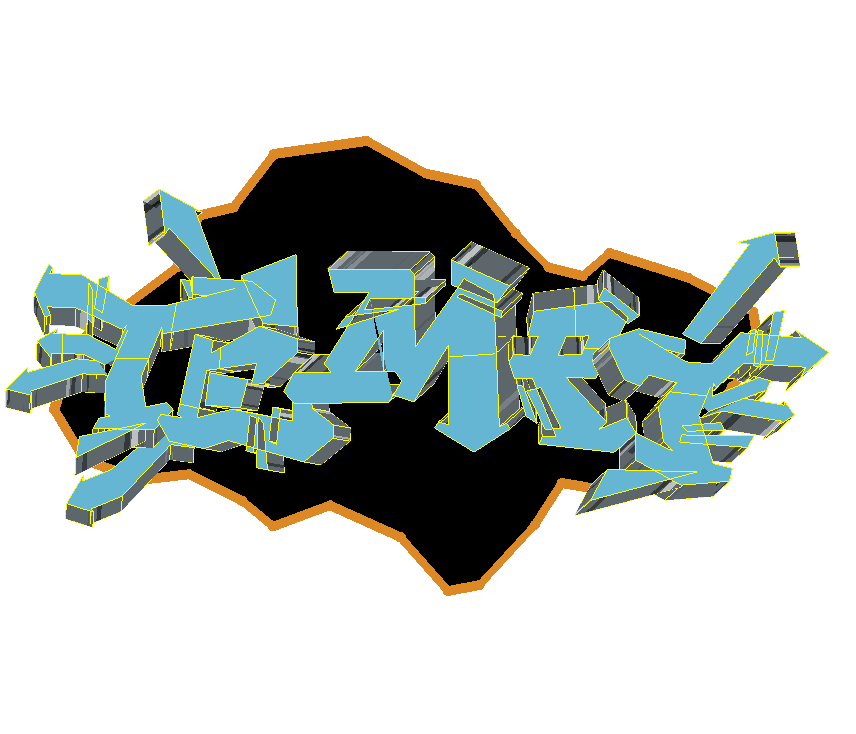
EyeWriter is a low-cost eyetracking system originally designed for paralyzed graffiti artist TEMPT1. The EyeWriter system uses inexpensive cameras and open-source computer vision software to track the wearer’s eye movements of their eye. EyeWriter was developed by artists and engineers from the Free Art & Technology Lab, Graffiti Research Lab and OpenFrameworks teams, including Zachary Lieberman, Evan Roth, James Powderly, Theo Watson and Chris Sugrue. The project received almost $18,000 as a kickstarter project, which surpassed its $15,000 goal. It also received funding support from The Ebeling Group and from Parsons School of Design.
The EyeWriter software consist of eye-tracking software, and a drawing software that allows a user to draw with the movement of their eye. The source code is open source with a Artistic/GPL License (a free use licence). The software for both parts has been developed using openframeworks, a cross platform c++ library for creative development. Eyewriter 2.0 led to the development of Livewriter to be used in the 2010 Cinekid festival: in addition to Eyewriter’s original parameters, a robot arm was integrated allowing the physical recording of visually created content.
Posted in Art, Health, Technology |
Leave a Comment »
June 28, 2010
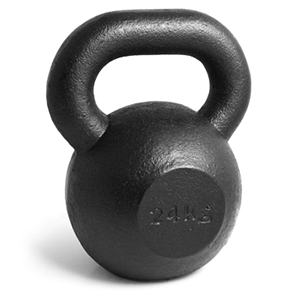
A kettlebell or girya is a cast iron weight looking somewhat like a cannonball with a handle. Sizes that range from 5 lbs to 175 lbs, but the traditional Russian kettlebell is usually one which weighs 1 Pood (roughly 35lbs). Unlike traditional dumbbells, the kettlebell’s center of mass is extended beyond the hand; this allows for swing movements not possible with traditional dumbbells. Because more muscle groups are utilized in the swinging and movement of a kettlebell than during the lifting of dumbbells a kettlebell workout is sometimes claimed to be more effective.
Posted in Health |
Leave a Comment »



 The Daily Omnivore