February 3, 2014


An eponymous [uh-pon-uh-muhs] hairstyle is a particular style of hair that has become fashionable during a certain period of time through its association with a prominent individual. Imitation of such styles can sometimes be attributed to what became known in the 1980s as the ‘wannabe’ effect, a term used particularly with reference to young women who wished to emulate (i.e. ‘wanna be’ like) the American singer Madonna. A 2010 study of British women found that half took a copy of a celebrity’s photograph to their salons to obtain a similar hairstyle.
The quest for a particular eponymous style was caricatured in Plum Sykes’ novel ‘Bergdorf Blondes’ (2004), in which it was rumored that a glamorous New York heiress (Julie Bergdorf) had her blonde hair touched up every thirteen days (‘$450 a highlight’) by a stylist at her family’s store, Bergdorf Goodman. Thus, other ‘Thirteen Day Blondes’ who attained Julie’s precise color—likened to that of the ‘very white’ hair of Carolyn Bessette Kennedy—became known as ‘Bergdorf Blondes.’
read more »
Posted in Art, Humor |
Leave a Comment »
January 25, 2014

People of Walmart is an entertainment website founded in 2009 by brothers Andrew and Adam Kipple of Harrison City, PA featuring user-submitted photos of socially awkward or undesirable Walmart shoppers.
The brothers and their friend Luke Wherry started the site after seeing a woman in a t-shirt that read ‘go f*** yourself’ with a 2 year old in a harness and a man with a beard reminiscent of those worn by ZZ Top at a South Carolina Walmart. They created the website to share what they find truly remarkable, ignoring more stereotypical redneck or mullets. In addition to avoiding the ordinary, the trio refuse to post photos of people who are disabled or working Walmart employees.
Posted in Humor, Money |
Leave a Comment »
January 23, 2014
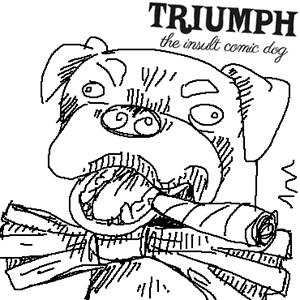
Robert Smigel [smy-guhl] (b. 1960) is an American actor, humorist, comedian and writer known for his ‘Saturday Night Live’ ‘TV Funhouse’ cartoon shorts and as the puppeteer and voice behind ‘Triumph, the Insult Comic Dog.’
read more »
Posted in Humor |
Leave a Comment »
December 16, 2013

The Land of Gorch was a recurring skit in season one of ‘Saturday Night Live’ featuring Jim Henson’s Muppets. It was set on a swampy alien wasteland on an unnamed planet (which was claimed to also be named ‘Gorch’ in one sketch) ruled by the oafish King Ploobis who has different misadventures with his wife Queen Peuta, his right-hand man Scred, his servant Vazh, his son Wisss, and a carved-from-stone deity called The Mighty Favog.
The intro narrated by Don Pardo states: ‘Come with us now from the bubbling tar pits to the sulfurous wasteland, from the rotting forest to the stagnant mud flats, to the Land of Gorch.’ The segments dealt with a number of racy issues ranging from alcohol abuse, adultery, species extinction, drugs, and other ‘adult’ topics, though each was treated with the expected SNL irreverence.
read more »
Posted in Art, Humor |
Leave a Comment »
December 9, 2013
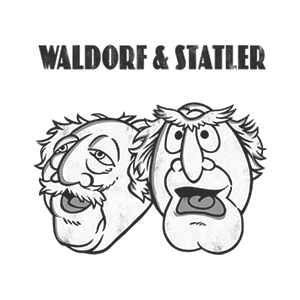
A heckler is a person who harasses and tries to disconcert others with questions, challenges, or gibes. They are often known to shout disparaging comments at a performance or event, or to interrupt set-piece speeches, with the intent of disturbing performers and/or participants.The term originates from the textile trade, where to heckle was to tease or comb out flax or hemp fibers.
The additional meaning, to interrupt speakers with awkward or embarrassing questions, was added in Scotland, and specifically perhaps in early nineteenth century Dundee, a famously radical town where the hecklers who combed the flax had established a reputation as the most radical and belligerent element in the workforce. In the heckling factory, one heckler would read out the day’s news while the others worked, to the accompaniment of interruptions and furious debate.
read more »
Posted in Art, Humor, Language |
2 Comments »
December 1, 2013
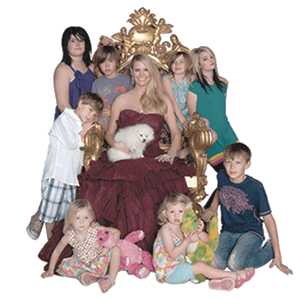
The Queen of Versailles is a 2012 American documentary film by Lauren Greenfield, depicting Jackie Siegel and her husband David, founder and CEO of Westgate Resorts (a timeshare company based out of Florida), and their family as they build the Versailles house, the largest and most expensive single-family house in the United States, and the crisis they face as the US economy declines.
‘Washington Post’ columnist Ezra Klein called it, ‘perhaps the single best film on the Great Recession,’ writing that one scene, in which Siegel recounts a series of transactions that allowed him to purchase at a fraction of its original value a loan on which he owes money, ‘might stand as the single most complete vignette on the mechanics of the financial crisis and the subsequent slow recovery.’
Posted in Humor, Money |
Leave a Comment »
November 28, 2013
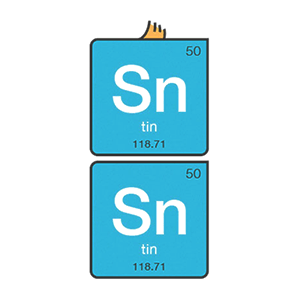
A visual pun is a pun involving an image or images (in addition to or instead of language). Visual puns in which the image is at odds with the inscription are common in cartoons such as ‘Lost Consonants’ or ‘The Far Side’ as well as in Dutch gable stones (decorative building markings).
For instance the ‘Batenburg’ stone from Amsterdam depicts silver coins entering a castle and gold golds exiting, which puns on the words ‘baten’ (‘to profit’) and ‘burg’ (‘castle’), the name of a village near Nijmegen. European heraldry contains the technique of canting arms, which can be considered punning.
Posted in Humor, Language |
Leave a Comment »
November 27, 2013

So-called ‘reverse product placement‘ is the creation of products in real life to match those seen in a fictional setting. In 2007, 7-Eleven rebranded 11 of its American stores and one Canadian store as ‘Kwik-E-Marts,’ selling some real-life versions of products seen in episodes of the ‘The Simpsons,’ such as Buzz Cola and Krusty-O’s cereal. In 1997, Acme Communications was created as a chain of real television stations; the firm is named for the fictional Acme Corporation of Warner Brothers fame.
The fictional Willy Wonka from ‘Willy Wonka & the Chocolate Factory’ (1971) was licensed to name a real candy company soon after the film’s release; the brand is now controlled by Nestlé. In the 1984 cult film ‘Repo Man,’ a reverse form of product placement is used, with an exaggerated form of 1980s era generic packaging used on products prominently shown on-screen (these include ‘Beer,’ ‘Drink,’ ‘Dry Gin,’ and ‘Food – Meat Flavored’).
Posted in Art, Humor, Money |
1 Comment »
November 26, 2013
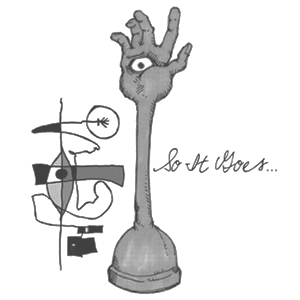
The Tralfamadorians are a fictional alien race mentioned in several novels by Kurt Vonnegut. Tralfamadore is their home planet. Details on the inhabitants of the planet vary from novel to novel.
In ‘Slaughterhouse-Five,’ Tralfamadore is the home to beings who exist in all times simultaneously, and are thus privy to knowledge of future events, including the destruction of the universe at the hands of a Tralfamadorian test pilot. They kidnap Billy Pilgrim, the protagonist of the novel, and place him in a zoo on Tralfamadore with Montana Wildhack, a Hollywood starlet.
read more »
Posted in Art, Humor |
Leave a Comment »
November 26, 2013

‘The Sirens of Titan‘ is a 1959 book by Kurt Vonnegut, Jr. His second novel, it involves issues of free will, omniscience, and the overall purpose of human history. Much of the story revolves around a Martian invasion of Earth. The protagonist is Malachi Constant, the richest man in 22nd-century America. He possesses extraordinary luck that he attributes to divine favor which he has used to build upon his father’s fortune.
He becomes the centerpoint of a journey that takes him from Earth to Mars in preparation for an interplanetary war, to Mercury with another Martian survivor of that war, back to Earth to be pilloried as a sign of Man’s displeasure with his arrogance, and finally to Titan where he again meets the man ostensibly responsible for the turn of events that have befallen him, Winston Niles Rumfoord.
read more »
Posted in Humor, Language |
Leave a Comment »
November 20, 2013

‘Gundam Rock‘ is a cover album by Andrew W.K., released in 2009 only in Japan. The album consists of covered music from the ‘Gundam’ series to celebrate its 30th Anniversary (the franchize is is a space opera anime created by Sunrise studios that features giant wearable robots called ‘Mobile Suits’; usually the protagonist’s suit will carry the name ‘Gundam’).
The front cover artwork features an original illustration by respected Gundam and Capcom artist, Akira Yasuda (also known as ‘Akiman’). The image depicts Andrew W.K. floating in space next to the Mobile Suit Gundam in similar fashion to frequent ‘Gundam’ protaganst Amuro Ray in the poster of the ‘Char’s Counterattack’ movie, the first theatrical ‘Gundam’ release in 1988.
Posted in Art, Humor, World |
Leave a Comment »
November 11, 2013
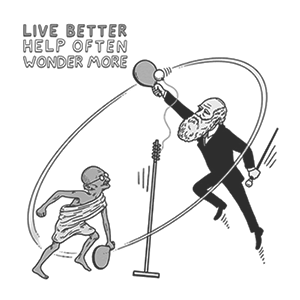
The Sunday Assembly is a syncretistic, non-religious gathering co-founded by stand-up comedians Sanderson Jones and Pippa Evans in early 2013 in London. The bimonthly gathering is designed to bring together non-religious people who want a similar communal experience to a religious church. Satellite assemblies have been established in over 30 cities including New York, San Diego, and Dublin. During Sunday Assembly gatherings attendees listen to talks by speakers such as Danish/British comedian Sandi Toksvig, socialize, and sing songs by artists such as Stevie Wonder and Queen.
Jones originally stated that he did not, ‘expect much objection from religious communities. They are happy for us to use their church model.’ However, he suspected that there may be ‘more aggressive atheists who will have an issue with it.’ Religious organizations also criticized criticized the group calling it ‘highly inappropriate.’ Jones replied to criticism by stating: ‘I don’t [think] there’s anything that’s inherently elite about people getting together to sing songs and think about themselves and improve their community. But we can’t wait to see people doing it in all manner of different places in all manner of different ways, that appeal to all manner of different people.’
Posted in Humor, Philosophy |
Leave a Comment »


 The Daily Omnivore