November 29, 2012

The Merry Pranksters was a cohort that formed around American author Ken Kesey in 1964 and sometimes lived communally at his homes in California and Oregon. The group promoted the use of psychedelic drugs. Their motto was ‘Never Trust a Prankster.’
Kesey and the Merry Pranksters are noted for the sociological significance of a lengthy road trip they took in the summer of 1964, traveling across the United States in a psychedelic painted school bus enigmatically and variably labeled ‘Further.’ Their early escapades were chronicled by Tom Wolfe in ‘The Electric Kool-Aid Acid Test.’ Wolfe also documents a notorious 1966 trip on Further from Mexico through Houston, stopping to visit Kesey’s friend, novelist Larry McMurtry. Kesey was in flight from a drug charge at the time.
read more »
Posted in Drugs, Humor |
Leave a Comment »
November 28, 2012
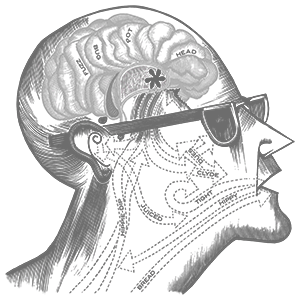
How to Speak Hip is a spoken-word comedy album by improv pioneer Del Close and John Brent, released by Mercury Records in 1959. The album is designed as a satire of language-learning records, where the secret language of the ‘hipster’ is treated as a foreign language.
Part of the joke, however, is that it actually does a good job of describing the Beat Generation/Beatnik sub-culture: Basic concepts such as ‘cool’ and ‘uncool’ are taught, as well as vocabulary building (‘dig,’ ‘dig it,’ ‘dig yourself, baby,’ ‘dig the chick,’ ‘dig the cat,’ ‘What a drag!’).
read more »
Posted in Art, Humor, Language |
Leave a Comment »
November 28, 2012

Harold is a structure used in longform theatrical improvisation. Developed by Del Close and brought to fruition through Close’s collaboration with Charna Halpern, the Harold has become the signature form of Chicago’s iO and the Upright Citizens Brigade Theater in New York and Los Angeles. It is now performed by improvisational theater troupes and teams across the world.
The Committee, a San Francisco improv group, performed the first Harold in Concord, California in 1967. They were invited to a high school and decided to do their improvisations on the war in Vietnam. On the way home they were discussing the performance when one of them asked what they should call it. Allaudin (Bill) Mathieu called out ‘Harold.’ It was a joking reference to a line from ‘A Hard Days Night’ where a reporter asked George Harrison what he called his haircut; he answered ‘Arthur.’ Close later remarked that he wished he had chosen a better name.
read more »
Posted in Art, Games, Humor |
Leave a Comment »
November 28, 2012

Del Close (1934 – 1999) is one of the premier influences on modern improvisational theater. He was also an actor appearing in a number of films and television shows.
He was a co-author of the book ‘Truth in Comedy,’ which outlines techniques now common to longform improvisational theater and describes the overall structure (he named ‘Harold’) which remains a common frame for longer improvisational scenes. His favorite framework for comedic storytelling was the structures of Wagner’s ‘Ring Cycle.’
read more »
Posted in Art, Games, Humor |
Leave a Comment »
November 28, 2012

Recess is an American animated television series created by Paul Germain and Joe Ansolabehere (credited as ‘Paul and Joe’) and produced by Walt Disney Television Animation. The series focuses on six elementary school students and their interaction with other classmates and teachers.
The title refers to the period of time during the school day in which children are not in lessons and are outside in the schoolyard, in North American society. One of the main features of the series is how the children form their own society, complete with government and a class structure, set against the backdrop of a regular school.
read more »
Posted in Art, Humor |
Leave a Comment »
November 18, 2012

The Comedy is a 2012 black comedy film directed and co-written by Rick Alverson, and starring Tim Heidecker. Supporting actors include Eric Wareheim (Tim and Eric), James Murphy (LCD Soundsystem), and Gregg Turkington (better known as Neil Hamburger).
Despite the title and use of comedians as actors, Sundance festival chief programmer Trevor Groth says that the film is not a comedy, but instead ‘a provocation, a critique of a culture based at its core around irony and sarcasm and about ultimately how hollow that is.’ Indifferent even to the prospects of inheriting his father’s estate, Swanson (Heidecker) whittles away his days with a group of aging Brooklyn hipsters, engaging in acts of recreational cruelty and pacified boredom. Desensitized and disenchanted, he strays into a series of reckless situations that may offer the promise of redemption or the threat of retribution.
Posted in Art, Humor |
Leave a Comment »
November 17, 2012
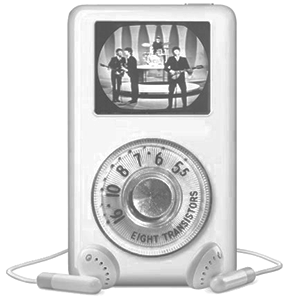
An anachronism [uh-nak-ruh-niz-uhm] is a chronological inconsistency in some arrangement, especially a juxtaposition of person(s), events, objects, or customs from different periods of time. Often the item misplaced in time is an object, but it may be a verbal expression, a technology, a philosophical idea, a musical style, a material, a custom, or anything else associated with a particular period in time so that it is incorrect to place it outside its proper temporal domain.
The intentional use of older, often obsolete cultural artifacts may be regarded as anachronistic. For example, it could be considered anachronistic for a modern-day person to wear a top hat, write with a quill, or carry on a conversation in Latin. Such choices may reflect an eccentricity, or an aesthetic preference.
read more »
Posted in Art, Humor, Technology |
Leave a Comment »
November 14, 2012

Charles Fort (1874 – 1932) was an American writer and researcher into anomalous phenomena (e.g. UFOs, ghosts, telepathy).
Today, the terms Fortean and Forteana are used to characterize various such phenomena.
read more »
Posted in Humor, Philosophy, Science |
Leave a Comment »
November 12, 2012

Russell’s teapot, sometimes called the celestial teapot or cosmic teapot, is an analogy first coined by the philosopher Bertrand Russell to illustrate that the philosophic burden of proof lies upon a person making scientifically unfalsifiable claims rather than shifting the burden of proof to others, specifically in the case of religion.
Russell wrote that if he claims that a teapot orbits the Sun somewhere in space between the Earth and Mars, it is nonsensical for him to expect others to believe him on the grounds that they cannot prove him wrong. Russell’s teapot is still referred to in discussions concerning the existence of God.
read more »
Posted in Humor, Philosophy |
Leave a Comment »
November 9, 2012
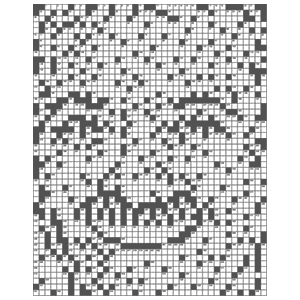
Will Shortz (b. 1952) is the long-time crossword puzzle editor for ‘The New York Times.’ Shortz was born and raised on an Arabian horse farm in Indiana. He is the only person known to hold a college degree in enigmatology, the study of puzzles.
Shortz achieved this feat by designing his own curriculum through Indiana University’s Individualized Major Program. He also earned a Juris Doctor degree from the University of Virginia School of Law (1977), though he forewent the bar exam and began a career in puzzles instead. Shortz began his career at ‘Penny Press Magazines,’ then moved to ‘Games’ magazine for 15 years, serving as its editor from 1989–1993.
read more »
Posted in Games, Humor, Language |
Leave a Comment »
November 7, 2012

‘Our Dumb World‘ is a parody of the standard desk atlas created by the staff of ‘The Onion’ and published in 2007. It is The Onion’s first book of entirely original content since 1999’s ‘Our Dumb Century.’ The book, written in the satirical paper’s editorial voice, contains entries for nearly every country on Earth, including detailed maps and humorous stereotyped descriptions of regional history and customs. For example, Canada’s entry is subtitled, ‘For the United States, see pages 9 – 22.’ The sections devoted to the Northern and Southern Poles and Greenland, are touted as, ‘larger than Africa and South America combined.’
The visual style of the atlas has been compared to Dorling Kindersley’s ‘Eyewitness’ series. The book uses faux xenophobia to illustrate the cultural differences of various nations, often mocking racial stereotypes with satirical comments. In the ‘New York Times,’ William Grimes called it ‘an astoundingly offensive guide to the states of the union and the countries of the world, compiled on the premise that all countries are ridiculous and contemptible’ and found it ‘sophomoric, transgressive, and intermittently brilliant.’ Elements of the book have been transferred to an electronic format available on the paper’s website and as a layer on Google Earth.
Posted in Humor, Language, World |
Leave a Comment »
November 7, 2012
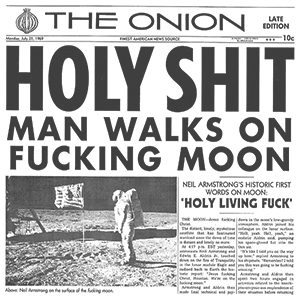
‘Our Dumb Century: The Onion Presents 100 Years of Headlines from America’s Finest News Source’ is a satirical humor book written by the staff of ‘The Onion’ and published in 1999. The chief editor of the book was Scott Dikkers, with specific sections edited by Robert D. Siegel, Maria Schneider, and John Krewson.
The book, spun off from ‘The Onion’ weekly-newspaper format of dryly satirizing current events, features mocked-up newspaper front pages from the entire 20th century, presented as though ‘The Onion’ had been continuously in print since before 1900. The publication of the book is in itself a parody of other end of the century retrospectives that had been published in 1999, notably ‘Time’ magazine and ‘The New York Times.’
read more »
Posted in Humor, Language, Politics |
Leave a Comment »


 The Daily Omnivore