January 28, 2013

‘The little boy’s mother was off to market. She worried about her boy, who was always up to some mischief. She sternly admonished him, ‘Be good. Don’t get into trouble. Don’t eat all the cabbage. Don’t spill all the milk. Don’t throw stones at the cow. Don’t fall down the well.’ The boy had done all of these things on other market days. Hoping to head off new trouble, she added, ‘And don’t stuff beans up your nose!’
This was a new idea for the boy, who promptly tried it out.’ In our zeal to head off others’ unwise action, we may put forth ideas they have not entertained before. It may be wise not to caution against such possibilities. Prophylactic admonition may trigger novel mischief. As the popular saying goes, ‘don’t give ’em any ideas.’
Posted in Education, Humor |
Leave a Comment »
January 28, 2013

The First law of holes is a proverb attributed to British politician Denis Healey. It states, ‘If you find yourself in a hole, stop digging.’
The meaning behind this proverb is that if you find yourself in an undesirable situation (‘the hole’), such as an argument with others, you should not ignore the situation or attempt to continue what you were doing (the ‘digging’), as it can make the situation worse. It has been cited numerous times by other politicians and in books.
Posted in Humor, Language, Politics |
Leave a Comment »
January 24, 2013

Animutation is a form of web-based computer animation, typically created in Adobe Flash and characterized by unpredictable montages of pop-culture images set to music, often in a language foreign to the intended viewers. It is not to be confused with manual collage animation (e.g., the work of Stan Vanderbeek and Terry Gilliam) which predates the Internet.
Animutation was ‘invented’ by American comedian Neil Cicierega. Cicierega claims to have been inspired by several sources, notably bizarre Japanese commercials (parodied, for example, by the Simpsons’ Mr. Sparkle), and Martin Holmström’s ‘Hatten är din’ Soramimi video (interpreting lyrics in one language as similar-sounding lyrics in another language) made for the ‘Habbeetik’ song by Azar Habib.
read more »
Posted in Humor, Language, World |
Leave a Comment »
January 23, 2013

Soramimi (‘mishearing’; [feigned] ‘deafness’) and Soramimi kashi (‘misheard lyrics’) are Japanese terms for homophonic translation of song lyrics, that is, interpreting lyrics in one language as similar-sounding lyrics in another language. A bilingual soramimi word play contrasts with a monolingual mondegreen (mishearing a phrase as a result of near-homophony, in a way that gives it a new meaning).
And example of Soramimi kashi is the Moldovan band O-Zone’s song ‘Dragostea din tei’ (named from the words in the opening of the song), known on the web as the ‘Numa Numa’ song. The refrain of the original song (in Romanian) is: ‘Vrei să pleci dar nu mă, nu mă iei…’ (‘You want to leave but you don’t want, don’t want to take me…’) A soramimi version, from the Japanese flash animation ‘Maiyahi,’ translates these words as: ‘Bei sa, beishu ka, nomanoma-yei!’ (‘Rice, is it, rice wine, drink it drink it yeah!’)
read more »
Posted in Humor, Language, World |
Leave a Comment »
January 23, 2013
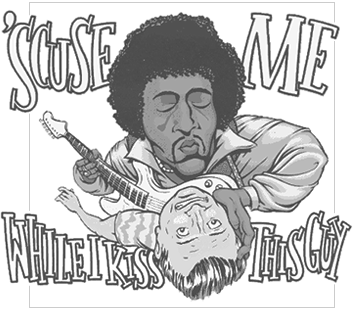
A mondegreen [mon-di-green] is the mishearing or misinterpretation of a phrase as a result of near-homophony, in a way that gives it a new meaning. It most commonly is applied to a line in a poem or a lyric in a song. American writer Sylvia Wright coined the term in her essay ‘The Death of Lady Mondegreen,’ published in ‘Harper’s Magazine’ in 1954. The phenomenon is not limited to English, with examples cited by Fyodor Dostoyevsky, in the Hebrew song ‘Háva Nagíla’ (‘Let’s Be Happy’), and in Bollywood movies.
A closely related category is ‘soramimi’—songs that produce unintended meanings when homophonically translated to another language. The unintentionally incorrect use of similar-sounding words or phrases in speaking is a malapropism. If there is a connection in meaning, it can be called an ‘eggcorn.’ If a person stubbornly sticks to a mispronunciation after being corrected, that can be described as ‘mumpsimus.’
read more »
Posted in Humor, Language |
Leave a Comment »
January 19, 2013

Stuff You Should Know, often abbreviated as SYSK, is a free podcast published by Discovery Communications via its HowStuffWorks website and hosted by Josh Clark and Chuck Bryant, both writers at HowStuffWorks. Clark has been a mainstay on the podcast since it began in 2008. The podcast, released every Tuesday and Thursday, educates listeners on a wide variety of topics, often using popular culture as a reference giving the podcast comedic value.
Episodes are normally around 30 minutes in length, although for more in-depth topics the show has run as long as an hour. Initial episodes were much shorter in duration, often less than 10 minutes. The podcast covers a variety of odd questions and topics, like ‘How Twinkies Work,’ ‘Do Zombies Exist?,’ ‘How Tickling works,’ and ‘How Albert Einstein’s Brain Worked.’
read more »
Posted in Education, Humor, Language |
Leave a Comment »
January 9, 2013
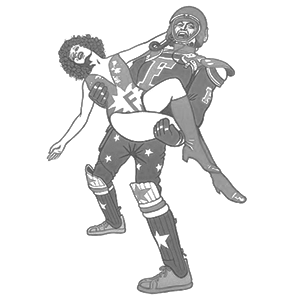
Mr. Freedom is a 1969 film by the expatriate American photographer and filmmaker William Klein. Starring the popular French actor Delphine Seyrig, this anti-imperialist satirical farce has cameos by the well-known actors Donald Pleasence and Philippe Noiret, as well as the musician Serge Gainsbourg. Under the command of Dr. Freedom, the crass superhero Mr. Freedom (John Abbey) goes to France to stave off the advances of the mysterious French Anti-Freedom (FAF) organization.
He joins forces with the femme fatale Marie-Madeleine to lead his own anti-communist Freedom organization. The Freedom mission is complicated by the machinations of communist foes — the Stalinist Moujik Man and the ferocious Maoist Red China Man (portrayed as a giant inflatable dragon). France, refusing to see the FAF as a threat, rebuffs Freedom, leading to an escalation of Cold War tactics. In the end, betrayed, Mr. Freedom destroys himself trying to save the ‘unappreciative’ nation.
read more »
Posted in Humor, Politics, World |
Leave a Comment »
January 9, 2013
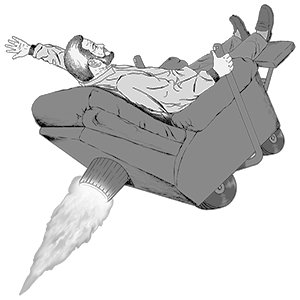
In 2009, Dennis LeRoy Anderson of Minnesota received widespread media attention for being arrested in a DWI case involving a motorized recliner. Riding a recliner which he had fitted with a motor, Anderson crashed into a car after leaving a local bar, where he had drunk a number of beers. The driver was convicted and the chair was confiscated by the police. The police auctioned the recliner away on Do-Bid.com for $3,700. 62-year-old Dennis LeRoy Anderson fitted his recliner with a lawnmower engine, wheels and steering wheel, which allowed the chair to reach up to 20 miles per hour. He had also installed a stereo, cup holders, headlights and a power antenna.
According to Minnesota law, a ‘motor vehicle’ is taken to mean ‘every vehicle that is self-propelled and every vehicle that is propelled by electric power obtained from overhead trolley wires. This means that a driver of any motorized vehicle, even a recliner, is liable under DWI legislation. Anderson’s blood alcohol content was three times over the legal limit for the state. In addition to this, vehicles can also be confiscated if the driver has a blood alcohol level over 0.2, or has a prior DWI conviction from the last 10 years. Anderson, in addition to having a blood alcohol level well over that limit, also had a prior conviction.
Posted in Humor, Politics, Technology |
Leave a Comment »
January 8, 2013

Fear and Loathing: On the Campaign Trail ’72 is a collection of articles covering the 1972 presidential campaign written by Hunter S. Thompson and illustrated by Ralph Steadman. The articles were first serialized in ‘Rolling Stone’ magazine throughout 1972 and later released as a book in early 1973. The book focuses almost exclusively on the Democratic Party’s primaries and the breakdown of the party as it splits between the different candidates.
Of particular focus is the manic maneuvering of the George McGovern campaign during the Miami convention as they sought to ensure the Democratic nomination despite attempts by the Hubert Humphrey campaign and other candidates to block McGovern. Thompson began his coverage of the campaign in December 1971, just as the race toward the primaries was beginning, from a rented apartment in Washington, DC (a situation he compared to ‘living in an armed camp, a condition of constant fear’). Over the next 12 months, in voluminous detail, he covered every aspect of the campaign, from the smallest rally to the raucous conventions.
read more »
Posted in Humor, Language, Politics |
Leave a Comment »
January 1, 2013
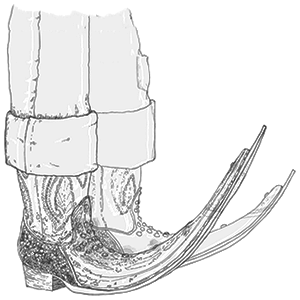
Mexican pointy boots (botas picudas mexicanas) are a style of pointed fashion boots made with elongated toes. The boots are said to have originated in Matehuala in the Mexican state of San Luis Potosí. The came to popularity at the same time as ‘tribal guarachero’ music (‘a mixture of Pre-Columbian and African sounds mixed with fast cumbia bass and electro-house beats’). and the boots have become a preferred footwear for the all-male troupes that dance to the tribal music. They are made by elongating normal boots by as much as 5 feet (1.5 m), causing the toes to curl up toward the knees. Decorative alterations incorporate paint and sequins and can go as far as adding flashing LED lights, disco balls and even mirrors.
Boys and men that wear the pointy boots have formed all-male troupes to compete in danceoffs at local nightclubs to tribal music. Participants in the contests spend weeks choreographing their dance moves and fabricating their outfits which commonly include ‘matching western shirts and skinny jeans to accentuate their footwear.’ In Matehuala, prize money ranges from $100 to $500. The prize often includes a bottle of whiskey. The dance troupes have reportedly become so popular that they are being ‘hired to dance at weddings, for quinceañeras, celebrations of the Virgin of Guadalupe, bachelorette parties, and even rosary ceremonies for the dead.’
Posted in Art, Humor, World |
Leave a Comment »
December 23, 2012

Culture jamming is a tactic used by many anti-consumerist social movements to disrupt or subvert media culture and its mainstream cultural institutions, including corporate advertising. It purports to ‘expose the methods of domination’ of mass society to foster progressive change.
Culture jamming is a form of subvertising (subversive advertising. Many culture jams are intended to expose apparently questionable political assumptions behind commercial culture. Common tactics include re-figuring logos, fashion statements, and product images as a means to challenge the idea of ‘what’s cool’ along with assumptions about the personal freedoms of consumption.
read more »
Posted in Humor, Money, Politics |
Leave a Comment »
December 11, 2012

‘How to Rob‘ is a 1999 song by American hip hop recording artist 50 Cent. The song serves as his debut single and the lead single from his album ‘Power of the Dollar’ (officially unreleased but heavily bootlegged).
The album, which was originally set for a 2000 release, was supposed to be his debut with Columbia Records, but was cancelled after 50 Cent was dropped from the label when Columbia discovered that he had been shot. ‘How to Rob’ was produced by Tone & Poke of Trackmasters and features D-Dot, also known as The Madd Rapper. The song was also included on the soundtrack to the 1999 film ‘In Too Deep,’ staring LL Cool J and Omar Epps.
read more »
Posted in Art, Humor, Money |
Leave a Comment »


 The Daily Omnivore