March 26, 2012

The Onion is an American news satire organization. It is a newspaper and a website featuring satirical articles reporting on international, national, and local news, in addition to a non-satirical entertainment section known as The A.V. Club (which features interviews and reviews of various newly released media, as well as other weekly features). Since 2007, the organization has been publishing satirical news audios and videos online, as the ‘Onion News Network.’
The Onion’s articles comment on current events, both real and fictional. It parodies such traditional newspaper features as editorials, man-on-the-street interviews, and stock quotes on a traditional newspaper layout with an AP-style editorial voice. Much of its humor depends on presenting everyday events as newsworthy and by playing on commonly used phrases, as in the headline ‘Drugs Win Drug War.’
read more »
Posted in Humor, Language, Politics |
Leave a Comment »
March 25, 2012

‘A Night at the Roxbury‘ is a 1998 American comedy film based on a recurring skit on television’s long-running ‘Saturday Night Live’ called ‘The Roxbury Guys.’ SNL regulars Will Ferrell, Chris Kattan, Molly Shannon, and Colin Quinn star.
The film is about wealthy Yemeni-American brothers Steve (Will Ferrell) and Doug Butabi (Chris Kattan) who enjoy frequenting nightclubs, where they bob their heads in unison to dance music (specifically Haddaway’s hit song ‘What Is Love’) and fail miserably at picking up women. Their dream is to party at the famous L.A. nightclub The Roxbury, where they are continually denied entrance by a hulking bouncer (Michael Clarke Duncan).
Posted in Art, Humor |
Leave a Comment »
March 25, 2012

Second City Television (SCTV) is a Canadian television sketch comedy show offshoot from Toronto’s The Second City troupe that ran between 1976 and 1984. The basic premise of the show is that ‘SCTV’ is an independent television station in the city of Melonville.
Rather than broadcasting the usual TV rerun fare, the station produces a bizarre and humorously incompetent range of cheap local programming including a soap opera called ‘The Days of the Week’ (‘Monday… Tuesday… Wednesday… these are… the days of the week’), a game show, ‘Shoot At The Stars,’ in which celebrities are literally shot at like targets in a shooting gallery, and full blown movie spoofs like ‘Play it Again, Bob’ in which Woody Allen (Rick Moranis) tries to get Bob Hope (Dave Thomas) to star in his next film.
read more »
Posted in Art, Humor |
2 Comments »
March 25, 2012
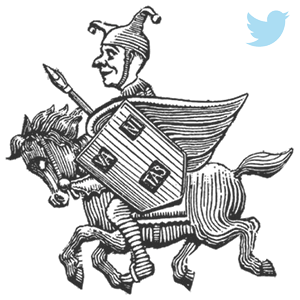
The Harvard Lampoon is an undergraduate humor publication founded in 1876. It is the world’s longest continually published humor magazine. It is also the second longest-running English-language humor magazine, after the ‘Yale Record.’ The organization also produces occasional humor books and parodies of national magazines. Much of the organization’s capital is provided by the licensing of the ‘Lampoon’ name to ‘National Lampoon,’ begun by ‘Harvard Lampoon’ graduates in 1970.
The Lampoon is known for its bacchanalian parties, which can result in smashed plates and furniture. Robert K. Hoffman, co-founder of the ‘National Lampoon’ and major donor to the Dallas Museum of Art was a Trustee until his death in 2006, and was declared a Trustee ‘Ad-Infinitum’ a year later. The bone of his pinky finger is said to be encased in a block of lucite in the Harvard Lampoon’s ‘Brainatorium Crypt.’
read more »
Posted in Education, Humor, Language |
Leave a Comment »
March 25, 2012

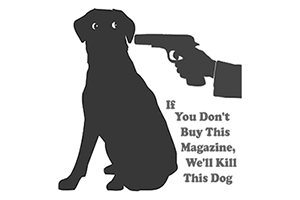
National Lampoon was both a ground-breaking American humor magazine and also a wide range of productions directly associated with that magazine. The magazine ran from 1970 to 1998, and was originally a spinoff of the ‘Harvard Lampoon’ (is an undergraduate humor publication founded in 1876 at Harvard University).
The magazine reached its height of popularity and critical acclaim during the 1970s, when it had a far-reaching effect on American humor. It spawned films, radio, live theater, various kinds of recordings, and print products including books. Many members of the creative staff from the magazine subsequently went on to contribute creatively to successful media of all types.
read more »
Posted in Art, Humor, Language |
Leave a Comment »
March 24, 2012
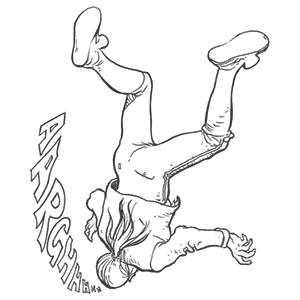
The Incal is a set of science fiction comic book series written in French by Alejandro Jodorowsky and illustrated by Moebius and others. ‘The Incal’ takes place in, and introduced Jodorowsky’s ‘Jodoverse,’ a fictional universe in which his science fiction comics take place. The story begins in the dystopian capital city of an insignificant planet in a human-dominated galactic empire. The series stars John DiFool, anoccasional bodyguard. DiFool has no interest in being a hero, has mood swings and suffers from self-doubt and temper tantrums in which he threatens to walk away and assume a comfortable lifeh. He has a fondness for cigars, ‘ouisky’ and ‘homeosluts’ (gynoid prostitutes).
The series mixes space opera, metaphysics, and satire; a counterpoint to the grandiosity of the events is always Difool’s base, even cowardly nature. Every major character in The Incal is based upon Tarot cards – for example, John Difool is based upon The Fool with his name being a pun upon ‘John, the Fool.’ Moebius and Jodorowsky sued Luc Besson, director of ‘The Fifth Element,’ claiming that the film borrowed graphic and story elements from ‘The Incal,’ but they lost their case. In a 2002 interview with Danish comic book magazine ‘Strip!,’ Jodorowsky actually claimed that he considered it an honor that somebody stole his ideas, saying he believes that authors do not create the stories they tell as much as they make personal interpretations of mythemes shared by the collective unconscious.
Posted in Art, Humor, Language |
Leave a Comment »
March 23, 2012
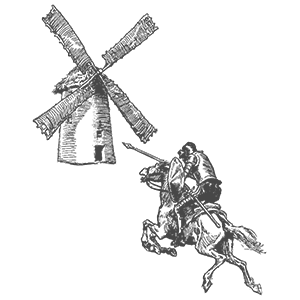
Tilting at windmills is an English idiom which means attacking imaginary enemies. The word ’tilt,’ in this context, comes from jousting. The phrase is sometimes used to describe confrontations where adversaries are incorrectly perceived, or courses of action that are based on misinterpreted or misapplied heroic, romantic, or idealistic justifications.
The phrase derives from an episode in the novel ‘Don Quixote’ by Miguel de Cervantes. In the novel, Don Quixote fights windmills that he imagines to be giants. Quixote sees the windmill blades as the giant’s arms, for instance.
read more »
Posted in Humor, Language, Politics |
Leave a Comment »
March 23, 2012

Selective Perception is a broad term to identify behavior where people tend to ‘see things’ based on their particular frame of reference. Selective perception may refer to any number of cognitive biases in psychology related to the way expectations affect perception.
For instance, several studies have shown that students who were told they were consuming alcoholic beverages (which in fact were non-alcoholic) perceived themselves as being ‘drunk,’ exhibited fewer physiological symptoms of social stress, and drove a simulated car similarly to other subjects who had actually consumed alcohol. The result is somewhat similar to the placebo effect.
read more »
Posted in Humor, Politics, Science |
Leave a Comment »
March 19, 2012
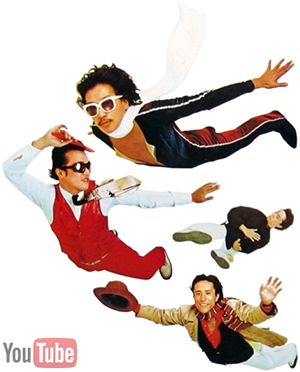
Sadistic Mika Band was a Japanese rock group formed in 1972. Its name is a parody of the ‘Plastic Ono Band.’ Produced by Masatoshi Hashiba on Toshiba-EMI Records (now EMI Music Japan), the band was led by the then husband and wife team of guitarist Kazuhiko Kato, and his wife, singer Mika Fukui. The word ‘sadistic’ is reported to be inspired by her insensitive sense of humor.
Kazuhiko Kato moved to London in 1972 and impressed by the burgeoning glam rock scene led by T. Rex and David Bowie, he set about forming a new group in Japan to emulate the style. Kato passed the album to Malcolm McLaren who at the time had a shop with Vivienne Westwood, and McLaren passed it on to Bryan Ferry, whose band Roxy Music would later support on a tour.
Posted in Art, Humor, World |
Leave a Comment »
March 19, 2012

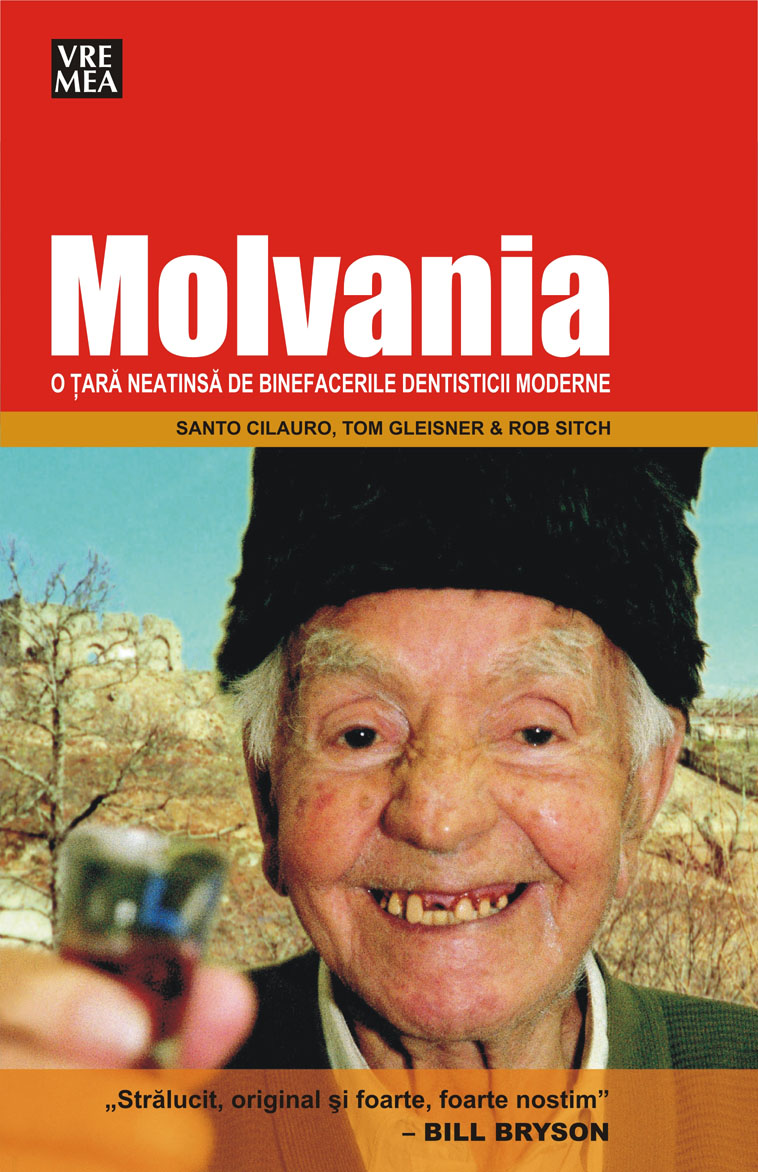
Molvanîa (subtitled ‘A Land Untouched by Modern Dentistry’) is a book parodying travel guidebooks. The guide describes the fictional country Molvanîa, in Eastern Europe, a nation described as ‘the birthplace of the whooping cough’ and ‘owner of Europe’s oldest nuclear reactor.’
It was created by Australians Tom Gleisner, Santo Cilauro and Rob Sitch (of ‘The D-Generation,’ a popular and influential Australian TV sketch comedy show). The book became a surprise success after its initial publication in Australia, sparking a bidding war for the international publication rights. Qantas has even run the half-hour video segment produced in association with the book on its international flights.
read more »
Posted in Humor, Politics, World |
Leave a Comment »
March 19, 2012
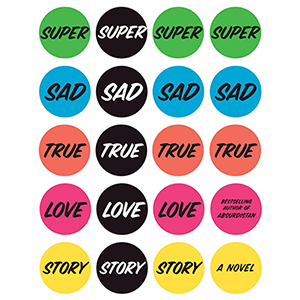
Gary Shteyngart (b. 1972) is an American writer born in Leningrad, USSR. Much of his work is satirical and relies on the invention of elaborately fictitious yet somehow familiar places and times. Shteyngart spent the first seven years of his childhood living in a square dominated by a huge statue of Vladimir Lenin in what is now St. Petersburg, Russia; (he alternately calls it ‘St. Leningrad’ or ‘St. Leninsburg’). He comes from a Jewish family and describes his family as typically Soviet. His father worked as an engineer in a LOMO camera factory; his mother was a pianist. Shteyngart emigrated to the United States in 1979 and was brought up with no television in the apartment in which he lived, where English was not the household language. He did not shed his thick Russian accent until the age of 14.
Shteyngart took a trip to Prague, and this experience helped spawn his first novel, set in the fictitious European city of Prava. He is a graduate of Stuyvesant High School in New York City, Oberlin College in Ohio, where he earned a degree in politics, and Hunter College of the City University of New York, where he earned an MFA in Creative Writing. Shteyngart now lives in the Lower East Side of Manhattan. He has taught writing at Hunter College, and currently teaches writing at Columbia University and Princeton University. Shteyngart’s novels include ‘The Russian Debutante’s Handbook’ (2002), ‘Absurdistan’ (2006), and ‘Super Sad True Love Story’ (2010).
Posted in Art, Humor, Language |
Leave a Comment »
March 19, 2012

Absurdistan is a term sometimes used to satirically describe a country in which absurdity is the norm, especially in its public authorities and government. The expression was originally used by Eastern bloc dissidents to refer to parts (or all) of the Soviet Union and its satellite states. Today, the term is most often reserved for Russia and states formerly in the Soviet sphere of influence which have retained Soviet-style authoritarian governments, such as Azerbaijan, Uzbekistan, Turkmenistan, or Belarus.
The first printed use of the word, in any language, can be found in a 1971 German monthly periodical ‘Politische Studien.’ Later, in Czech, the term was often used by the dissident and later president Václav Havel. This seems to indicate that use of the term began during perestroika (restructuring of the Soviet economy). The first recorded printed use of the term in English was in ‘Spectator’ in 1989, in an article about Czechoslovakia (Czechoslovakians have taken to calling their country ‘Absurdistan’ because everyday life there has long resembled the ‘Theatre of the Absurd’).
Posted in Humor, Politics, World |
Leave a Comment »



 The Daily Omnivore