November 18, 2011

‘The Man‘ is a slang phrase that may refer to the government or to some other authority in a position of power. In addition to this derogatory connotation, it may also serve as a term of respect and praise. The phrase ‘the Man is keeping me down’ is commonly used to describe oppression. The phrase ‘stick it to the Man’ encourages resistance to authority, and essentially means ‘fight back’ or ‘resist,’ either openly or via sabotage.
The term ‘the Man’ in the American sense dates back to the late 19th Century. In the Southern U.S. states, the phrase came to be applied to any man or any group in a position of authority, or to authority in the abstract. From about the 1950s the phrase was also an underworld code word for police, the warden of a prison or other law enforcement or penal authorities.
read more »
Posted in Humor, Language, Politics |
Leave a Comment »
November 18, 2011
Polybius is a supposed arcade game featured in an Internet urban legend. According to the story, the Tempest-style game was released to the public in 1981, and drove its players insane, causing them to suffer from intense stress, horrific nightmares, and even suicidal tendencies. A short time after its release, it supposedly disappeared without a trace. Not much evidence for the existence of such a game has ever been discovered. Polybius gets its name from the Greek historian who’s works are are relevant to modern cryptography.
According to the story, an unheard-of new arcade game appeared in several suburbs of Portland, Oregon in 1981, something of a rarity at the time. The game, ‘Polybius,’ proved to be incredibly popular, to the point of addiction, and lines formed around the machines, often resulting in fighting over who played next. This was followed by clusters of visits from men in black. Rather than the usual marketing data collected by company visitors to arcade machines, they collected some unknown data, allegedly testing responses to the psychoactive machines. The players themselves suffered from a series of unpleasant side-effects, including amnesia, insomnia, nightmares, night terrors, and even suicide in some versions of the legend.
read more »
Posted in Games, Humor |
Leave a Comment »
November 17, 2011

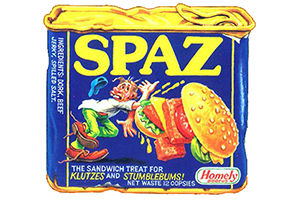
A euphemism is the substitution of an uncontroversial phrase for a more frank expression that might offend or otherwise suggest something unpleasant to the audience. Euphemisms often evolve over time into taboo words, through a process described by American philosopher W.V.O. Quine, and more recently dubbed the ‘euphemism treadmill‘ by cognitive scientist Steven Pinker, and discussed in his books ‘The Blank Slate’ (2003) and ‘The Stuff of Thought’ (2007).
This is the well-known linguistic process known as ‘pejoration’ or ‘semantic change.’ Words originally intended as euphemisms may lose their euphemistic value, acquiring the negative connotations of their referents. In some cases, they may be used mockingly and become the opposite of euphemisms, ‘dysphemisms.’ Euphemisms related to disabilities have been prone to this. In his remarks on the ever-changing London slang, made in ‘Down and Out’ in Paris and London, George Orwell mentioned both the euphemism treadmill and the dysphemism treadmill. He did not use these now-established terms, but observed and commented on the respective processes as early as in 1933.
Posted in Humor, Language, Politics |
Leave a Comment »
November 9, 2011
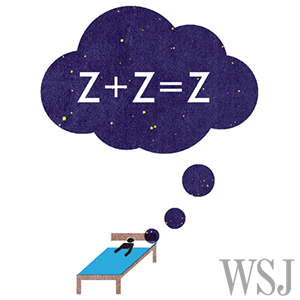
Sleep-learning (also known as hypnopædia [hip-noh-pee-dee-uh]) attempts to convey information to a sleeping person, typically by playing a sound recording to them while they sleep. This now-discredited technique was supposed to be moderately effective at making people remember direct passages or facts, word for word. Since the electroencephalography studies by Charles W. Simon and William H. Emmons in 1956, learning by sleep has not been taken seriously. The researchers concluded that learning during sleep was ‘impractical and probably impossible.’ They reported that stimulus material presented during sleep was not recalled later when the subject awoke unless alpha wave activity occurred at the same time the stimulus material was given. Since alpha activity during sleep indicates the subject is about to awake, the researchers felt that any learning occurred in a waking state.
In Aldous Huxley’s 1932 novel ‘Brave New World,’ hypnopaedia is used for the conditioning of children by future culture. In the novel, sleep-learning was discovered by accident when a Polish boy named Reuben Rabinovitch was able to recite an entire radio broadcast in English after a radio receiver was left on in his sleep. The boy was unable to comprehend what he had heard via hypnopædia, but it was soon realized that it could be used to effectively make suggestions about morality.
Posted in Education, Humor, Language |
1 Comment »
November 9, 2011

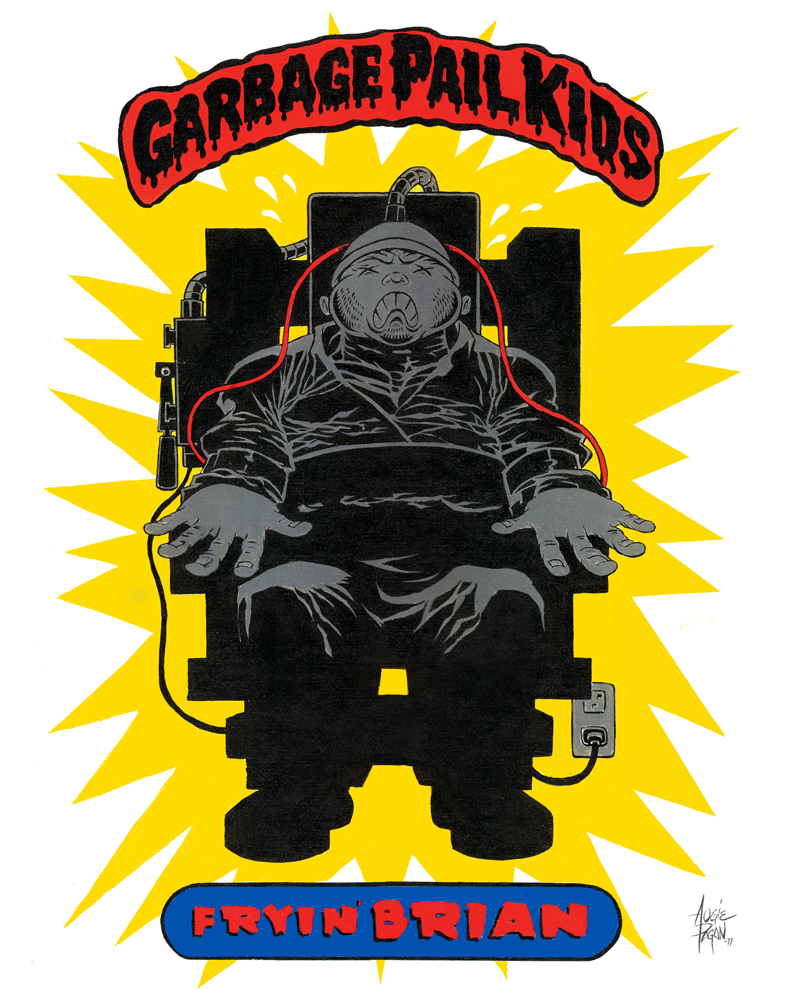
Garbage Pail Kids (also known as ‘Basuritas’ in Latin America, ‘Gang do Lixo’ in Brazil, ‘Sgorbions’ in Italy, ‘Les Crados’ in France and ‘Die total kaputten Kids’ in Germany) is a series of trading cards produced by the Topps Company, originally released in 1985 and designed to parody the Cabbage Patch Kids dolls, which were immensely popular at the time.
Each sticker card features a character with a comical abnormality and/or suffering some terrible fate, and punning name, such as ‘Glandular Angela’ or ‘Half-Nelson.’ Fifteen series of regular trading cards were released in the United States, with various sets released in other countries.
read more »
Posted in Art, Humor, Language |
Leave a Comment »
November 9, 2011
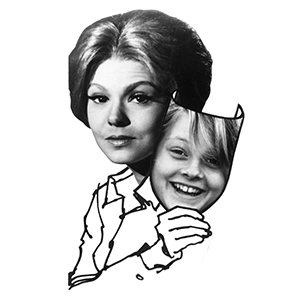
A body swap is a storytelling device seen in a variety of fiction, most often in television shows and movies, in which two people (or beings) exchange minds and end up in each other’s bodies. Alternatively, their minds may stay where they are as their bodies adjust. The two people usually keep their voices in cartoons, for purposes of knowing who is who. There are three distinct types of body swapping. Switches can be caused by magic items such as amulets, heartfelt wishes, or just strange quirks of the universe. The switches typically reverse after the subjects have expanded their world views, gained a new appreciation for each other’s troubles by literally ‘walking in another’s shoe’ and/or caused sufficient amounts of farce. Notable examples include the books ‘Vice Versa’ (1882) and ‘Freaky Friday’ (1972), as well as the film versions of both.
Switches accomplished by technology, exempting gadgets advanced sufficiently to appear as magic, are the fare of mad scientists. Body-swapping devices are characterized by highly experimental status, straps, helmets with complicated cables that run to a central system and a tendency to direly malfunction before their effects can be reversed. Those without such means may resort to brain transplants. Such experiments can have overtones of horror; evil mad scientists seldom use willing test subjects.
Posted in Art, Humor, Language |
Leave a Comment »
November 8, 2011
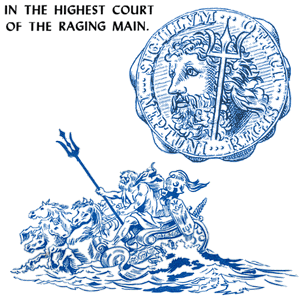
The ceremony of Crossing the Line is an initiation rite in several navies that commemorates a sailor’s first crossing of the Equator. Originally, the tradition was created as a test for seasoned sailors to ensure their new shipmates were capable of handling long rough times at sea. Sailors who have already crossed the Equator are nicknamed (Trusty) Shellbacks, often referred to as Sons of Neptune; those who have not are nicknamed (Slimy) Pollywogs. Equator-crossing ceremonies, typically featuring King Neptune, are also sometimes carried out for passengers’ entertainment on civilian ocean liners and cruise ships. They are also performed in the merchant navy and aboard sail training ships.
The two-day event (evening and day) is a ritual of reversal in which the older and experienced enlisted crew essentially takes over the ship from the officers. Physical assaults in keeping with the spirit of the initiation are tolerated, and even the inexperienced crew is given the opportunity to take over. The transition flows from established order to the controlled ‘chaos’ of the Pollywog Revolt, the beginnings of re-order in the initiation rite as the fewer but experienced enlisted crew converts the Wogs through physical tests, then back to, and thereby affirming, the pre-established order of officers and enlisted.
read more »
Posted in Humor, War, World |
Leave a Comment »
November 3, 2011

Movember is an annual, month-long event involving the growing of moustaches during the month of November. The event was conceived in 1999 by a group of Australian men from Adelaide. It is also known as ‘Novembeard.’ Since 2004, the Movember Foundation charity has run events to raise awareness and funds for men’s health issues, such as prostate cancer and depression, in Australia and New Zealand. In 2007, events were launched in Ireland, Canada, Cyprus, Czech Republic, Denmark, Greece, Spain, the United Kingdom, Israel, South Africa, and the United States.
The rules for participants as given on the official movember website are as follows: Once registered each bro must begin the 1st Movember with either a clean shaven face or facial growth dependant on your usual style. For the entire month of Movember each bro must shape grow and groom a moustache. There is to be no joining of the mo to the sideburns (that is considered a beard). There is to be no joining of the handlebars to your chin (that is considered a goatee). Each bro must conduct himself like a true country gentleman. Also shaving a beard to provide a ready-made mustache is cheating and not in the spirit of movember. A small growth of hair under the bottom lip (aka a tickler) is permitted as long as it is not connected to any other region.
Posted in Health, Humor |
Leave a Comment »
November 3, 2011

The Magic Castle in Hollywood is a nightclub for magicians and magic enthusiasts, as well as the clubhouse for the Academy of Magical Arts. It bills itself as ‘the most unusual private club in the world.’ The facility is a performance venue, restaurant and private club. A typical evening features several magic and sometimes variety arts performances, as well as a full service dining room and several bars in a nightclub atmosphere. A dress code of formal party attire is strictly enforced. Entry is only allowed to members and their guests, although low-cost, 30-day memberships are openly offered to the general public, with the savings in door charges often being sufficient to cover the membership fee.
The lobby of the Castle has no visible doors to the interior, and visitors must say a secret phrase to a sculpture of an owl to gain access, exposing the entrance to the club. Nightly, five different magic performances are showcased in three different theaters, with additional performances added on weekends. Magicians perform in several different theaters, including the intimate Close-Up Gallery, a larger Parlor of Prestidigitation, and stage illusions in the Palace of Mystery. Informal performance areas around the five bars give magician members the space for impromptu magic for guests and other patrons. In the music room, a piano is played by invisible ‘Irma,’ the Castle’s ‘resident ghost,’ who takes requests.
Posted in Art, Humor |
1 Comment »
October 31, 2011
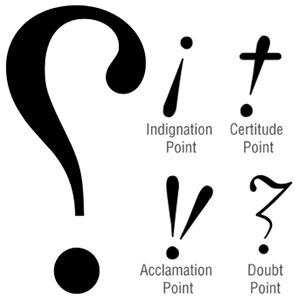
Although in the written English language there is no standard way to denote irony or sarcasm, several forms of punctuation have been proposed. Among the oldest and frequently attested are the ‘percontation point’ invented by English printer Henry Denham in the 1580s, and the irony mark, furthered by French poet Alcanter de Brahm in the 19th century. Both of these marks were represented visually by a backwards question mark.
These punctuation marks are primarily used to indicate that a sentence should be understood at a second level. A bracketed exclamation point and/or question mark are also sometimes used to express irony or sarcasm. Scare quotes are quotation marks placed around a word or phrase to indicate that it does not signify its literal or conventional meaning.
read more »
Posted in Humor, Language |
2 Comments »
October 28, 2011
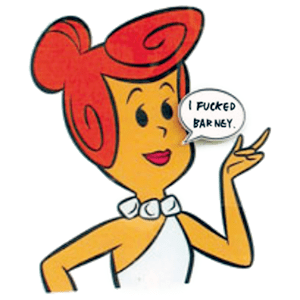
The Bubble Project, as proclaimed by its manifesto, aims to counteract corporate marketing and advertisement messages in public spaces. The project was conceived by Ji Lee, an artist and art director who originally printed 15,000 stickers that look like speech bubbles used in comic strips. He posts these blank speech bubbles on top of advertisements throughout New York City allowing anyone who sees them to write in their comments and thoughts.
By filling in the bubbles people engage in the project and transform ‘the corporate monologue into an open dialogue.’ The comments are photographed and posted on the project’s website. The Bubble Project has quickly gained popularity and independent efforts have sprung up in other parts of the world in countries such as Italy and Argentina.
Posted in Humor, Money, Politics |
Leave a Comment »
October 28, 2011

Charlie Kelly is a fictional character on the FX television series ‘It’s Always Sunny in Philadelphia,’ portrayed by Charlie Day. Green Man is a persona assumed by Charlie wearing a green Lycra suit (morphsuit). The persona has spawned imitators, most notably at sporting events. Rob McElhenney, creator of ‘It’s Always Sunny in Philadelphia’ came up with idea after watching the Philadelphia Eagles defeat the Dallas Cowboys at Lincoln Financial Field in Philadelphia. Without warning, in the parking lot after the game, a friend of McElhenney’s stripped off his clothes and donned a full-body green lycra suit.
McElhenney said: ‘Everyone started chanting, ‘Green Man! Green Man!’ It went on for several hours, and all I could think was, My God, there has to be a way I can take advantage of this on the show.’ When McElhenney returned to Los Angeles, he ordered a suit from Japan that was identical to the outfit that McElhenney’s friend had worn. The character made his debut the next season in an episode entitled ‘The Gang Gets Invincible,’ which centered on three of the show’s central characters trying out for the Eagles, just as they had seen in the film ‘Invincible.’
Posted in Games, Humor |
Leave a Comment »