August 25, 2011


Hammerspace (also known as malletspace) is a fan-envisioned extradimensional, instantly accessible storage area in fiction, which is used to explain how animated, comic and game characters can produce objects out of thin air. Inexplicable production of items dates back to the very beginning of animated shorts and was a fairly common occurrence during the golden age of animation. Warner Bros. cartoon characters are particularly well-known for often pulling all sorts of things — guns, disguises, bombs, anvils, mallets— from behind their backs or just offscreen. However, the explanation for this phenomenon was mostly just left to suspension of disbelief.
The term ‘Hammerspace’ itself originates from a gag common in certain anime and manga. A typical example would be when a male character would anger or otherwise offend a female character, who would proceed to produce, out of thin air, an oversized wooden rice mallet (saizuchi) and hit him on the head with it in an exaggerated manner. The strike would be purely for comic effect, and would not have any long-lasting effects. The term was largely popularized first by fans of ‘Urusei Yatsura’ (a comedic manga, popular in the 1980s).
read more »
Posted in Games, Humor, Language |
1 Comment »
August 18, 2011

Alan Smithee was an official pseudonym used by film directors who wish to disown a project, coined in 1968. Until its use was formally discontinued in 2000, it was the sole pseudonym used by members of the Directors Guild of America (DGA) when a director dissatisfied with the final product proved to the satisfaction of a guild panel that he or she had not been able to exercise creative control over a film. The director was also required by guild rules not to discuss the circumstances leading to the move or even to acknowledge being the actual director.
Prior to 1968, DGA rules did not permit directors to be credited under a pseudonym. This was intended to prevent producers from forcing them upon directors, which would inhibit the development of their résumés. The guild also required that the director be credited, in support of the DGA philosophy that the director was the primary creative force behind a film.
read more »
Posted in Art, Humor, Money |
Leave a Comment »
August 16, 2011
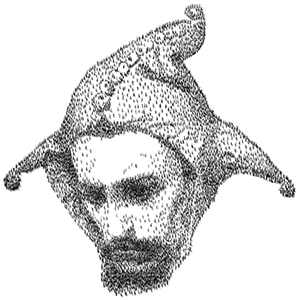
Stańczyk (c. 1480–1560) was the most famous court jester in Polish history. He is remembered as a man of great intelligence and a political philosopher gifted with formidable insight into Poland’s current and future situation. He used his job to criticize and warn his contemporaries through satire. His witty jokes often pertained to current political or court matters.
The best known anecdote about Stańczyk is that of a hunting incident. In 1533 King Sigismund the Old had a huge bear brought for him from Lithuania. The bear was released in the forest of Niepołomice near Kraków so that the king could hunt it. During the hunt, the animal charged at the king, the queen and their courtiers which caused panic and mayhem. Queen Bona fell from her horse which resulted in her miscarriage. Later, the king criticized Stańczyk for having run away instead of attacking the bear. The jester is said to have replied that ‘it is a greater folly to let out a bear that was locked in a cage.’ This remark is often interpreted as an allusion to the king’s policy toward Prussia which was defeated by Poland but not fully incorporated into the Crown.
Posted in Humor, Politics, World |
Leave a Comment »
August 15, 2011
A smiley, or happy face, is a stylized representation of a smiling human face. It is commonly represented as a yellow circle with two black dots representing eyes and a black arc representing the mouth. ‘Smiley’ is also sometimes used as a generic term for any emoticon (a facial expression pictorially represented by punctuation and letters, usually to express a writer’s mood).
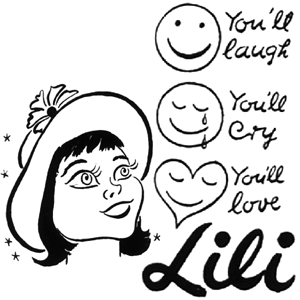
The first unhappy face recorded on film can be seen in Ingmar Bergman’s 1948 film ‘Hamnstad.’ Later on, in 1953 and 1958, the happy face was used in promotional campaigns for motion pictures ‘Lili’ and ‘Gigi’, respectively.
read more »
Posted in Humor, Money, Politics |
Leave a Comment »
August 15, 2011
Kopi luwak, or civet coffee, is one of the world’s most expensive and low-production varieties of coffee. It is made from the beans of coffee berries which have been eaten by the Asian Palm Civet, then passed through its digestive tract. A civet eats the berries for their fleshy pulp. In its stomach, enzymes seep into the beans, making shorter peptides and more free amino acids. Passing through a civet’s intestines the beans are then defecated, keeping their shape. After gathering, thorough washing, sun drying, light roasting and brewing, these beans yield an aromatic coffee with much less bitterness, widely noted as the most expensive coffee in the world.
Since the flavor of coffee owes much to its proteins, there is a hypothesis that this shift in the numbers and kinds of proteins in beans after being swallowed by civets brings forth their unique flavor. The proteins are also involved in non-enzymatic Maillard browning reactions brought about later by roasting. Moreover, while inside a civet the beans begin to germinate by malting which also lowers their bitterness. Kopi luwak is produced mainly on the islands of Sumatra, Java, Bali and Sulawesi in the Indonesian Archipelago, and also in the Philippines, and also in East Timor. Weasel coffee is a loose English translation of its name cà phê Chồn in Vietnam, where popular, chemically simulated versions are also produced.
read more »
Posted in Food, Humor, Money |
Leave a Comment »
August 15, 2011

Fuck for forest, or FFF, is a non-profit environmental organization founded in Norway by Leona Johansson and Tommy Hol Ellingsen, which raises money for rescuing the world’s rainforests by producing pornographic material or having sex in public. They are the world’s first eco-porn organization. However, their unorthodox methods have made it difficult to distribute monies. The Norwegian chapter of the Rainforest Foundation Fund as well as the WWF both in the Netherlands and in Norway have refused to accept donations from FFF. As a result, Fuck for Forest is working on a project to work directly with indigenous communities in Costa Rica and the Brazilian Amazon rainforest.
The group gained notoriety when its two members had sexual intercourse on stage during a 2004 Quart Festival concert featuring Norwegian singer Kristopher Schau and his band The Cumshots, after delivering a brief talk on the impact humans have on forests. The group then faced legal action as a result (including a fine imposed on the group after its male member dropped his pants in a courtroom), and consequently moved its headquarters to Berlin, Germany.
Posted in Humor, Politics, Sex |
Leave a Comment »
August 15, 2011

During the Vietnam War, in 1969, John Lennon and Yoko Ono held two week-long Bed-Ins for Peace in Amsterdam and Montreal, which were their non-violent ways of protesting wars and promoting peace. The idea is derived from a ‘sit-in,’ in which a group of protesters remains seated in front of an establishment until they are evicted, arrested, or their demands are met.
Knowing their March 20, 1969 marriage would be a huge press event, John and Yoko decided to use the publicity to promote world peace. They spent their honeymoon in the presidential suite (Room 702 at the Amsterdam Hilton Hotel for a week between March 25 and 31, inviting the world’s press into their hotel room every day between 9 a.m. and 9 p.m. After their other stunts, such as the nude cover of the ‘Two Virgins’ album, the press were expecting them to be having sex, but instead the couple were sitting in bed—in John’s words ‘like angels’—talking about peace with signs over their bed reading ‘Hair Peace’ and ‘Bed Peace.’
read more »
Posted in Humor, Politics, War |
Leave a Comment »
August 14, 2011

Cow tipping is the purported activity of sneaking up on a sleeping, upright cow and pushing it over for fun. As cattle do not sleep standing up, cow tipping is a myth. Cattle only rest while standing up, rather than sleeping that way, and they are easily disturbed.
Additionally, they represent over a half ton of weight that would easily resist a lesser tipping force. Horses, however, do regularly sleep standing up due to a locking mechanism of their stifle joint, a trait cows do not possess.
Posted in Games, Humor |
Leave a Comment »
August 14, 2011

‘Real-Life Superheroes‘ are men and women who, using the thematic device of the costumed superhero, perform services that benefit the community in a variety of ways. Some Real-Life Superheroes (RLSH) hand out supplies to the homeless, while others seek to directly combat crime through community patrols in which suspicious activity is identified and reported to the proper authorities, and some physically confront suspected perpetrators themselves.
Real life super heroes wear masks or otherwise disguise themselves in order to perform ‘heroic deeds’ like community services or fighting crime when they come across it. They are often similar to neighborhood watches or militias. Examples include Phoenix Jones and a team of nine others in the Rain City Superhero Movement.
Posted in Games, Humor, Politics |
Leave a Comment »
August 11, 2011

Ferdinand Cheval (1836 – 1924) was a French postman who spent thirty-three years of his life building Le Palais Idéal (‘The Ideal Palace’) in Hauterives. The structure is regarded as an extraordinary example of naïve art architecture. Cheval began the building in April 1879. He claimed that he had tripped on a stone and was inspired by its shape. He returned to the same spot the next day and started collecting stones. For the next thirty-three years, Cheval picked up stones during his daily mail round and carried them home to build with. He spent the first twenty years building the outer walls. At first, he carried the stones in his pockets, then switched to a basket. Eventually, he used a wheelbarrow. He often worked at night, by the light of an oil lamp.
The Palais is a mix of different styles with inspirations from Christianity to Hinduism. Cheval bound the stones together with lime, mortar and cement. He also wanted to be buried in his palace. However, since that is illegal in France, he proceeded to spend eight more years building a mausoleum for himself in the Hauterives cemetery. He died one year after he had finished building it, and is buried there. Just prior to his death, Cheval began to receive some recognition from luminaries like André Breton and Pablo Picasso. His work is commemorated in an essay by Anaïs Nin. In 1932, the German artist Max Ernst created a collage titled ‘The Postman Cheval.’ The work belongs to the Peggy Guggenheim Collection and is on display there.
Posted in Art, Humor, World |
Leave a Comment »
August 3, 2011

The Acid Tests were a series of parties held by Ken Kesey in the San Francisco Bay Area during the mid 1960s, centered entirely around the use of, experimentation with, and advocacy of, the psychedelic drug LSD, also known as ‘acid.’ The name ‘Acid Test’ was coined by Kesey, after the term ‘acid test’ used by gold miners in the 1850s.
He advertised the parties with posters that read, ‘Can YOU Pass The Acid Test?,’ and the name was later popularized in Tom Wolfe’s 1968 book, ‘The Electric Kool-Aid Acid Test.’ Musical performances by the Grateful Dead were commonplace, along with black lights, strobe lights, and fluorescent paint. The Acid Tests are notable for their influence on the LSD-based counterculture of the San Francisco area and subsequent transition from the beat generation to the hippie movement.
Posted in Drugs, Games, Humor |
Leave a Comment »
July 29, 2011

LMFAO is an American electro hop duo that formed in 2006 in Los Angeles, consisting of rappers, and DJs Redfoo (Stefan Kendal Gordy, b. 1975) and SkyBlu (Skyler Husten Gordy, b. 1986). They are the son and grandson, respectively, of Motown record label founder Berry Gordy, making them uncle and nephew.
Their music incorporates a theme of partying and drinking, and the group commonly refers to their music style as ‘party rock.’ The name LMFAO is an initialism for ‘Laughing My Fucking Ass Off’ (although it is often sanitised to ‘Loving My Friends and Others’) and is pronounced letter by letter.
Posted in Art, Humor |
Leave a Comment »




 The Daily Omnivore