June 17, 2011
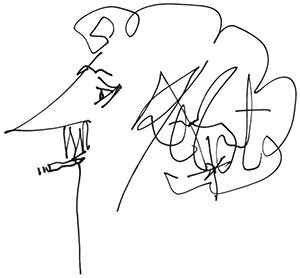
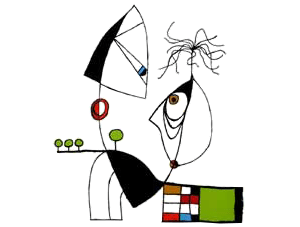
Kurt Vonnegut (1922 – 2007) was an American writer of the 20th century. He wrote such works as ‘Mother Night’ (1961), ‘Slaughterhouse-Five’ (1969), and ‘Breakfast of Champions’ (1973) blending satire, gallows humor, and science fiction. He was known for his humanist beliefs and was honorary president of the American Humanist Association. Vonnegut’s experience in WWII as a soldier and prisoner of war had a profound influence on his later work.
He was captured during the Battle of the Bulge. ‘The other American divisions on our flanks managed to pull out: We were obliged to stay and fight. Bayonets aren’t much good against tanks…’ Imprisoned in Dresden, Vonnegut was chosen as a leader of the POWs because he spoke some German. After telling the German guards ‘…just what I was going to do to them when the Russians came…’ he was beaten and had his position as leader taken away. While a prisoner, he witnessed the fire bombing of Dresden in February 1945 which destroyed most of the city.
read more »
Posted in Art, Humor, Language |
Leave a Comment »
June 14, 2011

Ben Wilson is a London-based artist who creates tiny works of art by painting onto chewing gum stuck to the pavement. Wilson started experimenting with occasional chewing-gum paintings in 1998, and in 2004 began working on them full time.
He has created more than 10,000 of these works on pavements all over the UK and parts of Europe. Wilson heats the gum with a small blow torch and then adds lacquer to harden it. He then uses special acrylic paints to create his designs. The paintings can take up to ten hours to produce. In 2005, he was arrested in Trafalgar Square, and in 2009 he was arrested by the City of London Police on suspicion of criminal damage, although the case was dropped a few months later.
Posted in Art, Humor, World |
1 Comment »
June 14, 2011

Scratch and sniff technology generally refers to things that have been treated with a microfragrance coating. When scratched, the coating releases an odor that is normally related to an image being displayed under the coating. The technology has been used on a variety of surfaces from stickers to compact discs. Stickers became common in the late 1970s, and grew into big business for several companies throughout the early and mid-1980s. As the technology evolved to an ‘acid-free’ design the sticker craze seemed to come to a close.
Utility companies have sometimes enclosed scratch and sniff cards in their bills to educate the public on recognizing the smell of a methane gas leak. However, this sometimes would lead to a rash of false alarms as the scent emanating from a discarded scratch and sniff is later mistaken for a real gas leak. Scratch and sniff is created through the process of micro-encapsulation. The desired smell is surrounded by micro-capsules that break easily upon scratching. Because of the micro-encapsulation, the aroma can be preserved for extremely long periods of time.
Posted in Humor, Technology |
Leave a Comment »
June 14, 2011
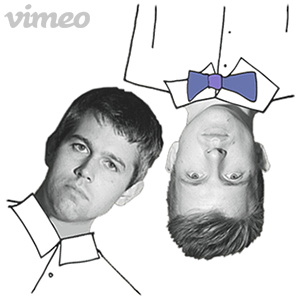
Bompas & Parr is a company specializing in food art using gelatin desserts. Named after the defunct food company of the same name, the company uses food molds to make edible decorations shaped like buildings and other architectural structures. The work of Bompas & Parr have been noted for their detail and have competed in culinary artwork competitions, an example being the Architectural Jelly Design Competition organized for the London Festival of Architecture.
The company claims their projects explore how the taste of food is altered through synaesthesia (a condition where the brain mixes up the senses), performance and setting. Currently the focus of their projects is gelatin based because they feel it is a perfect medium for an examination of food and architecture due to its plastic form and the historic role it has played in exploring notions of taste.
Posted in Art, Food, Humor |
Leave a Comment »
June 12, 2011
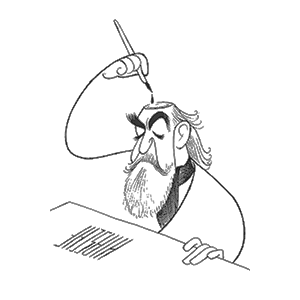
Al Hirschfeld (1903 – 2003) was an American caricaturist best known for his simple black and white portraits of celebrities and Broadway stars. Hirschfeld’s art style is unique, and he is considered to be one of the most important figures in contemporary caricature, having influenced countless cartoonists.
His caricatures are almost always drawings of pure line with simple black ink on white paper with little to no shading or crosshatching. His drawings always manage to capture a likeness using the minimum number of lines. Though his caricatures often exaggerate and distort the faces of his subjects, he is often described as being a fundamentally ‘nicer’ caricaturist than many of his contemporaries, and being drawn by Hirschfeld was considered an honor more than an insult. Nonetheless he did face some complaints from his editors over the years.
read more »
Posted in Art, Humor |
Leave a Comment »
June 11, 2011

A Googlewhack is a type of a contest for finding a Google search query consisting of exactly two words without quotation marks, that returns exactly one hit. A Googlewhack must consist of two actual words found in a dictionary. A Googlewhack is considered legitimate if both of the searched-for words appear in the result page.
Published googlewhacks are short-lived, since when published to a web site, the new number of hits will become at least two, one to the original hit found, and one to the publishing site. The term Googlewhack first appeared on the web at UnBlinking in 2002; the term was coined by Gary Stock. Subsequently, Stock created The Whack Stack, at googlewhack.com, to allow the verification and collection of user-submitted Googlewhacks.
read more »
Posted in Games, Humor, Technology |
Leave a Comment »
June 10, 2011


Gary Panter (b. 1950) is an illustrator, designer, and part-time musician. Panter’s work is representative of the post-underground, new wave comics movement that began with the end of one periodical, ‘Arcade: The Comics Revue’ and the initiation of another, RAW, one of the second generation in American underground comix. Panter attended Texas A&M University where he studied under commercial illustrator, Jack Unruh.
He has published his work in various magazines and newspapers, including ‘Raw,’ ‘Time,’ and ‘Rolling Stone.’ He has exhibited widely, and won three Emmy awards for his set designs for ‘Pee-Wee’s Playhouse.’ Prior to Panter’s work, kid shows had a more lulling aesthetic: everything was round, ‘cute,’ simplified, and pastel. His set design was the antithesis of pablum-art: it was dense as a jungle and jam-packed with surprises, often loud and abrasive ones.
read more »
Posted in Art, Humor |
Leave a Comment »
June 8, 2011

Captain EO is a 3-D film starring Michael Jackson and directed by Francis Ford Coppola (who based the name on Eos, the Greek goddess of dawn) that was shown at Disney theme parks from 1986 through the 1990s. The attraction returned in 2010, as a tribute after Jackson’s death. It is regarded as one of the first ‘4-D’ films (4-D being the name given to a 3-D film which incorporates in-theater effects, such as lasers, smoke, etc., frame synced to the film narrative). This innovation was suggested by producer-writer Rusty Lemorande who is, therefore, sometimes referred to as ‘The Father of 4-D.’ These effects resulted in the seventeen-minute film costing an estimated $30 million to produce. At the time, it was the most expensive film ever made on a per-minute basis, averaging out at $1.76 million per minute.
The film’s executive producer was George Lucas, and it was choreographed by Jeffrey Hornaday (who also choreographed ‘Flashdance’ and ‘A Chorus Line’) and Michael Jackson. The score was written by James Horner, and featured two songs (‘We Are Here to Change the World’ and ‘Another Part of Me’), both written and performed by Michael Jackson. The Supreme Leader was played by Anjelica Huston. The movie tells the story of Captain EO (Michael Jackson) and the ragtag crew of his spaceship on a mission to deliver a gift to ‘The Supreme Leader,’ who lives on a world of rotting, twisted metal and steaming vents. Captain EO’s alien crew consists of his small flying sidekick Fuzzball, the double-headed navigator and pilot Idey and Ody, robotic security officer Major Domo, a small robot Minor Domo (who fits like a module into Major Domo), and the clumsy elephant-like shipmate Hooter who always manages to upset the crew’s missions.
Posted in Art, Humor, Technology |
Leave a Comment »
June 8, 2011


A little green blobby planet thing, nicknamed the ‘Cosmic Cutie,’ with no eyes, a tongue and two thin arms, was used on the U.S. editions of the Hitch Hiker’s Guide To The Galaxy series of books because of worries that American consumers might not realize that a series of books with different names was a ‘trilogy.’
The author of the books, Douglas Adams was one of many people who disliked the character, and demanded it not appear on new editions of any of his books.
Posted in Art, Humor |
Leave a Comment »
June 8, 2011
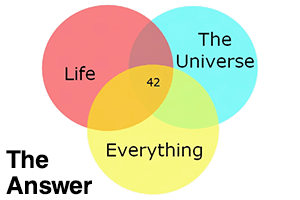

In the first novel and radio series of ‘The Hitchhiker’s Guide to the Galaxy’ a group of hyper-intelligent pan-dimensional beings demand to learn the Ultimate Answer to the Ultimate Question of Life, The Universe, and Everything from the supercomputer, Deep Thought, specially built for this purpose. It takes Deep Thought 7½ million years to compute and check the answer, which turns out to be 42. The Ultimate Question itself is unknown.
When asked to produce The Ultimate Question, the computer says that it cannot; however, it can help to design an even more powerful computer, the Earth, that can. The programmers then embark on a further ten-million-year program to discover The Ultimate Question. This new computer will incorporate living beings in the ‘computational matrix,’ with the pan-dimensional creators assuming the form of mice.
read more »
Posted in Art, Humor |
Leave a Comment »
June 8, 2011
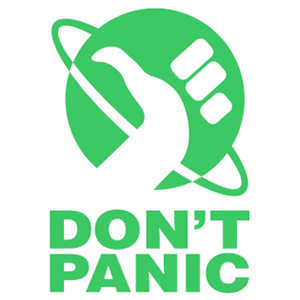
Towel Day is celebrated every May 25th as a tribute by fans of the late author Douglas Adams.
On this day, fans carry a towel with them to demonstrate their love for the books and the author, as referred to in Adams’s ‘The Hitchhiker’s Guide to the Galaxy.’ The commemoration was first held in 2001, two weeks after Adams’s death in May of that year.
read more »
Posted in Art, Humor |
Leave a Comment »
June 8, 2011
In ‘The Hitchhiker’s Guide to the Galaxy’ series, DON’T PANIC (always upper-case) is a phrase written on the cover of titular ‘The Hitchhiker’s Guide to the Galaxy.’ The novel explains that this was partly because the device ‘looked insanely complicated’ to operate, and partly to keep intergalactic travelers from panicking.
It is said that despite its many glaring (and occasionally fatal) inaccuracies, the Hitchhiker’s Guide to the Galaxy itself has outsold the Encyclopedia Galactica because it is slightly cheaper, and because it has the words ‘DON’T PANIC’ in large, friendly letters on the cover.
Posted in Art, Humor, Language |
Leave a Comment »



 The Daily Omnivore