May 9, 2011

The Firesign Theatre is an American comedy troupe consisting of Phil Austin, Peter Bergman, David Ossman and Philip Proctor. Their brand of surrealistic humor is best known through their record albums, which acquired a cult following in the late 1960s and early ’70s. The troupe began as live radio performers in LA; the name stems in part from astrology, because the membership encompasses all three ‘fire signs’: Aries, Leo, and Sagittarius. The name also refers to Fireside Theatre, an early television series that ran on NBC from 1949 to 1955, followed by ‘Jane Wyman Presents the Fireside Theatre’ (1955–58); it may also refer to the Fireside Chats radio broadcasts made by President Franklin Delano Roosevelt, a parody of which can be heard in one of the Theatre’s ‘Nick Danger’ adventures.
The Firesign Theatre employs a stream of consciousness style that includes direct references to movies, radio, TV, political figures, and other cultural sources, intermingled with sound effects and bits of music. The resulting stories — including the theft of a high school, a fair of clowns and holograms and aliens who use hemp smoking to turn people into crows — border on psychedelia, an effect intensified by the frequent appearance of mock ‘advertisements’ satirizing real products. The Firesign approach to comedy was strongly influenced by ‘The Goon Show,’ a British radio comedy program. While their style has the feel of improvisational comedy, most of the material is tightly scripted and memorized. The group’s writing method demands the consent of all four members before a line can be included. Much of their work has been copyrighted under the name ‘4 or 5 Crazee Guys.’
Posted in Art, Humor |
Leave a Comment »
May 8, 2011
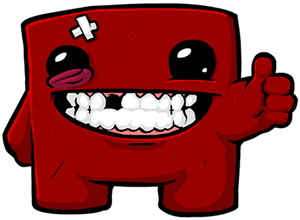

Super Meat Boy is a platform game developed by Edmund McMillen and Tommy Refenes, and is the successor to ‘Meat Boy,’ originally released in 2008. Super Meat Boy was released in 2010. The game follows Meat Boy as he attempts to rescue his girlfriend Bandage Girl from the villainous Dr. Fetus through over 300 levels filled with deadly hazards. It has won acclaim for its extremely high difficulty.
Players must guide Meat Boy to the end of each level while avoiding buzzsaws, salt, and various other fatal obstacles. The player can jump and run, and can stick to walls in order to either jump off of them or to slide down them. The player has an unlimited number of attempts to complete each level; if Meat Boy is killed he immediately restarts the level, though the red blood left behind on surfaces that the player has touched remains.
Posted in Games, Humor |
Leave a Comment »
May 6, 2011

Chromotherapy, sometimes called color therapy, is an pseudoscientific alternative medicine practice. It is claimed that a therapist trained in chromotherapy can use color and light to balance ‘energy’ wherever a person’s body be lacking, be it physical, emotional, spiritual, or mental.
Color therapy is unrelated to light therapy, a valid and proven form of medical treatment for seasonal affective disorder and a small number of other conditions.
read more »
Posted in Health, Humor |
Leave a Comment »
May 4, 2011
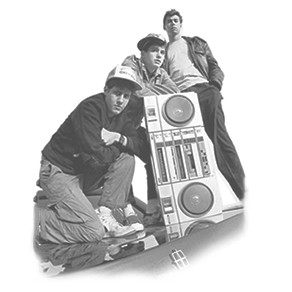
‘(You Gotta) Fight for Your Right (to Party!)‘ was the first single released from the Beastie Boys’ breakthrough album, Licensed to Ill (1986). Ironically, the song, written by band friend Tom ‘Tommy Triphammer’ Cushman (who appears in the video), was intended as a parody of party and attitude songs, such as ‘Smokin’ In the Boys Room’ and ‘I Wanna Rock.’ However, the irony was lost on most listeners.
Mike D commented that, ‘The only thing that upsets me is that we might have reinforced certain values of some people in our audience when our own values were actually totally different. There were tons of guys singing along to ‘Fight for Your Right’ who were oblivious to the fact it was a total goof on them.’
read more »
Posted in Art, Humor |
Leave a Comment »
May 4, 2011
In 2011, Adam Yauch directed and wrote a surreal comedic short film entitled Fight For Your Right Revisited to commemorate the 25th anniversary of the original video release of their 1987 hit, ‘(You Gotta) Fight for Your Right (To Party!).’ ‘Revisited’ acts as a sequel to the events that took place in the original music video and stars Mike D, Ad-Rock and MCA (played by Seth Rogen, Elijah Wood & Danny McBride respectively) as they get into more drunken antics, before being challenged to a dance battle by the future Mike D, Ad-Rock and MCA (John C. Reilly, Will Ferrell and Jack Black, respectively).
The short also features several cameo appearances, including Stanley Tucci, Susan Sarandon, Steve Buscemi, Shannyn Sossamon, Kirsten Dunst, Ted Danson, Rashida Jones, Rainn Wilson, Amy Poehler, Mary Steenburgen, Will Arnett, Chloe Sevigny, Maya Rudolph, David Cross, Orlando Bloom, Martin Starr, and the actual Mike D, Ad-Rock & MCA.
Posted in Art, Humor |
Leave a Comment »
May 3, 2011
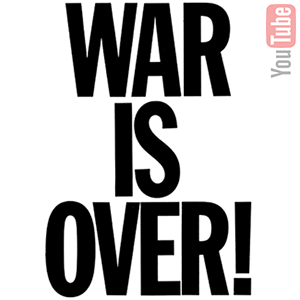
‘Happy Xmas (War Is Over)’ is a song written by John Lennon and Yoko Ono and released in 1971 as a single by John & Yoko/Plastic Ono Band with the Harlem Community Choir. Ostensibly a protest song about the Vietnam War, it has become a Christmas standard and has appeared on several Christmas albums. The lyric is based on a campaign in late 1969 by Lennon and Ono, who rented billboards and posters in eleven major cities around the world that read: ‘WAR IS OVER! (If You Want It) Happy Christmas from John and Yoko.’ In 1971, the US was deeply entrenched in the unpopular Vietnam War.
The melody and chord structure are from the folk standard ‘Stewball,’ about a race-horse. Lennon and Ono added modulation through several keys and the ‘War is over’ counter-melody. It was recorded at Record Plant Studios in New York City in late October 1971, with the help of producer Phil Spector. It features heavily echoed vocals and backing vocals from children from the Harlem Community Choir.
Posted in Art, Humor, War |
Leave a Comment »
May 3, 2011

The Yellow Kid emerged as the lead character in ‘Hogan’s Alley,’ a comic first drawn by Richard F. Outcault in 1894, which became one of the first Sunday supplement comic strips in an American newspaper. The Yellow Kid was a bald, snaggle-toothed boy who wore a yellow nightshirt and hung around in a ghetto alley filled with equally odd characters, mostly other children.
With a goofy grin, the Kid habitually spoke in a ragged, peculiar ghetto argot printed on his shirt, a device meant to lampoon advertising billboards. His head was drawn wholly shaved as if having been recently ridden of lice, a common sight among children in New York’s tenement ghettos at the time. His nightshirt, a hand-me-down from an older sister, was white or pale blue in the first color strips.
read more »
Posted in Art, Humor, Money |
Leave a Comment »
May 3, 2011
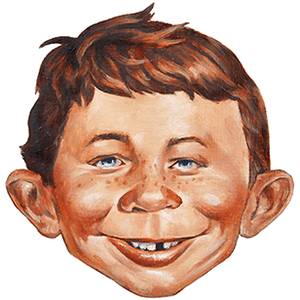
Alfred E. Neuman is the fictional mascot and iconic cover boy of Mad magazine. The face had drifted through American pictography for decades before being claimed and named by Mad editor Harvey Kurtzman. Since his debut in Mad, Neuman’s likeness, distinguished by jug ears, a missing front tooth, and one eye lower than the other has graced the cover of all but a handful of the magazine’s 500 issues. His face is rarely seen in profile; he has virtually always been shown in full frontal view, directly from behind, or in silhouette.
Harvey Kurtzman first spotted the image on a postcard pinned to the office bulletin board of Ballantine Books editor Bernard Shir-Cliff. ‘It was a face that didn’t have a care in the world, except mischief,’ recalled Kurtzman.
read more »
Posted in Art, Humor |
Leave a Comment »
May 3, 2011

The Stay Puft Marshmallow Man is a fictional mascot from the Ghostbusters franchise of media, which sometimes appears as a giant, lumbering paranormal monster.
It first appears in the 1984 film Ghostbusters as a picture logo on a prop package of marshmallows in Dana Barrett’s apartment when she places the groceries on her kitchen counter, on a graffiti advertisement on the building next to the Ghostbuster’s HQ when the ghosts are released from the containment grid after the power is shut down, then later in the climax of the film.
read more »
Posted in Art, Humor |
Leave a Comment »
May 2, 2011

‘Mission Accomplished‘ refers to a banner that was displayed during an address by President George W. Bush on May 1, 2003. Bush stated at the time that major combat operations in Iraq were completed. While his statement did coincide with an end to the conventional phase of the war, his assertion—and the sign itself—became controversial with the growing violence of the Iraqi insurgency. The vast majority of casualties, both military and civilian, occurred after the speech. White House staff members produced the banner. For critics of the war, the photo-op became a symbol of the Bush administration’s unrealistic goals and perceptions of the conflict. The banner came to symbolize the irony of Bush giving a victory speech only a few weeks after the beginning of a long war.
Bush became the first sitting President to make an arrested landing in a fixed-wing aircraft on an aircraft carrier when he arrived at the USS Abraham Lincoln in a Lockheed S-3 Viking, dubbed ‘Navy One,’ as the carrier returned from combat operations in the Persian Gulf. He posed for photographs with members of the ship’s crew while wearing a flight suit. Opponents criticized the event as a theatrical and expensive stunt. Bush was a passenger of the plane (unlike his father, who was a Navy pilot, he was never trained to land on a carrier). According to the Navy, the banner referred specifically to the Abraham Lincoln’s 10-month deployment (which was the longest deployment of a carrier since the Vietnam War) and not the war itself.
Posted in Humor, Politics, War |
Leave a Comment »
May 2, 2011

A Dagwood is a tall, multi-layered sandwich made with a variety of meats, cheeses and condiments. It was named after Dagwood Bumstead, a central character in the comic strip Blondie, who is frequently illustrated making enormous sandwiches. According to Blondie scripter Dean Young, his father, Chic Young, began drawing the huge sandwiches in the comic strip during 1936. Though the actual contents of Chic Young’s Dagwood sandwich remain obscure, it obviously contains large quantities and varieties of cold cuts, sliced cheese and vegetables, plus additional slices of bread. An olive pierced by a toothpick or wooden skewer usually crowns the edible superstructure.
In May 1999, a counter-service restaurant named Blondie’s opened at Universal Orlando’s Islands of Adventure, serving a traditional Dagwood-style sandwich. Blondie’s bills itself as ‘Home of the Dagwood Sandwich.’ A Blondie-themed restaurant chain, Dagwood’s Sandwich Shoppe, was founded in 2006. The Dagwood is sold as a 1.5-pound sandwich with three slices of deli bread, hard salami, pepperoni, cappicola, mortadella, deli ham, cotto salami, cheddar, Provolone, red onion, green leaf lettuce, tomato, fresh and roasted red bell peppers, mayo, mustard and a secret Italian olive salad oil.
Posted in Food, Humor |
Leave a Comment »
May 2, 2011
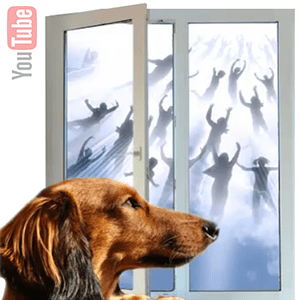
For a one-time charge of $10, After the Rapture Pet Care promises to look after Christian’s pets on Earth should the rapture occur. When Jesus returns, their non-Christian administrators will activate a rescue plan: animal caretakers will be alerted immediately by email and telephone that they have been activated.
Pets will be assigned to caretakers based upon location and other factors. Administrators will do whatever it takes to find and rescue pets covered by a policy.
Posted in Death, Humor, Philosophy |
Leave a Comment »





