April 23, 2011

Bacon mania refers to passionate bacon enthusiasm in the US, Canada, and the UK. The movement (sometimes called ‘Bacon Nation’) has been traced to the 1980s and 1990s when high-protein foods became a more prominent diet focus due in part to the Atkins diet. Bacon possesses six ingredient types of umami, which elicits an addictive neurochemical response. Newer bacon creations have joined more traditional foods like the BLT and Cobb salad, including bacon bubble gum, bacon band-aids, sizzling bacon flavored rolling papers, and bacon air freshener.
The growing popularity of bacon has also encouraged product introductions such as bacon salt, maple bacon donuts, and baconnaise. Other bacon food oddities include the bacon explosion (a bacon-wrapped loaf of pork sausage), chicken fried bacon, bacon ice cream, and chocolate covered bacon, all popularized over the internet. A bacon alarm clock that wakes people up with the smell of cooking bacon has also been announced. The increased interest in bacon has led to Bacon-of-the-month clubs, bacon recipe contests, blogs, and even ‘bacon camps.’
Posted in Food, Humor, Language |
Leave a Comment »
April 20, 2011

Hash Bash is an annual event held in Ann Arbor, Michigan, on the first Saturday of April at high noon on the University of Michigan Diag (a large open space in the middle of the university’s Central Campus). A collection of speeches, live music, street vending and occasional civil disobedience are centered on the goal of reforming federal, state, and local marijuana laws. The first Hash Bash was held on Saturday, April 1 1972 in response to the March 9th 1972 decision by Michigan Supreme Court declaring unconstitutional the law used to convict cultural activist John Sinclair for possession of two marijuana joints.
Ann Arbor has very lenient laws regarding the possession of marijuana, it is a civil infraction rather than a criminal offense. Even so, the campus of the University of Michigan sits upon state property, and so anyone caught with marijuana on any campus location is subject to the more strict state marijuana laws. In addition, since state law takes precedence over municipal law, many people are prosecuted under state law regardless of where in Ann Arbor they are located.
Posted in Drugs, Humor, Politics |
1 Comment »
April 20, 2011


420 (pronounced four-twenty) refers to cannabis subculture. April 20th has evolved into a counterculture holiday, where people gather to celebrate and consume cannabis. Some events have a political nature to them, advocating for the decriminalization of non-medical cannabis. The term was allegedly coined by a group of teenagers in California in 1971. Calling themselves the Waldos, because their chosen hang-out spot was a wall outside the school,’ the group first used the term in connection to a plan to search for an abandoned cannabis crop that they had learned about. They designated the Louis Pasteur statue on the grounds of San Rafael High School as their meeting place, and 4:20 p.m. as their meeting time.
The Waldos referred to this plan with the phrase ‘4:20 Louis.’ Multiple failed attempts to find the crop eventually shortened their phrase to simply ‘4:20,’ which ultimately evolved into a codeword the teens used to mean pot-smoking in general. ‘High Times’ Creative Director Steven Hager was the first person to track down the Waldos and publish their account of the origins of the term. In 1998, Hager wrote ‘Are You Stoner Smart or Stoner Stupid?’ in which he called for 4:20 p.m. to be the socially accepted hour of the day to consume cannabis. ‘I believe 420 is a ritualization of cannabis use that holds deep meaning for our subculture,’ wrote Hager. ‘It also points us in a direction for the responsible use of cannabis.’
Posted in Drugs, Humor, Politics |
Leave a Comment »
April 19, 2011
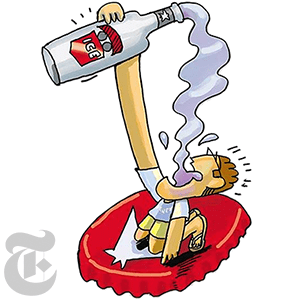
Icing is a drinking game in which players are required to bend down on one knee and chug a bottle of Smirnoff Ice. Participants are encouraged to come up with elaborate ways to present the Ice to their targets by hiding bottles in inconspicuous locations, or in situations where drinking it would be dangerous or embarrassing (e.g. before they drive somewhere, attend a meeting, etc.). Failure to drink, no matter the circumstance, results in the humiliation of the victim, and players are encouraged to mistreat those who refuse to play.
The target of an Icing can perform an ‘ice block’ by grabbing a Smirnoff Ice within arms reach (e.g. on his person). An ice block can be in the form of any size Smirnoff Ice, thus upping the stakes for the challenger. Once the player presents this ice block to the original player, the original player must drink both ices. You can ice block an ice block, even though this would lead to back and forth infinite ice blocks. Refusal to consume an Ice results in excommunication, meaning that that player can no longer ice anyone or get iced. Furthermore, you cannot pour it into any other drinking container to mimic another liquid. This is punishable by drinking that said ice.
Posted in Food, Games, Humor |
Leave a Comment »
April 14, 2011

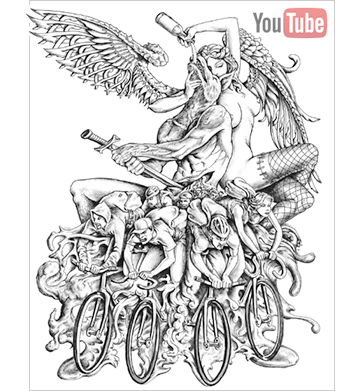
An Alleycat race is an informal bicycle race. Alleycats almost always take place in cities, and are often organized by bicycle messengers. The informality of the organization is matched by the emphasis on taking part, rather than simple competition. Many Alleycats present prizes for the last competitor to finish (sometimes known as Dead Friggin’ Last or DFL).
The first race to be called ‘Alleycat’ was held in Toronto in 1989. Regularly organized Alleycats can be found in cities across North America, Europe and Asia. Many smaller cities with no cycle messenger population are also home to alleycats run by the burgeoning urban cyclist subculture.
read more »
Posted in Games, Humor |
Leave a Comment »
April 14, 2011

The weasel war dance is a colloquial term for a behavior of excited ferrets and weasels. In wild animals, it is speculated that this dance is used to confuse or disorient prey. In domestic animals, the war dance usually follows play or the successful capture of a toy or a stolen object.
It consists of a frenzied series of sideways and backwards hops, often accompanied by an arched back, hissing noises, and a frizzy tail. Ferrets are notoriously clumsy in their surroundings during their dance and will often bump into or fall over objects and furniture. Although the weasel war dance may make a ferret appear frightened or angry, they are often just excited and are usually harmless to humans.
Posted in Humor, Science |
Leave a Comment »
April 13, 2011

Leslie Conway ‘Lester’ Bangs (1948 – 1982) was an American music journalist and musician. He wrote for ‘Creem’ and ‘Rolling Stone’ magazines and has been called one of the ‘most influential’ voices in rock criticism. In 1969, Bangs began writing freelance after reading an ad in ‘Rolling Stone’ soliciting readers’ reviews.
His first piece was a negative review of the MC5 album ‘Kick Out The Jams,’ which he sent to ‘Rolling Stone’ with a note detailing that should the magazine decide not to publish the review, then they would have to contact Lester and tell him why. They published it.
read more »
Posted in Art, Humor, Money |
Leave a Comment »
April 13, 2011

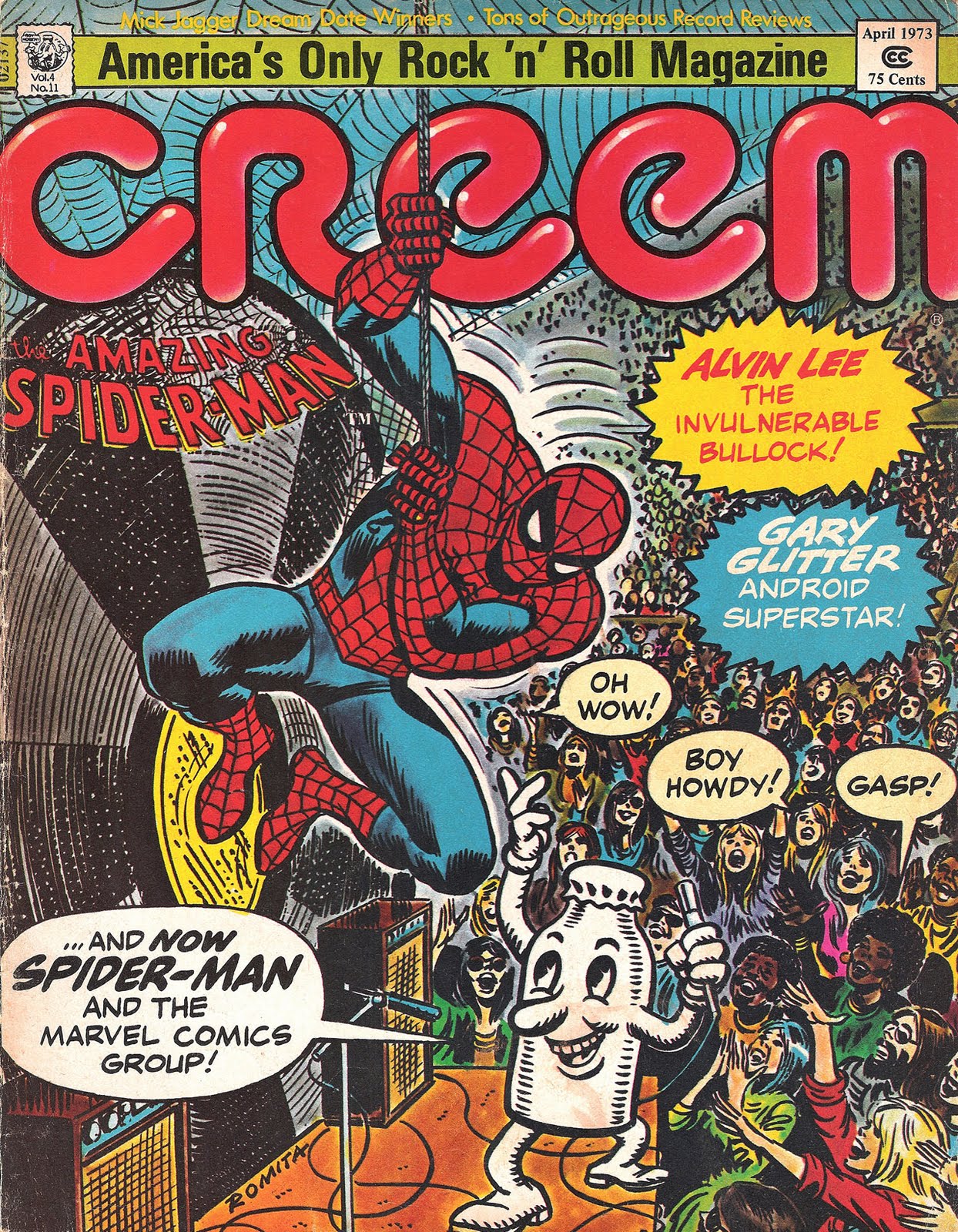
Creem was a monthly rock ‘n’ roll publication first published in March 1969 by Barry Kramer and founding editor Tony Reay. It suspended production in 1989 but received a short-lived renaissance in the early 1990s as a glossy tabloid.
Lester Bangs, often cited as ‘America’s Greatest Rock Critic,’ became editor in 1971. The term ‘punk rock’ was said to have been coined by the magazine in 1971, and the term ‘heavy metal’ was also first used in its pages.
read more »
Posted in Art, Humor, Money |
Leave a Comment »
April 11, 2011
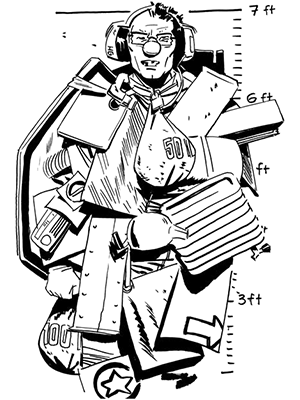
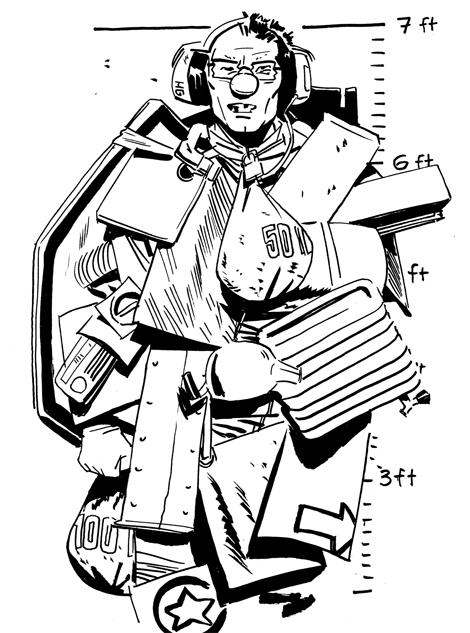
‘Harrison Bergeron‘ is a satirical, dystopian science fiction short story written by Kurt Vonnegut and first published in 1961. The story is set in the year 2081. Due to the 211th, 212th and 213th Amendments to the Constitution of America, all Americans are mandated equal.
‘They were not only equal before God and the law. They were equal every which way.’ In America no one is more intelligent than anyone else, no one is better looking or more athletic than anyone else. In order to stop any sort of competition in society these measures are enforced by the United States Handicapper General.
read more »
Posted in Art, Humor, Politics |
Leave a Comment »
April 11, 2011

A jinx [jingks], in popular superstition and folklore, is: a type of curse placed on a person that makes them prey to many minor misfortunes and other forms of bad luck; a person afflicted with a similar curse, who, while not directly subject to a series of misfortunes, seems to attract them to anyone in his vicinity; and an object/ person that brings bad luck.
Jinx is also a children’s game (although not necessarily played only by children) with myriad rules and penalties that occurs when two people unintentionally or intentionally speak (or type) the same word or phrase simultaneously.
read more »
Posted in Games, Humor, Language |
Leave a Comment »
April 11, 2011

A street piano is a piano placed in the street which passers-by are encouraged to play. The best known examples is the ‘Play Me, I’m Yours’ project by artist Luke Jerram. The concept originates quite by accident in the early 2000’s in Sheffield, England, where there was a piano on the pavement on Sharrow Vale Road.
It was left outside temporarily because the owner could not get it up the steps into his new house. As a social experiment he attached a sign inviting passers by to play the piano for free. This offer was taken up by a great many people and the piano became a part of the local community.
read more »
Posted in Art, Humor, World |
1 Comment »
April 11, 2011

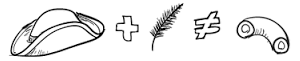
A macaroni [mak-uh-roh-nee] in mid-18th century England, was a fashionable fellow who dressed and spoke in an outlandishly affected and effeminate manner.
The term pejoratively referred to a man who ‘exceeded the ordinary bounds of fashion’ in terms of clothes, fastidious eating and gambling.
read more »
Posted in Art, Humor, Language |
Leave a Comment »