February 12, 2011
The Rally to Restore Sanity and/or Fear was a gathering which took place on October 30, 2010 at the National Mall in Washington, D.C.. Led by Jon Stewart and an in-character Stephen Colbert. The rally drew about 215,000 people, according to aerial photography analysis, and was a combination of what initially were announced as separate events: Stewart’s Rally to Restore Sanity and Colbert’s counterpart, the March to Keep Fear Alive.
Its stated purpose was to provide a venue for attendees to be heard above what Stewart describes as the more vocal and extreme 15–20% of Americans who ‘control the conversation’ of United States politics. News reports cast the rally as a spoof of Glenn Beck’s Restoring Honor rally and Al Sharpton’s Reclaim the Dream rally, while Stewart said it was not.
Posted in Humor, Politics |
Leave a Comment »
February 11, 2011
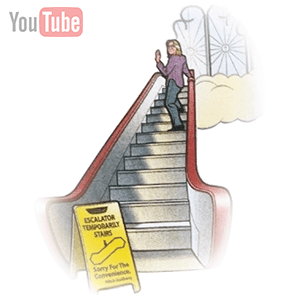
Mitch Hedberg (1968 – 2005) was an American stand-up comedian known for his surreal humor and unconventional comedic delivery. His comedy typically featured short, sometimes one-line jokes, mixed with absurd elements and non sequiturs.
Hedberg’s comedy and on-stage persona gained him a cult following, with audience members sometimes shouting out the punchlines to his jokes before he could finish them.
read more »
Posted in Art, Humor |
Leave a Comment »
February 11, 2011

Karl Pilkington (b. 1972) is an English author and former radio producer. He is best known for producing and co-presenting The Ricky Gervais Show on Xfm London between 2001 and 2005; and for the subsequent podcast series and HBO animated television series. He was also the subject of the Sky1 travel series, An Idiot Abroad, which was also presented in the United States on the Science Channel. The New York Times ran an article about The Ricky Gervais Show describing Pilkington’s behaviour as a well-executed deadpan routine.
Posted in Art, Humor |
Leave a Comment »
February 10, 2011

Disco Demolition Night was a promotional event that took place on Thursday, July 12, 1979, at Comiskey Park in Chicago, Illinois, during which a crate filled with records was blown up on the field. It was held during the doubleheader baseball game between the Chicago White Sox and the Detroit Tigers. During the climax of the event, rowdy fans surged onto the field, and a near riot ensued. It would ultimately prove to be one of the most notable promotional ideas and one of the most infamous since ‘Ten Cent Beer Night’ in Cleveland in 1974. The event was the culmination of a popular backlash against disco music.
Posted in Art, Humor |
Leave a Comment »
February 10, 2011

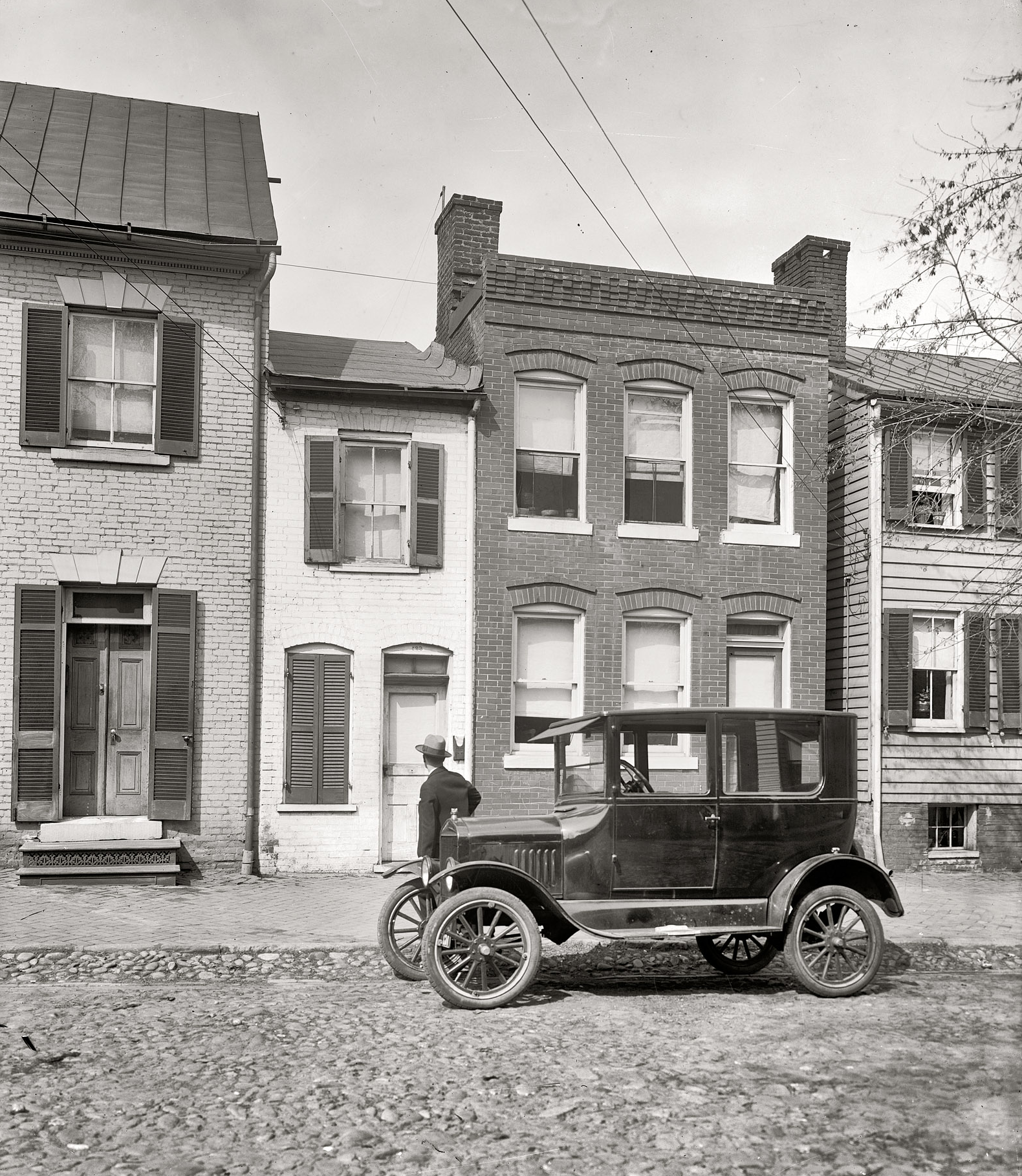
A spite house is a building constructed or modified to irritate neighbors or other parties with land stakes. Spite houses often serve as obstructions, blocking out light or access to neighboring buildings, or as flamboyant symbols of defiance. Because long-term occupation is at best a secondary consideration, spite houses frequently sport strange and impractical structures. Spite houses are much rarer than spite fences. This is partially attributable to the fact that modern building codes often prevent the construction of houses likely to impinge on neighbors’ views or privacy.
Probably the most famous spite house was the Richardson Spite House in New York City at Lexington Avenue and 82nd Street. Built in 1882 and demolished in 1915, it was four stories tall, 104 feet (31.7 m) long, and only five feet (1.5 m) wide. Joseph Richardson, the owner of the plot of the same dimensions, built it after the owner of the adjacent plot, Hyman Sarner, unsuccessfully tried to purchase the land. Sarner considered the plot useless by itself and offered only $1000; Richardson demanded $5000. After the deal fell through, Richardson had an apartment building constructed on his land. It was a functional (albeit impractical) apartment building with eight suites, each consisting of three rooms and a bath.
Posted in Humor, Money |
Leave a Comment »
February 10, 2011

Flipism is a pseudophilosophy under which all decisions are made by flipping a coin. It originally appeared in the Disney comic ‘Flip Decision’ by Carl Barks, published in 1953. Barks called a practitioner of ‘Flipism’ a ‘Flippist.’ In the comic book, Donald Duck meets Professor Batty, who persuades Donald to make decisions based on flipping a coin at every crossroad of life. Donald soon gets into trouble when following this advice. He drives a one way road in the wrong direction and is fined $50.
Posted in Humor, Philosophy |
Leave a Comment »
February 10, 2011
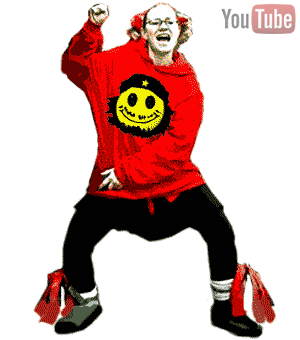
Radical cheerleading is a form of cheerleading that originated in Florida, but has now spread across the United States as well as Canada, Europe and beyond. The idea is to ironically reappropriate the aesthetics of cheerleading, for example by changing the chants to promote feminism and left-wing causes. Radical cheerleaders often perform at demonstrations. They also often perform at feminist and other radical festivals and events.
Radical cheerleading is used at demonstrations to promote a radical message in a media-friendly, people-friendly way. It is also used to support the actions of other activists who put themselves at physical risk and to denounce infiltrators and opponents. Radical cheerleaders are often anti-authoritarian and anti-capitalist. Their cheers are usually written from scratch or by rewriting the words of popular and historic songs. Radical cheerleaders dress in diverse ways but often wear a combination of red or pink and black.
Posted in Games, Humor, Politics |
Leave a Comment »
February 10, 2011
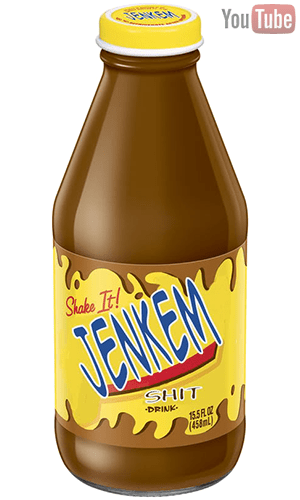
Jenkem is an alleged hallucinogenic recreational drug composed of noxious gas formed from fermented sewage. In the mid to late 1990s, several reports stated that Jenkem was being used by Zambian street children. The surfacing of the drug, or rumors of its existence, has caused at least one US municipality to amend its city ordinance regarding substances that cannot be legally inhaled to include organic substances.
Posted in Drugs, Humor |
1 Comment »
February 10, 2011

Nickelodeon compounds refers to a number of molding substances for children’s play that were created and sold by the children’s television channel Nickelodon and toy company Mattel in the 1990s. Like most molding compounds, they could be kept in their container to retain plasticity, or molded and allowed to harden overnight. They featured a wide variety of compounds with different attributes. The first compound, whose idea was taken from the show ‘You Can’t Do That on Television,’ was Nickelodeon ‘Slime,’ first manufactured in the 1980s.
The most popular compound, ‘Gak,’ was inspired by the game show ‘Double Dare.’ It made a ‘fart’ noise when squeezed into its clear, star-shaped container. In 1994 ‘Floam,’ originally called ‘bubble-gak,’ a compound composed of microbeads in a foam-like substance, was released. ‘Smud’ was much like Play-Doh, but slicker and would not dry out if left out of its container. ‘Skweeez’ was also like Play-Doh but had a more Marshmallow-like feel. ‘Gooze’ was similar to ‘Gak’ but more watery. ‘Sqand,’ or ‘Magic sand,’ begins as ordinary sand, but is dyed and coated in a hydrophobic substance.
Posted in Humor, Money, Technology |
Leave a Comment »
February 9, 2011
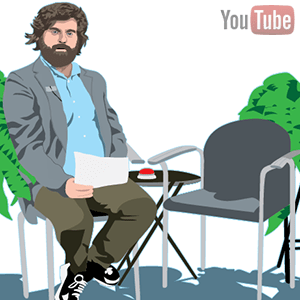
Between Two Ferns With Zach Galifianakis is an interview series on Funny or Die hosted by Zach Galifianakis. Zach conducts interviews with popular celebrities between two potted ferns. The show is filmed to resemble a low-budget amateur production fit for public access television. He maintains an awkward and sometimes antagonistic demeanor with his guests, asking them bizarre and inappropriate questions mixed with off-handed non sequiturs.
Posted in Art, Humor |
Leave a Comment »
February 8, 2011
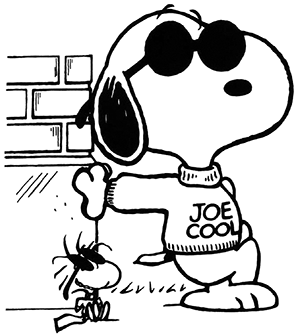
Joe Cool could refer to: Snoopy of Peanuts fame, whose aliases included Joe Cool, generally while wearing dark sunglasses and hanging around the student union. Joe Montana, a former NFL quarterback who earned the nickname for his undaunted poise in adverse, high-pressure game situations. Or, a New-York-based jazz-fusion band of the 1980’s featuring Rob Mounsey, Jeff Mironov, Will Lee, and Christopher Parker.
Posted in Art, Humor, Language |
Leave a Comment »
February 8, 2011

Bo Burnham (b. 1990) is an American comedian and musician. He performs satirical songs with a politically incorrect slant, and rose to fame on YouTube.
Posted in Art, Humor |
1 Comment »


 The Daily Omnivore