August 24, 2010
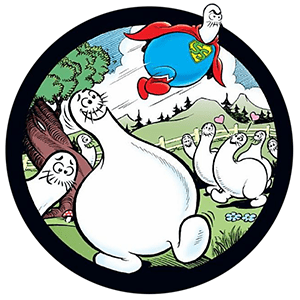
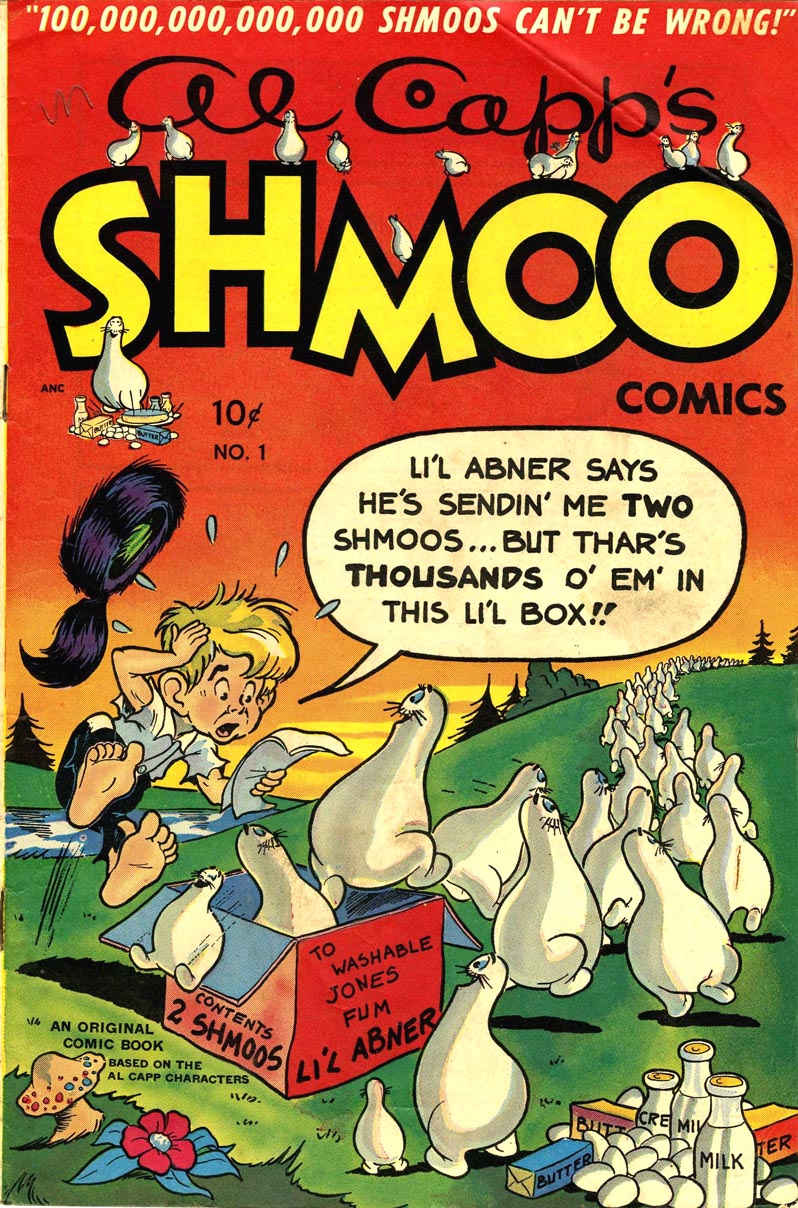
A shmoo is a fictional cartoon creature created by Al Capp. They first appeared in his comic strip ‘Li’l Abner’ on August 31, 1948, and quickly became a postwar national craze in the USA. Shmoon reproduce asexually, require no sustenance other than air, make good pets, are delicious to eat, and are eager to be eaten. Their pelts make perfect boot leather or house timber, depending on how thick you slice it. They have no bones, their eyes make the best suspender buttons, and their whiskers make perfect toothpicks. In short, they are the ideal herd animal.
In the comic strip the frolicking of shmoon is so entertaining that people no longer feel the need to watch television or go to the movies. It’s been used in discussions of socioeconomics, for instance, a widget is any material good which is produced through labor from a finite resource. In contrast, a shmoo is a material good that reproduces itself and is captured or bred as an economic activity.
Posted in Art, Humor, Money |
Leave a Comment »
August 16, 2010
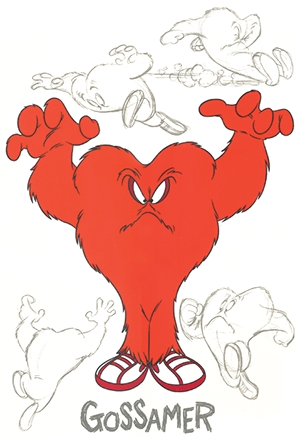
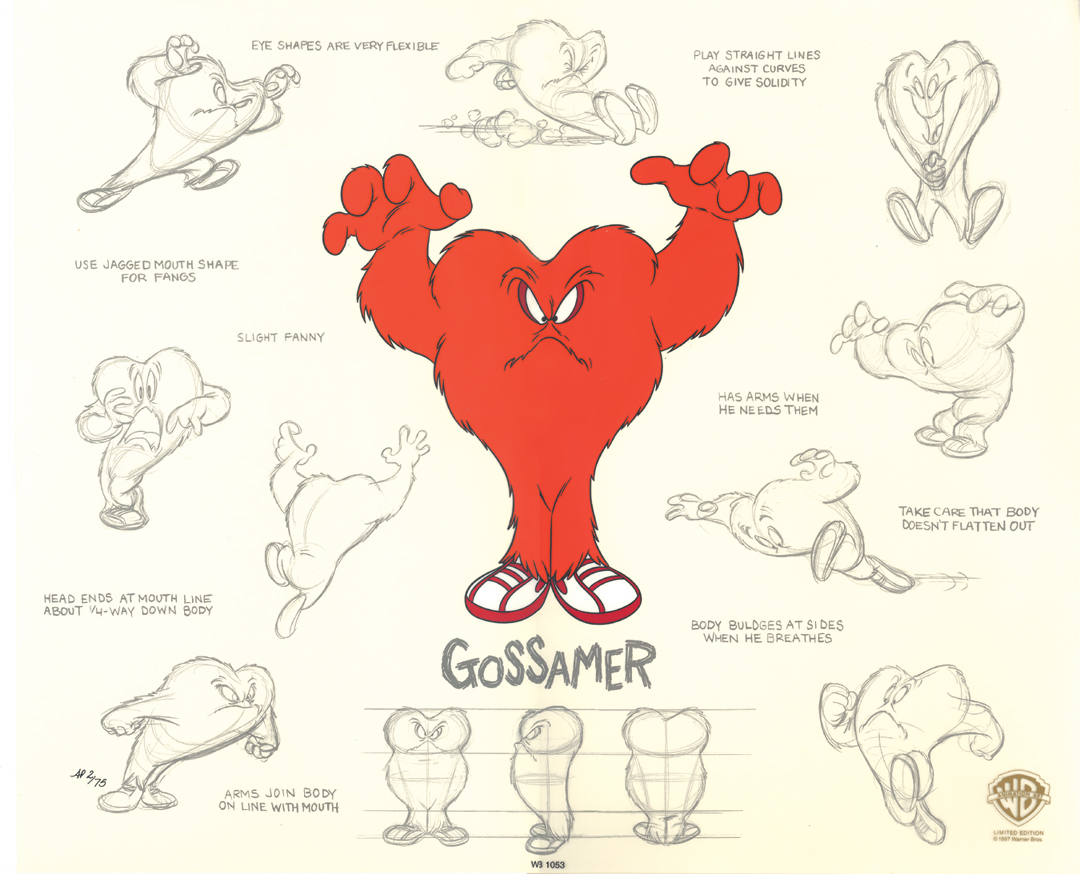
Gossamer is an animated cartoon character in the Warner Bros. Looney Tunes and Merrie Melodies series of cartoons. The character is a hairy, orange monster. His rectangular body is perched on two giant tennis shoes, and his heart-shaped face is composed of only two oval eyes and a wide mouth, with two hulking arms. The monster’s main trait, however, is bright uncombed red hair.
In fact, a gag in the 1980 short Duck Dodgers and the Return of the 24½th Century lampoons this by revealing that Gossamer is, in fact, composed entirely of hair. He was originally voiced by Mel Blanc and has been voiced by Joe Alaskey and Jim Cummings. The word ‘Gossamer’ refers to things light, delicate, or insubstantial. The name is meant to be ironic, since the character is large, menacing, and destructive.
Posted in Art, Humor |
Leave a Comment »
August 12, 2010
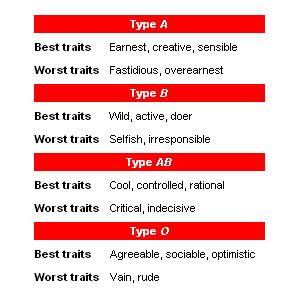
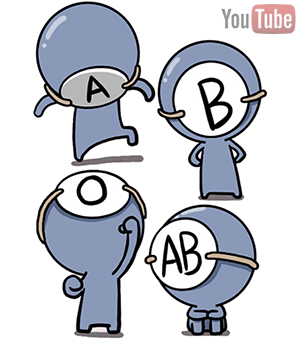
Ketsuekigata is a Japanese pseudoscience based on human blood types. There is a popular belief in Japan that a person’s ABO blood type is predictive of their personality, temperament, and compatibility with others. Ultimately deriving from ideas of historical scientific racism, the popular belief originates with publications by Masahiko Nomi in the 1970s. The scientific community dismisses such beliefs as superstition. Discussion of blood types is widely popular in women’s magazines as a way of gauging relationship compatibility with a potential or current partner. Morning television shows feature blood type horoscopes, and similar horoscopes are published daily in newspapers. In addition, a series of four books that describe people’s character by blood type ranked third, fourth, fifth and ninth on a list of best selling books in Japan in 2008.
Although there is no proven correlation between blood type and personality, it remains popular with the many matchmaking services that cater to blood type. In this way, it is similar to the use of astrological signs in the West, which is also popular in Japan. Asking one’s blood type is common in Japan, and people are often surprised when a non-Japanese does not know his or her own blood type.
Posted in Humor, Philosophy, World |
Leave a Comment »
August 10, 2010


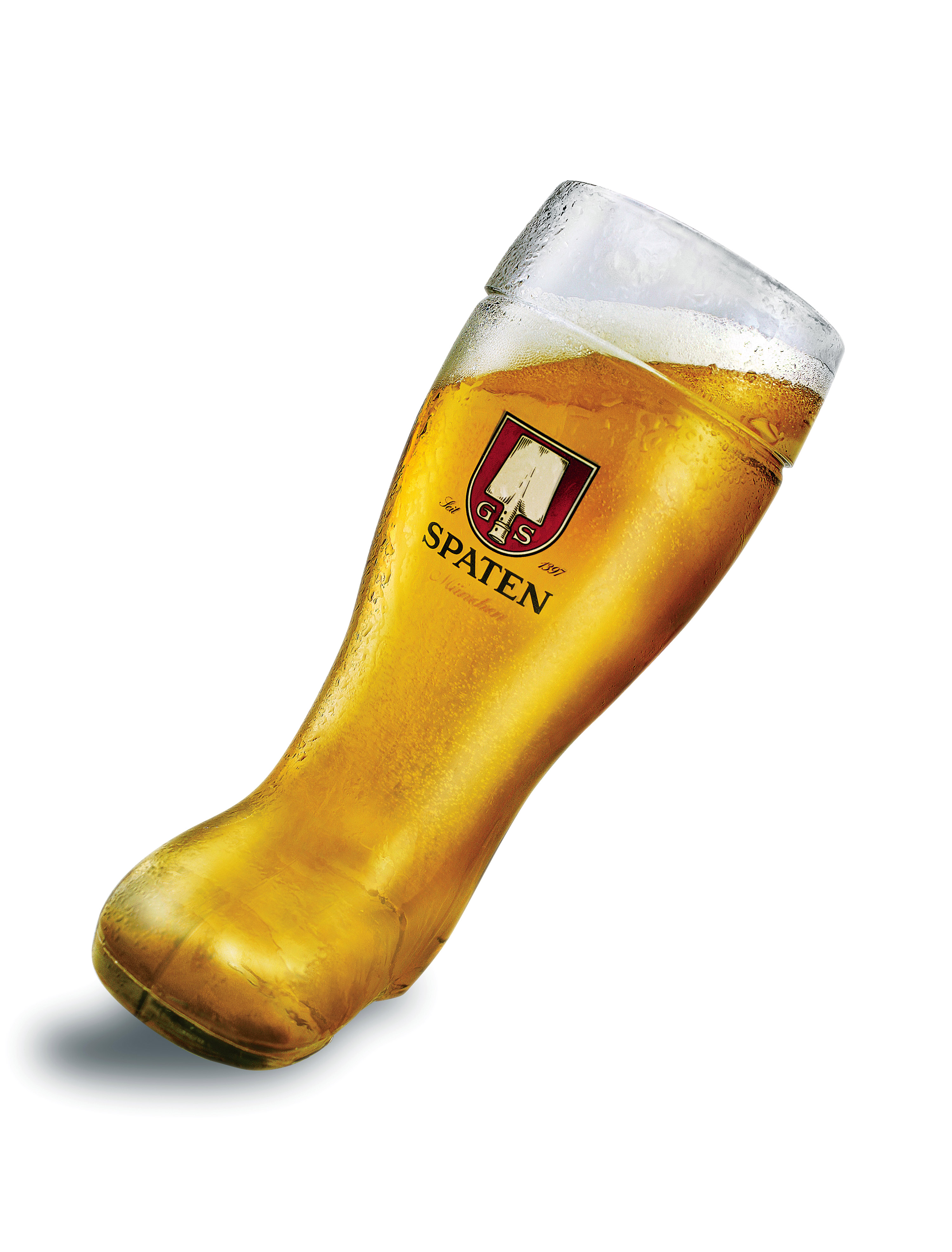
The custom of drinking beer from a boot-shaped glass is common in German themed bars, beer gardens, and the like. Machine pressed beer boots range in size from a shot glass up to 1 litre. The more popular mouth blown beer boots are typically 1 and 2 litres in size.
There are several different origin stories for the boot of beer. One tradition holds that a Prussian general swore to his troops that he would drink beer from his boot dependent on the successful outcome in a coming battle. When victorious, the general ordered a glass fashioned in the shape of a boot to fulfill his promise without, ‘having to taste his own feet.’ Another tradition holds that the boot began when German soldiers during World War I having nothing else to drink from instead passed around an actual leather boot of beer before heading into battle. They would flick the boot before drinking from it for good luck and again after drinking to wish the next soldier good luck.
Posted in Food, Humor, World |
Leave a Comment »
August 10, 2010

Wojtek (1942–1963), was a Syrian brown bear cub adopted by soldiers of the 22nd Artillery Supply Company of the Polish II Corps. During the Battle of Monte Cassino, Wojtek helped move ammunition. The name Wojtek is Slavic and has two meanings: ‘he who enjoys war’ or ‘smiling warrior.’
The bear was fed with fruits, marmalade, honey and syrup, and was often rewarded with beer, which became his favourite drink. He also enjoyed eating cigarettes. As one of the officially enlisted ‘soldiers’ of the company, he lived with the other men in their tents or in a transportable wooden crate. After the war, Wojtek was given to the Edinburgh Zoo. There he spent the rest of his days, often visited by journalists and former Polish soldiers, some of whom would toss him cigarettes. Wojtek died in December of 1963, at the age of 22.
Posted in Humor, War |
Leave a Comment »
August 4, 2010

Rule 34 is a generally accepted internet observation which states: ‘If it exists, there is porn of it. No exceptions.’ It implies that there is a sexual fetish for every conceivable subject matter. It originated from a 2003 webcomic drawn by Peter Morley-Souter to depict his shock at seeing Calvin and Hobbes parody porn. Morley-Souter posted his comic on the United Kingdom website ‘Zoom-Out in 2004,’ and it has been widely reproduced. ‘Boing Boing’ blogger Cory Doctorow writes of the meme: ‘Rule 34 can be thought of as a kind of indictment of the Web as a cesspit of freaks, geeks, and weirdos, but seen through the lens of cosmopolitanism,’ which ‘bespeaks a certain sophistication—a gourmet approach to life.’
The conundrum of finding an Internet pornographic exception to Rule 34’s ‘No exceptions’ led to Rule 35: ‘If no porn is found at the moment, it will be made.’
Posted in Humor, Sex |
Leave a Comment »
August 4, 2010
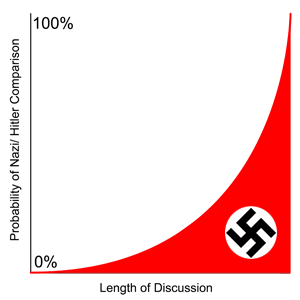
Godwin’s law is a humorous observation made by Mike Godwin in 1990 which has become an Internet adage. It states: ‘As an online discussion grows longer, the probability of a comparison involving Nazis or Hitler approaches 1.’ In other words, given enough time, all discussions —regardless of topic or scope —inevitably wind up being about Hitler and the Nazis. Also the poster who mentioned Nazis loses all debates/discussions they had in said topic, and their insults are nullified. Godwin’s law is often cited in online discussions as a deterrent against the use of arguments in the widespread reductio ad Hitlerum form.
The rule does not make any statement about whether any particular reference or comparison to Adolf Hitler or the Nazis might be appropriate, but only asserts that the likelihood of such a reference or comparison arising increases as the discussion progresses. It is precisely because such a comparison or reference may sometimes be appropriate, Godwin has argued that overuse of Nazi and Hitler comparisons should be avoided, because it robs the valid comparisons of their impact. Although in one of its early forms Godwin’s law referred specifically to Usenet newsgroup discussions, the law is now applied to any threaded online discussion: electronic mailing lists, message boards, chat rooms, and more recently blog comment threads, wiki talk pages, and social networking sites.
Posted in Humor, Language, War |
Leave a Comment »
August 3, 2010
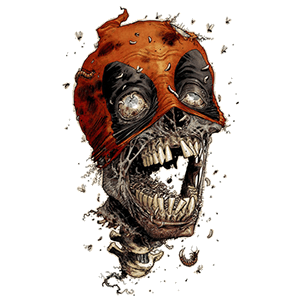
Deadpool is a fictional character and anti-hero appearing in comic books published by Marvel Comics. Created by artist Rob Liefeld and writer Fabian Nicieza, Deadpool first appeared in ‘The New Mutants’ #98 in 1991. A disfigured and mentally unstable mercenary, Deadpool originally appeared as a villain, but the character has since starred in several ongoing series, which is used by writers for humorous effect. The character is famous for his tendency to break the fourth wall and is frequently referred to by the moniker ‘Merc with a Mouth.’
In 1991 Rob Liefeld, a fan of the ‘Teen Titans’ comics, showed his new character to then writer Fabian Nicieza. Upon seeing the costume and noting his characteristics (killer with super agility), Nicieza said, ‘this is Deathstroke from Teen Titans.’ Nicieza gave Deadpool the real name of ‘Wade Wilson’ as an in-joke to being related to ‘Slade Wilson,’ aka Deathstroke. In his first appearance, Deadpool was hired to attack Cable and the New Mutants. After subsequently appearing in ‘X-Force’ as a recurring character, Deadpool began making guest appearances in various different Marvel Comics titles such as the ‘Avengers,’ ‘Daredevil,’ and ‘Heroes for Hire.’
read more »
Posted in Art, Humor |
Leave a Comment »
August 1, 2010
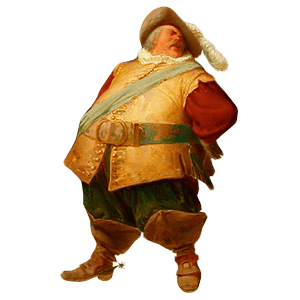
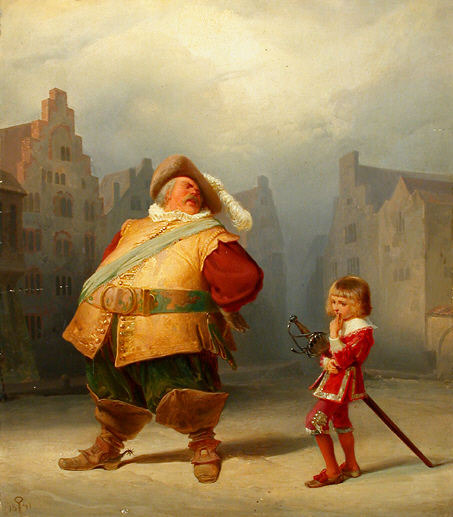
Sir John Falstaff is a fictional character who appears in three plays by William Shakespeare as a companion to Prince Hal, the future King Henry V. A fat, vainglorious, and cowardly knight, Falstaff leads the apparently wayward Prince Hal into trouble, and is ultimately repudiated after Hal becomes king. To describe someone as falstaffian is to say they are characterized by joviality and conviviality.
Posted in Art, Humor, Language |
Leave a Comment »
August 1, 2010
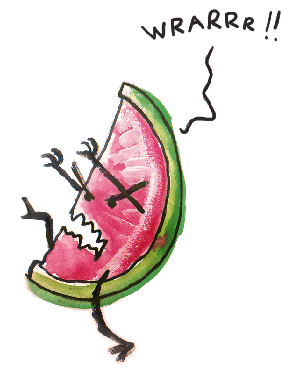
Vampire pumpkins and watermelons are a folk legend from the Balkans. The story is associated with the Roma people of the region, from whom much of traditional vampire folklore originate. The belief in vampire fruit is similar to the belief that any inanimate object left outside during the night of a full moon will become a vampire. According to tradition, watermelons or any kind of pumpkin kept more than ten days or after Christmas will become a vampire, rolling around on the ground and growling to pester the living. People have little fear of the vampire pumpkins and melons because of the creatures’ lack of teeth.
Posted in Food, Humor, Philosophy |
Leave a Comment »
July 20, 2010
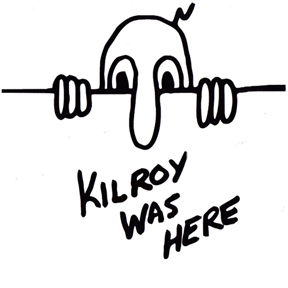
‘Kilroy was here‘ is an American popular culture expression, often seen in graffiti. Its origins are debated, but the phrase and the distinctive accompanying doodle — a bald man with his nose and fingers peeking over a wall – is widely known among U.S. residents who lived during World War II. The British equivalent of Kilroy is called ‘Mr. Chad,’ and the Australian equivalent is called ‘Foo.’ It is not certain which variation appeared first.
Posted in Art, Humor |
Leave a Comment »
July 17, 2010

A nutmeg (or tunnel) is a technique used in football or field hockey, in which a player plays the ball through an opponent’s legs. This can be whilst passing to another player, shooting or occasionally to carry on and retrieve it himself. However it is well accepted that the classic nutmeg involves retrieving the ball oneself after passing the ball through the opponent’s legs, ideally calling ‘nuts’ or ‘megs’ whilst doing so.
The usage may have arisen because of a sharp practice used in nutmeg exports between America and England. Unscrupulous exporters mixed wooden replicas into the sacks being shipped to England. Being nutmegged soon came to imply stupidity on the part of the duped victim and cleverness on the part of the trickster. Panna is a two person soccer game where opponents attempt to meg each other that is popular in the Netherlands.
Posted in Games, Humor |
Leave a Comment »