September 24, 2010

In its original sense, a shaggy dog story is an extremely long-winded tale featuring extensive narration of typically irrelevant incidents, usually resulting in a pointless or absurd punchline. These stories are a special case of yarns, coming from the long tradition of campfire yarns. Shaggy dog stories play upon the audience’s preconceptions of the art of joke telling. The audience listens to the story with certain expectations, which are either simply not met or met in some entirely unexpected manner.
A boy owned a dog that was uncommonly shaggy. Many people remarked upon its considerable shagginess. When the boy learned that there are contests for shaggy dogs, he entered his dog. The dog won first prize for shagginess in both the local and the regional competitions. The boy entered the dog in ever-larger contests, until finally he entered it in the world championship for shaggy dogs. When the judges had inspected all of the competing dogs, they remarked about the boy’s dog: ‘He’s not so shaggy.’
Posted in Art, Humor |
Leave a Comment »
September 20, 2010
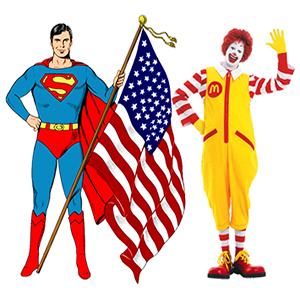
Nacirema [nak-uh-ree-ma] (American backwards) is a tongue-in-cheek reference to the people of the United States. Anthropologists and sociologists use the term to examine (with a degree of anthropological self-distancing) aspects of the behavior and society of American people.
The original use of the term was in ‘Body Ritual Among the Nacirema’, which satirizes anthropological papers on ‘other’ cultures, and the Northern American Culture. Horace Miner wrote the paper and originally published it in the June 1956 edition of American Anthropologist.
Posted in Humor, World |
Leave a Comment »
September 20, 2010
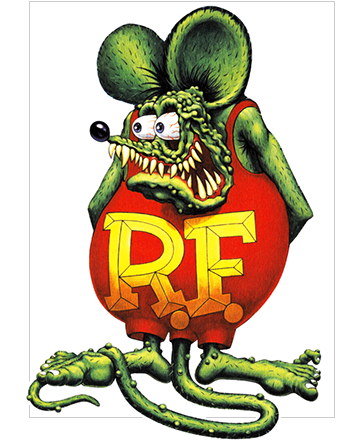
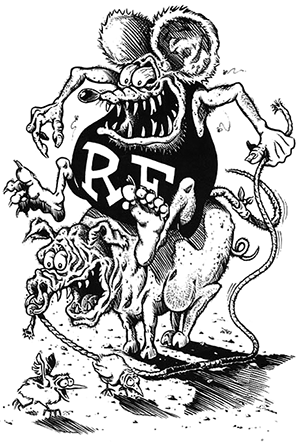
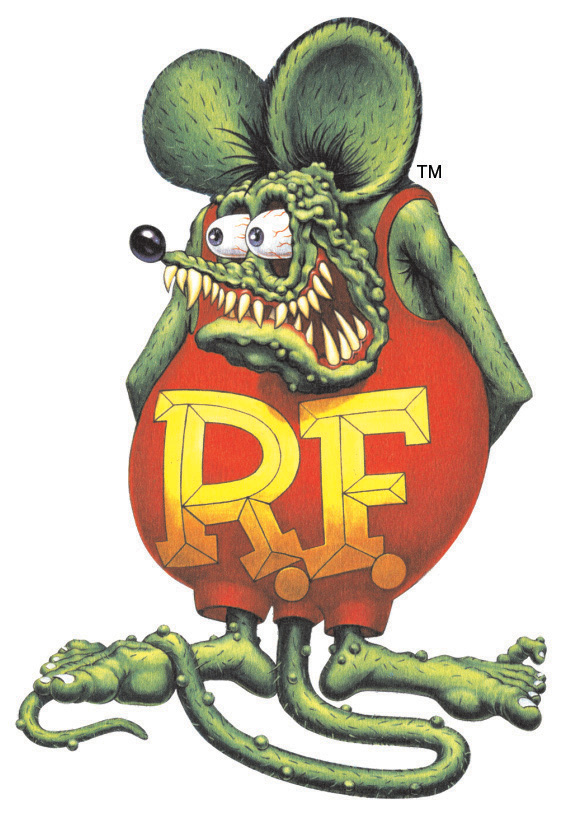
Rat Fink is one of the several hot-rod characters created by artist Ed ‘Big Daddy’ Roth. Roth’s hatred for Mickey Mouse led him to draw the original Rat Fink, who came to symbolize the hot-rod and ‘Kustom Kulture’ scene of the 1950s and 1960s. Although Detroit native Stanley Mouse is credited with creating the so-called ‘Monster Hot Rod’ art form, Roth is accepted as the individual who popularized it. The Rat Fink is a green, depraved-looking mouse with bulging, bloodshot eyes, an oversized mouth with yellowed, narrow teeth, and a red T-shirt with yellow ‘R.F.’ on it. Other artists associated with Roth also drew the character, including Steve Fiorilla, who illustrated Roth’s catalogs.
A Rat Fink revival in the late 1980s and the 1990s centered around the West Coast grunge/punk rock movements. The term ‘fink’ was originally underworld slang for an informer, comparable to ‘stool pigeon.’ It is also thought to have been a toned-down form of ‘ratfucking,’ a slang term for playing dirty tricks.
Posted in Art, Humor |
Leave a Comment »
September 20, 2010
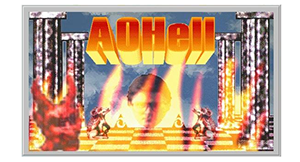

AOHell was a program that modified early versions of America Online. It included a fake account generator, social engineering (or phishing) tools, and email, IM, and chatroom automation. Released in 1994 by a hacker known as ‘Da Chronic,’ AOHell provided a number of utilities which ran on top of the America Online client software. Upon loading, the program played a short clip from Dr. Dre’s 1993 song ‘Nuthin’ but a ‘G’ Thang.’ It was the first program of its kind, and spawned a large number of copycats. Over a period of 10 years, more than 1000 programs would be released for various versions of AOL.
In the manual, the creator of AOHell claims that he created the program because the AOL administrators would frequently shut down hacker and pirate chatrooms for violation of AOL’s terms of service while refusing to shut down the pedophilia chat rooms which regularly traded child pornography. Da Chronic claimed when he confronted AOL about it, he was met with an account deletion. His goal was,'[To have] 20,000+ idiots using AOHell to knock people offline, steal passwords and credit card information, and to basically annoy the hell out of everyone.’
Posted in Humor, Technology |
Leave a Comment »
September 17, 2010


Mars Blackmon was a fictional character from the 1986 film ‘She’s Gotta Have It.’ He is also the alter-ego of filmmaker Spike Lee. In the film, he was a ‘Brooklyn-loving,’ die-hard New York Knicks fan. During the late 1980s and early 1990s, Blackmon became the primary pitchman in Nike commercials for Air Jordans, the basketball shoes worn by Michael Jordan. In these commercials, Mars Blackmon popularized the phrases ‘Is it the Shoes? Is it the Shoes? Is it the Shoes? … Money, it’s gotta be the shoes.’
Posted in Games, Humor, Money |
Leave a Comment »
September 13, 2010

An announcer’s test is a test sometimes given to those wanting to be a radio or television announcer. The tests usually involve retention, memory, repetition, enunciation, diction, and using every letter in the alphabet a variety of times. One of the more well known announcer’s tests originated at Radio Central New York in the early 1940s as a cold reading test given to prospective radio talent to demonstrate their speaking ability.
There are many variants, but most begin thusly: One hen. One hen, two ducks. One hen, two ducks, three squawking geese. One hen, two ducks, three squawking geese, four limerick oysters… and so on.
Posted in Humor, Money |
1 Comment »
September 13, 2010
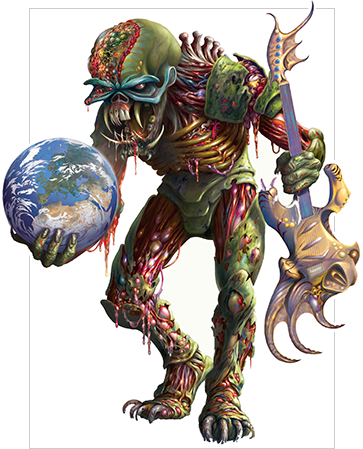

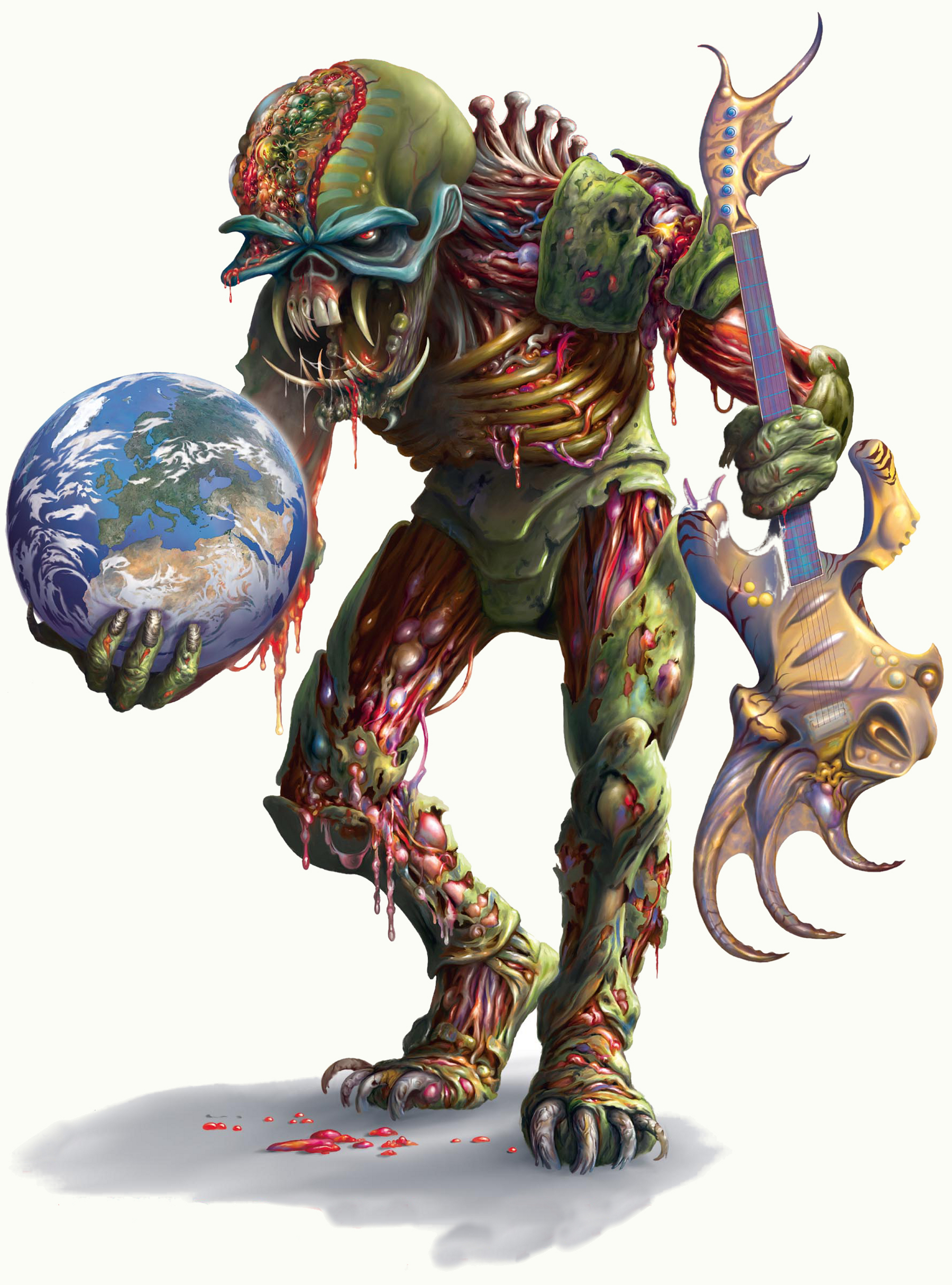
Eddie the Head is the mascot for the British heavy metal band Iron Maiden. He is a perennial fixture in the album cover art, as well as ever present in their live shows.The character was created by artist Derek Riggs. Riggs claimed that the design was based on a Japanese head he saw on a television documentary, hanging on the side of a burned out tank at the Matanikau River during the Battle for Henderson Field, October 24, 1942. The original Eddie was just a theatrical mask. It was connected to a pump that would eject various kinds of liquids, from food dye to paint, and would drool over Doug Sampson who was the drummer at the time.
The name originates from an old joke: Eddie the head was born with no body, no arms, and no legs. All he had was a head. But despite this major birth defect, his parents still loved him very much. So on his sixteenth birthday, his parents found a doctor that could surgically give Eddie a body. When the parents got home, they couldn’t wait to tell him that he could finally have a body and be like other normal people. When Eddie got there, they were really excited and said, ‘Have we got a surprise for you. It’s the best present ever!’ And Eddie said, ‘Oh no, not another f*****’ hat!’
Posted in Art, Humor |
Leave a Comment »
September 12, 2010
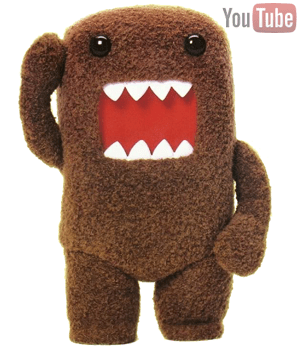

Domo Kun is the official mascot of NHK television station, appearing in several 30 second stop-motion interstitial sketches shown as station identification during shows. NHK is Japan’s national public broadcasting organization. The name ‘Domo’ was acquired during the second episode of his show in which a TV announcer said, ‘dōmo, konnichiwa,’ which is a greeting meaning something along the lines of, ‘Well, hello there!” but which can also be interpreted as ‘Hello, Domo!’ The suffix ‘kun’ is a Japanese honorific often used with young males.
Posted in Art, Humor, World |
Leave a Comment »
September 10, 2010

The Streisand effect is a phenomenon in which an attempt to censor or remove a piece of information has the unintended consequence of causing the information to be publicized widely and to a greater extent than would have occurred if no censorship had been attempted. It is named after American entertainer Barbra Streisand, following a 2003 incident in which her attempts to suppress photographs of her residence inadvertently generated further publicity.
Posted in Humor, Language |
Leave a Comment »
September 1, 2010
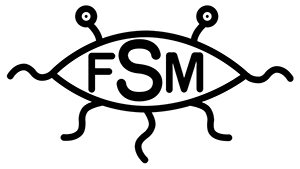

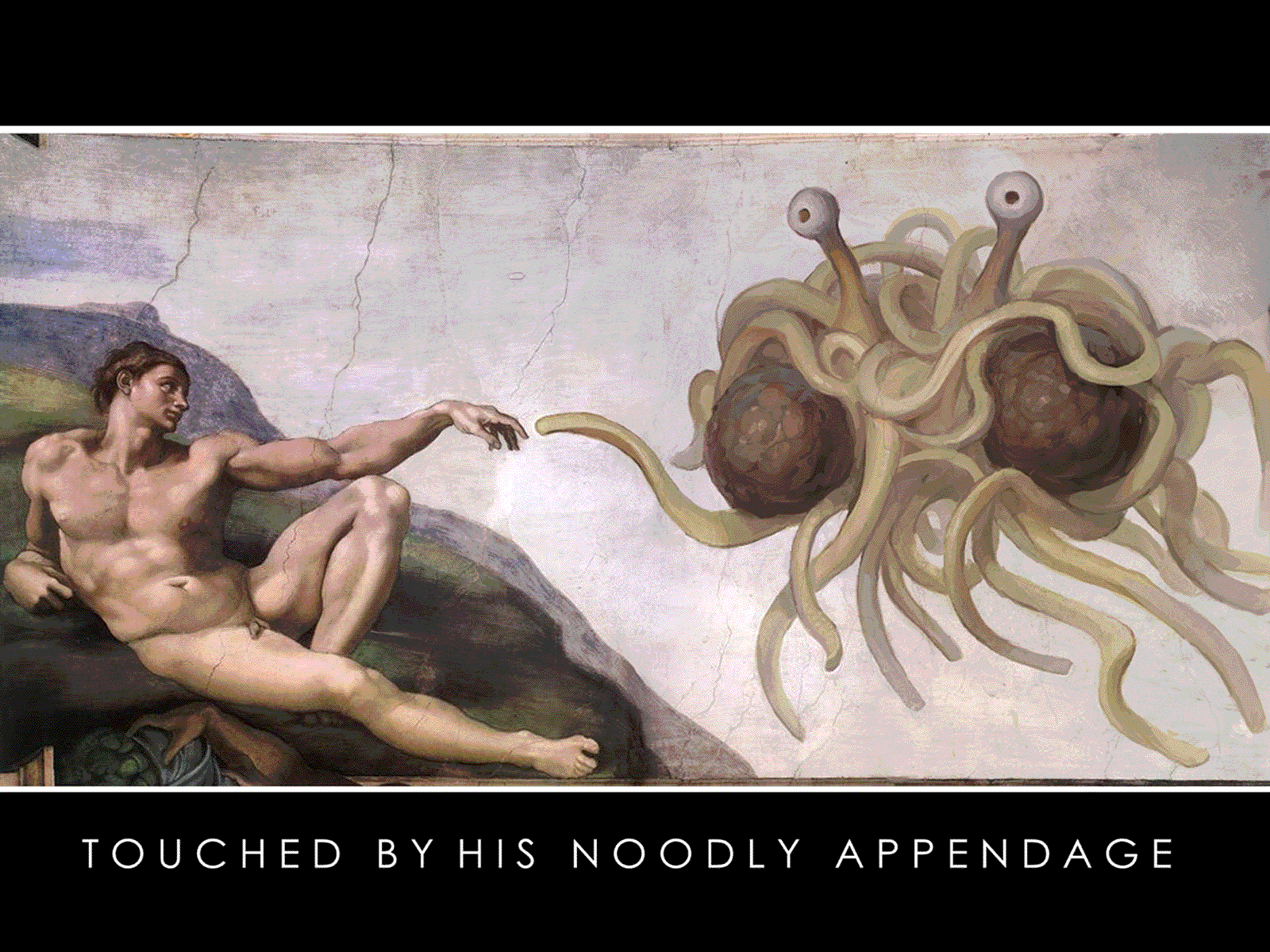
The Flying Spaghetti Monster (FSM) is the deity of the parody religion the Church of the Flying Spaghetti Monster or Pastafarianism, a satirical movement that promotes a light-hearted view of religion and opposes the teaching of intelligent design and creationism in public schools. Created in 2005 by Oregon State physics graduate Bobby Henderson, it was originally intended as a satirical protest against the decision by the Kansas State Board of Education to permit the teaching of intelligent design as an alternative to evolution in public schools. In an open letter, Henderson parodied the concept of intelligent design by professing belief in a supernatural creator which closely resembles spaghetti and meatballs. Henderson further called for his theory of creation to be allotted equal time in science classrooms alongside intelligent design and evolution.
In his letter he wrote, ‘I think we can all look forward to the time when these three theories are given equal time in our science classrooms across the country, and eventually the world; one third time for Intelligent Design, one third time for Flying Spaghetti Monsterism, and one third time for logical conjecture based on overwhelming observable evidence.’
read more »
Posted in Education, Humor, Philosophy |
1 Comment »
September 1, 2010
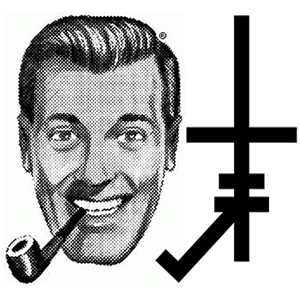
The Church of the SubGenius is a religious organization often seen as a ‘parody religion,’ that satirizes religion, conspiracy theories, Ufology, and popular culture. Originally based in Dallas, Texas, the Church of the SubGenius gained prominence in the 1980s and 1990s subculture and maintains an active presence on the Internet. In 1996 the legal entity SubGenius Foundation was incorporated in Cleveland, Ohio. The Foundation’s president and founder is Ivan Stang. It’s mascot is ‘world’s greatest salesman’ J. R. ‘Bob’ Dobbs. ‘Bob’ is depicted as a cartoon of a Ward Cleaver-like man smoking a pipe. It’s symbol is the ‘Dobb’s Mark,’ a stylized cross with three bars and a pipe, placed in a pattern that matches the eyes, nose, mouth, and pipe of ‘Bob’s’ image.
The central belief in the Church is the pursuit of ‘Slack,’ which generally stands for the sense of freedom, independence, and original thinking that comes when you stop worrying about personal goals. In essence, slack is about finding satisfaction with what you have and who you are, as opposed for searching for satisfaction in accomplishment.
Posted in Humor, Philosophy |
1 Comment »
August 25, 2010


Xenu [zee-noo] was, according to the founder of Scientology and science fiction writer L. Ron Hubbard, the dictator of the ‘Galactic Confederacy’ who, 75 million years ago, brought billions of his people to Earth in a DC-8-like spacecraft, stacked them around volcanoes and killed them using hydrogen bombs. Official Scientology dogma holds that the essences of these many people remained, and that they form around people in modern times, causing them spiritual harm.
Posted in Humor, Philosophy |
Leave a Comment »