February 28, 2011
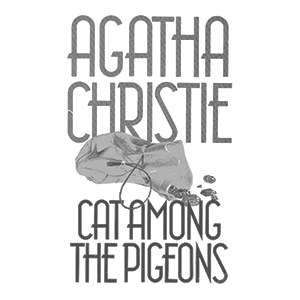
A red herring is a literary tactic of diverting attention away from an item of significance. For example, in mystery fiction, where the identity of a criminal is being sought, an innocent party may be purposefully cast in a guilty light by the author through the employment of false emphasis, deceptive clues, ‘loaded’ words, or other descriptive tricks of the trade. The reader’s suspicions are thus misdirected, allowing the true culprit to go (temporarily at least) undetected. A false protagonist is another example of a red herring.
In a literal sense, there is no such fish species as a ‘red herring’; rather it refers to a particularly ‘strong kipper’ (a fish that has been strongly cured and smoked making it pungent smelling and reddish in color).
read more »
Posted in Art, Language |
Leave a Comment »
February 28, 2011


Chekhov’s gun is a literary technique whereby an element is introduced early in the story, but its significance does not become clear until later in the narrative. The concept is named after Russian playwright Anton Chekhov, who mentioned several variants of the concept in letters. Chekhov himself makes use of this principle in ‘Uncle Vanya,’ in which a pistol is introduced early on as a seemingly irrelevant prop and, towards the end of the play, becomes much more important as Uncle Vanya, in a rage, grabs it and tries to commit homicide.
The phrase ‘Chekhov’s gun’ is often interpreted as a method of foreshadowing, but the concept can also be interpreted as meaning ‘do not include any unnecessary elements in a story.’ Failure to observe the rule of ‘Chekhov’s gun’ may be cited by critics when discussing plot holes. The opposite of Chekhov’s gun is a ‘red herring,’ a plot device that’s designed to divert attention.
Posted in Art, Language |
Leave a Comment »
February 28, 2011


RTFM (‘read the fucking manual’) is a brusque way to remind others to try to help themselves in obvious ways before seeking assistance from others. Since the rise of the Web, pervasive internet connectivity, and ubiquitous search, a similar type of response has involved the idea that by asking questions that could easily be answered by even the most cursory, obvious search, the user embarrasses himself by showing that the very idea of searching before asking didn’t even occur to him.
The most common variants of this type are GIYF (‘Google is your friend’) and LMGTFY (‘let me google that for you’), both with a tone of patronizing helpfulness (with varying degrees of sarcasm).Often the responder will even insert a link into the reply that, when the user clicks it, will take them to a saved search query. The clear implication is that’you should know by now to do this yourself.’
Posted in Humor, Language, Technology |
Leave a Comment »
February 27, 2011


A MacGuffin is a plot element that catches the viewers’ attention or drives the plot of a work of fiction. The defining aspect of a MacGuffin is that the major players in the story are (at least initially) willing to do and sacrifice almost anything to obtain it, regardless of what the MacGuffin actually is. In fact, the specific nature of the MacGuffin may be ambiguous, undefined, generic, left open to interpretation or otherwise completely unimportant to the plot. Common examples are money, victory, glory, survival, a source of power, or a potential threat, or it may simply be something entirely unexplained.
The MacGuffin is common in films, especially thrillers. Usually, though not always, the MacGuffin is the central focus of the film in the first act, and then declines in importance as the struggles and motivations of characters play out. It may come back into play at the climax of the story, but sometimes the MacGuffin is actually forgotten by the end of the film. The director and producer Alfred Hitchcock popularized both the term and the technique, with his 1935 film ‘The 39 Steps,’ an early example of the concept.
Posted in Art, Language |
Leave a Comment »
February 27, 2011

Mono no aware (literally ‘the pathos of things’), also translated as ‘an empathy toward things,’ or ‘a sensitivity of ephemera,’ is a Japanese term used to describe the awareness of ‘mujo’ or the transience of things and a gentle sadness (or wistfulness) at their passing. The term was coined in the eighteenth century by the Edo period Japanese cultural scholar Motoori Norinaga, and was originally a concept used in his literary criticism of ‘The Tale of Genji,’ and later applied to other seminal Japanese works including the ‘Man’yōshū,’ becoming central to his philosophy of literature, and eventually to Japanese cultural tradition.
The word is derived from the Japanese word ‘mono’ (lit. ‘things’) and ‘aware,’ which was a Heian period expression of measured surprise (similar to ‘ah’ or ‘oh’), translating roughly as ‘pathos,’ ‘poignancy,’ ‘deep feeling,’ or ‘sensitivity.’ Thus, mono no aware has frequently been translated as “the ‘ahh-ness’ of things,” life and love. The quintessentially ‘Japanese’ director Yasujiro Ozu was well known for creating a sense of mono no aware, frequently climaxing with a character saying a very understated ‘ii tenki desu ne’ (‘It is fine weather, isn’t it?’), after both a familial and societal paradigm shift, such as daughter being married off, against the backdrop of a swiftly changing Japan.
Posted in Art, Language, World |
Leave a Comment »
February 27, 2011

Saudade is a Portuguese word difficult to translate adequately, which describes a deep emotional state of nostalgic longing for something or someone that one was fond of and which is lost. It often carries a fatalist tone and a repressed knowledge that the object of longing might really never return. Saudade has been described as a ‘vague and constant desire for something that does not and probably cannot exist … a turning towards the past or towards the future.’ A stronger form of saudade may be felt towards people and things whose whereabouts are unknown, such as a lost lover, or a family member who has gone missing.
It may also be translated as a deep longing or yearning for something which does not exist or is unattainable. Saudade was once described as ‘the love that remains’ or ‘the love that stays’ after someone is gone. Saudade is the recollection of feelings, experiences, places or events that once brought excitement, pleasure, well-being, which now triggers the senses and makes one live again.
Posted in Art, Language, World |
Leave a Comment »
February 27, 2011

Sehnsucht is a German noun translated as ‘longing,’ ‘yearning’ and ‘craving,’ or in a wider sense a type of ‘intensely missing.’ The word is almost impossible to translate adequately and describes a deep emotional state. Its meaning is somewhat similar to the Portuguese word, ‘saudade.’ The stage director and author Georg Tabori called Sehnsucht one of those quasi-mystical terms in German for which there is no satisfactory corresponding term in another language.
The term is a compound word, originating from an ardent longing or yearning (‘das Sehnen’) and addiction (‘die Sucht’). However, these words do not adequately encapsulate the full meaning of their resulting compound, even when considered together.
read more »
Posted in Language, Philosophy, World |
Leave a Comment »
February 27, 2011

A third-culture kid (TCK) is someone who, as a child, has spent a significant period of time in one or more culture(s) other than his or her own, thus integrating elements of those cultures and their own birth culture, into a third culture. TCKs tend to have more in common with one another, regardless of nationality, than they do with non-TCKs from their passport country. TCKs are often multilingual and highly accepting of other cultures. Although moving between countries may become an easy thing for some TCKs, after a childhood spent in other cultures, adjusting to their passport country often takes years.
Before World War II, 66% of TCKs came from missionary families, and 16% came from business families. After World War II, with the increase of international business and the rise of two international superpowers, the composition of international families changed. Sponsors are generally broken down into five categories: missionary (17%), business (16%), government (23%), military (30%), and “other” (14%). Some TCK families migrate for work independently of any organization based in their country of origin.
Posted in Language, Politics, World |
Leave a Comment »
February 27, 2011
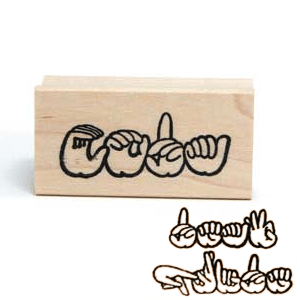
A child of a deaf adult, often known by the acronym CODA, is a person who was raised by a deaf parent or guardian. Many CODAs identify with both deaf and hearing cultures. The organization CODA (Children of Deaf Adults) was established in 1983 for hearing children of deaf adults in the United States. CODA began hosting annual conferences in 1986, in Fremont, California. The conferences have grown, taking on an international status with attendees hailing from worldwide.
Posted in Health, Language, Politics |
Leave a Comment »
February 27, 2011

In business, economics or investment, market liquidity is an asset’s ability to be sold without causing a significant movement in the price and with minimum loss of value. Money, or cash in hand, is the most liquid asset, and can be used immediately to perform economic actions like buying, selling, or paying debt, meeting immediate wants and needs. An act of exchange of a less liquid asset with a more liquid asset is called liquidation. Liquidity also refers both to a business’s ability to meet its payment obligations, in terms of possessing sufficient liquid assets, and to such assets themselves.
Posted in Language, Money |
Leave a Comment »
February 24, 2011

Gadsby: A Story of Over 50,000 Words Without Using the Letter ‘E’ is a 1939 novel by Ernest Vincent Wright. The plot revolves around the dying fictional city of Branton Hills, which is revitalized thanks to the efforts of protagonist John Gadsby and a youth group he organizes. The novel is written as a lipogram: a constrained writing or word game consisting of writing paragraphs or longer works in which a particular letter or group of letters is avoided. Though self-published and little-noticed in its time, the book is a favorite of fans of constrained writing and is a sought-after rarity among some book collectors.
Posted in Art, Language |
Leave a Comment »
February 24, 2011
Retroactive continuity (often shortened to retcon) refers to the alteration of previously established facts in a literary work. Retcons may be carried out for a variety of reasons, such as to accommodate sequels or further derivative works in the same series, to reintroduce popular characters, to resolve chronological issues, to reboot a familiar series for modern audiences, or to simplify an excessively complex continuity structure.
Retcons are common in pulp fiction, especially comic books published by long-established houses such as DC, Marvel and leading manga publishers. The long history of popular titles and the plurality of writers who contribute stories can often create situations that demand clarification or revision of exposition. Retcons appear as well in soap operas, serial drama, movie sequels, professional wrestling, video games, radio series, and other kinds of serial fiction.
Posted in Art, Language |
Leave a Comment »



