March 2, 2011


ASCII art is a graphic design technique that uses computers for presentation and consists of pictures pieced together from the 95 printable (from a total of 128) characters of the ASCII compliant character sets. The term is also loosely used to refer to text based art in general. ASCII art can be created with any text editor, and is often used with free-form languages. Most examples of ASCII art require a fixed-width font (non-proportional fonts, as on a traditional typewriter) such as Courier for presentation.
Among the oldest known examples of ASCII art are the creations by computer-art pioneer Kenneth Knowlton from around 1966, who was working for Bell Labs at the time. One of the main reasons ASCII art was born was because early printers often lacked graphics ability and thus characters were used in place of graphic marks. Also, to mark divisions between different print jobs from different users, bulk printers often used ASCII art to print large banners, making the division easier to spot so that the results could be more easily separated by a computer operator or clerk. ASCII art was also used in early e-mail when images could not be embedded.
Posted in Art, Language, Technology |
Leave a Comment »
March 2, 2011

Al Jazeera (literally, ‘The Island,’ referring to the Arabian Peninsula) is an international news network headquartered in Doha, Qatar. Initially launched as an Arabic news and current affairs satellite TV channel with the same name, Al Jazeera has since expanded into a network with several outlets, including the Internet and specialty TV channels in multiple languages. The original Al Jazeera channel’s willingness to broadcast dissenting views, for example on call-in shows, created controversies in the Arab states of the Persian Gulf. The station gained worldwide attention following the September 11, 2001 attacks, when it was the only channel to cover the war in Afghanistan live from its office there.
The original Al Jazeera channel was started in 1996 by an emiri decree with a loan of 500 million Qatari riyals (US$137 million) from the Emir of Qatar, Sheikh Hamad bin Khalifa. By its funding through loans or grants rather than direct government subsidies, the channel claims to maintain independent editorial policy. Much of the staff came from the BBC World Service’s Saudi-co-owned Arabic language TV station, which had shut down after two years of operation because of censorship demands by the Saudi Arabian government.
Posted in Language, Money, Politics |
Leave a Comment »
March 2, 2011

Rendezvous with Rama is a novel by Arthur C. Clarke first published in 1972. Set in the 22nd century, the story involves a fifty-kilometre-long cylindrical alien starship that enters Earth’s solar system. The story is told from the point of view of a group of human explorers, who intercept the ship in an attempt to unlock its mysteries. It is considered a science fiction classic, and is particularly seen as a key hard science fiction text.
The ‘Rama’ of the title is the alien star ship, initially mistaken for an asteroid and named after the king Rama who is considered to be the seventh avatar of the Hindu god Vishnu (Clarke mentions that by the 22nd century, scientists have used the names of all the Greek and Roman mythological figures to name astronomical bodies, and have thus moved on to Hindu mythology).
Posted in Art, Language, Technology |
Leave a Comment »
March 2, 2011

News Corporation is the world’s third-largest media conglomerate (behind The Walt Disney Company and Time Warner). The company’s Chairman & Chief Executive Officer is Rupert Murdoch. News Corp was created in 1979 by Murdoch as a holding company for News Limited (which he inherited in 1952 following the death of his father, Sir Keith Murdoch). The main asset left to him was ownership of the Adelaide afternoon tabloid, The News.
News Ltd. made its first acquisition in the United States in 1973, when it purchased the San Antonio Express-News. Soon afterwards it founded the National Star, a supermarket tabloid, and in 1976 it purchased the New York Post. In 1981 News Corp bought half of the movie studio 20th Century Fox, buying the other half in 1984. In 1996, Fox established the Fox News Channel, a 24-hour cable news station to compete against Ted Turner’s rival channel CNN. In 2007 News Corporation reached an agreement to purchase Dow Jones, publishers of The Wall Street Journal, for an estimated $5.6 billion.
Posted in Language, Money |
Leave a Comment »
March 1, 2011
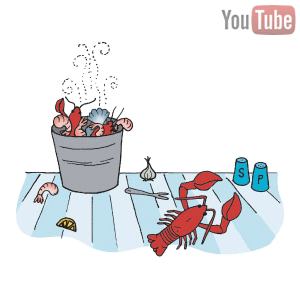
Seafood boil is the generic term for any number of different kinds of social events in which shellfish is the central element. Regional variations dictate the kinds of seafood, the accompaniments and side dishes, and the preparation techniques (boiling, steaming, baking, or raw). In some cases, a boil may be sponsored by a community organization as a fundraiser or a mixer. In this way, they are like a fish fry, barbecue, or church potluck supper.
But boils are also held by individuals for their friends and family for weekend get-togethers and on the summer holidays of Memorial Day and the Fourth of July. There are also companies that can cater a boil for large and small events. While boils and bakes are traditionally associated with coastal regions of the United States, there are notable exceptions. For example, the Fiesta Oyster Bake (San Antonio) began in 1916 as an alumni fund raiser for St. Mary’s University. It is now attended by over 70,000 people during its two day run and is a major music and cultural event in the city.
Posted in Food, Language |
Leave a Comment »
March 1, 2011

Ubuntu [ooh-boon-too] is an ethic or humanist philosophy focusing on people’s allegiances and relations with each other. The word has its origin in the Bantu languages of southern Africa. Ubuntu is seen as a classical African concept. Ubuntu translates to, ‘I am what I am because of who we all are.’
Posted in Language, Philosophy, World |
Leave a Comment »
March 1, 2011

The Nation is the oldest continuously published weekly magazine in the US. The periodical, devoted to politics and culture, is self-described as ‘the flagship of the left.’ Founded on July 6, 1865, It is published by The Nation Company, L.P., at 33 Irving Place, New York City. It has bureaus in Washington, D.C., London, and South Africa, with departments covering Architecture, Art, Corporations, Defense, Environment, Films, Legal Affairs, Music, Peace and Disarmament, Poetry, and the UN. The publisher and editor is Katrina vanden Heuvel.
According to its founding prospectus of 1865, ‘The Nation will not be the organ of any party, sect, or body. It will, on the contrary, make an earnest effort to bring to the discussion of political and social questions a really critical spirit, and to wage war upon the vices of violence, exaggeration and misrepresentation by which so much of the political writing of the day is marred.’ Notable contributors have included Albert Einstein, Martin Luther King Jr., Bertrand Russell, Hunter S. Thompson, Leon Trotsky, George Orwell, Franklin D. Roosevelt, John Steinbeck, Kurt Vonnegut, Robert Frost, Frank Lloyd Wright, Jean-Paul Sartre, and John Maynard Keynes.
Posted in Language, Money, Politics |
Leave a Comment »
March 1, 2011

The Weekly Standard is an American neoconservative opinion magazine published semi-weekly since 1995 by News Corporation. Currently edited by founder William Kristol and Fred Barnes, the Standard has been described as a ‘redoubt of neoconservatism’ and as ‘the neo-con bible.’
Many of the magazine’s articles are written by members of conservative think tanks located in Washington, D.C.: the American Enterprise Institute, the Ethics and Public Policy Center, the Foundation for Defense of Democracies, and the Hudson Institute. The magazine’s website blog, titled the ‘Daily Standard,’ is edited by John McCormack and Daniel Halper and produces daily articles and commentary.
Posted in Language, Money, Politics |
Leave a Comment »
February 28, 2011
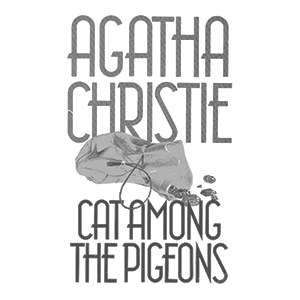
A red herring is a literary tactic of diverting attention away from an item of significance. For example, in mystery fiction, where the identity of a criminal is being sought, an innocent party may be purposefully cast in a guilty light by the author through the employment of false emphasis, deceptive clues, ‘loaded’ words, or other descriptive tricks of the trade. The reader’s suspicions are thus misdirected, allowing the true culprit to go (temporarily at least) undetected. A false protagonist is another example of a red herring.
In a literal sense, there is no such fish species as a ‘red herring’; rather it refers to a particularly ‘strong kipper’ (a fish that has been strongly cured and smoked making it pungent smelling and reddish in color).
read more »
Posted in Art, Language |
Leave a Comment »
February 28, 2011


Chekhov’s gun is a literary technique whereby an element is introduced early in the story, but its significance does not become clear until later in the narrative. The concept is named after Russian playwright Anton Chekhov, who mentioned several variants of the concept in letters. Chekhov himself makes use of this principle in ‘Uncle Vanya,’ in which a pistol is introduced early on as a seemingly irrelevant prop and, towards the end of the play, becomes much more important as Uncle Vanya, in a rage, grabs it and tries to commit homicide.
The phrase ‘Chekhov’s gun’ is often interpreted as a method of foreshadowing, but the concept can also be interpreted as meaning ‘do not include any unnecessary elements in a story.’ Failure to observe the rule of ‘Chekhov’s gun’ may be cited by critics when discussing plot holes. The opposite of Chekhov’s gun is a ‘red herring,’ a plot device that’s designed to divert attention.
Posted in Art, Language |
Leave a Comment »
February 28, 2011


RTFM (‘read the fucking manual’) is a brusque way to remind others to try to help themselves in obvious ways before seeking assistance from others. Since the rise of the Web, pervasive internet connectivity, and ubiquitous search, a similar type of response has involved the idea that by asking questions that could easily be answered by even the most cursory, obvious search, the user embarrasses himself by showing that the very idea of searching before asking didn’t even occur to him.
The most common variants of this type are GIYF (‘Google is your friend’) and LMGTFY (‘let me google that for you’), both with a tone of patronizing helpfulness (with varying degrees of sarcasm).Often the responder will even insert a link into the reply that, when the user clicks it, will take them to a saved search query. The clear implication is that’you should know by now to do this yourself.’
Posted in Humor, Language, Technology |
Leave a Comment »
February 27, 2011


A MacGuffin is a plot element that catches the viewers’ attention or drives the plot of a work of fiction. The defining aspect of a MacGuffin is that the major players in the story are (at least initially) willing to do and sacrifice almost anything to obtain it, regardless of what the MacGuffin actually is. In fact, the specific nature of the MacGuffin may be ambiguous, undefined, generic, left open to interpretation or otherwise completely unimportant to the plot. Common examples are money, victory, glory, survival, a source of power, or a potential threat, or it may simply be something entirely unexplained.
The MacGuffin is common in films, especially thrillers. Usually, though not always, the MacGuffin is the central focus of the film in the first act, and then declines in importance as the struggles and motivations of characters play out. It may come back into play at the climax of the story, but sometimes the MacGuffin is actually forgotten by the end of the film. The director and producer Alfred Hitchcock popularized both the term and the technique, with his 1935 film ‘The 39 Steps,’ an early example of the concept.
Posted in Art, Language |
Leave a Comment »




 The Daily Omnivore