February 20, 2011

‘Bread and Circuses‘ (Latin: panem et circenses) is a metaphor for a superficial means of appeasement. In the case of politics, the phrase is used to describe the creation of public approval, not through exemplary or excellent public service or public policy, but through the mere satisfaction of the immediate, shallow requirements of a populace. The phrase also implies the erosion or ignorance of civic duty amongst the concerns of the common man (l’homme moyen sensuel).
In modern usage, the phrase has become an adjective to deride a populace that no longer values civic virtues and the public life. To many across the political spectrum, left and right, it connotes the triviality and frivolity that in popular culture is supposed to have characterized the Roman Empire prior to its decline.
Posted in Language, Money, Politics |
Leave a Comment »
February 17, 2011
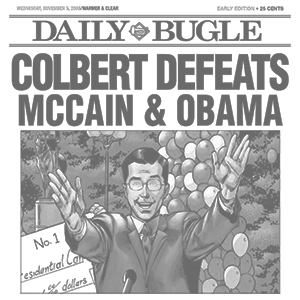
Satire is a literary genre where vices, follies, abuses, and shortcomings are held up to ridicule, ideally with the intent of shaming individuals, and society itself, into improvement. Although satire is usually meant to be funny, its greater purpose is often constructive social criticism, using wit as a weapon.
A common feature of satire is strong irony or sarcasm, but parody, burlesque, exaggeration, juxtaposition, comparison, analogy, and double entendre are all frequently used in satirical speech and writing as well. Satire is not possible under dictatorships. It was not allowed, for example, in the Soviet Union. Anyone trying to make fun of Stalin would have been put to death immediately.
Posted in Humor, Language, Politics |
Leave a Comment »
February 17, 2011
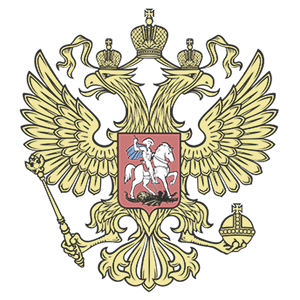
The Droste [dro-st] effect is a specific kind of recursive picture, one that in heraldry is termed ‘mise en abyme’ (French for ‘placing into infinity’). An image exhibiting the Droste effect depicts a smaller version of itself in a place where a similar picture would realistically be expected to appear. This smaller version then depicts an even smaller version of itself in the same place, and so on. Only in theory could this go on forever; practically, it continues only as long as the resolution of the picture allows, which is relatively short, since each iteration geometrically reduces the picture’s size.
The effect is named after the image on the tins and boxes of Droste cocoa powder, one of the main Dutch brands, which displayed a nurse carrying a serving tray with a cup of hot chocolate and a box with the same image. This image, introduced in 1904 and maintained for decades with slight variations, became a household notion.
Posted in Art, Language, Science |
Leave a Comment »
February 17, 2011

Dualism is the idea or theory that something (an object, an idea or the whole world) is split into two parts. These parts are separate from each other and the thing cannot be divided up into any other way. The idea or theory that something cannot be split into any parts is called monism. The idea that something can be split into many parts is called pluralism.
read more »
Posted in Language, Philosophy |
Leave a Comment »
February 16, 2011


Stuckism is an international art movement that was founded in 1999 by Billy Childish and Charles Thomson to promote figurative painting in opposition to conceptual art. The charter group of thirteen British artists has since expanded, as of January 2011, to 209 groups in 48 countries. Although painting is the dominant artistic form of Stuckism, artists using other media such as photography, sculpture, film and collage have also joined, and share the Stuckist opposition to conceptualism.
The name ‘Stuckism’ was coined in January 1999 by Charles Thomson in response to a poem recited to him several times by Billy Childish, who records in it that his former girlfriend, Tracey Emin had said he was “stuck! stuck! stuck!” with his art, poetry and music. Later that month, Thomson approached Childish with a view to co-founding an art group called Stuckism.
Posted in Art, Language |
Leave a Comment »
February 16, 2011

A wildcat strike is a strike action taken by workers without the authorization of their trade union officials. This is sometimes termed unofficial industrial action. Wildcat strikes were the key fighting strategy during the events of May 1968 in France, during which the country saw its largest general strike, resulting in the economy coming to a virtual standstill.
The strike involved eleven million workers for a continuous two weeks, and its impact was such that it almost caused the collapse of President Charles de Gaulle’s government. Groups revolted against modern consumer and technical society and embraced left-wing positions that were critical of authoritarianism and Western capitalism.
Posted in Language, Money, Politics |
Leave a Comment »
February 16, 2011

Anti-art is a loosely-used term applied to an array of concepts and attitudes that reject prior definitions of art and question art in general. The term is associated with the Dada movement and is generally accepted as attributable to Marcel Duchamp pre-World War I, when he began to use found objects as art. Anti-art has become generally accepted by fine art collectors, although some still reject Duchamp’s readymades as art, for instance the Stuckist group of artists who are ‘anti-anti-art.’
Posted in Art, Language, Politics |
Leave a Comment »
February 14, 2011

The New Wave (French: La Nouvelle Vague) was a term coined by critics for a group of French filmmakers of the late 1950s and 1960s, influenced by Italian Neorealism (a style of film characterized by stories set amongst the poor and working class) and classical Hollywood cinema. French New Wave was a product of the social and political upheavals of the era; radical experiments with editing, visual style and narrative broke with the conservative paradigm.
read more »
Posted in Art, Language, World |
Leave a Comment »
February 14, 2011

In popular music, a break is an instrumental or percussion section or interlude during a song derived from or related to stop-time – being a ‘break’ from the main parts of the song or piece. A solo break in jazz occurs when the rhythm section stops playing behind a soloist for a brief period, usually two or four bars leading into the soloist’s first chorus. In DJ parlance, a break is where all elements of a song (e.g., pads, basslines, vocals), except for percussion, disappear for a time. This is distinguished from a breakdown, a section where the composition is deliberately deconstructed to minimal elements (usually the percussion or rhythm section with the vocal re-introduced over the minimal backing), all other parts having been gradually or suddenly cut out.
In hip hop and electronica, a short break is also known as a ‘cut,’ and the reintroduction of the full bass line and drums is known as a ‘drop,’ which is sometimes accented by cutting off everything, even the percussion. A break beat is the sampling of breaks as drum loops (beats), originally from soul tracks, and using them as the rhythmic basis for hip hop and rap songs. It was invented by DJ Kool Herc. A particularly innovative style of street dance was created to accompany break beat-based music, and was hence referred to as ‘The Break,’ or break dancing.
Posted in Art, Language |
Leave a Comment »
February 14, 2011

Copernicus named his treatise on the movements of planets around the sun ‘On the Revolutions of Celestial Bodies’ in 1583 The word ‘Revolution‘ then passed from astronomy into vernacular speech; coming to represent abrupt change in the social order. Political usage of the word first appeared in 1688 in the young United Kingdom as a description of the replacement of James II with William III. The process was termed ‘The Glorious Revolution.’
Posted in Language, Politics, Science |
Leave a Comment »
February 14, 2011

Flaming, also known as bashing, is hostile and insulting interaction between Internet users. Flaming usually occurs in the social context of a Internet forum, Internet Relay Chat (IRC), Usenet, by e-mail, game servers such as Xbox Live or Playstation Network, and on video-sharing websites. It is frequently the result of the discussion of heated real-world issues such as politics, sports, religion, and philosophy, or of issues that polarise subpopulations, but can also be provoked by seemingly trivial differences. Deliberate flaming, as opposed to flaming as a result of emotional discussions, is carried out by individuals known as flamers, who are specifically motivated to incite flaming. These users specialize in flaming and target specific aspects of a controversial conversation, and are usually more subtle than their counterparts.
Their counterparts are known as trolls who write obvious and blunt remarks to incite a flame war, as opposed to the more subtle, yet precise flamers. Some websites even cater for flamers and trolls, by allowing them a free environment, such as Flame-Wars forum. Flamebait is a message posted to a public Internet discussion group, such as a forum, newsgroup or mailing list, with the intent of provoking an angry response (a ‘flame’) or argument over a topic the poster often has no real interest in. While flaming can occur as a result of legitimate debates or grievances, flamebait implies the intentional posting of inflammatory rhetoric or images.
Posted in Language, Technology |
Leave a Comment »
February 14, 2011
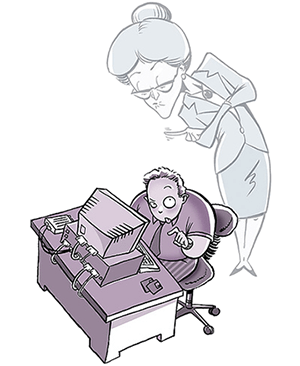
Netiquette is a set of social conventions that facilitate interaction over networks. The points most strongly emphasized about netiquette often include using simple electronic signatures, and avoiding multiposting, cross-posting, off-topic posting, hijacking a discussion thread, and other techniques used to minimize the effort required to read a post or a thread.
Netiquette guidelines posted by IBM for employees utilizing Second Life in an official capacity, however, focus on basic professionalism, amiable work environment, and protecting IBM’s intellectual property. Similarly, some guidelines call for use of unabbreviated English while users of online chat protocols like IRC and instant messaging protocols like SMS occasionally encourage just the opposite, bolstering use of SMS language. However, many other online communities frown upon this practice.
Posted in Language, Technology |
1 Comment »


 The Daily Omnivore