February 16, 2011

Anti-art is a loosely-used term applied to an array of concepts and attitudes that reject prior definitions of art and question art in general. The term is associated with the Dada movement and is generally accepted as attributable to Marcel Duchamp pre-World War I, when he began to use found objects as art. Anti-art has become generally accepted by fine art collectors, although some still reject Duchamp’s readymades as art, for instance the Stuckist group of artists who are ‘anti-anti-art.’
Posted in Art, Language, Politics |
Leave a Comment »
February 14, 2011

The New Wave (French: La Nouvelle Vague) was a term coined by critics for a group of French filmmakers of the late 1950s and 1960s, influenced by Italian Neorealism (a style of film characterized by stories set amongst the poor and working class) and classical Hollywood cinema. French New Wave was a product of the social and political upheavals of the era; radical experiments with editing, visual style and narrative broke with the conservative paradigm.
read more »
Posted in Art, Language, World |
Leave a Comment »
February 14, 2011

In popular music, a break is an instrumental or percussion section or interlude during a song derived from or related to stop-time – being a ‘break’ from the main parts of the song or piece. A solo break in jazz occurs when the rhythm section stops playing behind a soloist for a brief period, usually two or four bars leading into the soloist’s first chorus. In DJ parlance, a break is where all elements of a song (e.g., pads, basslines, vocals), except for percussion, disappear for a time. This is distinguished from a breakdown, a section where the composition is deliberately deconstructed to minimal elements (usually the percussion or rhythm section with the vocal re-introduced over the minimal backing), all other parts having been gradually or suddenly cut out.
In hip hop and electronica, a short break is also known as a ‘cut,’ and the reintroduction of the full bass line and drums is known as a ‘drop,’ which is sometimes accented by cutting off everything, even the percussion. A break beat is the sampling of breaks as drum loops (beats), originally from soul tracks, and using them as the rhythmic basis for hip hop and rap songs. It was invented by DJ Kool Herc. A particularly innovative style of street dance was created to accompany break beat-based music, and was hence referred to as ‘The Break,’ or break dancing.
Posted in Art, Language |
Leave a Comment »
February 14, 2011

Copernicus named his treatise on the movements of planets around the sun ‘On the Revolutions of Celestial Bodies’ in 1583 The word ‘Revolution‘ then passed from astronomy into vernacular speech; coming to represent abrupt change in the social order. Political usage of the word first appeared in 1688 in the young United Kingdom as a description of the replacement of James II with William III. The process was termed ‘The Glorious Revolution.’
Posted in Language, Politics, Science |
Leave a Comment »
February 14, 2011

Flaming, also known as bashing, is hostile and insulting interaction between Internet users. Flaming usually occurs in the social context of a Internet forum, Internet Relay Chat (IRC), Usenet, by e-mail, game servers such as Xbox Live or Playstation Network, and on video-sharing websites. It is frequently the result of the discussion of heated real-world issues such as politics, sports, religion, and philosophy, or of issues that polarise subpopulations, but can also be provoked by seemingly trivial differences. Deliberate flaming, as opposed to flaming as a result of emotional discussions, is carried out by individuals known as flamers, who are specifically motivated to incite flaming. These users specialize in flaming and target specific aspects of a controversial conversation, and are usually more subtle than their counterparts.
Their counterparts are known as trolls who write obvious and blunt remarks to incite a flame war, as opposed to the more subtle, yet precise flamers. Some websites even cater for flamers and trolls, by allowing them a free environment, such as Flame-Wars forum. Flamebait is a message posted to a public Internet discussion group, such as a forum, newsgroup or mailing list, with the intent of provoking an angry response (a ‘flame’) or argument over a topic the poster often has no real interest in. While flaming can occur as a result of legitimate debates or grievances, flamebait implies the intentional posting of inflammatory rhetoric or images.
Posted in Language, Technology |
Leave a Comment »
February 14, 2011
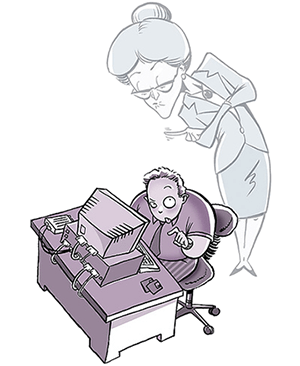
Netiquette is a set of social conventions that facilitate interaction over networks. The points most strongly emphasized about netiquette often include using simple electronic signatures, and avoiding multiposting, cross-posting, off-topic posting, hijacking a discussion thread, and other techniques used to minimize the effort required to read a post or a thread.
Netiquette guidelines posted by IBM for employees utilizing Second Life in an official capacity, however, focus on basic professionalism, amiable work environment, and protecting IBM’s intellectual property. Similarly, some guidelines call for use of unabbreviated English while users of online chat protocols like IRC and instant messaging protocols like SMS occasionally encourage just the opposite, bolstering use of SMS language. However, many other online communities frown upon this practice.
Posted in Language, Technology |
1 Comment »
February 14, 2011
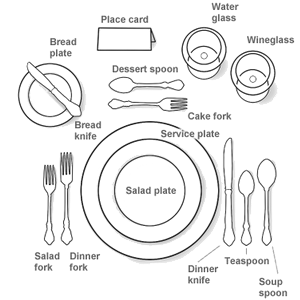
Emily Post (1872 – 1960) was an American author on etiquette. She wrote in various styles, including humorous travel books, early in her career. In 1922 her book Etiquette (full title Etiquette in Society, in Business, in Politics, and at Home) was a best seller, and updated versions continued to be popular for decades. In 1946, she founded The Emily Post Institute which continues her work. She died in 1960 in her New York City apartment at the age of 87.
Today, The Emily Post Institute, located in Burlington, Vermont, provides etiquette experts and advice to news outlets and other corporations. The authors at the Emily Post Institute write books and columns, conduct seminars and workshops, give speeches, and act as spokespeople for select corporations. They give media interviews each year on a variety of topics. Emily Post’s name has become synonymous, at least in North America, with proper etiquette and manners. Nearly half a century after her death, her name is still used in titles of etiquette books.
Posted in Language, Money |
Leave a Comment »
February 14, 2011
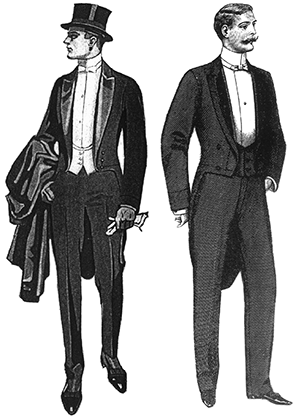
Tuxedo Park is a village in New York, about 50 miles north of New York City in Orange County from which the formal attire of the same name originates. The population was 731 at the 2000 census.The name is derived from a Native American word of the Lenape language, tucsedo, which means either ‘place of the bear’ or ‘clear flowing water.’ Tuxedo Park is a village within the southern part of the Town of Tuxedo (pop. 3,334).
read more »
Posted in Art, Language, Money |
Leave a Comment »
February 13, 2011
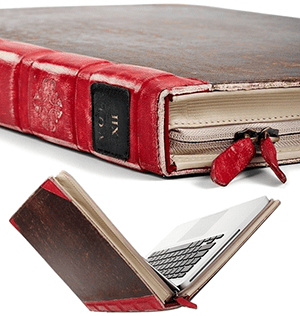
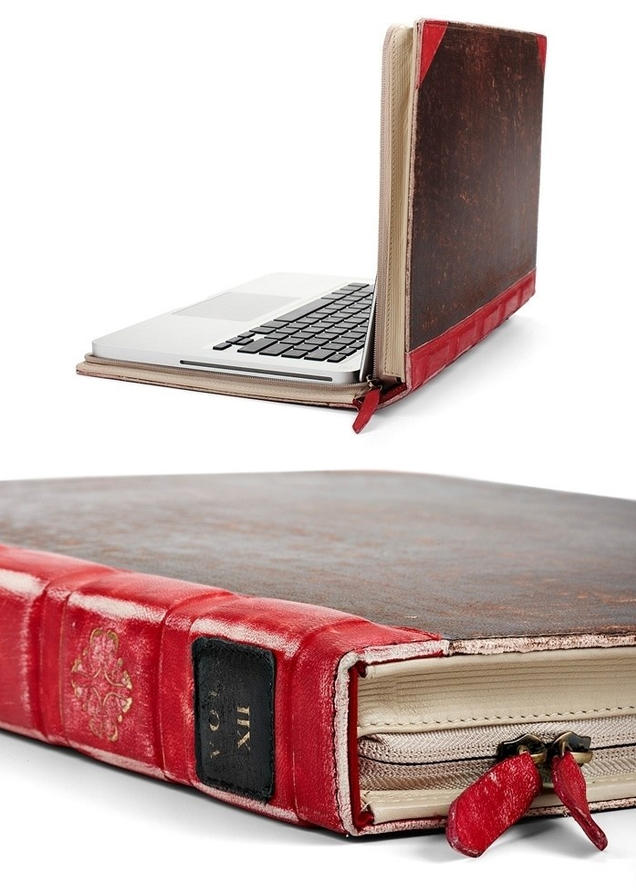
A skeuomorph [skyoo-uh-mawrf] is a derivative object that retains ornamental design cues to a structure that was necessary in the original. They may be deliberately employed to make the new look comfortably old and familiar, such as copper cladding on zinc pennies or computer printed postage with circular town name and cancellation lines. Historically, high-status items, such as metal tableware, were often recreated for the mass market using ceramics, which were a cheaper material. In certain cases, efforts were made to recreate the rivets in the metal originals by adding pellets of clay to the pottery version.
In the modern era, cheaper plastic items often attempt to mimic more expensive wooden and metal products though they are only skeuomorphic if new ornamentation references original functionality, such as molded screw heads in molded plastic items. Blue jeans have authentic-looking brass rivet caps covering the functional steel rivet beneath, and a pocket watch pocket; digital cameras play a recorded audio clip of a conventional SLR camera mirror slap and shutter opening and closing. Such ornamentation is not necessarily non-functional: the watch pocket is now used for coins, and the camera shutter sound is used to indicate to subject and photographer when the taking of the picture is complete.
Posted in Language, Money, Technology |
Leave a Comment »
February 13, 2011

The Levant [li-vant] describes, traditionally, the Eastern Mediterranean at large, but can be used as a geographical term that denotes a large area in Western Asia formed by the lands bordering the eastern shores of the Mediterranean, roughly bounded on the north by the Taurus Mountains, on the south by the Arabian Desert, and on the west by the Mediterranean Sea, while on the east it extends towards the Zagros Mountains. The Levant includes modern Lebanon, Syria, Jordan, Israel and the Palestinian territories, similar to the historic area called Syria or Greater Syria. Occasionally Cyprus, Sinai and Iraq are included.
Posted in Language, World |
Leave a Comment »
February 13, 2011

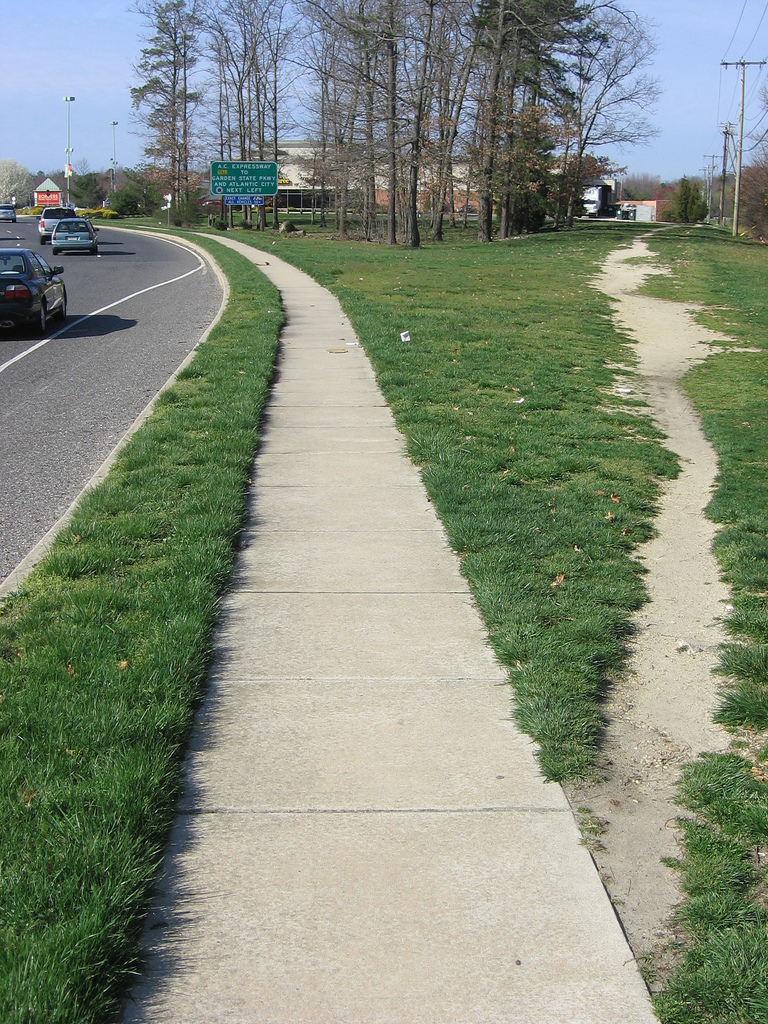
A desire path (also known as a social trail) is a path developed by erosion caused by animal or human footfall. The path usually represents the shortest or most easily navigated route between an origin and destination. The width and amount of erosion of the line represents the amount of demand. Desire paths can usually be found as shortcuts where constructed pathways take a circuitous route.
Posted in Language |
1 Comment »
February 12, 2011


Borscht Belt, or Jewish Alps, is a colloquial term for the mostly defunct summer resorts of the Catskill Mountains in upstate New York that were a popular vacation spot for New York City Jews from the 1920s through the 1960s. The name comes from borscht, a beet soup that is popular in many Central and Eastern European countries and was brought from these regions by Ashkenazi Jewish and Slavic immigrants to the United States, where it remains a popular dish in these ethnic communities as well.
read more »
Posted in Humor, Language, Money |
Leave a Comment »